Tom Cruise Stunts in Ghost Protocol: Inside the Burj Khalifa Climb and Beyond

Tom Cruise performed his own high-stakes stunts in Mission: Impossible – Ghost Protocol, most notably scaling the exterior of the Burj Khalifa in Dubai. Using a specialized cable and harness system hidden by digital effects, Cruise climbed, ran, and jumped across the world's tallest building at heights exceeding 1,700 feet.
The 2011 release of Mission: Impossible – Ghost Protocol marked a pivotal shift in the action genre. While the industry was leaning heavily into Green Screen and Computer-Generated Imagery (CGI), Tom Cruise and director Brad Bird decided to pursue a philosophy of "tactile reality." This decision birthed what is arguably the most famous stunt in cinematic history: the Burj Khalifa climb. As of 2026, this sequence remains the gold standard for practical filmmaking, serving as the blueprint for Cruise’s subsequent death-defying feats in the later Mission installments.
The Engineering Behind the Burj Khalifa Climb
When discussing Tom Cruise stunts in Ghost Protocol, the conversation begins and ends with the Burj Khalifa. In the film, Ethan Hunt must scale the outside of the building using "suction gloves" to reach a server room on the 130th floor. In reality, the production moved to the 123rd floor of the 2,717-foot structure to film the sequence.
The engineering required to keep the world’s biggest movie star safe while dangling over a mile in the air was immense. Stunt coordinator Gregg Smrz and his team spent months designing a rig that could support Cruise while remaining invisible to the camera. The primary challenge was not just the height, but the architecture of the building itself. The Burj Khalifa’s glass exterior becomes incredibly hot under the desert sun, and the wind speeds at that altitude can fluctuate violently, creating a "venturi effect" that threatens to slam a person against the glass or pull them away from the structure.
To facilitate the climb, the production team received permission to pull out several windows of the Burj Khalifa. This allowed them to bolt heavy-duty scaffolding and winch systems directly to the building’s internal steel frame. Cruise wore a thin, high-strength harness underneath his costume, which was attached to multiple cables. These cables were then digitally removed in post-production, giving the illusion that he was adhering to the glass with only his hands.
Environmental and Physical Challenges of the Dubai Shoot
The physical toll of the Burj Khalifa stunt is often underestimated. Because the harness was designed to be as thin as possible to avoid being seen through his clothing, it offered very little padding. Cruise has noted in various retrospectives that the harness acted like a tourniquet, cutting off circulation to his legs during long hours of filming.
Furthermore, the heat of the Dubai sun made the glass surfaces nearly untouchable. The crew had to constantly monitor the temperature of the building's skin. If the glass became too hot, it could potentially weaken the adhesive on the suction cups used for minor safety backups or cause physical burns to the actor.
Wind was the most unpredictable factor. During the "running" portion of the stunt—where Cruise sprints horizontally across the face of the building before leaping into an open window—crosswinds could have easily sent him into a terminal spin. The precision required by the crane operators inside the building to "feed" or "retract" the cable in sync with Cruise's movements was a feat of timing that rivaled the performance itself.

Filming in IMAX: The Technical Depth of High-Altitude Cinematography
One reason the Tom Cruise stunts in Ghost Protocol feel so visceral is the choice of format. Brad Bird opted to shoot the sequence using 15/70mm IMAX cameras. In 2011, IMAX cameras were notoriously bulky, heavy, and loud, making them a nightmare to rig on the side of a skyscraper.
The decision to use IMAX meant that the audience would be treated to an unparalleled level of detail and a massive vertical aspect ratio that emphasized the terrifying drop below Hunt’s feet. However, it also meant that the film canisters only held about three minutes of footage at a time. Every time the camera ran out of film, the crew had to haul the massive unit back through a window, reload it, and recalibrate the rigging.
The resolution of IMAX is so high that it forced the stunt team to be even more meticulous with the "invisible" wires. Any slight glint or shadow from the safety rigging would be captured in 12K-equivalent detail, requiring the visual effects team at Industrial Light & Magic (ILM) to frame-accurately paint out the wires while preserving the reflections on the glass.
Comparison of Key Stunts in Mission: Impossible – Ghost Protocol
While the Burj Khalifa is the centerpiece, Ghost Protocol features several other complex physical sequences that define the film's "practical-first" identity.
| Stunt Description | Location | Primary Technical Challenge | Safety Mechanism |
|---|---|---|---|
| Burj Khalifa Climb | Dubai, UAE | Extreme altitude and wind resistance | Multi-point cable harness & internal winches |
| Sandstorm Chase | Dubai Streets | Zero visibility and high-speed navigation | Practical dust machines and precision driving |
| Kremlin Break-in | Moscow (Set) | Synchronization with moving "screen" props | Motion control cameras and practical sets |
| Automated Car Park | Mumbai, India | 70-foot vertical drops in a confined space | High-speed wire descenders and custom car rigs |
| Prison Break Brawl | Moscow (Set) | High-volume choreography with 50+ extras | Extensive rehearsal and soft-matted floors |
The Mumbai Automated Parking Garage Sequence
Often overshadowed by the Burj Khalifa, the climax of the film takes place in a multi-level automated parking garage in Mumbai. This sequence involved Cruise and actor Michael Nyqvist fighting over a nuclear launch briefcase while moving through a complex, shifting grid of platforms and cars.
The production built a massive, functioning version of this garage on a soundstage. The stunt required Cruise to perform a 70-foot "nose-dive" off a platform to catch the briefcase. To execute this, the team used a high-speed winch that could accelerate and decelerate the actor with extreme precision, allowing him to stop just inches from the ground.
This sequence highlighted a different kind of stunt work: the marriage of mechanical engineering and physical timing. Unlike the Burj Khalifa climb, which was about endurance and height, the car park fight was about navigating a "living" environment where heavy machinery was moving in close proximity to the actors.
Training and Preparation: The Secret to Cruise's Success
Tom Cruise’s ability to perform these stunts is not merely a matter of bravery; it is a result of obsessive preparation. For the Burj Khalifa climb, the production built a simulated glass wall in Los Angeles months before filming began.
Cruise spent weeks climbing this wall while the crew experimented with different harness configurations and "suction" tech. He also worked with professional climbers to learn how to move his body in a way that looked authentic for someone exerting maximum effort. This rehearsal period allowed the team to identify problems—such as the harness cutting off circulation—long before they were 1,000 feet in the air in Dubai.
The Impact on Modern Action Cinema
The Tom Cruise stunts in Ghost Protocol changed the trajectory of the Mission: Impossible franchise and the wider action genre. Prior to this film, the series was known for its revolving door of directors (De Palma, Woo, Abrams), each bringing a different stylistic flair. Ghost Protocol established the "stunt-as-spectacle" as the core identity of the brand.
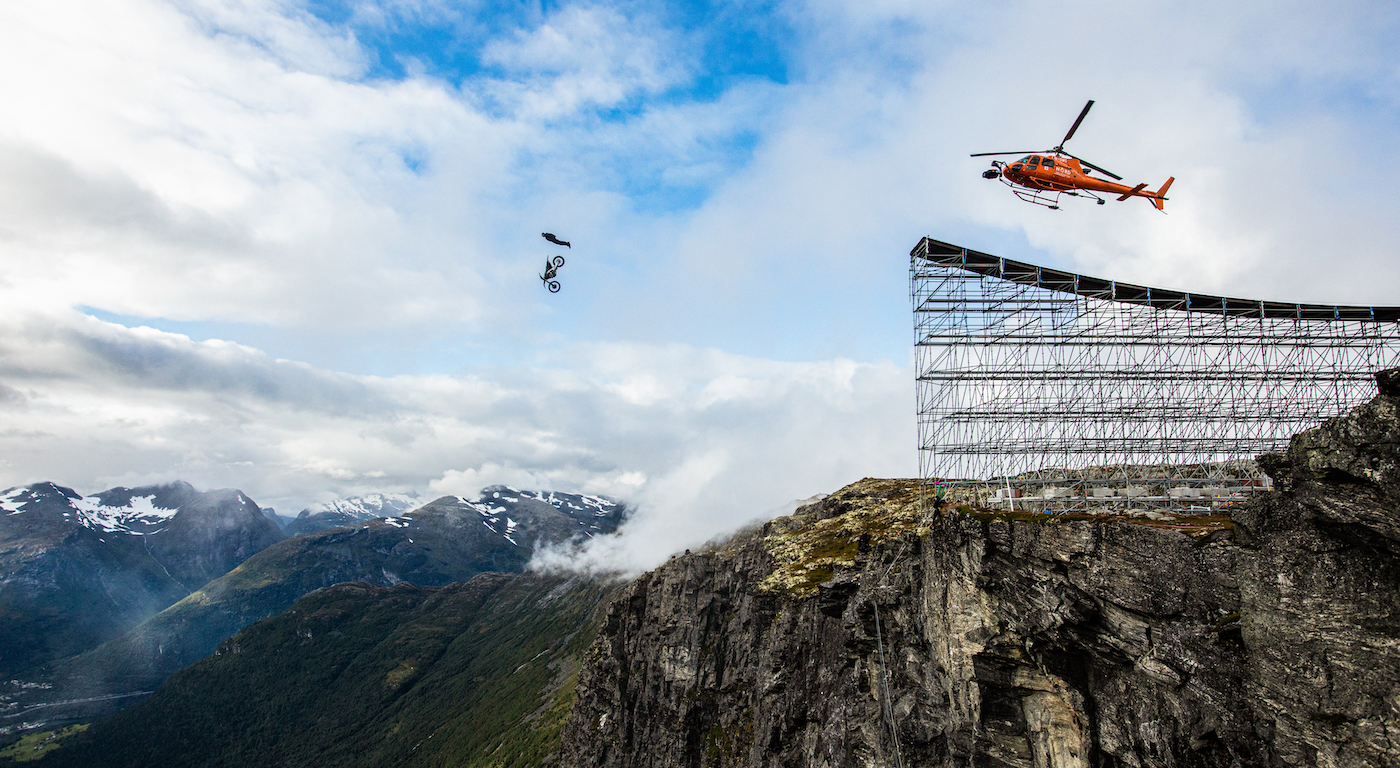
Looking back from 2026, we can see how this film emboldened Cruise to push even further in sequels like Rogue Nation (hanging off an Airbus A400M), Fallout (the HALO jump), and Dead Reckoning (the motorcycle cliff jump). It proved to studios that audiences have a "sixth sense" for reality; they can tell the difference between a digital avatar and a human being actually interacting with a physical environment. This "authenticity premium" has become a major marketing tool for theatrical releases in an era dominated by streaming and CGI.
Frequently Asked Questions
Was Tom Cruise actually on the outside of the Burj Khalifa?
Yes. While he was supported by a sophisticated cable system that was later removed digitally, Tom Cruise was physically on the exterior of the building. No stunt double was used for the wide shots or the close-ups of the climb. The production filmed on the 123rd floor, and Cruise actually performed the running jump and the vertical scaling himself.
How high up was Tom Cruise during the Ghost Protocol stunts?
The Burj Khalifa stands at 2,717 feet. The filming took place around the 123rd floor, which is approximately 1,700 to 1,800 feet above the ground. Even with safety wires, the height presented significant psychological and physical challenges, including high winds and extreme temperatures.
Did they use green screens for the Dubai sequence?
Minimal green screen was used for the Burj Khalifa sequence. The vast majority of the footage features the actual city of Dubai in the background. The windows were removed from the building to allow cameras to point directly outside, capturing the real atmosphere, lighting, and depth that a green screen cannot perfectly replicate.
Were the suction gloves used in the movie real?
No, the "suction gloves" used by Ethan Hunt are a fictional gadget. In reality, Cruise used his hands and feet to navigate the glass, supported entirely by the hidden harness and cable system. The tension in his muscles and the difficulty of the movement seen on screen are real, as he was fighting his own weight and the wind.
Why does Tom Cruise insist on doing his own stunts?
Cruise has stated in numerous interviews that doing his own stunts allows the director to place the camera in positions that wouldn't be possible with a stunt double. It allows for long, unbroken takes where the audience can see the actor's face, which increases the emotional stakes and the sense of immersion for the viewer.
Practical Recommendation for Aspiring Filmmakers
If you are a filmmaker looking to incorporate practical stunts into your work, the primary lesson from Ghost Protocol is the importance of pre-visualization and testing. Tom Cruise and his team did not just show up in Dubai and start climbing. They spent months in a controlled environment testing every variable—from the thickness of the wires to the heat of the glass.
For those interested in the technical history of these stunts, I recommend seeking out the "behind-the-scenes" features specifically focused on the IMAX cinematography of Ghost Protocol. It provides a masterclass in how to balance high-concept action with the technical limitations of heavy-duty film equipment.
Image Gallery
Select an image to open it in a new tab.
Akira Tanaka
International Academic Trends Correspondent
