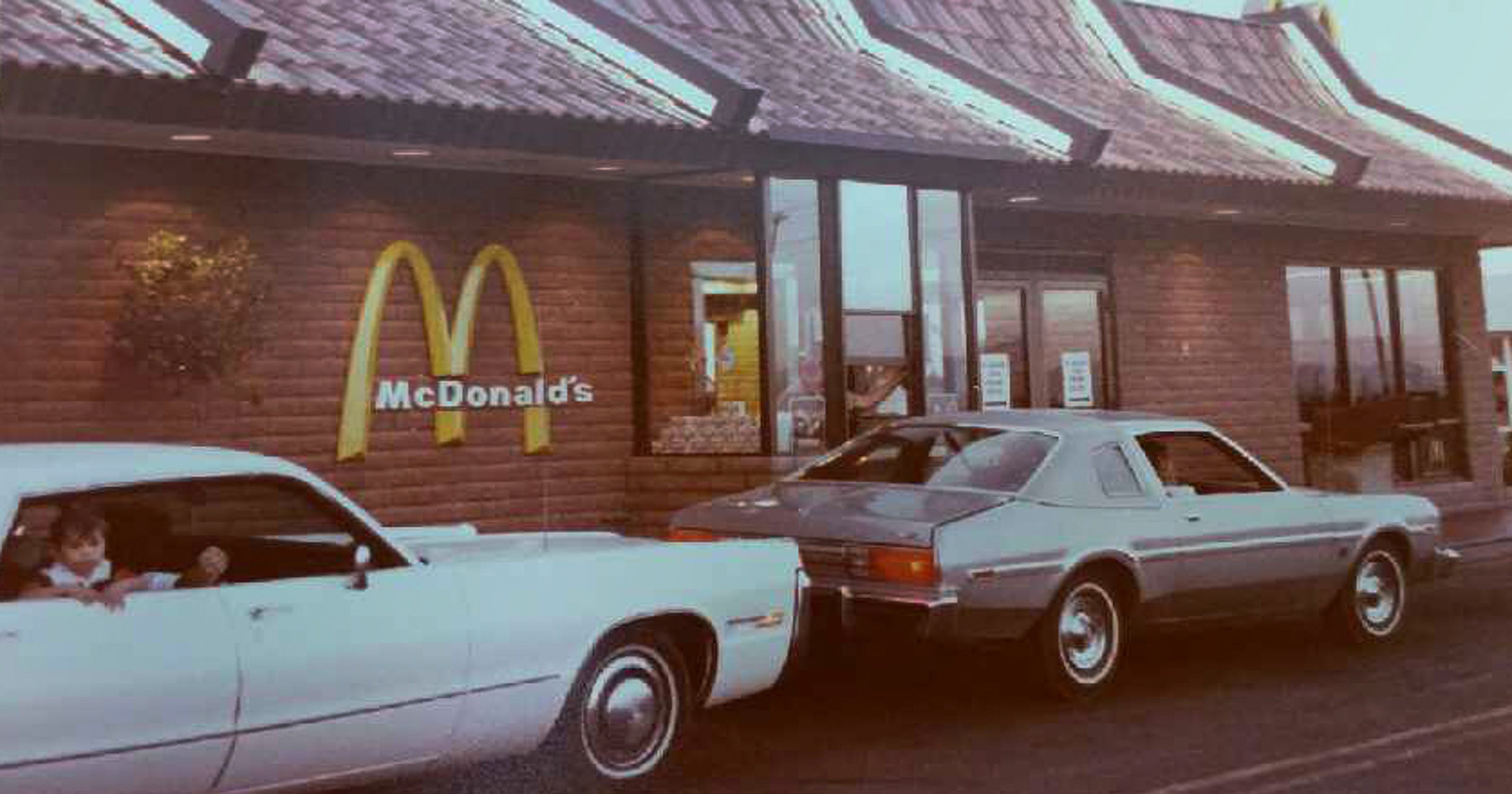
The first McDonald’s drive-through was opened on January 24, 1975, in Sierra Vista, Arizona. This groundbreaking innovation was designed by franchise owner David Rich to serve military personnel from the nearby Fort Huachuca, who were not permitted to exit their vehicles while wearing their fatigue uniforms in public.
While the McDonald’s brand was already a global powerhouse by the mid-1970s, the introduction of the drive-through window marked a pivotal shift in how the world consumes fast food. As of 2026, the drive-through remains the primary source of revenue for the majority of McDonald's locations, but its origins are rooted in a very specific local problem involving military regulations and a franchisee’s desire to accommodate his customers.
The Genesis of the Sierra Vista Location
In the early 1970s, Sierra Vista, Arizona, was a growing community largely defined by its proximity to Fort Huachuca, a major U.S. Army installation. David Rich, the owner of the local McDonald's franchise, noticed a significant missed opportunity in his daily operations. At the time, Army regulations prohibited soldiers from appearing in public establishments while wearing their work fatigues. Because these soldiers were often on duty or in transit, they could not easily change into civilian clothes just to grab a meal.
Rich realized that if he could serve these soldiers without requiring them to leave their vehicles, he could tap into a massive, underserved market. On January 24, 1975, he officially opened a sliding window on the side of his restaurant. This allowed soldiers to drive up, order, and receive their food—all while remaining in their cars and, more importantly, remaining in compliance with their military dress codes.
This was not just a convenience; it was a solution to a logistical and regulatory barrier. The success was immediate. The Sierra Vista location saw a massive surge in volume, proving that the convenience of the drive-through appealed far beyond the military community. It didn't take long for McDonald’s corporate headquarters to take notice of the massive potential this model held for the entire chain.
Disambiguating the "First" Drive-Through
There is often confusion regarding which restaurant actually invented the drive-through. To understand the history of the McDonald's first drive-through, one must distinguish between "drive-ins" and "drive-throughs."
Drive-In vs. Drive-Through
Before 1975, McDonald's operated primarily as a "walk-up" or "drive-in" establishment. At a drive-in, customers would park their cars, and "carhops" (servers on foot or skates) would bring food to the vehicle. Alternatively, customers would park and walk to a central window to order.
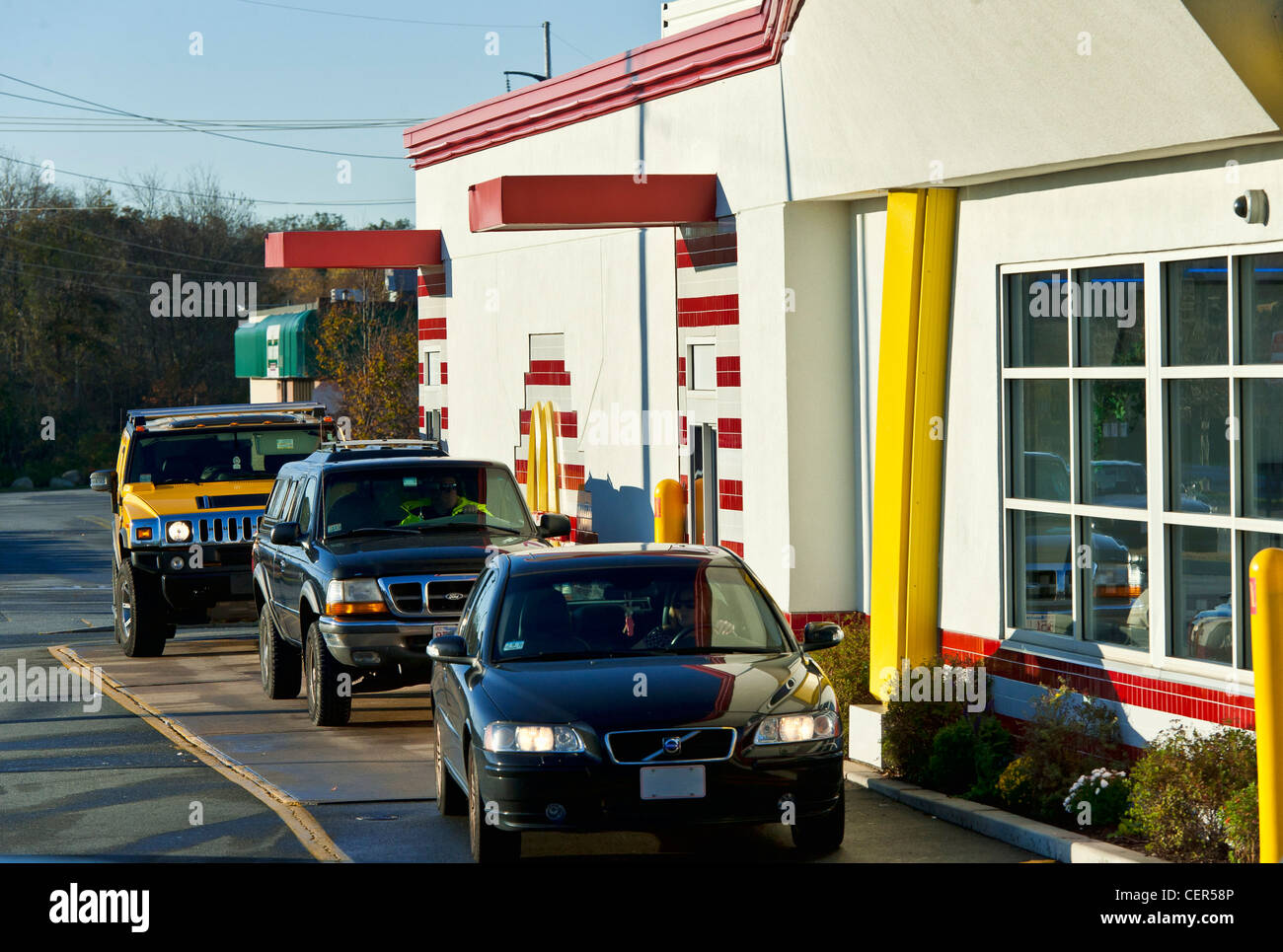
The "drive-through" differs because it involves a dedicated lane that moves vehicles through a sequence: ordering (usually via a speaker), paying, and receiving food through a window without the car ever being parked.
Industry Competitors
While Sierra Vista was the first for McDonald's, other chains had experimented with the concept earlier.
- In-N-Out Burger: Harry Snyder opened the first In-N-Out in 1948 in Baldwin Park, California, featuring a two-way speaker system. This is often cited as the first true drive-through in the United States.
- Jack in the Box: Founded in 1951, this chain focused almost exclusively on the drive-through model from its inception.
- Wendy’s: Dave Thomas opened the first Wendy’s with a drive-through in 1970, five years before McDonald’s adopted the practice.
Despite not being the very first in the industry to use a window, McDonald’s implementation in 1975 is considered the most significant because of the company's massive scale. Once McDonald's adopted the drive-through, it became the industry standard for the entire fast-food world.
The Engineering and Operational Shift
The introduction of the drive-through required more than just cutting a hole in a wall. It necessitated a complete overhaul of how the "Speedee Service System"—the foundation of McDonald's—operated.
The Kitchen Layout
To accommodate the speed required for a drive-through, the internal layout of the kitchen had to change. Equipment was rearranged to ensure that the staff working the window had immediate access to the high-volume items like fries and drinks without crossing the paths of those serving the front counter. This led to the development of the "T-shaped" or "L-shaped" kitchen designs that are still studied in industrial engineering today.
The Speaker System
Early drive-throughs relied on simple sliding windows and face-to-face ordering. However, as the volume increased, the need for a remote ordering point became clear. This led to the installation of the outdoor menu board and the two-way intercom. By 2026, these systems have evolved into high-definition digital displays and AI-driven voice recognition, but the core logic remains the same: decouple the ordering process from the pickup process to keep the line moving.
The Impact on Packaging
The drive-through also influenced how McDonald's packaged its food. Items had to be portable and durable enough to survive a car ride. This led to the refinement of the "clamshell" container (initially polystyrene, now cardboard) and the development of the iconic drink carrier. Even the design of cup holders in American automobiles began to change in the late 1970s and 1980s to accommodate the increasingly popular fast-food beverage sizes.
How the Drive-Through Changed the Menu
The adoption of the drive-through didn't just change the building; it changed the food. As more people began eating while driving, McDonald's had to consider the "eatability" of its products.
- Handheld Convenience: The menu began to favor items that could be consumed with one hand. This is one reason why the Egg McMuffin (introduced nationally in 1975, the same year as the drive-through) became such a massive success. It was the perfect breakfast for someone behind the wheel.
- Temperature Retention: Fries are notorious for losing their quality quickly. The drive-through era pushed McDonald's to research better ways to keep fries hot and crisp in a paper bag, leading to specific standards for "holding times" and oil temperatures.
- Complexity Reduction: Items that were too messy or required utensils (like certain salads or large, multi-layered sandwiches with loose toppings) were often deprioritized or redesigned to ensure they didn't fall apart in a customer's lap.
The Global Expansion of the Concept
Following the success in Sierra Vista, McDonald’s began an aggressive rollout of drive-through windows.
- Oklahoma City: In 1975, shortly after the Arizona opening, a second drive-through was opened in Oklahoma City.
- International Markets: The first international McDonald's drive-through (known as a "McDrive" in many countries) opened in 1985 in Dublin, Ireland.
By the late 1980s, over half of all McDonald's restaurants featured a drive-through. By the early 2000s, that number had climbed to nearly 90% in the United States. In 2026, we see the culmination of this trend with "Drive-Thru Only" locations that lack any indoor seating whatsoever, focusing entirely on speed and delivery drivers.
Comparing the Original 1975 Drive-Through to 2026 Standards
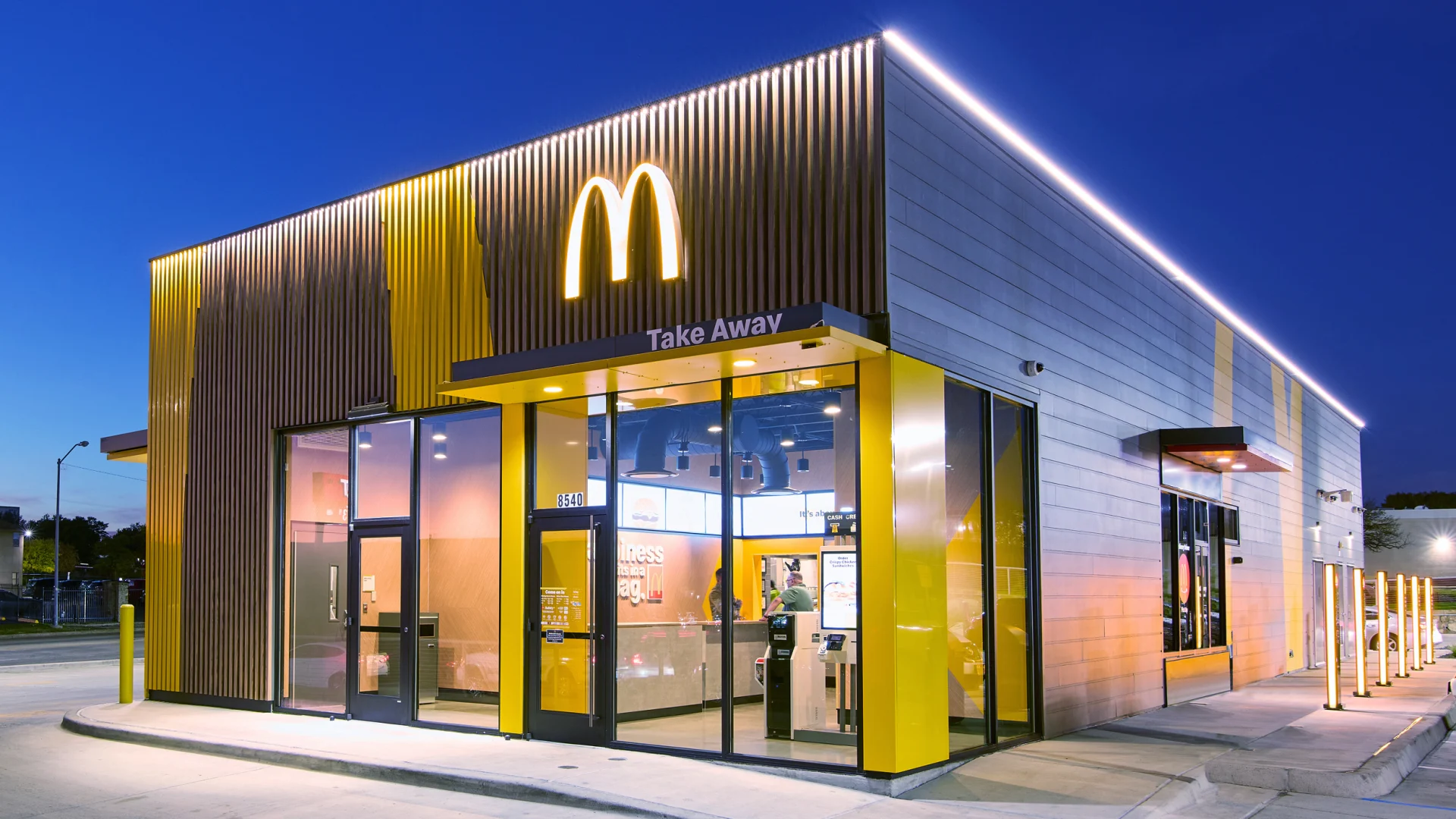
The differences between the original Sierra Vista window and a modern 2026 McDonald’s operation are vast. The following table highlights the evolution of technology, speed, and volume.
| Feature | 1975 (Sierra Vista) | 2026 (Modern Standard) |
|---|---|---|
| Ordering Method | Face-to-face at the window | AI-integrated voice recognition & Mobile App |
| Menu Display | Static board with plastic letters | Dynamic 4K digital displays with personalized ads |
| Payment | Cash only | Contactless, Biometric, and In-App Auto-pay |
| Lanes | Single lane | Dual or Triple lanes with "Pull Forward" spots |
| Average Service Time | 2-4 minutes | Under 90 seconds (target) |
| Order Accuracy | Manual verification | Computerized sensors and weight-check scales |
| Primary Customer | Military personnel in uniform | Commuters and Gig-economy delivery drivers |
Historical Preservation: The Sierra Vista Site
The original building in Sierra Vista where David Rich installed that first window is no longer a functioning McDonald's in its original 1975 form. The site has been renovated and modernized over the decades to keep up with the brand's evolving image. However, its historical significance is well-documented.
For enthusiasts of "Americana" and fast-food history, the Sierra Vista location remains a point of interest. In 1999, a commemorative plaque was placed at the site to recognize its role in the company's history. The plaque reads: "On this site, January 24, 1975, the first McDonald’s drive-thru window was opened."
While the physical structure has changed, the spirit of David Rich’s innovation remains. It serves as a classic example of how a localized problem—soldiers not being able to walk into a building—led to a global revolution in commerce.
Technological Evolution in 2026
In 2026, the drive-through has moved into the era of hyper-automation. Many McDonald's locations now utilize:
- Automated Beverage Systems (ABS): These machines automatically pour and lid drinks based on the order entered into the system, reducing human error.
- Geofencing: Through the McDonald's app, the kitchen is notified when a customer is within a certain radius of the restaurant, allowing them to drop fresh fries and start the burger as the car approaches the menu board.
- Conveyor Systems: In some high-volume urban locations, food is prepared on a second floor or in a centralized kitchen and delivered to the drive-through window via a small elevator or conveyor belt.
These advancements all trace their lineage back to the simple sliding window in Arizona. The focus on shaving seconds off the "service time" began the moment David Rich realized that cars move faster than foot traffic.
Frequently Asked Questions
Did McDonald’s invent the drive-through?
No, McDonald’s did not invent the drive-through. In-N-Out Burger is generally credited with the first drive-through using a speaker system in 1948. Other chains like Wendy’s and Jack in the Box also preceded McDonald's. However, McDonald's is credited with perfecting the operational efficiency of the drive-through and scaling it globally.
Why was the first McDonald's drive-through in Sierra Vista, Arizona?
The location was chosen because of its proximity to Fort Huachuca. Military regulations at the time prohibited soldiers from wearing their fatigues in public businesses. The drive-through allowed them to purchase food without violating these rules, as they remained inside their vehicles.
Is the original Sierra Vista drive-through still there?
The location still exists as a McDonald’s, but the building has undergone numerous renovations and modernizations since 1975. A historical marker at the site commemorates its status as the first drive-through in the McDonald's system.
How much of McDonald’s revenue comes from the drive-through?
As of 2026, drive-through sales account for approximately 70% to 80% of total revenue for most U.S. McDonald's locations. This percentage spiked during the 2020s and has remained high as consumer habits shifted permanently toward convenience and off-premise dining.
Who was David Rich?
David Rich was the McDonald's franchisee in Sierra Vista, Arizona. He is the person responsible for the idea of cutting a hole in the side of the restaurant to serve soldiers. His local ingenuity eventually changed the business model for the entire global corporation.
What was the first item ordered at the Sierra Vista drive-through?
While corporate records don't definitively name the very first item, historical accounts suggest the soldier who made the first purchase ordered a Big Mac. The Big Mac had been a national staple since 1968 and was the most popular item on the menu at the time.
Practical Recommendations for History Buffs
If you are interested in the history of fast food and the evolution of the drive-through, there are several actions you can take to explore this topic further:
- Visit the Sierra Vista Site: If you find yourself in Southern Arizona, the McDonald's on Fry Boulevard in Sierra Vista is a must-visit. Look for the historical plaque located near the drive-through lane.
- Explore the First Store Museum: While the first drive-through was in Arizona, the first franchised McDonald's (opened by Ray Kroc) is in Des Plaines, Illinois. It is now a museum that showcases the 1955 era of the company.
- Research the "In-N-Out" Connection: To see the competing claim for the first drive-through, research the Baldwin Park, California, historical records for In-N-Out. They have a replica of their original 1948 stand.
- Observe Modern Innovation: Visit a "McDrive" in 2026 to see how AI and automation have changed the experience. Compare the seamlessness of modern mobile-integrated lanes to the manual processes of the past.
The story of the first McDonald’s drive-through is more than just a corporate milestone; it is a testament to how local entrepreneurs can influence global change by solving a simple problem for their customers.
Image Gallery
Select an image to open it in a new tab.


Ingrid Bjornson
Global Cyber Policy and Regulation Analyst
