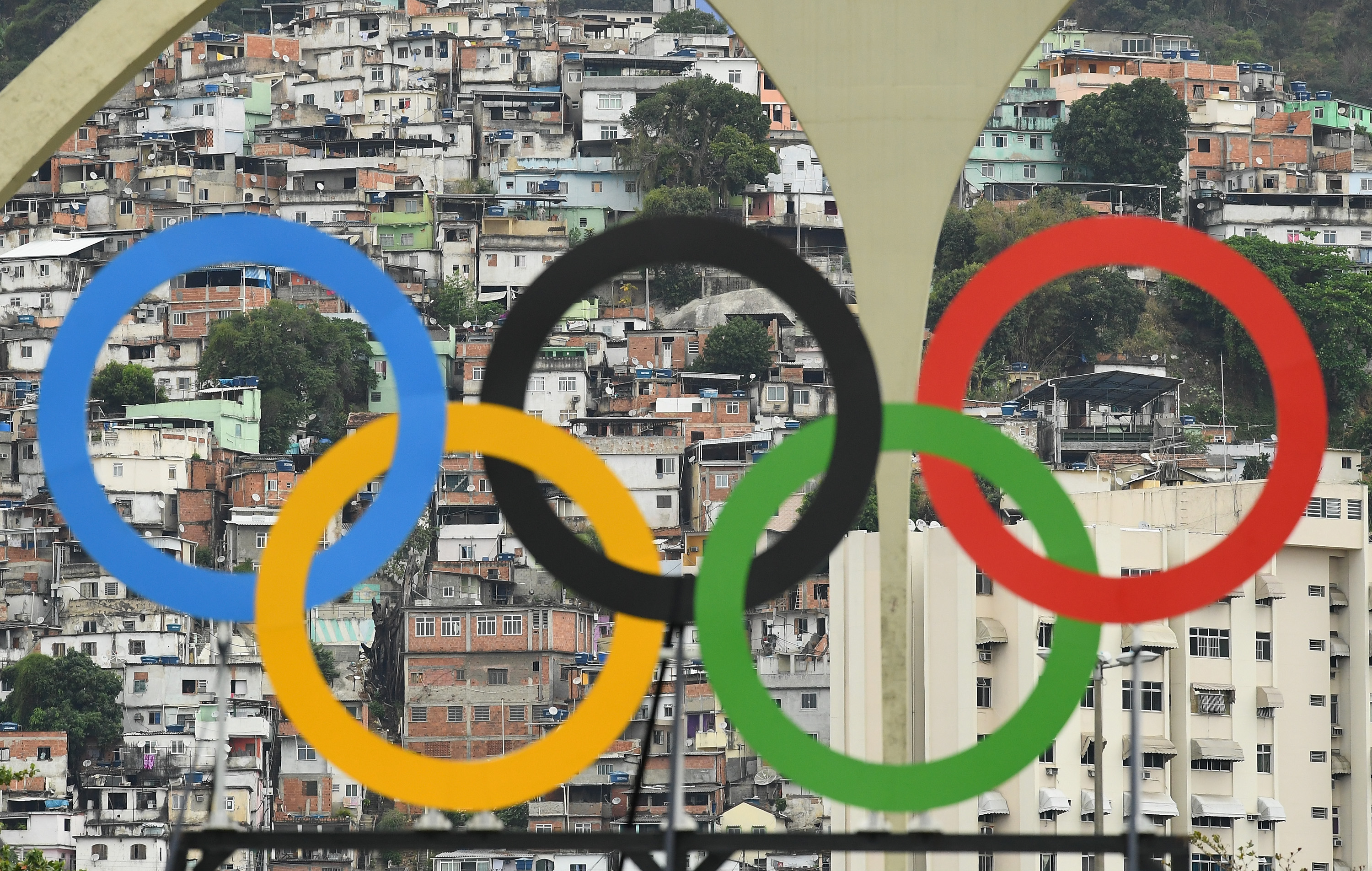
Since the inaugural modern Games in Athens in 1896, over 40 cities have hosted the Summer and Winter Olympic Games. These host cities are selected by the International Olympic Committee (IOC) based on their infrastructure, financial stability, and ability to provide a global stage for the world's premier multi-sport event.
The selection of an Olympic host city is more than a sporting decision; it is a monumental urban undertaking that reshapes metropolitan landscapes and leaves a lasting geopolitical footprint. From the historic capitals of Europe to the high-tech hubs of East Asia and the sprawling cities of North America, the list of host cities represents a rotating map of global influence. As we navigate through 2026, with the Winter Games currently centered in the Italian regions of Milan and Cortina d'Ampezzo, understanding the history and requirements of these host cities provides insight into the evolution of international cooperation and urban development.
The Evolution of the Host City Selection Process
The method by which the International Olympic Committee (IOC) selects host cities has undergone significant transformations, particularly under the "Olympic Agenda 2020" and the subsequent "Olympic Agenda 2020+5." Historically, cities engaged in a competitive "beauty pageant" style bidding process that often cost tens of millions of dollars in marketing alone. Today, the process is governed by two Future Host Commissions—one for Summer and one for Winter—which engage in a "Continuous Dialogue" with interested parties.
This new approach prioritizes sustainability and the use of existing or temporary venues. The goal is to prevent the "white elephant" phenomenon, where massive stadiums are built for the Games and subsequently fall into disrepair. Cities must now demonstrate a long-term legacy plan that aligns with their existing urban development goals. This shift explains why recent and upcoming hosts, such as Paris (2024), Milan-Cortina (2026), and Los Angeles (2028), rely heavily on renovated historic sites or pre-existing professional sports infrastructure.
Summer Olympic Host Cities: A Chronological Journey
The Summer Olympics are the flagship event of the Olympic movement. They require massive capacity for athletes, media, and spectators, often necessitating a city with a population and infrastructure capable of handling millions of visitors.
The Early Era (1896–1928)
The early Games were often held in conjunction with World's Fairs, which sometimes overshadowed the sporting events.
- Athens, Greece (1896): The revival of the ancient tradition, held at the Panathenaic Stadium.
- Paris, France (1900): Noted for being the first Games where women were allowed to compete.
- St. Louis, USA (1904): The first Games held outside of Europe.
- London, UK (1908): Stepped in after Rome was unable to host due to the eruption of Mount Vesuvius.
- Stockholm, Sweden (1912): Introduced electronic timing and the first use of a public address system.
- Antwerp, Belgium (1920): The first Games after World War I, introducing the Olympic Flag and the Olympic Oath.
- Paris, France (1924): The second time for Paris, introducing the "Citius, Altius, Fortius" motto.
- Amsterdam, Netherlands (1928): The first appearance of the Olympic Flame.
The Expansion and Modernization (1932–1988)
During this period, the Games became a significant tool for national branding and political expression.
- Los Angeles, USA (1932): Despite the Great Depression, this city built the first dedicated Olympic Village.
- Berlin, Germany (1936): The first Games to be televised (locally) and the introduction of the torch relay.
- London, UK (1948): Known as the "Austerity Games" following World War II.
- Helsinki, Finland (1952): Saw the Soviet Union's Olympic debut.
- Melbourne, Australia (1956): The first Games in the Southern Hemisphere.
- Rome, Italy (1960): Used ancient sites like the Baths of Caracalla for competitions.
- Tokyo, Japan (1964): The first Games in Asia, showcasing Japan’s post-war technological recovery.
- Mexico City, Mexico (1968): High altitude significantly impacted athletic performances.
- Munich, West Germany (1972): Marked by tragedy but also saw Mark Spitz’s seven gold medals.
- Montreal, Canada (1976): Famous for the "Big O" stadium and the massive debt incurred by the city.
- Moscow, USSR (1980): Subject to a massive Western boycott.
- Los Angeles, USA (1984): The first Games to be financed almost entirely by private sponsorship.
- Seoul, South Korea (1988): Signaled South Korea's emergence as a modernized global power.
The Global Spectacle (1992–Present)
- Barcelona, Spain (1992): Widely considered the gold standard for urban revitalization through the Olympics.
- Atlanta, USA (1996): Known for its heavy commercialization and the Centennial Olympic Park bombing.
- Sydney, Australia (2000): Praised for exceptional organization and the "Green Games" initiative.
- Athens, Greece (2004): Returned the Games to their home but struggled with long-term facility maintenance.
- Beijing, China (2008): A massive display of national strength, featuring the iconic "Bird's Nest" stadium.
- London, UK (2012): Focused on the regeneration of East London.
- Rio de Janeiro, Brazil (2016): The first Games held in South America.
- Tokyo, Japan (2020/2021): Delayed by a year due to the global pandemic, held largely without spectators.
- Paris, France (2024): Celebrated for using the city’s landmarks (Eiffel Tower, Versailles) as backdrops.

Winter Olympic Host Cities: Specialization in Cold Climates
The Winter Olympics require specific topographical features, specifically mountains and consistent freezing temperatures. Consequently, the list of host cities is often dominated by alpine regions or northern latitudes.
- Chamonix, France (1924): The first Winter Games, originally called "International Winter Sports Week."
- St. Moritz, Switzerland (1928, 1948): A premier luxury alpine destination.
- Lake Placid, USA (1932, 1980): Famous for the "Miracle on Ice" hockey game in 1980.
- Garmisch-Partenkirchen, Germany (1936): Held in the Bavarian Alps.
- Oslo, Norway (1952): The first Winter Games held in a capital city.
- Cortina d'Ampezzo, Italy (1956): The first Games to be televised internationally.
- Squaw Valley, USA (1960): The first Games to use a computer for processing results.
- Innsbruck, Austria (1964, 1976): A historic hub for winter sports in the Alps.
- Grenoble, France (1968): Introduced the first official Olympic mascot (Schuss).
- Sapporo, Japan (1972): The first Winter Games outside Europe or North America.
- Sarajevo, Yugoslavia (1984): The only Winter Games hosted by a socialist state.
- Calgary, Canada (1988): Extended the Games to 16 days.
- Albertville, France (1992): Utilized various venues across the Savoie region.
- Lillehammer, Norway (1994): Regarded as one of the most successful and atmospheric Winter Games.
- Nagano, Japan (1998): Saw the introduction of women's ice hockey and snowboarding.
- Salt Lake City, USA (2002): Overcame a significant bribery scandal to host a successful event.
- Turin, Italy (2006): Revitalized the industrial city of Turin.
- Vancouver, Canada (2010): Noted for the sea-to-sky venue distribution.
- Sochi, Russia (2014): The most expensive Winter Olympics to date, built largely from scratch.
- Pyeongchang, South Korea (2018): Highlighted by diplomatic efforts between North and South Korea.
- Beijing, China (2022): The first city to host both a Summer and Winter Olympics.
- Milan-Cortina, Italy (2026): Current hosts, focusing on regional collaboration and pre-existing venues.
Summary Table of Olympic Host City Statistics
This table provides a snapshot of the geographic and historical distribution of the Games.
| Region | Number of Summer Hosts | Number of Winter Hosts | Most Frequent Host Nation |
|---|---|---|---|
| Europe | 17 | 15 | France (6 total) |
| North America | 6 | 7 | USA (8 total) |
| Asia | 4 | 4 | Japan (4 total) |
| Oceania | 3 | 0 | Australia (3 total) |
| South America | 1 | 0 | Brazil (1 total) |
| Africa | 0 | 0 | N/A |
The "Elite Club": Repeat Olympic Hosts
Hosting the Olympics once is a Herculean task; hosting them multiple times is a testament to a city’s enduring infrastructure and global status. As of 2026, only a few cities have been chosen more than twice.
London, United Kingdom
London was the first city to host the Summer Olympics three times (1908, 1948, and 2012). Each iteration represented a different era of British history: the height of the Edwardian era, the post-war recovery, and the modern multicultural resurgence. The 2012 Games are particularly noted for the creation of the Queen Elizabeth Olympic Park, which transformed a formerly derelict industrial site in East London into a thriving residential and commercial district.
Paris, France
Following its recent 2024 Games, Paris joined London in the "three-time host" club (1900, 1924, and 2024). The 2024 Games were a radical departure from the traditional "closed-park" model, holding events at the foot of the Eiffel Tower and along the Seine River. This demonstrated how a historic city could host a modern mega-event without massive new construction.
Los Angeles, USA
Los Angeles will host its third Summer Olympics in 2028, having previously hosted in 1932 and 1984. LA is unique because it is one of the few cities to consistently turn a profit from the Games. The 1984 Games, in particular, utilized existing university dormitories and stadiums, a model the city plans to replicate in 2028.
Beijing, China
Beijing holds the unique distinction of being the first and only city to host both the Summer Games (2008) and the Winter Games (2022). To achieve this, the city repurposed several 2008 venues for winter use, such as converting the "Water Cube" swimming arena into the "Ice Cube" for curling.
Economic and Urban Impact of Hosting
The decision to host the Olympics is often debated due to the astronomical costs. However, successful host cities view the Games as a catalyst for urban transformation.
- Transport Infrastructure: Many cities use the Olympic deadline to push through major transport projects. For example, Athens (2004) gained a new international airport and subway system, while Tokyo (1964) introduced the Shinkansen (bullet train).
- Housing Legacy: The "Olympic Village" usually transitions into affordable or market-rate housing. The East Village in London and the Olympic Village in Vancouver are now highly sought-after residential neighborhoods.
- Soft Power and Tourism: Hosting provides a 17-day global commercial for the city. Barcelona (1992) transformed from a regional industrial port into one of the most visited tourist destinations in the world.
- Environmental Standards: Modern hosts must adhere to strict sustainability ratings. Milan-Cortina 2026, for example, is utilizing 90% existing venues to minimize carbon footprints and resource waste.
Future Host Cities (2028–2034)
The roadmap for the next decade is already firmly established by the IOC. These selections reflect a preference for stable economies and cities with high existing sports capacity.
- Los Angeles 2028 (Summer): Will focus on the "LA28" vision of using no new permanent venues, relying on the extensive sports infrastructure of Southern California.
- French Alps 2030 (Winter): A regional bid that covers several departments in France, emphasizing the use of world-class ski resorts.
- Brisbane 2032 (Summer): Marks the return of the Games to Australia, focusing on the development of the Queensland region.
- Salt Lake City-Utah 2034 (Winter): Returns to the site of the 2002 Games, utilizing the well-maintained facilities that have served as training grounds for athletes for two decades.
Frequently Asked Questions
Which city has hosted the most Olympics?
London and Paris are currently tied for the most Summer Olympics hosted, with three each. If considering both Summer and Winter, no single city has hosted more than three, though several nations have hosted many times across different cities.
Have any Olympic Games been cancelled?
Yes, the Games were cancelled in 1916 (Summer) due to World War I, and in 1940 (Summer and Winter) and 1944 (Summer and Winter) due to World War II. Additionally, the Tokyo 2020 Games were postponed to 2021 due to the COVID-19 pandemic but were still officially titled "Tokyo 2020."
Why has an African city never hosted the Olympics?
The primary barriers have been the immense cost of infrastructure and the strict requirements for venue density and transport. However, Senegal is set to host the Youth Olympic Games in 2026 (Dakar), which many see as a precursor and test case for a future Summer Olympic bid from the continent.
What is the smallest city to host the Olympics?
For the Summer Games, St. Louis (1904) is among the smallest by modern metropolitan standards, though it was a major hub at the time. For the Winter Games, Lillehammer, Norway (1994) and Lake Placid, USA (1932/1980) are notable for being small towns rather than major cities.
How are host cities selected in 2026?
In 2026, the selection process is no longer a fixed seven-year-out vote. The IOC’s Future Host Commissions engage in ongoing discussions with cities and regions. Once a preferred host is identified, it is put forward for a vote by the IOC Session.
Practical Recommendation for Travelers and Historians
If you are interested in the legacy of Olympic host cities, the best way to experience them is through "Olympic Legacy Tours." Many cities, such as London, Munich, and Barcelona, offer guided tours of their Olympic Parks. For those currently following the 2026 Winter Games, visiting the Lombardy and Veneto regions provides a unique look at how multiple venues across a broad geographic area (Milan and Cortina) can be integrated into a single cohesive event. Always check the official IOC website or the specific city's legacy foundation website for information on venue accessibility and public sports programs.
Image Gallery
Select an image to open it in a new tab.


Celine Dubois
Contemporary Living and Global Arts Columnist
