Why the Breakfast Pizza Biscuit Crust Works: A Culinary and Structural Analysis

The breakfast pizza biscuit crust works because it utilizes chemical leavening and a high fat-to-flour ratio to create a sturdy, porous structure that withstands heavy, moisture-rich toppings. Unlike yeast-based doughs, the biscuit base provides a buttery flavor profile that complements savory breakfast fats while maintaining its structural integrity against gravies and eggs.
The Physical Chemistry of the Biscuit Base
To understand why a biscuit crust is the superior choice for a breakfast-style pizza, one must first examine the chemical composition of the dough. Traditional pizza crust relies on yeast fermentation to create gluten networks and air pockets. While excellent for light toppings, yeast dough often struggles under the weight and moisture of classic breakfast ingredients like sausage gravy, scrambled eggs, and dense cheeses.
The biscuit crust, however, relies on chemical leaveners—typically baking powder or a combination of baking soda and an acid like buttermilk. This results in a rapid release of carbon dioxide during the initial stages of baking, known as "oven spring." Because this process does not require the long fermentation times of yeast, the gluten remains less developed. This "short" texture (hence the term "shortcrust") creates a tender crumb that is simultaneously dense enough to act as a structural foundation.
Furthermore, the integration of cold fats—usually butter, lard, or vegetable shortening—plays a critical role. In a well-made biscuit crust, small "peas" of fat remain intact within the flour. As the pizza bakes, these fats melt, creating steam pockets that lift the dough. This creates a laminated, flaky texture that provides a satisfying mechanical resistance when bitten, a stark contrast to the chewy, elastic nature of a traditional Neapolitan or New York-style crust.
Structural Integrity and Moisture Management
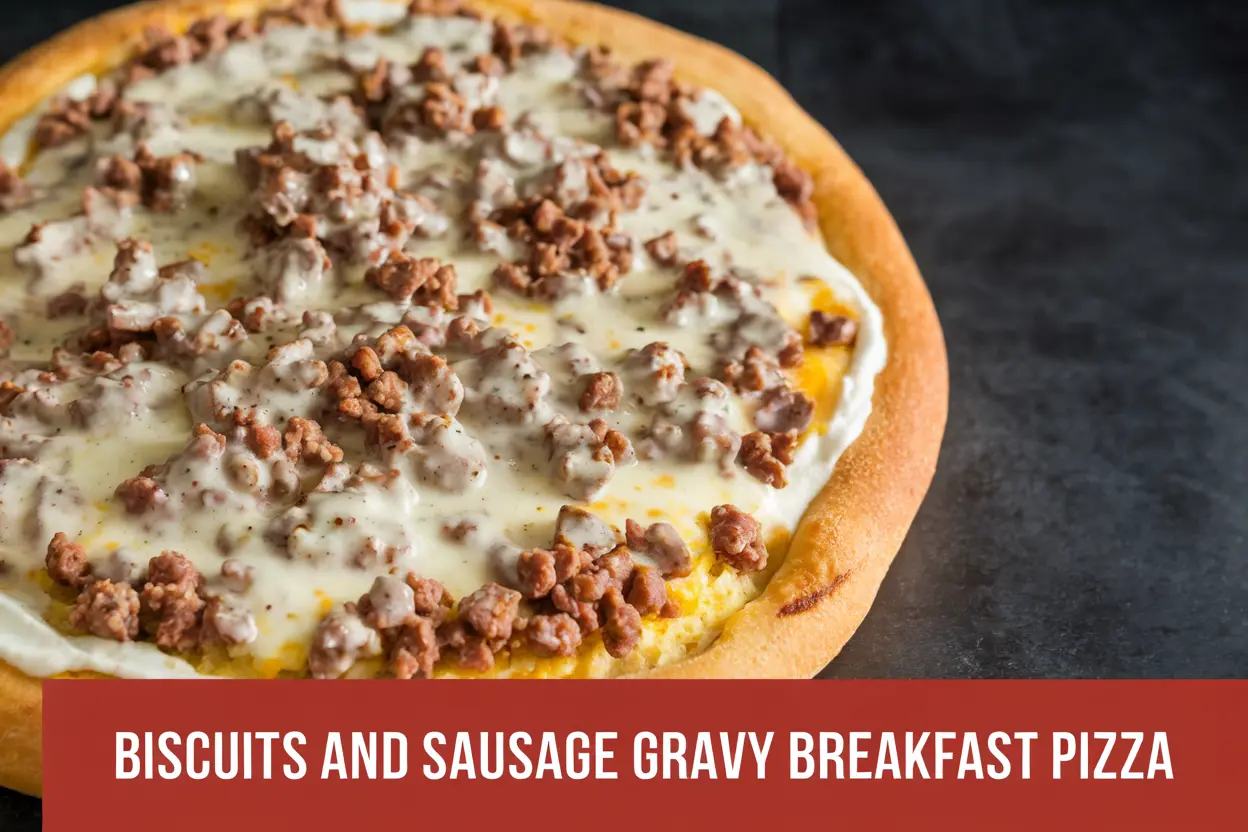
One of the primary challenges of breakfast pizza is the "soggy bottom" syndrome. Breakfast pizzas frequently utilize a white gravy (béchamel with sausage) instead of a traditional tomato-based sauce. Gravy has a higher moisture content and a different viscosity than tomato sauce, which can easily penetrate a standard thin crust and turn it into a gummy mess.
The Lipid Barrier
The high fat content in a biscuit crust serves as a functional "lipid barrier." Because oil and water do not mix, the butter or shortening saturated throughout the flour helps repel the liquid from the gravy or undercooked egg yolks. This allows the crust to bake thoroughly underneath the toppings without absorbing an excessive amount of moisture.
Porosity and Absorption
While the fats repel liquid, the porous nature of the baked biscuit actually helps "trap" the flavors of the toppings without losing its shape. The crumb of a biscuit is more "open" than a dense bread dough. This allows a small amount of the savory fats from the sausage and cheese to migrate slightly into the top layer of the crust, seasoning the bread itself and creating a unified flavor profile between the base and the toppings.
Flavor Profile Synergy: Salt, Fat, and Acid
Beyond the structural benefits, the flavor of a biscuit crust is inherently suited for breakfast ingredients. A traditional pizza dough is relatively neutral, leaning on the char of the oven and a hint of salt for flavor. In contrast, a biscuit crust is a flavor powerhouse in its own right.
- Buttery Notes: The primary flavor of a biscuit is toasted butter. This pairs naturally with the creamy elements of breakfast pizza, such as melted mozzarella, cheddar, or Monterey Jack cheese.
- The Buttermilk Tang: Many biscuit crusts incorporate buttermilk, which adds a slight acidity. This acidity is crucial for "cutting through" the heavy, rich fats found in breakfast sausage, bacon, and egg yolks. It provides a bright finish to an otherwise very heavy meal.
- The Maillard Reaction: Because biscuit dough often contains higher levels of sugar (naturally occurring in milk or added as granulated sugar) and fats, it undergoes the Maillard reaction more readily at lower temperatures. This results in a golden-brown, flavorful exterior that offers a nutty, toasted taste that complements the smoky notes of breakfast meats.
Comparative Analysis of Pizza Bases
To see why the biscuit crust is uniquely suited for the 2026 breakfast table, we can compare it to other common pizza bases used in similar applications.
| Feature | Biscuit Crust | Traditional Yeast Dough | Puff Pastry |
|---|---|---|---|
| Leavening Agent | Chemical (Baking Powder) | Biological (Yeast) | Physical (Steam/Layers) |
| Texture | Flaky, Tender, Sturdy | Chewy, Elastic, Airy | Extremely Flaky, Fragile |
| Moisture Resistance | High (due to fat content) | Low (absorbs liquids) | Moderate (can collapse) |
| Flavor Profile | Buttery, Tangy, Rich | Neutral, Yeasty, Salty | Buttery, Light |
| Weight Capacity | Excellent (High density) | Poor (if thin) | Poor (crushes easily) |
| Prep Time | Short (No rise needed) | Long (Requires proofing) | Moderate (Thawing/Chilling) |
The Role of Par-Baking in 2026 Culinary Standards
In the current 2026 culinary landscape, professional chefs and home cooks alike emphasize the technique of par-baking when using a biscuit crust. Par-baking involves baking the crust for 5 to 8 minutes before adding any toppings.
This step is essential for "setting" the structure of the biscuit. By partially cooking the dough, you initiate the carbon dioxide release and begin the solidification of the flour proteins. This creates a hardened top surface that is even more resistant to the weight of gravy and eggs. Without par-baking, the center of a breakfast pizza often remains raw or "doughy," a common failure point in amateur preparation.
Addressing the "Heavy" Nature of the Dish
A common critique of the breakfast pizza biscuit crust is its caloric density. However, from a technical perspective, this density is exactly what makes the dish "work" as a meal. Breakfast pizza is designed to be a high-energy, satiating start to the day. The biscuit crust provides the complex carbohydrates and fats necessary for long-term satiety.
To balance this, 2026 trends have seen an increase in the use of "hybrid" flours—mixing traditional all-purpose flour with whole wheat or almond flour to add fiber and reduce the glycemic load. Even with these modifications, the fundamental "biscuit" method remains the same: cold fat, minimal handling, and chemical leavening.
Common Mistakes and Troubleshooting
Despite its reliability, the biscuit crust can fail if certain technical rules are ignored. Understanding these pitfalls further illustrates why the "correct" biscuit method works so well.
- Overworking the Dough: If the dough is kneaded like a bread dough, gluten develops excessively. This turns a tender biscuit into a tough, hockey-puck-like disc that is difficult to chew. The "work" in a biscuit crust should be minimal—just enough to bring the ingredients together.
- Warm Ingredients: If the butter or shortening is at room temperature, it incorporates too thoroughly into the flour. This eliminates the "flaky" layers and results in a crumbly, dry crust that lacks the structural integrity to hold toppings.
- Low Oven Temperature: Biscuit crusts require high heat (usually between 400°F and 425°F). This high heat is necessary to turn the water in the butter into steam rapidly, creating the "lift" that makes the crust light rather than leaden.
Culinary Versatility: Beyond Sausage Gravy
While sausage gravy is the classic "sauce" for this crust, its structural success has led to various 2026 innovations. The biscuit base works equally well with:
- Hollandaise Sauce: The sturdy crust can support the richness of a Benedict-style pizza without becoming saturated.
- Salsa Verde: For Southwestern breakfast pizzas, the buttery biscuit provides a needed counterpoint to the acidity and spice of the salsa.
- Maple Glazes: In "sweet and savory" iterations featuring chicken and waffles or maple-glazed bacon, the biscuit crust acts as the perfect flavor bridge.
FAQs
Can I use canned biscuit dough for a breakfast pizza crust?
Yes, canned biscuit dough works because it utilizes the same chemical leavening and fat-distribution principles as homemade dough. To make it work as a pizza crust, you must press the individual biscuits together to form a unified sheet. However, be mindful of the "seams" between biscuits, as these can be weak points where moisture might leak through.
Why does my biscuit crust always turn out soggy?
Sogginess is usually caused by one of two factors: failing to par-bake the crust or using toppings with too much liquid. Always cook your sausage and scramble your eggs slightly before putting them on the pizza, as they release steam and moisture during the baking process. Additionally, ensure your gravy is thick; a runny gravy will almost always compromise the crust.
Is a biscuit crust better than a crescent roll crust for breakfast pizza?
While crescent roll dough is popular, it is significantly higher in fat and much thinner. This makes it more prone to collapsing under heavy toppings like thick-cut bacon or heavy gravy. A biscuit crust provides a more substantial "bread-like" experience that balances the richness of the toppings more effectively than the lighter, airier crescent dough.
Does the type of flour matter for a biscuit pizza crust?
All-purpose flour is generally the best choice. It has a moderate protein content (usually around 10-12%) which provides enough structure to hold the toppings while maintaining the tenderness expected of a biscuit. Bread flour, which is higher in protein, will make the crust too chewy and "bready," detracting from the classic biscuit texture.
How do I store and reheat a biscuit crust breakfast pizza?
The biscuit crust is remarkably resilient when it comes to leftovers. To maintain the texture, it is best to reheat it in an oven or air fryer at 350°F. This "re-crisps" the fats in the crust. Avoid the microwave, as it will make the biscuit dough soft and rubbery.
Recommended Next Steps
For the best results when making or serving a biscuit crust breakfast pizza, focus on the temperature of your fats. Ensure your butter or shortening is chilled in the freezer for 10 minutes before incorporating it into the flour. If you are a commercial operator or a dedicated home chef, consider investing in a pastry cutter or a food processor to ensure the fat is distributed in discrete chunks rather than a uniform paste. This technical attention to "fat pebbles" is the single most important factor in ensuring the crust works as intended, providing that perfect balance of flakiness and structural support.
Image Gallery
Select an image to open it in a new tab.
Vivian Cho
Executive IT and Emerging Technologies Reporter
