The NAMES Project AIDS Memorial Quilt: A Comprehensive Guide to History, Impact, and Participation

The NAMES Project AIDS Memorial Quilt is a monumental community art project and the world’s largest piece of community folk art, created to memorialize individuals lost to HIV/AIDS-related causes. Since its inception in 1987, it has grown to over 50,000 panels, humanizing the statistics of the epidemic through personal storytelling. Today, it serves as a powerful tool for education, social justice, and healing, stewarded by the National AIDS Memorial.
The Origins of the AIDS Memorial Quilt
The AIDS Memorial Quilt was born out of a period of profound grief and political inaction. In the mid-1980s, the HIV/AIDS epidemic was ravaging communities across the United States, particularly in San Francisco and New York City. At the time, there was significant social stigma surrounding the disease, and the federal government's response was criticized as being dangerously slow.
In November 1985, San Francisco gay rights activist Cleve Jones organized a candlelight march to honor the lives of Harvey Milk and George Moscone. During the planning process, Jones learned that over 1,000 San Franciscans had died of AIDS. He asked fellow marchers to write the names of these individuals on placards. When the marchers reached the San Francisco Federal Building, they taped the placards to the stone walls. Standing back, Jones noted that the overlapping squares of paper resembled a patchwork quilt.
This visual metaphor struck a chord. Jones realized that a quilt represented home, family, comfort, and tradition—values that were often denied to those dying of AIDS, many of whom were ostracized by their families or the healthcare system. In June 1987, Jones, along with Mike Smith and several other activists, officially founded the NAMES Project AIDS Memorial Quilt in a small storefront in San Francisco’s Castro District.
The Design and Composition of a Quilt Panel
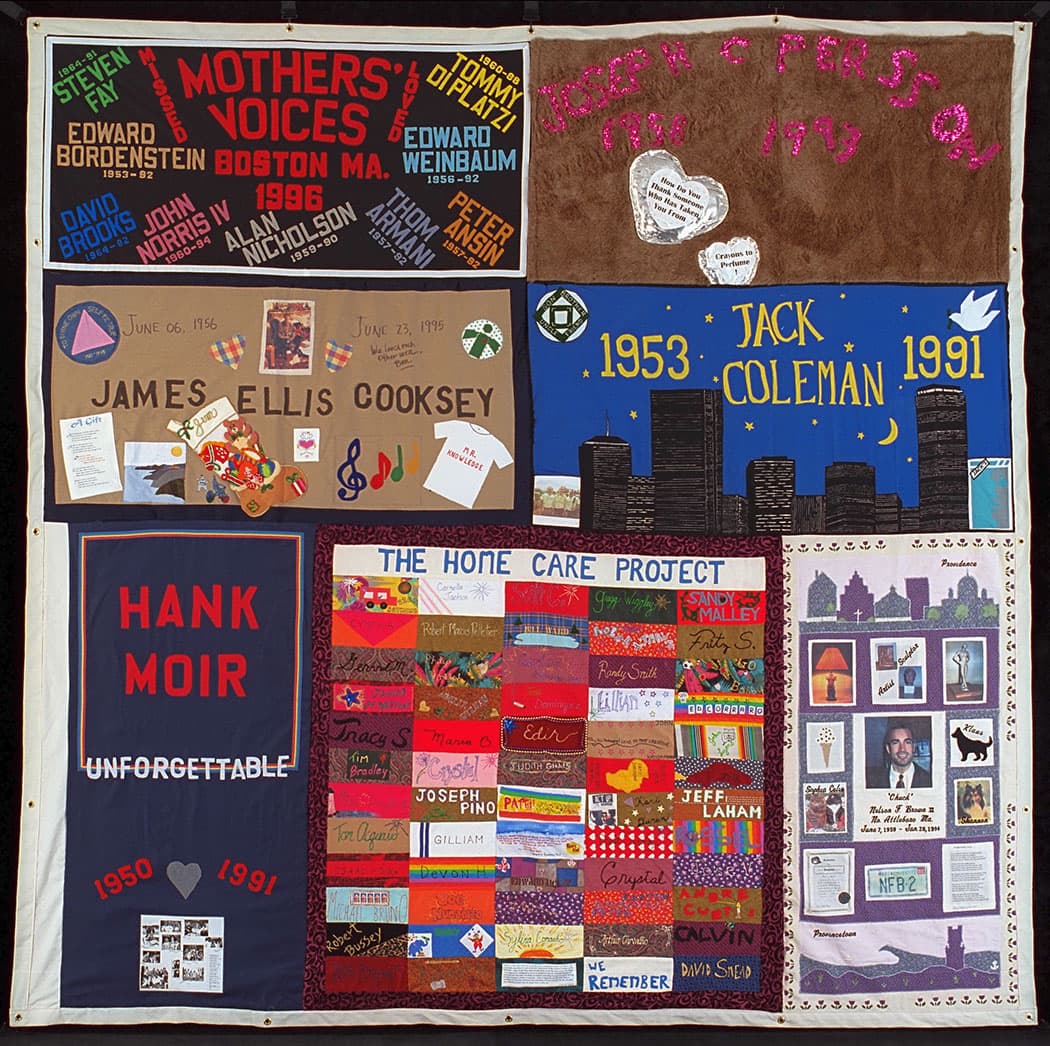
The Quilt is not a single piece of fabric but a massive collection of individual tributes. The physical structure of the Quilt is governed by specific dimensions that carry deep symbolic meaning.
The Symbolic Dimensions
Each individual panel is designed to be 3 feet by 6 feet. These dimensions were chosen specifically because they approximate the size of a standard human grave. When the Quilt is laid out on the ground, the viewer is effectively walking through a cemetery of fabric, where each "grave" is uniquely decorated to reflect the personality, passions, and life of the person it honors.
Materials and Artistry
There are no strict rules regarding the materials used for a panel, which allows for incredible diversity in folk art. While some panels are professionally sewn, many are created by friends, family members, or lovers with no prior sewing experience. Common materials found on the panels include:
- Personal Clothing: T-shirts, leather jackets, wedding dresses, and uniforms.
- Meaningful Objects: Teddy bears, merit badges, keys, and even cremated remains (though this is no longer recommended for preservation reasons).
- Decorative Elements: Sequins, lace, feather boas, rhinestones, and photographs transferred to fabric.
- Direct Messages: Hand-written notes, poems, and declarations of love or anger against the government’s response to the crisis.
The Block System
To manage the sheer scale of the project, panels are stitched together into larger "blocks." Each block typically consists of eight individual panels sewn into a 12-foot by 12-foot square. These blocks are then edged with a canvas border and fitted with grommets, which allow them to be tied together for larger displays or hung from rafters in indoor venues. This modular system is what enables the Quilt to be displayed in parts or, in rare historical instances, in its entirety.

Historical Milestones and Public Displays
The Quilt has transitioned from a local activist project to a national treasure. Its history is marked by several watershed moments that changed the public perception of the HIV/AIDS epidemic.
The First Display (1987)
On October 11, 1987, the Quilt was displayed for the first time on the National Mall in Washington, D.C., during the National March on Washington for Lesbian and Gay Rights. At that time, it consisted of 1,920 panels and covered a space larger than a football field. The display was a massive success, drawing half a million visitors and forcing the public to acknowledge the humanity of those dying from the disease.
The 1996 Full Display
By 1996, the Quilt had grown so large that it covered the entire National Mall from the U.S. Capitol to the Washington Monument. This was the last time the entire Quilt was displayed at once in Washington, D.C. It included over 40,000 panels. During this event, high-profile figures and ordinary citizens alike participated in the "Reading of the Names," a somber tradition where the names of those featured on the Quilt are read aloud over a PA system, a process that takes several days to complete.
Stewardship and the Move to San Francisco
For many years, the NAMES Project Foundation was headquartered in Atlanta, Georgia. However, in late 2019, a major announcement was made: stewardship of the Quilt would be transferred to the National AIDS Memorial in San Francisco. This move returned the Quilt to its city of origin. Additionally, the Library of Congress became the official home for the Quilt’s extensive archives, which include over 200,000 items, such as letters, photographs, and biographical records associated with the panel makers.
| Metric | Details (As of 2026) |
|---|---|
| Total Panels | Over 50,000 |
| Total Names | More than 110,000 |
| Total Weight | Approximately 54 tons |
| Dimensions of One Block | 12 feet x 12 feet (8 panels) |
| Primary Steward | National AIDS Memorial (San Francisco) |
| Archival Partner | Library of Congress |
| Year of Inception | 1987 |
The Impact of the Quilt on Public Policy and Awareness
The AIDS Memorial Quilt is widely regarded as one of the most effective pieces of political "propaganda" (in the classical sense) in modern history. By choosing the medium of a quilt—a symbol of traditional American craft and domesticity—activists were able to bypass some of the hostility and fear surrounding the LGBTQ+ community and the HIV virus.
Humanizing the Statistics
In the 1980s and 90s, the media often reported on AIDS using cold, frightening statistics: infection rates, death tolls, and demographic "risk groups." The Quilt countered this by showing the individual behind the number. Visitors saw panels for children, grandmothers, athletes, artists, and veterans. This diversity shattered the myth that the virus only affected "others," fostering a sense of shared national loss.
Advocacy and Education
The Quilt served as a visual demand for research funding and better healthcare. Its presence at political conventions and in the shadows of the Capitol Building made it impossible for lawmakers to ignore the scale of the tragedy. Today, the Quilt continues its educational mission through its National AIDS Memorial partnerships, where individual blocks are sent to schools, universities, and community centers to teach new generations about the history of the epidemic and the importance of continued prevention and stigma reduction.
Digital Accessibility and the Modern Era
As we reach 2026, the Quilt has embraced digital technology to ensure that the stories it contains are accessible to a global audience, even when the physical fabric is in storage.
The Digital Archive
Because the Quilt is too large to be displayed in one place and too fragile to be constantly handled, the National AIDS Memorial has digitized every panel. Users can visit the official website to search for specific names. The digital interface allows you to zoom in on individual panels to see the intricate details and read the stories behind them. This is particularly important for family members who may live far from San Francisco or who want to view a loved one's panel at any time.
Preservation Challenges
Maintaining 54 tons of fabric is a significant conservation challenge. The physical panels are stored in a climate-controlled facility in the San Francisco Bay Area. Exposure to light, moisture, and handling causes the fabric to degrade over time. The transition to the National AIDS Memorial included a renewed focus on "conservation first," ensuring that the materials—ranging from delicate lace to heavy denim—are preserved for centuries.
How to Participate: Submitting a Panel or Hosting a Display
The AIDS Memorial Quilt is a "living memorial," meaning it is still growing. Even as medical advancements like PrEP and U=U (Undetectable = Untransmittable) have transformed the landscape of HIV, panels continue to be made for those who passed away decades ago and those who have passed away more recently.
Submitting a New Panel
If you wish to create a panel for someone lost to AIDS, the process is straightforward but requires adherence to the 3-foot by 6-foot dimension rule.
- Select Your Materials: Choose fabrics that are durable but personal. Avoid heavy or sharp objects that might damage adjacent panels when folded.
- Design the Layout: Most panels include the person’s name and dates of birth/death, but this is not mandatory.
- Construct the Panel: You can sew, glue, or paint your design. Leave a 2-3 inch hem around the edges to allow for the block-stitching process.
- Submit Documentation: When sending a panel to the National AIDS Memorial, you are encouraged to include a "Panel Maker Form" detailing the life of the individual. This information is preserved in the Library of Congress archives.
Hosting a Display
Organizations can request to host specific blocks of the Quilt. This is a common practice for World AIDS Day (December 1st) or LGBTQ+ Pride Month. The National AIDS Memorial coordinates the logistics, shipping the 12x12 blocks to the host location. Hosts are typically responsible for a small rental fee that covers shipping and maintenance costs, as well as ensuring the Quilt is treated with the proper respect during the event.
Cultural Legacy and Artistic Significance
Beyond its role in activism, the Quilt is a landmark in the history of American art. It represents a shift from "high art" found in museums to "social practice art," where the process of creation and the community involvement are just as important as the final product.
The Quilt has been nominated for a Nobel Peace Prize and was the subject of the Academy Award-winning documentary Common Threads: Stories from the Quilt. It has inspired musical compositions, plays, and literature. Its legacy can be seen in other memorial projects, such as the COVID-19 memorial flags or the various digital memorials for social justice movements, all of which use the "multiplicity of units" to demonstrate the scale of a human tragedy.
FAQ: Understanding the AIDS Memorial Quilt
Can I see the entire Quilt in one place?
Currently, there are no plans for a permanent, full display of all 50,000+ panels because there is no indoor venue large enough to hold it, and outdoor displays put the fabric at risk of weather damage. However, large-scale displays of several thousand panels occur periodically in major cities.
Is there a cost to submit a panel?
There is no fee to submit a panel to the NAMES Project. The project relies on donations to cover the costs of preservation, storage, and the sewing of blocks, but the act of memorializing a loved one is free to all.
How do I find a specific person's name on the Quilt?
The most efficient way to find a name is through the National AIDS Memorial Interactive Map. By searching a person’s name, you can find the specific Block Number (e.g., Block 5821). This allows you to view the digital image or request that specific block if you are organizing a display.
Does the Quilt only include people who died in the 1980s?
No. While the majority of panels represent those lost during the height of the epidemic in the 1980s and 90s, panels are still being added today. Some are for recent losses, while others are "historical" panels made by family members who finally feel ready to commemorate a loss from decades ago.
What happens if a panel gets damaged?
The National AIDS Memorial has a team of "Quilt Treasurers" and conservators who perform repairs. Because the Quilt is a piece of folk art, repairs are done carefully to maintain the original intent of the maker while ensuring the structural integrity of the block.
Practical Next Steps for Readers
If you are moved by the mission of the AIDS Memorial Quilt, consider the following actions:
- Search the Archive: Visit the National AIDS Memorial website to look up names of friends, family, or public figures to see their panels and read their stories.
- Support Preservation: Consider donating to the National AIDS Memorial. The cost of storing and maintaining 54 tons of historical fabric is immense.
- Educate Others: If you belong to a school, church, or community group, look into the requirements for hosting a small Quilt display to foster dialogue about HIV/AIDS history and modern prevention.
The Quilt remains a vital reminder that behind every statistic is a human story. As we continue to navigate the complexities of global health, the Quilt stands as a testament to the power of community, the necessity of remembrance, and the enduring strength of love over stigma.
Image Gallery
Select an image to open it in a new tab.



Akira Tanaka
International Academic Trends Correspondent
