
The Code of Federal Regulations (CFR) is the codification of the general and permanent rules published in the Federal Register by the departments and agencies of the United States federal government. It serves as the primary source for the administrative law that governs daily operations, safety standards, environmental protections, and federal program eligibility for businesses and citizens alike.
The Purpose and Role of the CFR
In the United States legal system, the legislative branch—Congress—passes statutes, which provide the framework for federal policy. However, these statutes are often broad. To implement these laws, federal agencies create specific, detailed regulations. The Code of Federal Regulations (CFR) is the definitive repository where these regulations are organized.
While the United States Code (U.S.C.) contains the laws themselves, the CFR provides the actionable instructions on how those laws are enforced. If a law states that an industry must maintain "clean water," the corresponding section in the CFR will define exactly what "clean" means, the specific chemical thresholds allowed, the frequency of testing required, and the protocols for reporting violations. By centralizing these rules, the CFR ensures that the administrative requirements of the executive branch are transparent, accessible, and legally binding.
Structure: Titles, Chapters, and Sections
The CFR is organized into 50 broad subject areas known as "Titles." Each title represents a specific sector or broad policy area of the federal government. For instance, Title 7 covers Agriculture, while Title 21 covers Food and Drugs.
Within these titles, the system follows a hierarchical structure to ensure precision:
- Title: The broad subject area (e.g., Title 40, Protection of Environment).
- Chapter: Usually corresponds to a specific agency or bureau (e.g., Chapter I, Environmental Protection Agency).
- Subchapter: Categorizes regulations by specific programs or sub-issues.
- Part: Defines the specific regulations covering a particular subject within that agency's jurisdiction.
- Section: The smallest operational unit, detailing a specific rule or requirement.
This numeric system—expressed as "X CFR Part Y"—allows legal professionals, compliance officers, and researchers to cite specific requirements with absolute clarity.
The Lifecycle of a Regulation
A regulation does not appear in the CFR overnight. It follows a rigorous process defined by the Administrative Procedure Act (APA).
- Notice of Proposed Rulemaking (NPRM): An agency identifies a need for a rule and publishes a proposal in the Federal Register. This invites public commentary.
- Public Comment Period: Stakeholders, companies, and private citizens may submit feedback. Agencies are legally required to consider these comments.
- Final Rule: After reviewing comments, the agency publishes the final rule, including an explanation of how the feedback influenced the final language.
- Codification: Once the rule is finalized and its effective date passes, the language is integrated into the appropriate Title and Part of the CFR.
This lifecycle ensures that the government is held accountable to the public and that stakeholders have a window to adapt their operations before a rule becomes enforceable law.
Accessing the CFR in 2026
In 2026, the primary method for accessing the CFR is through digital portals managed by the National Archives and Records Administration (NARA). While physical, bound volumes still exist for historical purposes, the digital versions are the standard for legal and professional use.
- eCFR (Electronic Code of Federal Regulations): The eCFR is an editorial compilation of CFR material and Federal Register amendments. It is updated daily, providing the most current, "live" view of the regulations as they stand today.
- Federal Register: While the CFR is the static codification, the Federal Register is the "daily newspaper" of the government. When a regulation is updated, the change is first published in the Federal Register before being integrated into the eCFR.
Comparing the United States Code and the Code of Federal Regulations
It is common for users to confuse the U.S. Code with the CFR. Understanding the distinction is essential for regulatory compliance and legal research.
| Feature | U.S. Code (U.S.C.) | Code of Federal Regulations (CFR) |
|---|---|---|
| Origin | Created by Congress (Legislative) | Created by Agencies (Executive) |
| Content | Primary Statutes and Laws | Rules, Procedures, and Standards |
| Function | Authorizes action | Implements requirements |
| Update Frequency | Periodically (by Congress) | Continuously (via Federal Register) |
| Enforceability | Source of legal authority | Binding regulatory compliance |
Why Compliance with the CFR Matters
For businesses and individuals, ignorance of the CFR is rarely a valid legal defense. Many sectors—ranging from finance and healthcare to aviation and manufacturing—operate under strict mandates found within these volumes.
- Operational Requirements: Agencies use the CFR to dictate how companies must store data, handle hazardous materials, or report financial transactions.
- Safety and Standards: Consumer products must meet specific testing criteria defined in the CFR to be legally sold in the U.S. market.
- Penalties: Failure to adhere to CFR requirements can lead to heavy fines, revocation of licenses, or legal sanctions from agencies like the FDA, EPA, or SEC.
Compliance professionals often conduct "gap analyses," where they map their internal corporate policies directly against the relevant sections of the CFR to ensure that every internal process aligns with federal mandates.
Common Pitfalls in CFR Research
Navigating the CFR can be daunting due to its sheer volume and the complexity of its language. Researchers often encounter the following obstacles:
- Failure to Check the eCFR: Users sometimes rely on an outdated printed version of the CFR. Always use the live eCFR portal to ensure you are viewing the most recent amendments.
- Ignoring Cross-References: Regulations rarely exist in a vacuum. A requirement in one part of the CFR may be subject to definitions or exceptions found in another part.
- Misinterpreting the Hierarchy: An agency's guidance document or memorandum is not the same as a regulation in the CFR. Always distinguish between "binding rules" (found in the CFR) and "non-binding guidance."
- Overlooking "Effective Dates": A rule may be finalized but not yet in effect. Always verify the effective date of a specific section to determine your current obligations.
Frequently Asked Questions
Does the CFR apply to state laws? No. The CFR contains only federal regulations. However, many states adopt standards that mirror or exceed those found in the CFR. Always check both your state's administrative code and the federal regulations to ensure full compliance.
How often is the CFR updated? The eCFR is updated daily to reflect changes published in the Federal Register. Printed versions of the CFR are updated on a staggered schedule throughout the year, meaning they are almost always slightly behind the current legal reality.
Can a private citizen comment on CFR proposals? Yes. The process is specifically designed to allow the public to participate. Anyone can submit a comment during the "proposed rule" phase, and agencies are required to review and respond to these comments in the final version of the rule.
What is the difference between a "statute" and a "regulation"? A statute is a law passed by the legislative branch (Congress). A regulation is a rule established by an executive branch agency, which provides the technical details for how the statute is put into practice.
Is there a cost to access the CFR? No. The CFR, the Federal Register, and all underlying regulatory documentation are public documents maintained by the U.S. government and are available to the public free of charge via official government websites.
Recommendation for Further Action
If you are researching the CFR for professional compliance or legal requirements, start by identifying the specific federal agency that oversees your field of interest. Once the agency is identified, locate their specific Chapter within the CFR. Before acting on any regulation, use the eCFR search function to locate the most recent amendment and verify that the rule has not been vacated or modified by recent litigation. For complex compliance scenarios, consult with a qualified legal professional who specializes in the specific administrative law of your industry.
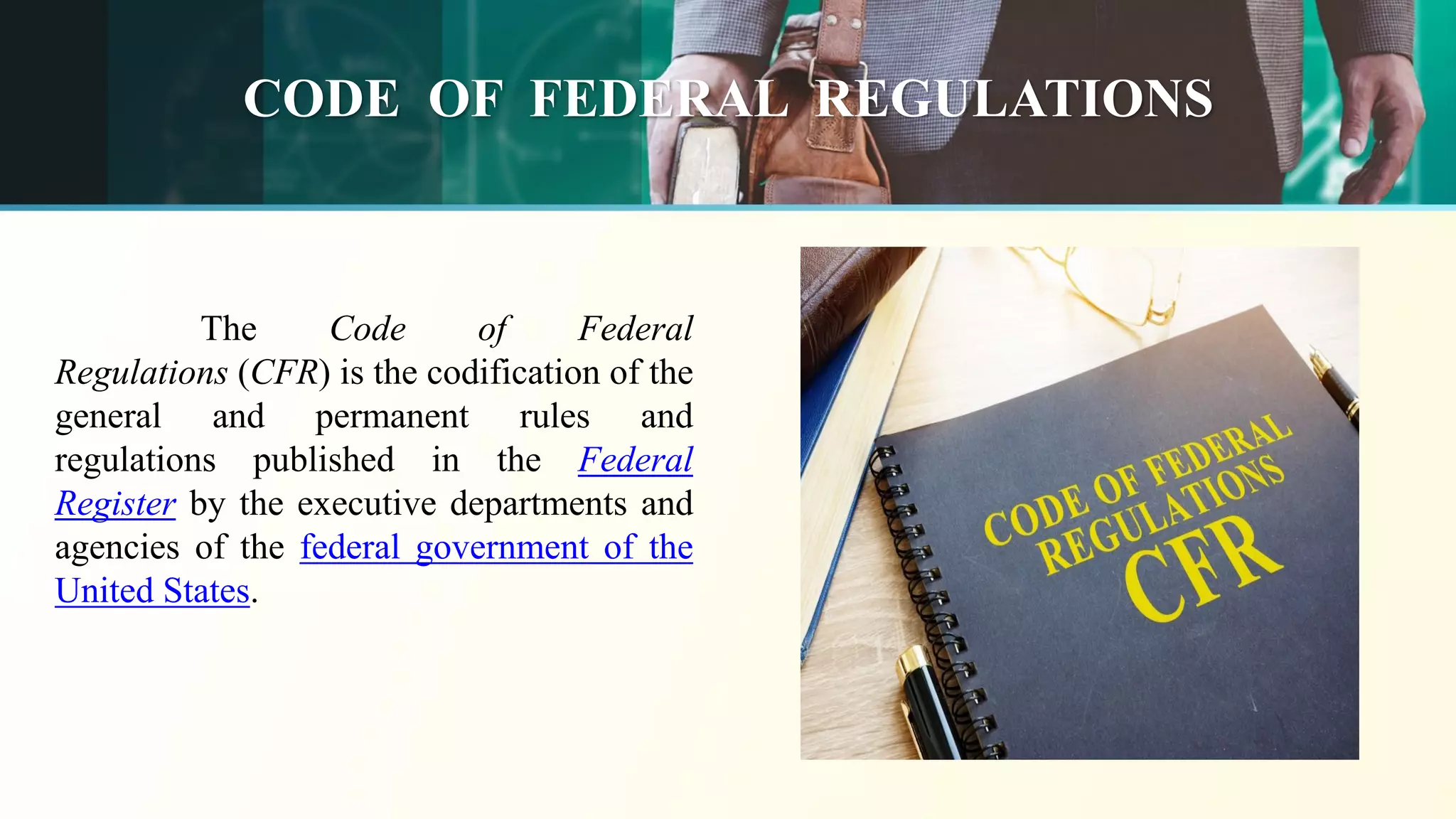
Image Gallery
Select an image to open it in a new tab.


Omar Farooq
EdTech Innovation and Virtual Pedagogy Journalist
