The Truth About Prince Sultan Air Base (PSAB) in Al Kharj: History, Deployment Reality, and Strategic Role
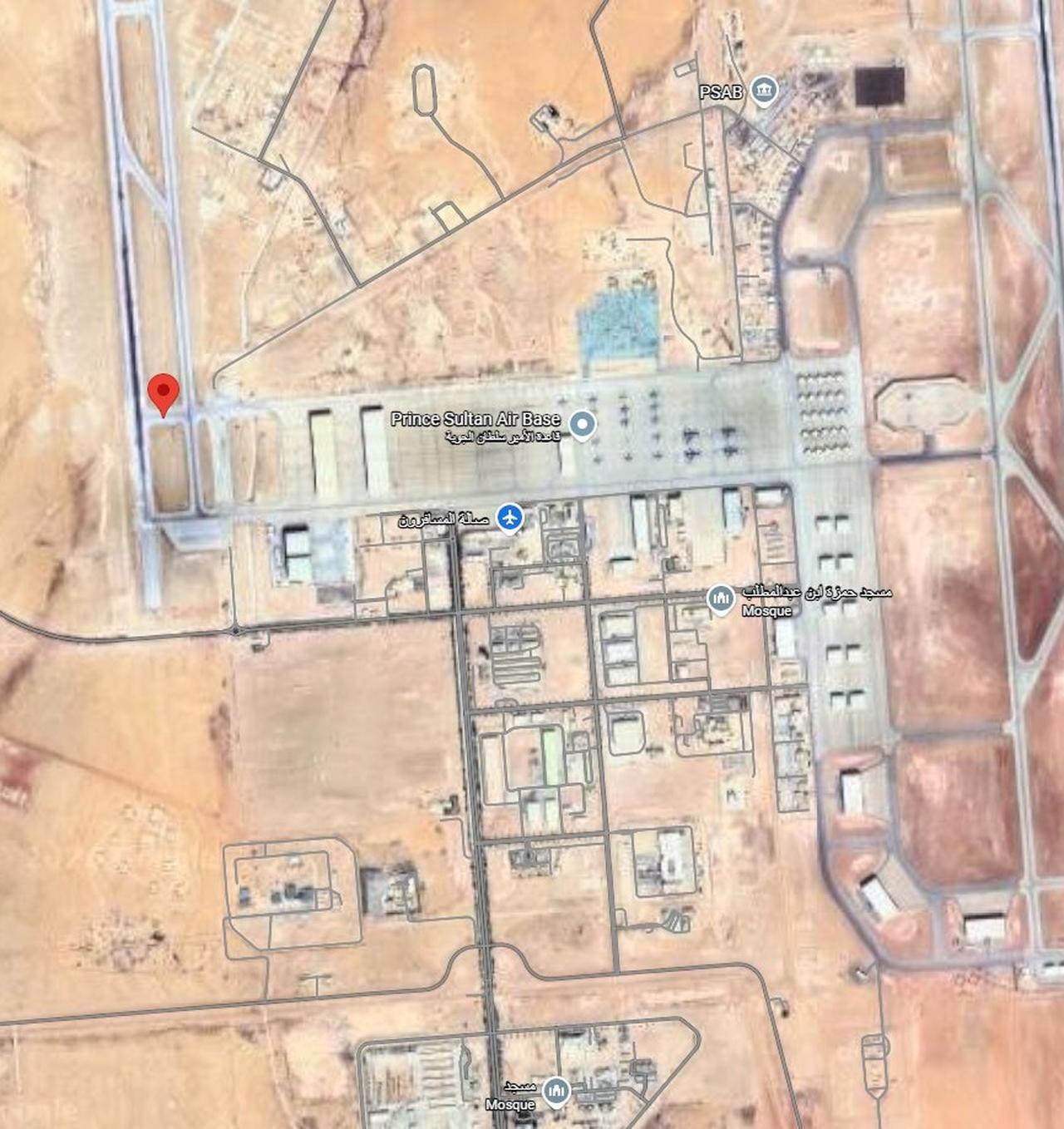
Prince Sultan Air Base (PSAB), located near Al Kharj in Saudi Arabia, is a major military installation hosting both the Royal Saudi Air Force and deployed forces from the United States military. Dispelling common misconceptions, PSAB is neither a abandoned post nor a temporary outpost, but rather a vital hub for regional air defense, missile interception, and joint military operations across the Middle East.
Historical Background: From the Gulf War to the 2003 Relocation
To understand the current reality of Prince Sultan Air Base, one must first look at its historical development. Located approximately 80 kilometers (50 miles) south-southeast of Riyadh, near the city of Al Kharj, the base was designed as a remote, expansive installation for the Royal Saudi Air Force (RSAF).
The Post-Khobar Towers Relocation (1996)
Following the June 1996 bombing of the Khobar Towers complex in Dhahran, Saudi Arabia—which killed 19 U.S. Air Force personnel—the U.S. Department of Defense sought a significantly more secure, isolated location to base its aviation assets and personnel. Prince Sultan Air Base offered vast desert standoff distance, controlled access points, and modern airfield infrastructure far from major urban centers.
Between 1996 and 2003, PSAB served as the primary hub for U.S. Air Forces Central (USAFCENT) operations in the region. It housed the Joint Air Operations Center (JAOC), which directed coalition aircraft monitoring the no-fly zone over southern Iraq under Operation Southern Watch (OSW). At its peak during this era, PSAB hosted over 5,000 U.S. military members, dozens of combat aircraft (including F-15s, F-16s, AWACS, and refuelers), and extensive support staff.
The 2003 Transition to Qatar
Following the end of major combat operations during the initial phase of Operation Iraqi Freedom in 2003, bilateral agreements between the United States and Saudi Arabia led to the drawdown of U.S. combat forces at PSAB. The Joint Air Operations Center was officially relocated to Al Udeid Air Base in Qatar, which became the central nerve center for U.S. Central Command (CENTCOM) air operations. For over fifteen years, U.S. operational presence at PSAB remained minimal, while the RSAF continued to utilize the airfield for its Wing 6 operations and training exercises.
The 2019 Return: Why U.S. Forces Re-Established Operations at PSAB
A widespread myth regarding PSAB is that U.S. involvement ended permanently in 2003. In reality, U.S. military forces returned to Prince Sultan Air Base in the summer of 2019 following a series of regional security crises.
- 1996: Relocation to PSAB post-Khobar Towers
- 2003: Transfer of Operations to Al Udeid
- 2019: Re-establishment of U.S. Operations
Strategic Catalysts for Re-Deployment
In mid-2019, escalating tensions in the Arabian Gulf—including attacks on international maritime oil tankers and the September 2019 drone and cruise missile attack on Saudi Aramco processing facilities at Abqaiq and Khurais—highlighted vulnerabilities in regional air defenses.
At the request of the Saudi Arabian government, the U.S. Department of Defense deployed personnel, surface-to-air missile systems, and combat aircraft back to PSAB. The move served three primary objectives:
- Integrated Air and Missile Defense (IAMD): Enhancing protection for critical Saudi national infrastructure against unmanned aerial systems (UAS), cruise missiles, and ballistic missile threats.
- Force Dispersion: Reducing operational reliance on a single centralized hub (such as Al Udeid Air Base) by establishing alternative, resilient operating locations across the Arabian Peninsula.
- Agile Combat Employment (ACE): Supporting the U.S. Air Force's operational concept of rapidly deploying combat airframes to non-permanent or re-established airfields to complicate adversary targeting.
Activation of the 378th Air Expeditionary Wing
To command and support the returning forces, the U.S. Air Force activated the 378th Air Expeditionary Wing (378 AEW) at PSAB in late 2019. The wing's mission centers on air support, tactical theater airlift, fighter operations, and surface-to-air defense integration alongside RSAF partners.
Debunking Common Myths About Prince Sultan Air Base
Due to strict operational security (OPSEC) protocols and the rapid pace of its 2019 re-establishment, several myths persist regarding life, security, and governance at PSAB.
Myth 1: "PSAB is an American-owned and operated military base."
The Truth: Prince Sultan Air Base is a sovereign facility owned, maintained, and governed by the Kingdom of Saudi Arabia and the Royal Saudi Air Force. U.S., coalition, and foreign military personnel operate at PSAB strictly as guests under bilateral defense agreements. Command of base installation infrastructure, airfield traffic control rights, and physical perimeter access remain under RSAF authority.
Myth 2: "Living conditions at PSAB remain primitive bare-base tents."
The Truth: When U.S. forces returned in 2019, initial accommodations utilized short-term deployment shelters, earn-to-fly tents, and expeditionary containers. However, substantial engineering investments transformed the base infrastructure.
Today, life at PSAB features:
- Semi-permanent Relocatable Buildings (RLBs) and hardened modular housing units equipped with climate control.
- Full-service Dining Facilities (DFACs) serving varied diet options.
- Comprehensive Morale, Welfare, and Recreation (MWR) facilities, including indoor fitness centers, wifi hubs, and sports courts.
- Modern medical facilities providing primary care, flight medicine, and emergency stabilization.
Myth 3: "PSAB is obsolete compared to larger regional bases."
The Truth: Far from being obsolete, PSAB occupies a strategically advantageous inland position. While coastal bases face potential littoral vulnerabilities, PSAB’s location near Al Kharj offers deep geographical buffer zones. The base features dual parallel runways measuring over 13,000 feet (3,900 meters), capable of accommodating the largest cargo, transport, and strategic bomber aircraft in the U.S. and Saudi inventories, including the C-17 Globemaster III, C-5M Galaxy, KC-135 Stratotanker, and KC-46 Pegasus.
Operational Capabilities and Integrated Defense
The primary operational focus at PSAB centers on defensive power projection and counter-air operations. The combined infrastructure at Al Kharj provides multi-layered defense capabilities designed to safeguard the Arabian Peninsula.
Surface-to-Air Defense Architecture
PSAB hosts sophisticated air defense arrays operated by U.S. Army and foreign units:
- MIM-104 Patriot Missile Batteries: Configured for low-to-medium altitude interception of incoming tactical ballistic missiles, cruise missiles, and advanced aircraft.
- Terminal High Altitude Area Defense (THAAD): Designed to intercept short, medium, and intermediate-range ballistic missiles at exo-atmospheric or high-endoatmospheric altitudes, providing broad area protection for regional defense networks.
Combat Aviation Rotations
The airfield regularly hosts rotating squadrons of multi-role fighter aircraft, including:
- F-15E Strike Eagle and F-15SA: Providing strike capabilities and air superiority options.
- F-22 Raptor and F-35A Lightning II: Fifth-generation stealth fighters deployed for operational deterrence and advanced sensor fusion.
- A-10C Thunderbolt II and F-16 Fighting Falcon: Supporting close air support, defensive counter-air, and regional exercise training missions.
Key Comparison: PSAB in the 1990s vs. Modern PSAB
The operational environment at Prince Sultan Air Base has transformed across four decades of military operations.
| Operational Dimension | 1996–2003 Era (Operation Southern Watch) | Modern Era (Post-2019 Deployment) |
|---|---|---|
| Primary U.S. Unit | 4404th Wing (Provisional) / 363rd Air Expeditionary Wing | 378th Air Expeditionary Wing (378 AEW) |
| Primary Mission Focus | Enforcing Southern Iraq No-Fly Zone (OSW) | Integrated Air & Missile Defense (IAMD), Deterrence, & ACE |
| Command Architecture | Co-located Joint Air Operations Center (JAOC) | Distributed Operations (Coordinated with Combined Air Operations Center at Al Udeid) |
| Defensive Hardware | MIM-104 Patriot Systems | Layered THAAD, Patriot PAC-3, and Counter-UAS Systems |
| Housing & Infrastructure | "Coalition Town" Tent Cities & Hardened Shelters | Semi-Permanent RLBs, Modular Facilities, & Hardened Bunkers |
| Regional Context | Containment of post-Gulf War Iraq | Multi-domain defense against asymmetric drone & missile threats |
Deployment Expectations: Life for Military Personnel and Contractors
For service members and defense contractors deployed to PSAB, understanding the daily environment is essential for operational readiness and personal wellbeing.
Climate and Environmental Factors
Al Kharj experiences extreme desert conditions:
- Summer Temperatures: High temperatures routinely exceed 45°C (113°F) between May and September, requiring strict heat-attenuation protocols, work-rest cycles, and mandatory hydration monitoring.
- Dust and Sandstorms: Seasonal winds (known locally as shamals) can rapidly reduce visibility to near zero and create severe mechanical stress on aviation engines and sensitive electronic systems, demanding rigorous maintenance procedures.
- Winter Climate: Winter months (November through February) bring moderate daytime temperatures ranging from 15°C to 25°C (59°F to 77°F), with significantly cooler desert nights.
Host-Nation Protocols and Base Culture
Because PSAB is a Royal Saudi Air Force base, deployed personnel must follow strict host-nation cultural guidelines and rules of engagement:
- Base Regulations: Consumption, possession, or importation of alcohol is strictly prohibited under Saudi law and military regulations (General Order No. 1).
- Cultural Sensitivity: Personnel are briefed on respecting Islamic traditions, local customs, and prayer times, particularly during the holy month of Ramadan.
- Interoperability: Joint training exercises between RSAF pilots, air traffic controllers, maintenance crews, and U.S. forces occur frequently, building bilateral tactical proficiency.
Strategic Significance for Regional Security
Prince Sultan Air Base plays a crucial role in modern military strategy within the Middle East:
- PSAB Location: Al Kharj
- Geographic Buffer (Inland positioning away from littoral threats)
- Airfield Scale (Dual 13,000+ ft runways for strategic air mobility)
- Integrated Defense (Patriot + THAAD layer protecting critical infrastructure)
- Flexible Posture (Supports Agile Combat Employment across CENTCOM AOR)
- Deterrence through Readiness: The permanent host presence of the RSAF combined with rotating U.S. combat capabilities demonstrates a continuous commitment to the security of the Arabian Peninsula.
- Operational Resilience: By maintaining functional facilities at PSAB, CENTCOM avoids single-point operational vulnerabilities in the event of regional contingencies that could restrict operations at other Persian Gulf installations.
- Capacity Building: Joint defense initiatives at PSAB facilitate seamless communication, shared air-track data sharing, and combined missile defense integration between U.S. and regional partner militaries.
Frequently Asked Questions (FAQ)
Where exactly is Prince Sultan Air Base located?
Prince Sultan Air Base is situated in the central desert region of Saudi Arabia, approximately 80 kilometers (50 miles) south-southeast of the capital city of Riyadh and just outside the city of Al Kharj.
Why did U.S. forces return to PSAB in 2019 after leaving in 2003?
U.S. forces returned in 2019 at the invitation of the Saudi government following heightened regional tensions, including missile and drone strikes against Saudi oil infrastructure. The re-deployment aimed to bolster integrated air and missile defenses and support force dispersion across the Middle East.
Who commands Prince Sultan Air Base?
Prince Sultan Air Base is an official military installation of the Kingdom of Saudi Arabia, commanded by the Royal Saudi Air Force (RSAF). U.S. and international forces operate on the base as guest tenant units under bilateral defense agreements.
What U.S. Air Force unit is stationed at PSAB?
The primary U.S. unit stationed at PSAB is the 378th Air Expeditionary Wing (378 AEW), which operates under U.S. Air Forces Central (USAFCENT) and U.S. Central Command (CENTCOM).
Are living conditions at PSAB completely primitive?
No. While initial deployments in 2019 used temporary expeditionary shelters, PSAB features modern, climate-controlled semi-permanent housing (RLBs), fully equipped dining facilities, medical units, fitness centers, and recreational amenities for base personnel.
Can military personnel leave PSAB during deployment?
Off-base travel for military personnel is strictly regulated according to command policies, force protection levels, and official business requirements set by U.S. Central Command and host-nation authorities.
Practical Recommendations for Deployed Personnel and Researchers
For individuals preparing for deployment or conducting operational research on Prince Sultan Air Base, consider the following key guidelines:
- Review Official Reporting: Consult official publication portals such as the U.S. Department of Defense and U.S. Air Forces Central for verified news updates regarding unit rotations and operational announcements.
- Prioritize Operational Security (OPSEC): Avoid sharing specific deployment dates, personnel strength details, flight paths, or unapproved photographic imagery of base defenses and infrastructure on social media platforms.
- Prepare Environmentally: Deployed service members should maintain strict physical conditioning prior to arrival to adjust efficiently to extreme high-heat environments and desert operational conditions.
- Understand Host-Nation Rules: Ensure complete familiarity with local laws, military regulations, and host-nation protocols governing interactions with Royal Saudi Air Force personnel.
Image Gallery
Select an image to open it in a new tab.

Zara El-Hashem
Sociocultural Dynamics and Academics Writer
