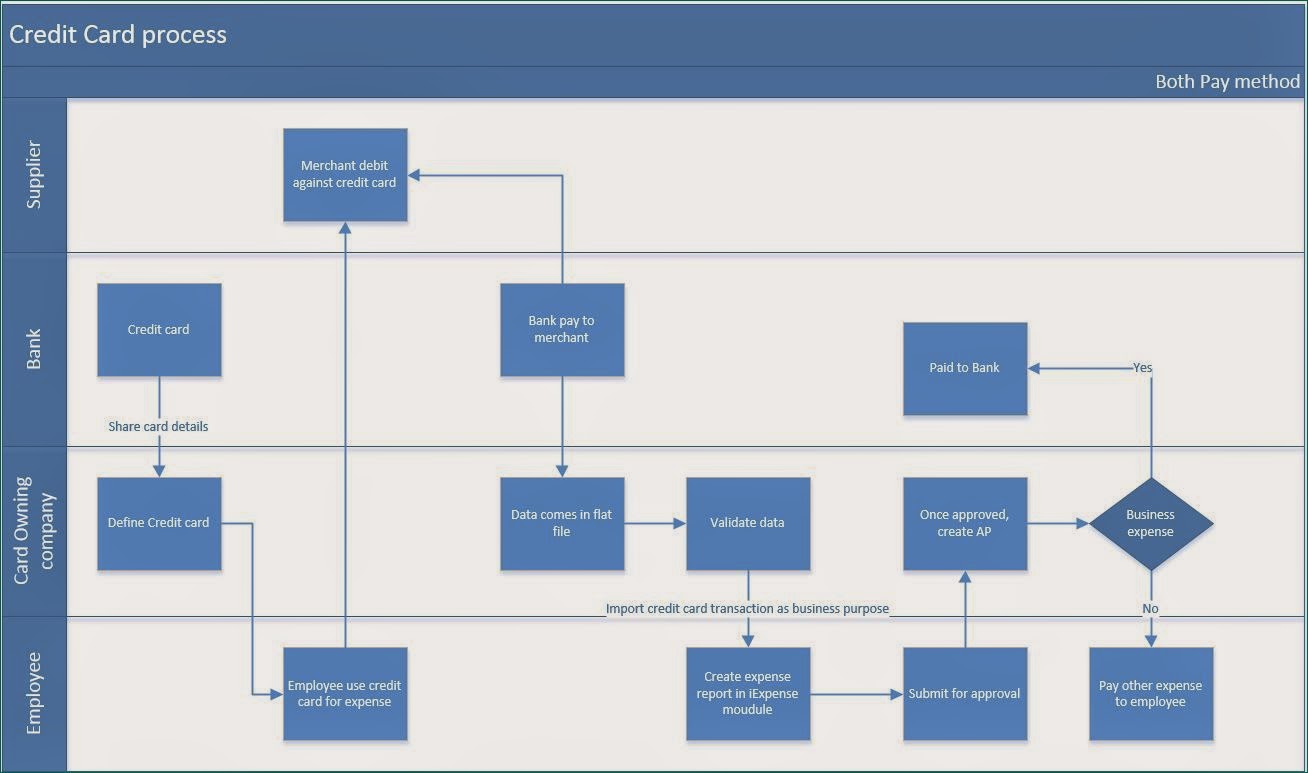
Establishing a corporate credit card process requires selecting an appropriate liability model, establishing strict spending policies aligned with regulatory tax standards, configuring software integrations with your general ledger, and issuing controlled physical or virtual cards to employees. A well-designed program mitigates financial fraud, eliminates manual reimbursement cycles, and ensures real-time visibility into business expenditure.
Disclaimer: Financial regulations, tax laws (such as IRS Accountable Plan rules), and corporate liability structures vary by jurisdiction. Consult with legal and accounting professionals when drafting binding corporate financial policies.
Program Architecture: Selecting the Right Card Model
Before drafting expense policies or selecting financial vendors, finance leaders must establish the underlying credit architecture. The choice between card types and liability structures impacts business credit requirements, personal financial risk for employees, and administrative overhead.
- Corporate Credit Card Architecture
- Card Liability Model
- Corporate Liability
- Individual Liability
- Joint Liability
- Card Product Type
- Physical Cards (Executives/Field)
- Virtual Cards (Vendors/SaaS)
- Purchasing Cards / P-Cards (Procurement)
- Card Liability Model
Liability Models
- Corporate Liability: The company assumes total legal responsibility for all charges incurred. The issuer evaluates the business’s balance sheet, liquidity, and credit history rather than individual employee credit profiles. This model is the industry standard for established businesses and mid-market to enterprise organizations, as it eliminates personal financial burdens on staff.
- Individual Liability with Corporate Reimbursement: Cards are issued to employees based on their personal credit scores. The employee is legally responsible for paying the monthly bill and must submit expense reports to the organization for reimbursement. While this reduces credit risk for the enterprise, it often encounters employee resistance, low adoption rates, and administrative friction.
- Joint Liability: Both the enterprise and the employee share legal responsibility for unpaid balances. This model is rarely used in modern corporate finance setups due to complex legal enforcement and administrative overhead.
Card Types and Operational Roles
Modern corporate financial programs rarely rely on a single physical card format. Instead, they deploy a hybrid card deployment strategy tailored to specific operational use cases:
- Physical Corporate Cards: Distributed to executives, field agents, and frequent business travelers for in-person expenses such as lodging, dining, and travel.
- Virtual Cards: Software-generated single-use or multi-use credit card numbers tied to a central credit line. Virtual cards can be locked to a specific merchant, given an exact dollar threshold, and assigned an immediate expiration date. They are ideal for recurring Software-as-a-Service (SaaS) subscriptions, digital marketing spend, and remote procurement.
- Purchasing Cards (P-Cards): High-limit or specialized cards used primarily by procurement departments to settle high-volume, non-payables business expenses without issuing formal Purchase Orders (POs).
Fintech Platforms vs. Traditional Commercial Banks
Organizations must decide whether to partner with traditional commercial banks (e.g., Chase, Citi, Bank of America) or modern fintech spend management platforms (e.g., Ramp, Brex, Spendesk, SAP Concur partners).
Traditional commercial banks often offer higher credit limits, extensive airport lounge networks, and deep global banking relationships, but their administrative portals can be clunky, requiring manual statement reconciliations at month-end. Modern fintech spend management platforms offer real-time transaction tracking, automated receipt matching via mobile applications, granular software-based spend limits, and native API integrations with cloud ERP systems—though their underlying credit lines may require daily or weekly ACH settlement depending on the agreement.
Comparative Breakdown of Corporate Card Program Models
The following matrix compares primary corporate card structures across liability, control features, and operational suitability.
| Card & Issuer Model | Primary Liability | Best Suited For | Built-in Spend Controls | Month-End Reconciliation Complexity |
|---|---|---|---|---|
| Fintech Spend Management Platform | Corporate (No personal guarantee usually required; collateralized by cash reserves) | Mid-market tech, fast-growing SMBs, distributed remote teams | High: Real-time software limits, merchant-locking, instant virtual card creation | Low: Automated receipt capture and AI-driven general ledger (GL) mapping |
| Traditional Commercial Bank Card | Corporate (Based on corporate credit rating and financials) | Enterprises, established corporations, legacy industrial firms | Medium: Basic monthly credit limits, phone-based authorization changes | High: Dependent on manual receipt submission and monthly batch file uploads |
| Purchasing Card (P-Card) | Corporate | Centralized procurement departments, supply chain teams | High: Strict Merchant Category Code (MCC) blocking, fixed transaction limits | Medium: Integrated with procurement/ERP workflows |
| Individual Liability Card | Individual Employee | Organizations unable to secure commercial lines; decentralized travel teams | Low: Set by individual employee credit limits | Very High: High manual expense report volume, delayed reimbursements |
Prerequisites and Alignment Before Implementation
Successfully launching a corporate card program requires technical, legal, and operational groundwork. Skipping preliminary alignment often results in policy circumvention, accounting backlogs, and security vulnerabilities.
- Pre-Implementation Workflow
- Financial Audit & Credit Evaluation
- Cross-Functional Steering Committee (Finance, IT, Legal, HR)
- Accounting & ERP Integration Architecture (GL Codes, Taxes)
1. Financial Audit and Credit Evaluation
Issuers evaluate business risk using financial metrics. Companies seeking a traditional corporate card line typically must provide 2–3 years of audited financial statements, tax returns, and proof of liquid capital reserves. Modern fintech issuers, by contrast, frequently pull real-time cash balance data via secure open-banking APIs (e.g., Plaid) to establish dynamic credit limits without requiring historical tax documentation.
2. Stakeholder Governance Committee
A card program impacts operational workflows across multiple departments. Assemble a project launch team containing key representatives:
- Finance & Accounting: Establishes chart-of-accounts (COA) mapping, tax compliance rules, and monthly reconciliation workflows.
- Information Technology & Security: Ensures Single Sign-On (SSO) integration, Multi-Factor Authentication (MFA), and data protection compliance.
- Legal & Human Resources: Drafts the legally binding employee cardholder agreement, disciplinary policies for non-compliance, and policy language compliant with local labor regulations.
3. ERP and General Ledger Architecture Requirements
The card system must integrate with your primary Enterprise Resource Planning (ERP) or accounting software (such as NetSuite, QuickBooks Online, SAP, Workday, or Xero). Map out spend categorization upfront:
- Synchronize vendor databases to eliminate duplicate records.
- Pre-define default General Ledger (GL) codes, department tags, custom segments, and location identifiers.
- Determine whether card transactions will post as individual journal entries or aggregated clearing-account transactions.
Step-by-Step Guide to Establishing the Corporate Card Process
Executing a corporate card program demands a structured deployment roadmap. Follow these seven steps to move from strategy to full deployment.
- Step 1: Set Limits & Tiering
- Step 2: Draft Policy Framework
- Step 3: Select Vendor
- Step 4: Configure Workflows
- Step 5: Integrate Accounting
- Step 6: Onboard Staff
- Step 7: Continuous Audit
Step 1: Define Spending Limits and Card Tiering
Avoid issuing blanket card privileges with uniform limits. Create a role-based card distribution matrix that correlates spend authorization with organizational responsibility:
- Executive Tier: High limits ($10,000–$50,000+/month) with broad merchant permissions for business development, client entertainment, and strategic travel.
- Department Heads / Managers: Medium limits ($2,500–$10,000/month) meant for team software, local offsites, and operational supplies.
- Operational / Field Staff: Variable limits ($500–$2,500/month) restricted specifically to travel, fuel, or project-based materials.
- Single-Purpose Virtual Cards: Exact dollar limits (down to the cent) assigned to single vendors (e.g., AWS hosting, Google Ads) with automated recurring or auto-expiring rules.
Step 2: Draft a Compliant Corporate Card Policy
A vague policy is the primary cause of unauthorized spending and tax compliance audits. Your policy document should clearly outline allowed expenses, prohibited uses, and administrative steps:
- Allowed vs. Prohibited Spend: Explicitly detail permitted business expenses (e.g., business travel, client meals within policy limits, approved operational software) versus strictly prohibited purchases (e.g., personal entertainment, cash advances, gift cards without HR authorization, alcohol purchases outside approved client dining).
- Tax Compliance (IRS Accountable Plan Standard): To prevent card expenses from being categorized as taxable employee income in the United States, the policy must satisfy IRS Accountable Plan requirements under Internal Revenue Code Section 62. Expenses must have a direct business connection, require original receipts for expenditures exceeding a specific threshold (commonly $75, though many firms enforce zero-tolerance thresholds for clarity), and mandate receipt submission within a reasonable timeframe (typically 30 to 60 days).
- Receipt Capture Mandates: Specify acceptable proof of purchase. Itemized receipts detailing individual items, taxes, and merchant info are required—generalized credit card authorization slips are insufficient for audit compliance.
Step 3: Vendor Selection and Term Negotiation
Evaluate credit providers against five core criteria:
- Rewards Structure: Cash-back rates versus travel rewards points, and whether rewards accrue to the corporate entity or the individual employee.
- FX Fees and International Processing: For organizations with global travel or foreign vendors, seek zero-foreign-transaction-fee policies.
- Integration Capability: Native, bi-directional API syncing with your ERP system to avoid manual CSV file uploads.
- Card Control Granularity: Ability to issue virtual cards instantly, set dynamic velocity limits (per transaction, per day, per month), and lock spend to specific Merchant Category Codes (MCCs).
- Billing and Payment Terms: Monthly net-30 billing cycles versus daily/weekly automatic balance sweeping.
Step 4: Establish Approval Workflows and Card Issuance Procedures
Design automated request-and-approval workflows within your spend software:
- Require employees to submit digital requests for new cards (physical or virtual) stating the business purpose, requested limit, and cost center.
- Direct requests through a two-tiered approval flow: first to the immediate direct manager for business validation, then to the finance department for budget verification.
- Configure automated escalations if approvals stall beyond 48 hours.
Step 5: Integrate Automated Expense Management and Receipt Capture Software
Eliminate manual expense reports by deploying modern expense management software. Employees should be able to capture receipts immediately at the point of sale using a mobile app.
Connect receipt-capture platforms directly to card transaction feeds using real-time webhooks. When an employee swipes a card, their smartphone receives a prompt requesting a photo of the receipt. Machine learning and Optical Character Recognition (OCR) engines extract the vendor name, date, total amount, and sales tax, automatically matching the receipt image to the transaction line item.
Step 6: Employee Onboarding and Mandatory Policy Acknowledgement
Card issuance should be contingent on explicit employee agreement:
- Conduct mandatory 15-minute training sessions on how to use the mobile app, capture receipts, and assign GL codes.
- Require every cardholder to sign a written or digital Cardholder Agreement. This document must state that unauthorized purchases will be deducted from wages (where legally permissible) or result in immediate card revocation and termination of employment.
Step 7: Establish Month-End Audit and Continuous Optimization Procedures
Set up an audit procedure for the finance team:
- Pre-Reconciliation Sanity Checks: Run weekly automated exception reports to flag missing receipts, duplicate charges, or flagged MCC categories.
- Month-End General Ledger Closure: Sync fully reconciled, receipt-matched card transactions into the accounting software prior to closing the monthly books.
- Card Portfolio Pruning: Conduct quarterly reviews to deactivate cards assigned to former employees, reduce limits on inactive cards, and cancel unused recurring virtual cards.
Governance, Tax Compliance, and Risk Controls
Maintaining strict oversight over a corporate card network requires software-enforced guardrails combined with financial controls.
- Core Corporate Card Risk Controls
- Automated Controls
- MCC Restrictive Blocking
- Velocity Limits (Per-Day/Spend)
- Virtual Card Single-Use Locks
- Operational Controls
- Receipt Submission Windows (e.g., 30 Days)
- Segregation of Approval Duties
- Personal Expense Deduction Mandates
- Automated Controls
Merchant Category Code (MCC) Blocking
Credit card networks classify merchants using four-digit Merchant Category Codes (MCCs). Finance administrators can block entire categories of merchants at the network level to prevent misuse.
- High-Risk Categories to Block: Gambling institutions (MCC 7995), liquor stores (MCC 5993), pawn shops (MCC 5933), jewelry stores (MCC 5944), and cash advances (MCC 6011).
- Allowed Categories by Department: Restrict marketing team cards to advertising platforms (MCC 7311) and software providers, while opening travel-related categories (airlines, hotels, rideshares) for sales personnel.
Preventing Fraud and Internal Misuse
Financial fraud occurs both externally (compromised card numbers) and internally (employee policy violations). Mitigate these risks with practical safeguards:
- Virtual Cards for Remote and Online Spend: Never use physical card numbers for online procurement. Issue a dedicated virtual card per software vendor. If a vendor suffers a data breach, cancel that specific virtual card without disrupting other company subscriptions.
- Segregation of Duties: Ensure that the individual authorizing card requests cannot approve their own credit limits or reconcile their own card statements without secondary finance review.
- Card Inactivation Automations: Integrate your spend management tool with your identity provider (IdP) or HR Information System (HRIS) such as Okta, Azure AD, or Rippling. When an employee is offboarded in HRIS, their corporate card must deactivate automatically.
Handling Personal Expenses Incurred Accidental or Intentional
Despite clear policies, employees may inadvertently swipe a corporate card for a personal transaction. Your process must handle this systematically:
- Immediate Notification: The employee must flag the transaction as "Personal / Non-Reimbursable" in the expense portal immediately.
- Repayment Mechanisms: The expense system should either trigger an automated direct debit (ACH) from the employee’s personal bank account or initiate a direct payroll deduction, subject to local labor laws.
- Escalation Triggers: Track personal swipe frequencies. Establish a "three-strike rule" where multiple personal swipes lead to automatic card suspension, regardless of intent.
Common Implementation Pitfalls and Mitigations
| Pitfall | Root Cause | Impact | Recommended Solution |
|---|---|---|---|
| Receipt Chasing Delays | Delayed submission policies and manual paper receipt tracking | Prolonged financial month-end close; tax non-compliance | Implement automated SMS/push notification prompts upon swipe; suspend card privileges if receipts remain unsubmitted after 14 days. |
| Uncontrolled Subscription Creep | Employee physical cards used for recurring SaaS products | Unclaimed software charges after employee departure; unexpected auto-renewals | Mandate that all software purchases occur via vendor-locked virtual cards with strict spend caps and explicit expiration dates. |
| Improper Accounting Coding | Employees forced to select complex General Ledger (GL) account codes | Misallocated expenses, inaccurate budget reporting, accounting cleanup overhead | Pre-map spend rules using software algorithms so transactions automatically inherit GL codes based on merchant profiles and employee department. |
| Personal Credit Exposure | Using individual liability cards with slow reimbursement cycles | Low employee morale, delayed business travel booking | Migrate to corporate liability cards or virtual spend controls that eliminate employee out-of-pocket expenses. |
Frequently Asked Questions
What is the difference between a corporate credit card and a business credit card?
Business credit cards are generally designed for sole proprietorships, partnerships, and smaller businesses. They typically rely on the owner's personal credit score and require a personal guarantee, making the owner personally liable for debts. Corporate credit cards are designed for mid-market and enterprise companies; they evaluate the company's financial balance sheet, do not require individual personal guarantees, and assign legal liability directly to the corporate entity.
How does an organization handle corporate card receipt requirements for small transactions?
Under IRS guidelines in the United States, receipts are generally required for business expenses of $75 or more. However, many organizations set lower internal thresholds (e.g., requiring receipts for expenses over $25 or for all transactions) to maintain tight financial controls. Modern expense management platforms simplify this by allowing employees to instantly snap photo receipts for low-value purchases using a mobile app.
What happens if an employee fails to submit receipts for corporate card purchases?
If an employee fails to submit required itemized receipts within the policy's specified timeframe (e.g., 30 days), the un-substantiated expense may fail IRS Accountable Plan rules. The company may treat the undocumented amount as taxable income to the employee, deduct the balance from their payroll (where legally permissible), or temporarily lock the corporate card until proper documentation is provided.
How do virtual cards improve corporate card security?
Virtual cards enhance security by replacing physical plastic cards with unique, software-generated 16-digit card numbers. Each virtual card can be locked to a specific merchant, limited to an exact dollar amount, and set to expire after a single transaction or on a specific date. If a virtual card number is compromised in a merchant data breach, it cannot be used elsewhere, protecting the company's broader credit line.
Can corporate credit card rewards be accrued at the organizational level?
Yes. When an organization utilizes a corporate liability card program, credit card rewards—such as cash back, airline miles, or point systems—accrue directly to the corporate entity. The business can redeploy these rewards to cover future corporate travel costs, offset operational expenses, or credit them back to the financial statement balance sheet.
Action Plan: Implementing Your Corporate Card Program
To launch or upgrade your corporate credit card process, execute the following operational sequence:
- Audit Current Spend Workflows: Quantify your monthly employee out-of-pocket reimbursements, recurring SaaS expenses, and administrative time spent chasing receipts.
- Draft Policy Controls: Write a corporate card policy that explicitly defines spend limits, allowed merchant categories, receipt capture windows, and IRS Accountable Plan parameters.
- Evaluate Software and Card Issuers: Compare traditional bank options against modern fintech spend platforms. Select a provider that offers native integration with your existing ERP or accounting system.
- Run a Controlled Pilot Program: Launch the program within a single department (e.g., Marketing or IT) for 30 days. Test receipt automation flows, GL mapping rules, and ERP synchronization.
- Roll Out Organization-Wide: Require signed cardholder agreements from all participating staff, conduct mandatory training sessions, issue role-tiered physical and virtual cards, and establish automated month-end audit reviews.
Image Gallery
Select an image to open it in a new tab.
Ingrid Bjornson
Global Cyber Policy and Regulation Analyst
