
To secure a Wells Fargo business loan, applicants generally need a strong credit profile, at least two years of operational history, and an existing Wells Fargo business checking account. The bank offers diverse options, including SBA loans, lines of credit, and specialized equipment financing, providing competitive rates for established businesses seeking long-term stability and growth.
Wells Fargo remains one of the largest and most prominent commercial lenders in the United States. For small and medium-sized enterprises (SMEs) navigating the financial landscape in 2026, the bank offers a traditional but increasingly digitized approach to business credit. Unlike fintech lenders that prioritize speed over cost, Wells Fargo focuses on relationship-based lending, where your history with the institution significantly impacts your eligibility and interest rates.
Understanding the nuances of their product suite is essential for any business owner. Whether you are looking to bridge a cash flow gap, purchase a new facility, or upgrade heavy machinery, Wells Fargo’s offerings are structured to reward stability. This guide breaks down the specific loan types, eligibility requirements, and the strategic considerations necessary to navigate the application process successfully.
The Core Categories of Wells Fargo Business Financing
Wells Fargo categorizes its business lending products based on the intended use of funds and the size of the business. In 2026, these products are primarily divided into revolving lines of credit, fixed-term loans, and government-backed Small Business Administration (SBA) loans.
1. Business Lines of Credit
Lines of credit are the most flexible tools in a business owner's arsenal. They allow you to draw funds up to a certain limit, pay them back, and draw them again. Wells Fargo offers two primary versions:
- Small Business Advantage® Line of Credit: This is typically aimed at newer businesses (even those with less than two years of history, though this is rare) or those needing smaller amounts of capital, often ranging from $5,000 to $50,000. It is usually unsecured, meaning you do not have to pledge specific assets as collateral.
- BusinessLine® Line of Credit: Designed for established businesses with higher revenue, this product offers higher credit limits (up to $150,000 or more). It can be secured or unsecured, with secured options generally offering lower interest rates.
2. SBA Loans
Wells Fargo is consistently one of the most active SBA lenders in the country. These loans are partially guaranteed by the U.S. Small Business Administration, which allows the bank to offer more favorable terms to businesses that might not qualify for traditional conventional loans.
- SBA 7(a) Loans: The most popular SBA program, used for working capital, debt refinancing, or purchasing a business. These offer long repayment terms and can go up to $5 million.
- SBA 504 Loans: These are specifically for major fixed assets, such as real estate or long-term machinery. They require a smaller down payment than traditional commercial mortgages, often as low as 10%.
3. Equipment and Vehicle Financing
For businesses that need to purchase high-cost assets, Wells Fargo provides specialized loans and leases. This is a "secured" form of lending where the equipment itself serves as collateral. This structure often results in faster approval times because the bank has a clear path to recovering funds if the borrower defaults.
Eligibility Requirements and Documentation
Securing a loan from a Tier-1 national bank like Wells Fargo is more rigorous than applying for an online "merchant cash advance." The bank performs a deep dive into the financial health of both the business and its owners.
Time in Business
While some specialized programs exist for startups, the general rule at Wells Fargo in 2026 is a minimum of two years in operation. This track record proves to the bank that the business model is sustainable and that the owners can navigate market fluctuations.
Credit Score Thresholds
Wells Fargo looks at both personal and business credit scores. For the best rates on unsecured lines of credit, a personal FICO score of 700 or higher is generally expected. If your score is in the mid-600s, you may still qualify for secured products, but expect higher interest rates and stricter collateral requirements.
Revenue and Cash Flow
The bank will evaluate your Debt Service Coverage Ratio (DSCR). This is a calculation that compares your business’s net operating income to its total debt obligations. A ratio of 1.25x or higher is typically required, meaning for every $1.00 of debt payment, the business generates $1.25 in profit.
The "Relationship" Factor
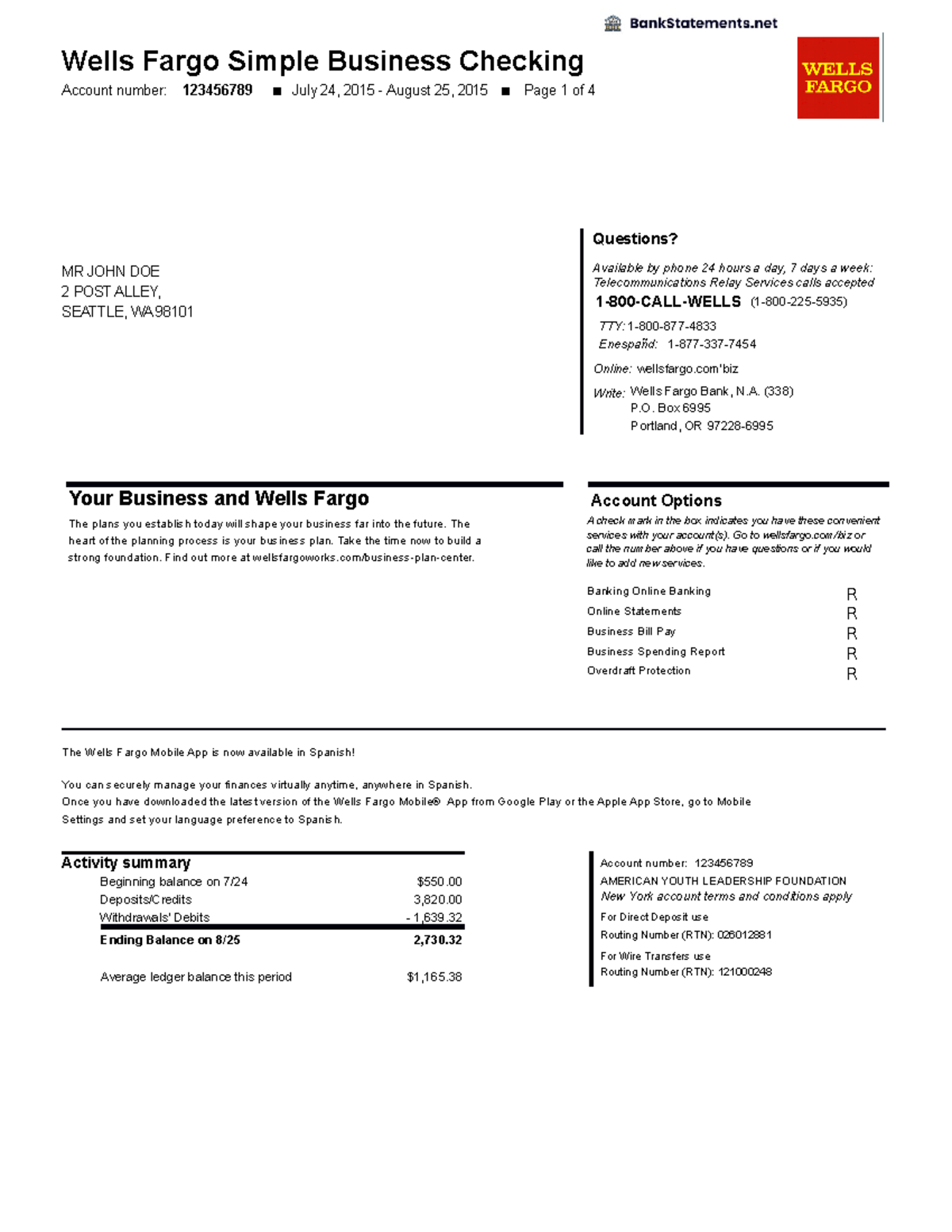
One of the most critical aspects of the Wells Fargo ecosystem is the requirement for a business checking account. Most of their loan products require that the business maintain an active account for at least 12 months prior to application to receive the most competitive terms. This allows the bank to monitor your cash flow patterns internally, reducing their perceived risk.

Comparing Wells Fargo Loan Products
The following table outlines the key differences between the most common financing options available to business owners.
| Loan Type | Typical Amount | Best For | Security |
|---|---|---|---|
| Small Business Advantage | $5,000 – $50,000 | Short-term cash flow | Unsecured |
| BusinessLine® | $10,000 – $150,000+ | Working capital, inventory | Secured/Unsecured |
| SBA 7(a) | Up to $5 million | Expansion, refinancing | Collateral Required |
| SBA 504 | Up to $5.5 million | Real estate, heavy equipment | Asset-backed |
| Equipment Financing | Varies by asset | Machinery, vehicles, tech | Asset-backed |
The Application Process: A Step-by-Step Guide
Applying for a business loan at Wells Fargo has become more streamlined by 2026, with many components handled through the Wells Fargo Vantage digital portal. However, the complexity of the documentation remains significant.
Step 1: Pre-Qualification and Consultation
Before submitting a formal application, it is advisable to speak with a Wells Fargo Business Relationship Manager. They can provide an initial assessment of which product fits your "credit box." This prevents you from applying for a product that is likely to be denied, which could unnecessarily impact your credit score.
Step 2: Gathering Documentation
You will need to provide a comprehensive financial package, including:
- Three years of personal and business tax returns.
- Year-to-date Profit and Loss (P&L) statement.
- Current Balance Sheet.
- Personal Financial Statement (PFS) for all owners with a 20% or greater stake.
- Business debt schedule (a list of all current loans and leases).
Step 3: Formal Submission and Underwriting
Once submitted, the file goes to the underwriting department. Unlike fintech lenders that use automated algorithms to provide an answer in minutes, Wells Fargo's process usually takes anywhere from a few days for small lines of credit to several weeks for complex SBA loans. During this time, the underwriter may request "clarification memos" regarding specific transactions in your bank statements.
Step 4: Closing and Funding
If approved, you will receive a commitment letter outlining the interest rate, fees, and terms. After signing, funds for a line of credit are usually available within 1–2 business days. For real estate or SBA loans, the closing process involves third-party appraisals and environmental reports, which can extend the timeline.
Interest Rates and Fee Structures
In 2026, Wells Fargo business loan rates are typically tied to the Prime Rate.
- Variable Rates: Most lines of credit feature variable rates (e.g., Prime + 2.00%). When the Federal Reserve adjusts interest rates, your monthly interest payment will fluctuate accordingly.
- Fixed Rates: Term loans and equipment financing often offer fixed rates, providing predictable monthly payments over the life of the loan.
- Origination and Annual Fees: Expect an origination fee (usually 0.5% to 2% of the loan amount) and an annual fee for lines of credit (typically ranging from $95 to $500, depending on the credit limit).
Pros and Cons of Choosing Wells Fargo
Advantages
- Lower Cost of Capital: Compared to online-only lenders, Wells Fargo generally offers significantly lower interest rates for those who qualify.
- Higher Borrowing Limits: They have the liquidity to support multi-million dollar expansions that smaller lenders cannot handle.
- Comprehensive Services: Having your business checking, payroll, merchant services, and loans under one roof simplifies financial management.
- SBA Expertise: Their deep experience with the Small Business Administration can help navigate the red tape of government-backed loans.
Disadvantages
- Strict Standards: Their "credit box" is narrow. Businesses with recent losses or owners with credit scores below 660 will find it very difficult to gain approval.
- Slow Speed: If you need capital within 24–48 hours to capitalize on a sudden opportunity, Wells Fargo is likely not the right choice.
- Relationship Requirement: The insistence on having an existing banking relationship can be a hurdle for business owners who prefer to keep their credit and operations separate.
Common Pitfalls to Avoid
When applying for a Wells Fargo business loan, certain mistakes can lead to an automatic denial or unfavorable terms.
- Mixing Personal and Business Finances: If your business bank statements show frequent personal draws or commingled funds, underwriters see this as a red flag regarding your financial discipline.
- Inaccurate Debt Schedule: Failing to disclose an existing EIDL loan or a smaller equipment lease can lead to a denial for "non-disclosure," even if your credit is otherwise perfect.
- Low Liquidity: Banks want to see that you have "skin in the game." If your balance sheet shows zero cash reserves, you are seen as a high-risk borrower who may default at the first sign of a market downturn.
- Neglecting Business Credit: Many owners focus solely on their personal FICO. Wells Fargo also looks at your Experian Business or Dun & Bradstreet scores. Ensure these profiles are active and accurate before applying.
Frequently Asked Questions
What is the minimum credit score for a Wells Fargo business loan?
While there is no "official" minimum published for every product, a personal FICO score of 680 is generally considered the baseline for most traditional products. For the Small Business Advantage Line of Credit, you might qualify with a slightly lower score if your business cash flow is exceptionally strong. However, to access the best interest rates, a score above 720 is ideal.
How long does the approval process take?
The timeline varies by product. An unsecured BusinessLine® might be approved and funded within 5 to 10 business days. Conversely, an SBA 7(a) loan typically takes 45 to 90 days due to the extensive documentation and government guarantee process. Equipment financing sits in the middle, usually taking 1 to 2 weeks.
Do I need to provide collateral?
Not always. Wells Fargo offers several unsecured lines of credit for amounts typically under $100,000. However, for larger loan amounts or to secure a lower interest rate, the bank will often require collateral such as real estate, inventory, accounts receivable, or equipment. In almost all cases, a personal guarantee from the business owners is required.
Can a startup get a business loan from Wells Fargo?
It is very difficult for a startup (less than 2 years of history) to get a traditional term loan or line of credit from Wells Fargo. Startups are generally directed toward the SBA 7(a) program or are encouraged to use personal credit products until the business has established a proven track record of revenue.
Is there a penalty for paying off the loan early?
Most of Wells Fargo's small business lines of credit and short-term loans do not have prepayment penalties. However, some commercial real estate loans and certain SBA products may have "prepayment premiums" if the loan is paid off within the first few years. Always review the "Prepayment" section of your loan agreement before signing.
Strategic Recommendation
If your business is established and your financial documentation is organized, Wells Fargo is a premier choice for reducing your cost of capital in 2026. However, do not apply "cold."
Your next action should be to review your last two years of tax returns and current year-to-date financials. If your debt-to-income ratio is healthy, schedule a meeting with a Business Relationship Manager at a local branch. Establishing this human connection often helps navigate the complexities of the bank's internal underwriting, especially if your business has unique seasonal fluctuations or industry-specific nuances that a computer algorithm might misunderstand.
Image Gallery
Select an image to open it in a new tab.

Omar Farooq
EdTech Innovation and Virtual Pedagogy Journalist
