
A limit order is an instruction to a brokerage to execute a trade only at a specific price or better. For a buy limit order, the transaction occurs at or below the specified price, while a sell limit order executes only at or above that price. This order type prioritizes price certainty over execution speed.
In the fast-evolving financial landscape of 2026, where algorithmic trading and high-frequency execution dominate global exchanges, the limit order remains the most essential tool for individual and institutional investors alike. While market orders provide the convenience of immediate execution, they leave the trader vulnerable to price volatility and slippage. The limit order, by contrast, serves as a safeguard, ensuring that an investor never pays more—or receives less—than their predetermined threshold.
The Mechanics of a Limit Order
To understand how a limit order functions, one must first understand the concept of the "order book." Every exchange maintains a ledger of buy and sell interests. When you place a limit order, your instruction enters this book and stays there until a matching counterparty is found or the order expires.
Buy Limit Orders
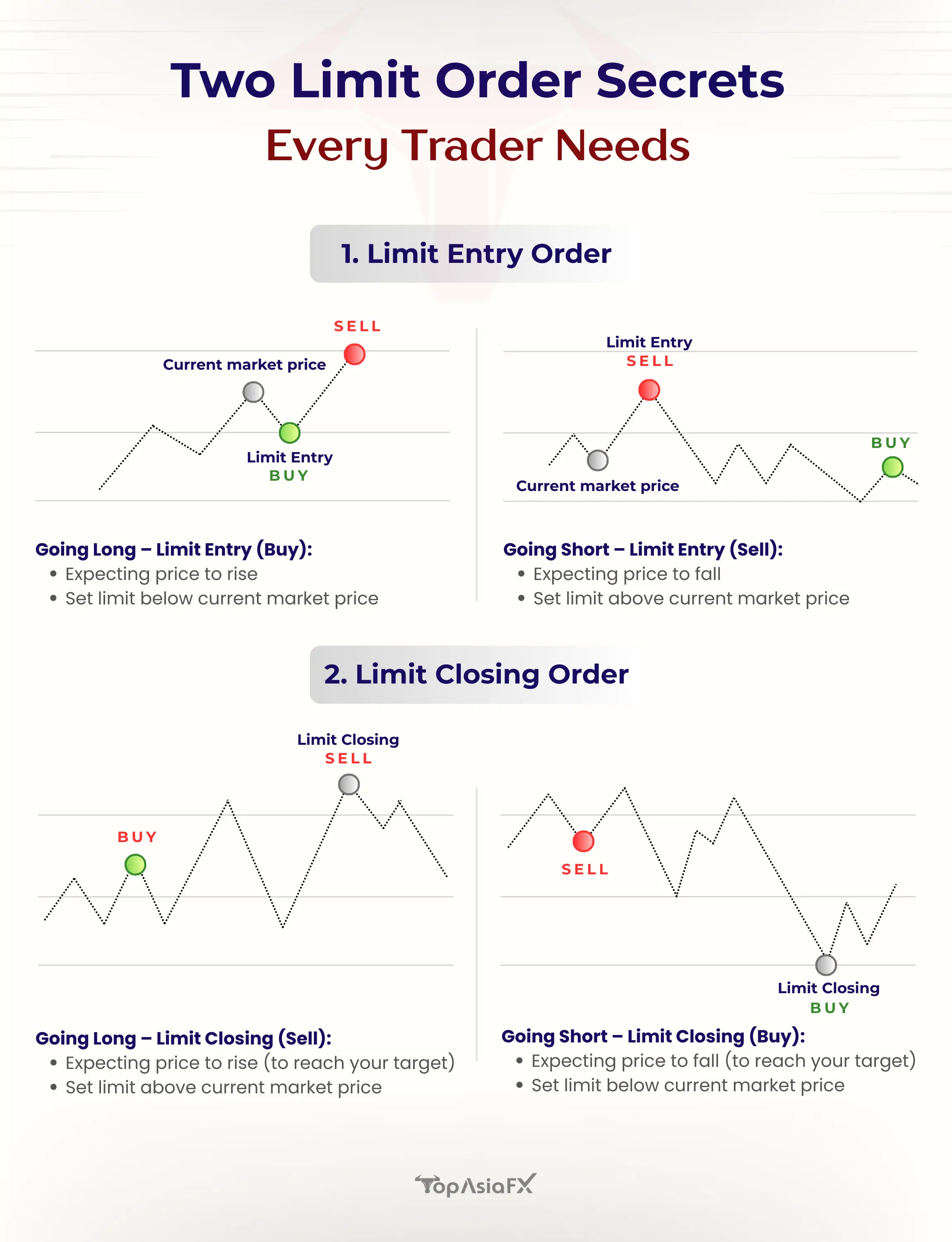
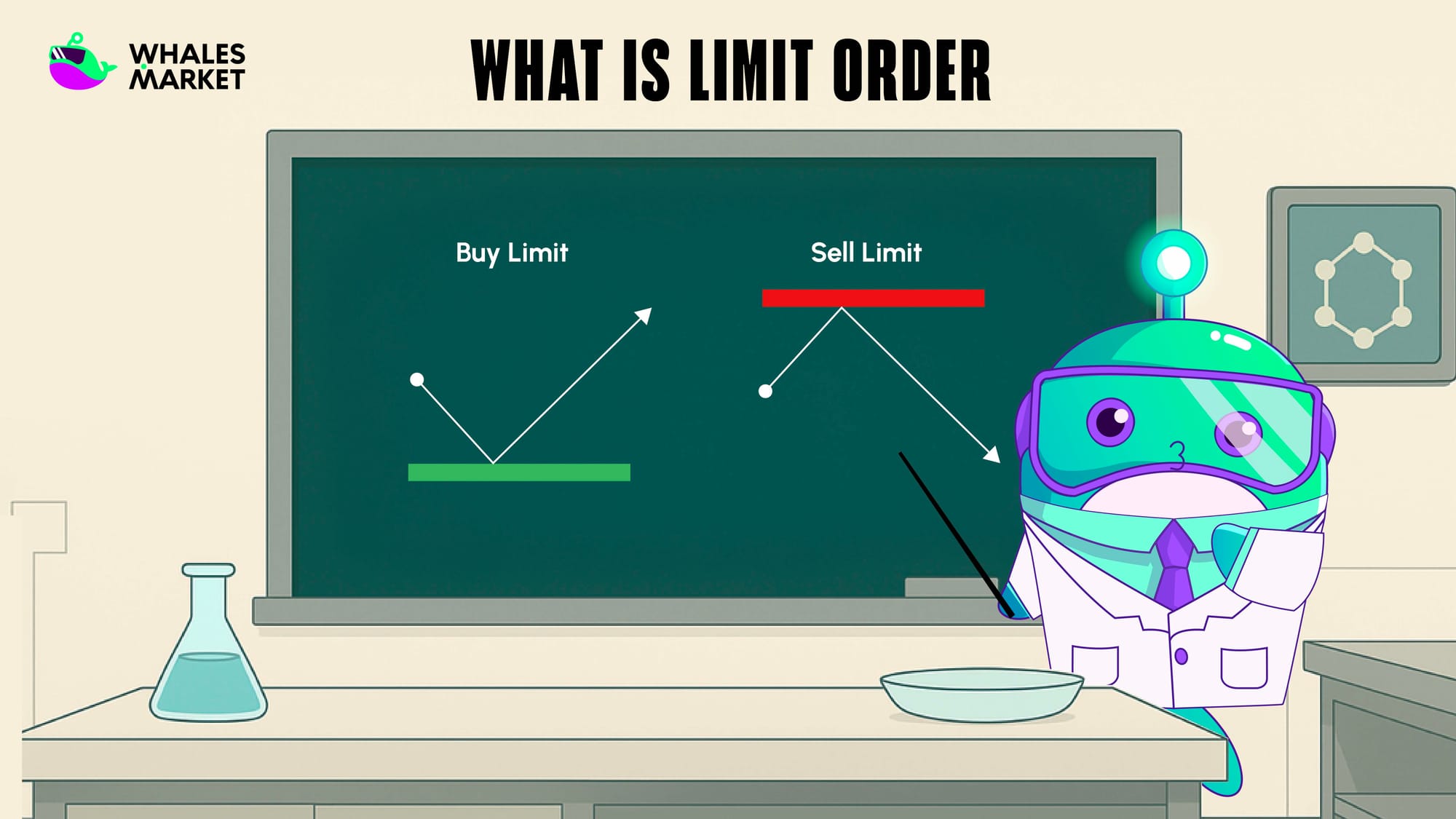
A buy limit order is placed when an investor wants to purchase an asset but believes the current market price is too high. By setting a "limit price" below the current market value, the investor ensures they only enter the position if the price dips to their desired level.
For example, if a stock is trading at $155 in 2026, an investor might place a buy limit order at $150. The order will remain unfilled as long as the stock stays above $150. If the price drops to $150 or lower, the brokerage will attempt to execute the trade. If the stock gaps down to $148, the investor may even receive an execution at that better (lower) price.
Sell Limit Orders
Conversely, a sell limit order is used when an investor wants to exit a position at a profit or avoid selling at an undervalued price. The sell limit is placed above the current market price.
Suppose an investor holds shares of a renewable energy firm currently trading at $90. They believe the stock is worth $100. By placing a sell limit order at $100, the investor guarantees they will not sell for a penny less. If the market reaches $100, the order triggers. If the market surges directly to $105 due to high demand, the investor may get filled at that higher, more favorable price.
Limit Order vs. Market Order: Key Differences
The choice between a limit order and a market order is a choice between price control and execution certainty. In 2026, where even milliseconds can see price fluctuations in volatile sectors like artificial intelligence or cryptocurrency, this choice is critical.
- Price Certainty: A limit order guarantees that you will not receive a worse price than what you specified. A market order provides no such guarantee; you take whatever the current "ask" or "bid" is, which could be significantly different from the last quoted price.
- Execution Certainty: A market order is almost guaranteed to execute immediately, provided there is liquidity in the market. A limit order may never execute if the market never reaches your specified price.
- Cost and Slippage: Market orders are susceptible to "slippage," which is the difference between the expected price of a trade and the price at which the trade is actually executed. Limit orders eliminate slippage risk by setting a hard ceiling (for buys) or floor (for sells).
Strategic Advantages of Using Limit Orders
Utilizing limit orders is a hallmark of disciplined trading. They allow investors to remove emotion from the decision-making process and adhere to a strict financial plan.
Protection Against Volatility
During periods of high market turbulence—such as earnings announcements or macroeconomic data releases—prices can swing wildly in seconds. A market order during these times can result in a "bad fill," where you buy at the peak of a temporary spike or sell at the bottom of a flash crash. Limit orders provide a "buffer," ensuring you only trade when the price aligns with your strategy.
Automation and Passive Management
In 2026, few investors have the time to watch ticker tapes all day. Limit orders allow for a "set and forget" approach. An investor can analyze a stock over the weekend, determine an entry point, place a limit order, and go about their week. If the market reaches the target, the trade happens automatically. This is particularly useful for managing a diverse portfolio across different time zones.
Improved Entry and Exit Points
By using limit orders, traders can participate in "mean reversion" strategies. If a stock typically fluctuates between $45 and $50, a trader can place a buy limit at $45.50 and a sell limit at $49.50. This disciplined approach captures the "spread" and avoids the trap of chasing prices upward.
Understanding Time-in-Force (TIF) Instructions
A limit order is not just about the price; it is also about the duration. When placing a limit order in 2026, you must specify how long the order should remain active.
- Day Order: The order is valid only until the end of the current trading day. If it is not filled by the closing bell, it is automatically canceled.
- Good 'til Canceled (GTC): The order remains active until it is either executed or manually canceled by the investor. Most brokerages have a 60-day or 90-day limit on how long they will hold a GTC order before requiring a renewal.
- Immediate-or-Cancel (IOC): This instruction requires that all or part of the order be executed immediately at the limit price. Any portion that cannot be filled immediately is canceled.
- Fill-or-Kill (FOK): This is an "all or nothing" instruction. The entire order must be filled immediately at the limit price, or the entire order is canceled. No partial fills are allowed.
Potential Drawbacks and Operational Risks
While limit orders offer protection, they are not without risks. Understanding these limitations is vital for effective portfolio management.
The Risk of Non-Execution
The most significant drawback of a limit order is that it may never be filled. If an investor is desperate to buy a stock that is trending upward and sets a limit price too low, the stock may continue to climb, leaving the investor on the sidelines. This is often referred to as "missing the boat." In a bull market, being too stingy with a limit price can result in significant opportunity costs.
Partial Fills
Because a limit order depends on a matching counterparty, there is a possibility of a partial fill. If you want to buy 1,000 shares at $50, but only 200 shares are available at that price, your brokerage may only fill those 200 shares. You are then left with a partial position, which might complicate your trading strategy or result in multiple commission charges depending on your broker’s fee structure in 2026.
The "Gap" Risk
A limit order does not protect against "gapping." If a stock closes at $100 and you have a buy limit at $95, but the company releases terrible news overnight and the stock opens the next day at $80, your order will be triggered. While you bought at a "better" price than your $95 limit, you still experienced an immediate 15% unrealized loss relative to the opening price.
Limit Order Comparisons: A Quick Reference
The following table compares the limit order to other common order types used in modern brokerage platforms.
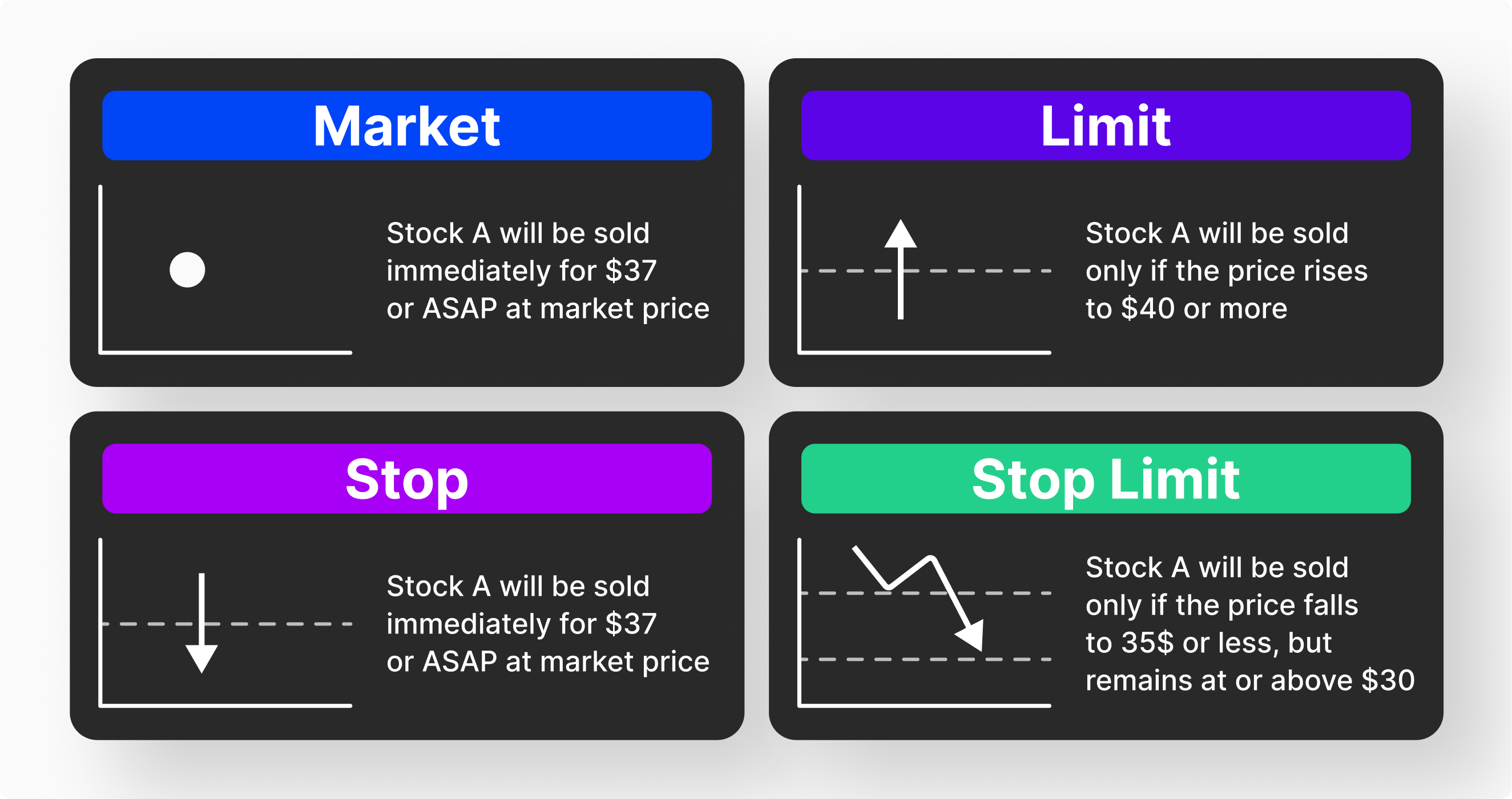
| Order Type | Price Certainty | Execution Certainty | Primary Use Case |
|---|---|---|---|
| Market Order | Low (Price can vary) | High (Immediate) | Urgent entry or exit in liquid markets. |
| Limit Order | High (Fixed Price) | Low (Depends on price) | Buying at a discount or selling at a target. |
| Stop Order | Low (Becomes market order) | Medium (Triggered by price) | Protecting against losses (Stop-Loss). |
| Stop-Limit Order | High (Once triggered) | Low (Price may move past) | Precision exits in highly volatile markets. |
Advanced Variations: The Stop-Limit Order
Traders often confuse limit orders with stop-limit orders. A stop-limit order is a more complex tool that combines the features of a stop order and a limit order. It requires two price points: a stop price and a limit price.
Once the "stop" price is reached, the order turns into a "limit" order rather than a market order. This prevents the investor from selling a stock at an unacceptably low price during a sudden crash (which a standard stop-loss might do). For example, if you own a stock at $100, you might set a stop at $90 and a limit at $85. If the stock hits $90, your sell limit order at $85 is activated. If the stock crashes instantly to $70, the order will not execute, preventing you from selling at the absolute bottom.
Practical Implementation: Placing the Order
In 2026, most brokerage interfaces—whether mobile apps, web portals, or desktop workstations—follow a standard flow for placing a limit order:
- Select the Asset: Enter the ticker symbol for the stock, ETF, or cryptocurrency.
- Choose "Limit" as the Order Type: This is usually a dropdown menu that defaults to "Market."
- Enter the Limit Price: This is the maximum you are willing to pay (Buy) or the minimum you are willing to accept (Sell).
- Set the Quantity: The number of shares or units you wish to trade.
- Select Time-in-Force: Choose between Day, GTC, or other advanced instructions.
- Review and Confirm: Most platforms will show you the "estimated total," including any regulatory fees or commissions.
Expert Guidance: When to Use a Limit Order
Professional traders typically use limit orders in the following scenarios:
- Illiquid Securities: For stocks with low trading volume or wide bid-ask spreads, market orders are dangerous. Limit orders are mandatory to avoid being "picked off" by market makers.
- Large Positions: If you are buying a significant number of shares, a market order could personally drive the price up before your order is finished. Limit orders allow you to enter the position gradually without moving the market.
- Long-Term Targets: If your research suggests a stock is overvalued by 10%, placing a buy limit 10% below the current price is a disciplined way to wait for the market to come to you.
Frequently Asked Questions
Does a limit order guarantee a fill?
No. A limit order only guarantees that if the order is filled, it will be at your specified price or better. There is no guarantee that the market price will ever reach your limit or that there will be enough shares available at that price to fill your order.
Why was my limit order not filled even though the price hit my limit?
This usually happens due to the "priority" of orders. Orders are generally filled on a first-come, first-served basis at a given price level. If there were many orders ahead of yours at the same price, the market might have moved away before the system reached your order. Additionally, the "tape" might show a trade at your price, but that could have been a small odd-lot trade that didn't clear the resting orders at your level.
Can I change or cancel a limit order after placing it?
Yes, as long as the order has not yet been executed. In 2026, most platforms allow for "Cancel/Replace" instructions, which let you adjust the limit price or quantity without losing your place in the queue more than necessary. However, once a fill occurs, the trade is final.
Are there extra fees for limit orders?
Historically, some brokers charged more for limit orders because they were "passive" and stayed on the books. However, in 2026, most major retail brokerages offer commission-free trading for both market and limit orders on standard equities. You should check your specific broker’s fee schedule for "Extended Hours" trading, as limit orders placed for pre-market or after-hours sessions sometimes carry different costs.
What is the "Or Better" part of a limit order?
This means that the brokerage is obligated to get you the best available price. If you place a buy limit at $50, but a seller is offering shares at $49.90, the brokerage will execute your trade at $49.90. You wanted to pay $50, but you got a "better" price.
Final Recommendation for 2026 Traders
For the vast majority of investment scenarios, the limit order should be your default order type. While it requires a bit more thought than a market order, the protection it offers against volatility and slippage is invaluable. To use limit orders effectively, always check the current bid-ask spread before setting your price. If you are eager to buy, set your limit price slightly above the current "bid" but below the "ask." If you are a patient investor, set your limit at a price that represents true value based on your fundamental or technical analysis. By mastering the limit order, you transition from a reactive participant to a proactive strategist in the global markets.
Image Gallery
Select an image to open it in a new tab.
Zara El-Hashem
Sociocultural Dynamics and Academics Writer
