Understanding the Serena Williams 2018 US Open Controversy: A Comprehensive Retrospective
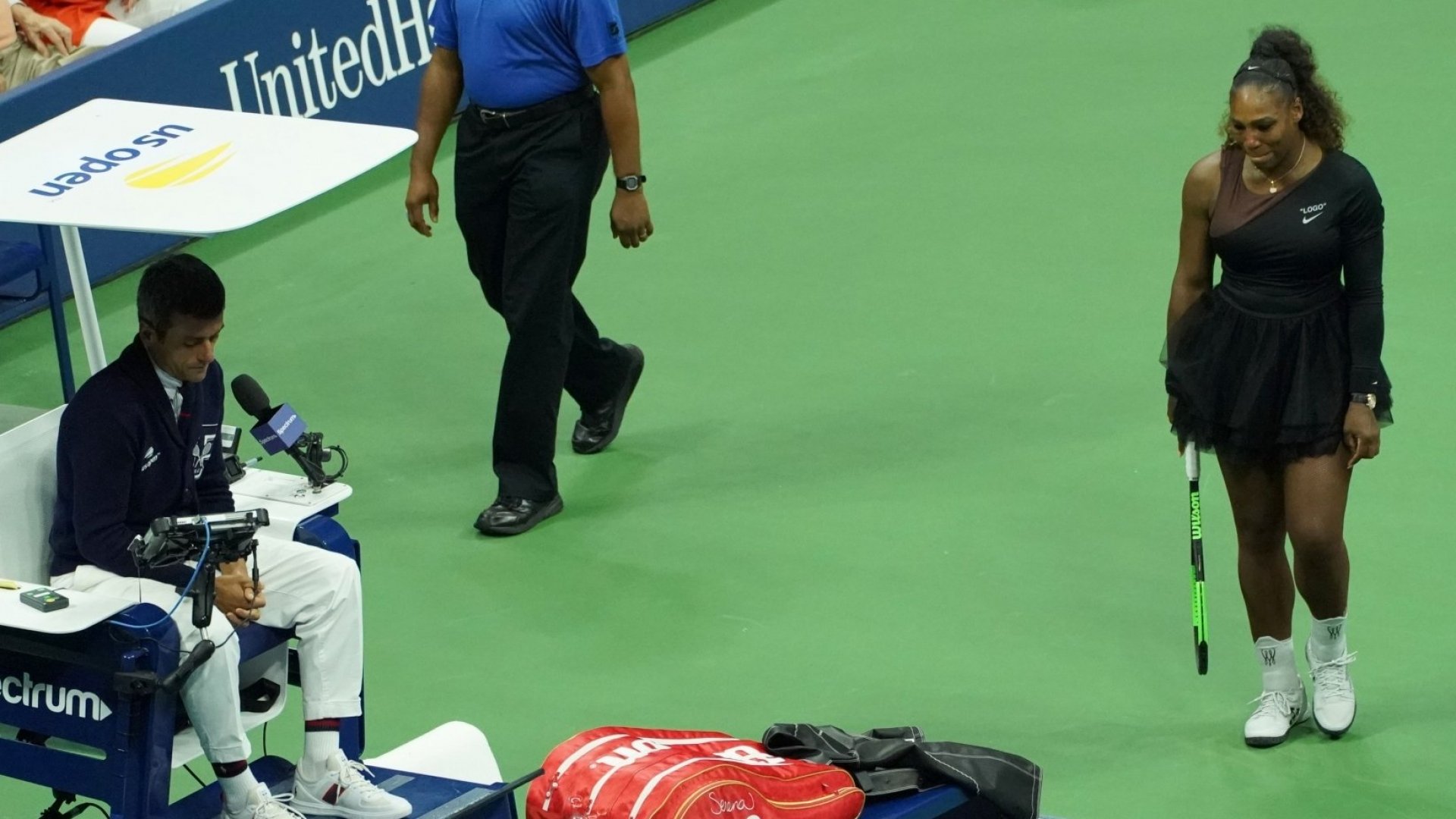
The 2018 US Open final controversy involved Serena Williams receiving three consecutive code violations—coaching, racket abuse, and verbal abuse—from chair umpire Carlos Ramos during her match against Naomi Osaka. These infractions led to a point penalty and a crucial game penalty, sparking an international debate over gender double standards in professional sports officiating.
The Context of the 2018 US Open Final
On September 8, 2018, the sporting world descended upon Arthur Ashe Stadium for a match that was expected to be a "passing of the torch." Serena Williams, arguably the greatest player in the history of the sport, was seeking her 24th Grand Slam title to tie Margaret Court’s all-time record. Opposite her was 20-year-old Naomi Osaka, a rising star who grew up idolizing Williams.
The match began with Osaka dominating play, showcasing a level of power and poise that unsettled the veteran Williams. However, the narrative shifted from athletic performance to officiating protocol early in the second set. This event remains one of the most scrutinized moments in tennis history, not merely for the penalties issued, but for the underlying questions it raised about the application of the Grand Slam Code of Conduct. As we look back from 2026, the 2018 final stands as the primary catalyst for the eventual legalization of on-court coaching in professional tennis.
Chronology of the Dispute: The Three Code Violations
To understand the "meltdown," as it was described by various media outlets, one must analyze the specific sequence of warnings and penalties issued by chair umpire Carlos Ramos. Under the Grand Slam rules, penalties follow a specific progression: Warning, Point Penalty, and finally, Game Penalty for every subsequent offense.
The First Violation: Coaching
The conflict began in the second game of the second set. Ramos issued a formal warning to Williams for coaching, citing a hand gesture made by her coach, Patrick Mouratoglou, from the player’s box. Williams immediately approached the chair to defend her integrity, stating, "I don’t cheat to win, I’d rather lose. I’m just letting you know."
At the time, on-court coaching was strictly prohibited in Grand Slam matches, although it was common knowledge that many coaches signaled their players. While Mouratoglou later admitted to ESPN that he was indeed trying to signal Williams, Serena maintained she had not seen the gesture. This initial warning created a psychological rift between the player and the official that would widen as the match progressed.
The Second Violation: Racket Abuse
After breaking Osaka’s serve to take a 3-1 lead in the second set, Williams immediately lost her own serve. In a moment of intense frustration, she smashed her racket onto the court surface, Mangling the frame. According to the Grand Slam Code of Conduct, "Players shall not violently, dangerously or with anger hit, kick or throw a racquet or other equipment within the precincts of the tournament site."
Because Williams had already received a warning for coaching, this second infraction triggered an automatic point penalty. This meant that Osaka started the following game with a 15-0 lead before a ball was even served. Williams was visibly shocked by the penalty, as she believed the coaching warning was "unfair" and should not have served as the first step toward a point deduction.
The Third Violation: Verbal Abuse
The situation reached a breaking point during a changeover. Williams continued to vent her frustration at Ramos, demanding an apology and accusing him of being a "thief" for taking a point away from her. She also called him a "liar" regarding the coaching incident.
Ramos determined that these insults constituted "Verbal Abuse," defined in the rulebook as a statement directed at an official, opponent, spectator, or other person that implies dishonesty or is derogatory, insulting, or otherwise abusive. Since this was her third violation, Ramos was required by the rules to issue a game penalty. This awarded the game to Osaka, putting her ahead 5-3 without having to play the game.

The Role of Chair Umpire Carlos Ramos
Carlos Ramos was a highly experienced, "gold badge" umpire known for his strict adherence to the letter of the law. Prior to the 2018 final, he had officiated numerous high-stakes matches and had a reputation for not being intimidated by star players. He had previously issued warnings to other top players, including Rafael Nadal and Novak Djokovic, for time violations and unsportsmanlike conduct.
Critics of Ramos argued that he lacked "match management" skills, suggesting that a more nuanced official might have warned Williams privately to calm down before escalating to a game penalty. Supporters, however, maintained that he followed the rules exactly as written. The International Tennis Federation (ITF) later issued a statement supporting Ramos, claiming his decisions were in accordance with the relevant rules and were validated by the US Open’s decision to fine Williams for the three offenses.
Cultural and Social Impact: The Gender and Race Debate
The fallout from the match extended far beyond the tennis court. The incident ignited a global conversation regarding whether female athletes are penalized more harshly than their male counterparts for displaying emotion. Serena Williams herself addressed this during her post-match press conference, stating, "I’ve seen other men call other umpires several things. I’m here fighting for women’s rights and for women’s equality and for all kinds of stuff."
This sentiment was echoed by the Women's Tennis Association (WTA). Then-CEO Steve Simon released a statement suggesting that the level of professionalism expected of Williams was not consistently applied to male players. However, some male players and commentators pointed out that men have also been disqualified or penalized games for similar outbursts, citing examples like Fabio Fognini or Nick Kyrgios.
The controversy was further inflamed by a caricature of Williams published in Australia’s Herald Sun, which many critics, including the National Association of Black Journalists, condemned as racist and sexist, utilizing tropes reminiscent of the Jim Crow era.
Financial and Professional Consequences
Following the match, the US Open tournament referee’s office fined Serena Williams a total of $17,000. The breakdown of the fines provided a clear look at how the governing bodies categorized her actions:
| Violation Type | Fine Amount | Specific Reason |
|---|---|---|
| Coaching | $4,000 | Signal from Patrick Mouratoglou |
| Racket Abuse | $3,000 | Smashed racket on court |
| Verbal Abuse | $10,000 | Calling the umpire a "thief" and "liar" |
While the financial penalty was a small fraction of her $1.85 million runner-up check, the professional impact was significant. The atmosphere during the trophy ceremony was toxic; the crowd booed so loudly that both Osaka and Williams were in tears. Williams eventually showed her veteran leadership by telling the crowd, "Let’s give everyone the credit where credit’s due... no more booing."
Comparing the Rules: 2018 vs. 2026
The 2018 meltdown was a turning point for the sport. In the years following, the governing bodies of tennis (ITF, ATP, and WTA) underwent significant soul-searching regarding on-court coaching and the consistency of code violation enforcement.
By 2022, the four Grand Slams began trialing "off-box" coaching, allowing players to receive verbal and hand signals from their coaches as long as it did not interrupt play. By 2026, this has become the standardized norm across the tour. If the 2018 match were played today, the initial coaching warning that set off the chain reaction likely would never have happened. This shift acknowledges that the "no coaching" rule was historically difficult to enforce and often led to arbitrary penalties.
FAQs: Serena Williams 2018 US Open Meltdown
Did Serena Williams lose the match because of the penalty?
While the game penalty put Naomi Osaka at a 5-3 lead in the second set, Osaka had been playing exceptionally well and had won the first set 6-2. The penalty certainly hindered Williams’ ability to mount a comeback, but Osaka’s performance was the primary factor in her victory.
Did the coach actually coach her?
Yes. Patrick Mouratoglou admitted in a post-match interview that he was trying to signal Williams to move forward. He noted that "everyone does it," but acknowledged that by the rules at the time, it was a violation.
Was Carlos Ramos ever allowed to umpire Serena's matches again?
The USTA decided not to have Carlos Ramos officiate any of Serena Williams’ matches during the 2019 US Open. This was seen by some as a protective measure to avoid further conflict and by others as a capitulation to star power.
What happened to Naomi Osaka after this match?
Naomi Osaka went on to win several more Grand Slam titles and became one of the highest-paid female athletes in the world. Despite the controversy of her first Major win, she is widely respected for her mental health advocacy and her dominance on hard courts.
Is on-court coaching legal now in 2026?
Yes, as of 2026, on-court coaching is widely permitted in professional tennis. The rules have been modernized to allow coaches to provide brief instructions from the stands, which has significantly reduced the frequency of coaching-related violations.
How did the tennis community respond to the $17,000 fine?
The response was polarized. Some felt the fine was a necessary enforcement of the rules, while others, including tennis legend Billie Jean King, argued that the focus should be on the unfairness of the rules themselves rather than Williams' reaction.
Practical Guidance for Navigating Sports Controversies
When analyzing high-profile sports disputes like the 2018 US Open final, it is essential to separate the technical rules from the social context. For players, coaches, and fans, the following actions are recommended for a balanced understanding:
- Consult the Rulebook: Always refer to the specific organization's code of conduct (e.g., the ITF Grand Slam Rulebook) to understand the technical definitions of "abuse" or "misconduct."
- Acknowledge Historical Precedent: Compare the incident to similar outbursts by other players to determine if officiating is being applied consistently.
- Evaluate Rule Evolution: Recognize that rules often change in response to controversy. The legalization of coaching is a direct result of the 2018 incident.
- Distinguish Between Intent and Result: A player may not intend to "cheat," but if their coach violates a rule, the player remains technically liable for the penalty.
The 2018 US Open final remains a case study in the intersection of sports psychology, officiating ethics, and social justice. While the "meltdown" was a difficult moment for the sport, it paved the way for a more transparent and modernized approach to tennis rules in the 2020s.
Image Gallery
Select an image to open it in a new tab.

Declan O'Connor
Higher Education and Campus Culture Reporter
