
The pervasive myth surrounding Michael Jordan’s NBA debut suggests he was immediately dominant, scoring 30-plus points in his first game and single-handedly turning the Chicago Bulls into a championship contender overnight. In reality, while his debut on October 26, 1984, was impressive, it was a modest performance of 16 points, 6 rebounds, and 7 assists, far from the polished legend he would eventually become.
The Genesis of the Myth
When discussing the career of Michael Jordan, the lines between reality and the hyper-inflated mythology surrounding his "Greatness" often blur. Fans, casual observers, and even some media outlets have spent four decades molding his entry into the NBA into a narrative of immediate, supernatural dominance. The core of this myth is the belief that Jordan arrived in the league fully formed—a seasoned superstar who dominated every opponent from the first tip-off.
This narrative was constructed over years, fueled by the sheer magnitude of his eventual legacy. Because Jordan ended his career as a six-time champion and arguably the greatest player in history, it is difficult for modern fans to reconcile his humble beginnings with the god-like status he achieved in the 1990s. The "myth" essentially serves as a retroactive projection: because he became the best, people assume he was always the best, starting with the very first time he stepped onto an NBA floor.
Fact-Checking the 1984 Debut
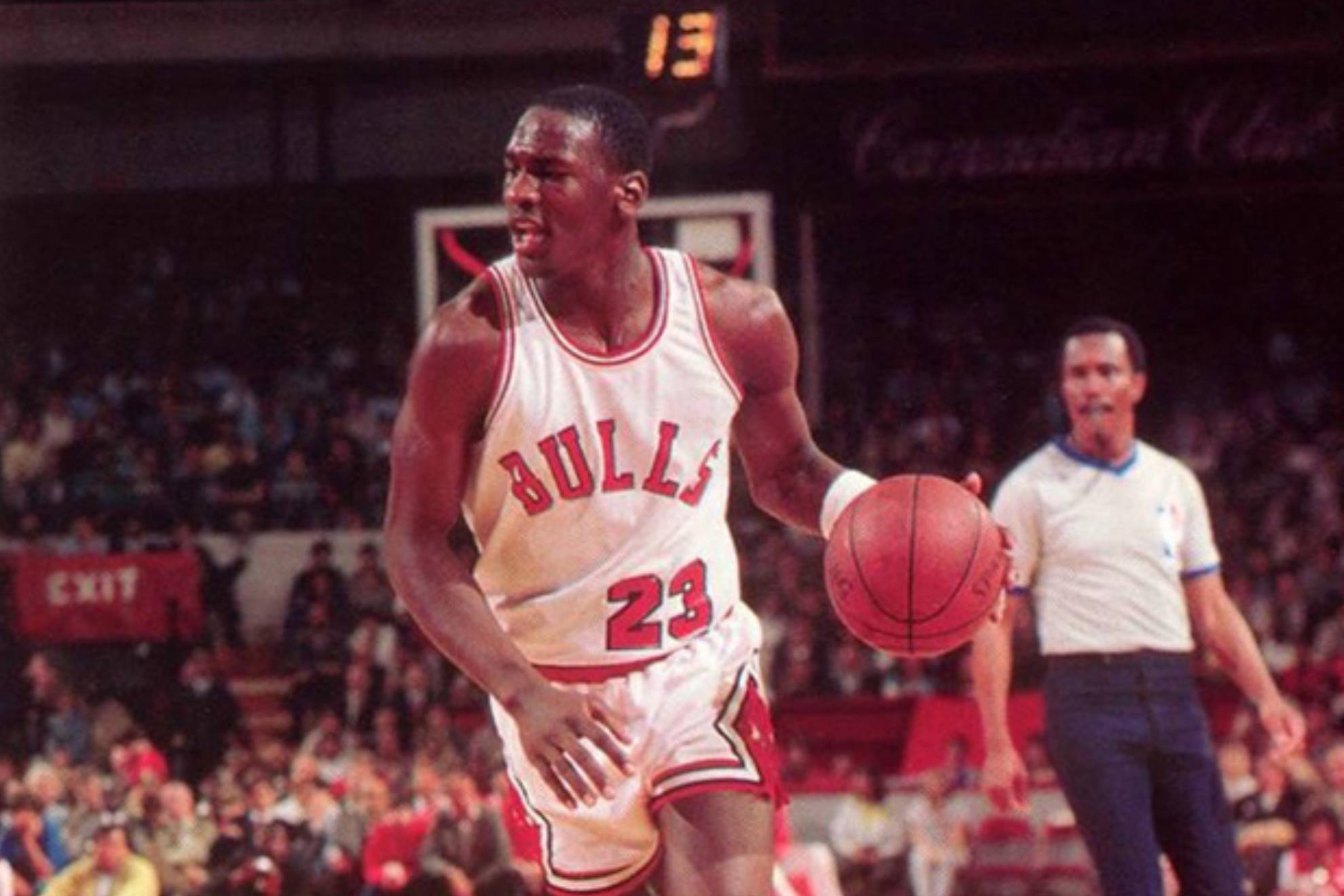
To dismantle the myth, one must look at the box score of October 26, 1984, at Chicago Stadium. The Bulls faced the Washington Bullets. Jordan played 40 minutes, scored 16 points on 5-of-16 shooting from the field, grabbed 6 rebounds, dished out 7 assists, recorded 2 steals, and blocked 4 shots.
While these numbers are objectively solid for a rookie, they are not the numbers of a player who "dominated" the league from day one. He shot 31.2% from the field and committed 5 turnovers. The Bulls won the game 109-93, but the game was defined more by the team's defensive pressure and the presence of veterans than by an explosive, high-scoring performance from the rookie.
The myth often replaces this grounded, rookie-level performance with a fictionalized version where Jordan scores 30 or 40 points, dunks on multiple defenders, and carries a lackluster team to a blowout win. By analyzing the actual data, we see a player who was talented and athletic, but still very much in the process of learning the nuances of the professional game.
Comparative Rookie Performances
To provide context, it is helpful to look at how other legendary players fared in their debuts. This comparison helps illustrate that the "slow start" or "solid start" is actually the norm, not an anomaly that requires a myth to explain away.
| Player | Debut Date | Points Scored | Context |
|---|---|---|---|
| Michael Jordan | Oct 26, 1984 | 16 | Solid efficiency, high minutes |
| Kareem Abdul-Jabbar | Oct 18, 1969 | 29 | Immediate impact on scoring |
| LeBron James | Oct 29, 2003 | 25 | Highly anticipated, met expectations |
| Shaquille O'Neal | Nov 6, 1992 | 12 | Strong presence, 18 rebounds |
| Larry Bird | Oct 12, 1979 | 14 | Focused on all-around play |
As evidenced by the table, rookie debuts vary wildly. Some legends come in scoring at a prolific rate, while others focus on integrating into their respective systems. Jordan’s 16-point performance sits squarely in the middle of this spectrum. It was an indication of potential, not the crystallization of a legend.
Why the Myth Persists
Why do we insist on misremembering his debut? The answer lies in the human tendency toward "narrative smoothing." We like our icons to have a clean, heroic origin story. A rookie who works hard, plays reasonably well, and slowly grows into a champion over the course of seven years is a compelling story, but it lacks the "chosen one" energy that the Jordan brand requires.
Furthermore, Jordan’s impact was immediate, just not in the box score categories that define the myth. His arrival in Chicago saved a franchise that was financially struggling and largely irrelevant. The "impact" was in ticket sales, local interest, and a change in team culture. People conflate his off-court impact with his on-court scoring, creating a hybrid myth that is easier to remember than the actual basketball game.
The Evolution of the Jordan Brand
The myth was further solidified by the rapid acceleration of Jordan’s sophomore and junior seasons. By his second year, he was scoring 37.1 points per game. This statistical explosion makes it easy for the brain to "backfill" his rookie year with similar levels of production.
Marketing played a massive role in this as well. Nike’s branding of Jordan was built on the premise of "Air Jordan"—the idea that he was a man who could fly, someone who defied the laws of physics. The marketing machine needed him to be a superhuman from the start to justify the premium pricing and the revolutionary nature of the Air Jordan sneaker line. If he had just been a "good rookie," the brand trajectory might have been different.
Common Misconceptions Addressed
Beyond the scoring, there are other facets of the "debut myth" that require clarification.
- The "He single-handedly won the game" fallacy: While the Bulls won, they did so as a team. Orlando Woolridge, for instance, scored 28 points in that same debut game. Jordan was a significant contributor, but he was not a one-man army.
- The "He was the best player on the court" claim: In his first game, many observers noted his athleticism, but veteran players in the league often targeted him physically. He had to learn how to deal with the "Jordan Rules" long before that term was coined in the late 80s.
- The "Immediate Superstar" status: It took time for the rest of the league to recognize him as the best player in the world. Being a rookie sensation is different from being a perennial MVP candidate, a transition he did not complete until the late 1980s.
The Role of Media and Documentation
In 1984, the media environment was vastly different from the 2026 landscape. Games were not consumed through real-time highlights on social media. People read the local newspaper box scores or watched limited highlights on the evening news. This created a vacuum where memory—rather than video evidence—became the primary source of truth for the casual fan.
As the years passed, the documentaries and historical retrospectives often focused on the highlights of his rookie year rather than the full context of his transition. By curating only his most explosive moments, media producers helped cement the idea that his entire entry into the NBA was a highlight reel of dominance.
Reality as a Teaching Tool
Understanding the reality of Jordan’s debut is not meant to diminish his achievements; it is meant to enhance them. The fact that he was not a fully formed god on day one makes his eventual rise to the top more impressive. It highlights the work ethic, the physical transformation, and the tactical adaptation he underwent under coaches like Doug Collins and Phil Jackson.
For young basketball fans, acknowledging that even Michael Jordan had a "standard" debut provides a more realistic framework for viewing player development. It emphasizes that consistency and growth are more important than immediate, flash-in-the-pan brilliance.
Frequently Asked Questions
Did Michael Jordan really score 30 points in his first NBA game? No, that is a common misconception. He scored 16 points in his official NBA debut against the Washington Bullets on October 26, 1984.
Was the Chicago Bulls' victory in his debut a sign of their future championship status? No, the 1984-85 Bulls finished with a 38-44 record. While Jordan’s arrival improved the team’s outlook, they were far from championship contenders and would undergo several roster changes before finally winning a title in 1991.
Why is there such a strong myth about his debut performance? The myth stems from the conflation of his career-long achievements with his early career, exacerbated by aggressive sports marketing and the tendency of fans to romanticize the origins of legendary athletes.
Did Jordan have any high-scoring games as a rookie? Yes. While he did not score 30+ in his first game, he did have several high-scoring outings during his rookie season, including a 49-point performance against the Detroit Pistons in February 1985, which demonstrated that his elite scoring ability was developing rapidly.
Is it common for NBA rookies to have modest debuts? Yes. Most NBA players, even those who go on to become Hall of Famers, experience an adjustment period as they transition from college or international basketball to the professional level, where the speed, physicality, and defensive schemes are significantly more advanced.
Next Steps for Basketball Historians
If you are interested in further exploring the accuracy of NBA lore, the most reliable path is to consult the official NBA historical box score database. By focusing on primary sources rather than anecdotal memories, you can reconstruct the true narratives of the game’s greatest stars. Start by watching full-game archival footage—often available through official league archives—to witness the raw, unfiltered performances of these players as they actually occurred, rather than how they are remembered in the collective consciousness.

Image Gallery
Select an image to open it in a new tab.




Zara El-Hashem
Sociocultural Dynamics and Academics Writer
