Finding affordable auto insurance in the United States involves balancing state-mandated minimums with personal protection needs. By comparing quotes from multiple providers, leveraging telematics-based discounts, and optimizing coverage limits and deductibles, drivers in 2026 can secure reliable protection without overpaying for unnecessary add-ons or inflated premiums.
The Landscape of U.S. Auto Insurance in 2026
The American auto insurance market is a decentralized system where regulations are primarily handled at the state level rather than federally. This means that "affordable" is a relative term that varies significantly depending on whether you live in a "no-fault" state like Michigan or a "tort" state like Ohio. In 2026, the industry has seen a stabilization of premiums following the high inflation of the early 2020s, but costs remain a significant portion of a household's annual transportation budget.
Most states require a minimum level of liability insurance. This coverage pays for the other party’s medical bills and property damage if you are found at fault in an accident. However, these state minimums are often too low to protect your assets in a major collision. The challenge for the modern consumer is finding the "sweet spot" where they are legally compliant and financially protected without paying for "prestige" branding or services they do not require.
Tort vs. No-Fault Systems
Understanding your state's legal framework is the first step toward choosing a policy. In "tort" states, the driver found at fault is responsible for all damages. In "no-fault" states, each driver’s own insurance pays for their medical bills (through Personal Injury Protection) regardless of who caused the accident. No-fault states often have higher premiums due to the broader scope of mandatory coverage, making it even more vital for residents in these areas to shop aggressively for discounts.
Core Components of an Auto Insurance Policy
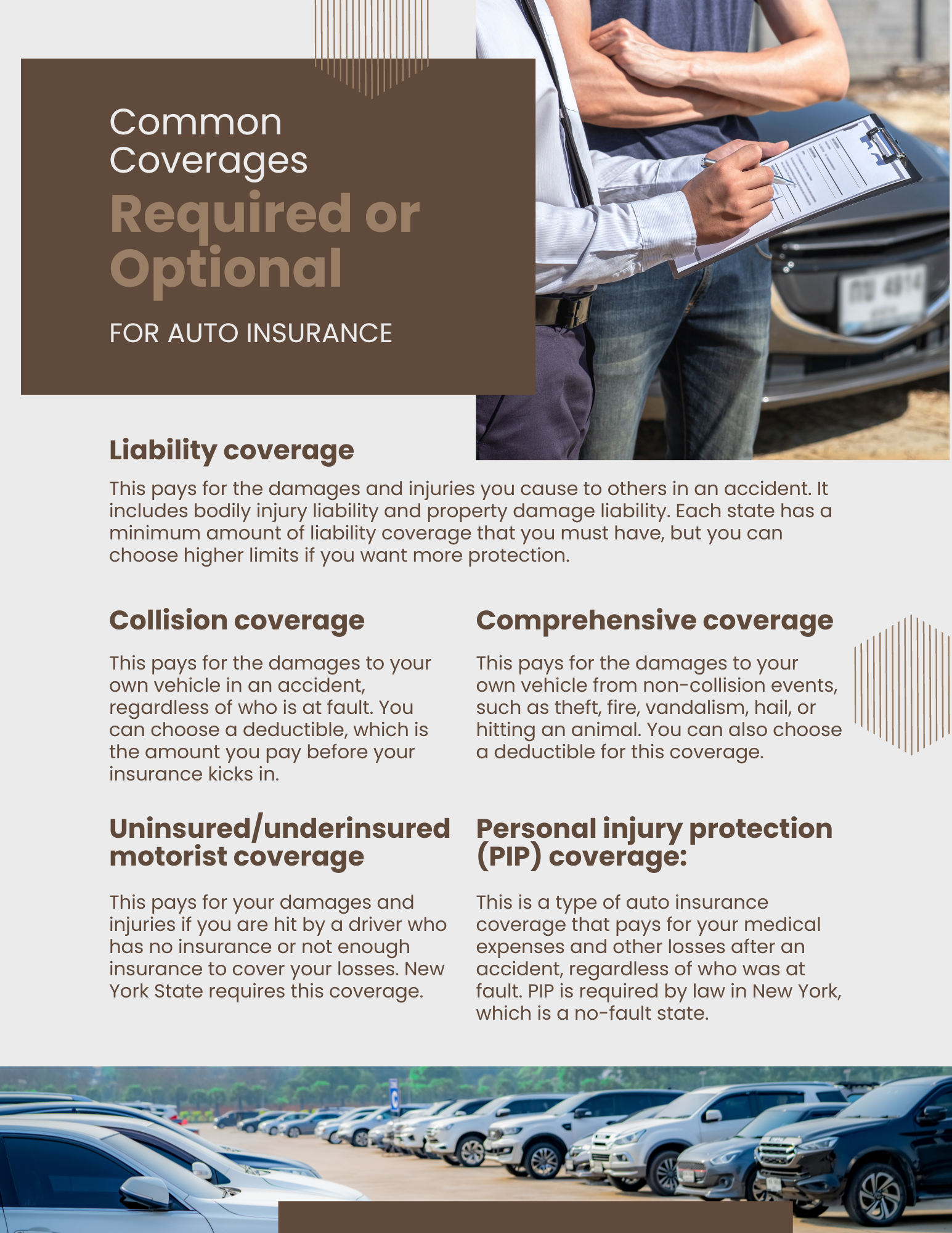
To choose an affordable policy, you must understand what you are actually buying. A standard policy is a bundle of different coverages, and adjusting these individual components is the most direct way to control your premium.
- Bodily Injury Liability: Pays for the medical expenses of others if you cause an accident.
- Property Damage Liability: Covers damage you cause to someone else's property (usually their car or a fence/structure).
- Collision Coverage: Pays for damage to your own vehicle resulting from a collision, regardless of fault. This is often optional unless you have a car loan or lease.
- Comprehensive Coverage: Protects against non-collision events such as theft, fire, vandalism, or "acts of God" like hail or falling branches.
- Uninsured/Underinsured Motorist (UM/UIM): Protects you if you are hit by someone who lacks sufficient insurance. Given that roughly one in eight drivers on U.S. roads remains uninsured, this is a critical, though often affordable, addition.
- Personal Injury Protection (PIP) / Medical Payments: Covers your own medical expenses and, in some cases, lost wages.
When looking for the most affordable option, many drivers opt for "liability-only" policies. While this offers the lowest monthly payment, it leaves the driver entirely responsible for replacing their own vehicle if it is totaled. Experts generally suggest that if your car is worth less than ten times the annual cost of the collision and comprehensive premiums, it may be time to drop those optional coverages.

Factors Influencing Your Premium
In 2026, insurance algorithms have become increasingly sophisticated, utilizing machine learning to analyze thousands of data points. However, the core factors remain consistent across the industry.
Driving History and Experience
Your "risk profile" is heavily weighted by your past behavior. A single speeding ticket or a small at-fault accident can increase premiums by 20% to 50% for up to three years. Conversely, a clean record for five years often qualifies you for "preferred" status, unlocking the lowest available tiers of pricing.
Credit-Based Insurance Scores
In most states, insurers use your credit history to help predict the likelihood of you filing a claim. Statistical data shows a strong correlation between high credit scores and lower claim frequency. Drivers with "Poor" credit may pay more than double what drivers with "Excellent" credit pay for the exact same coverage. It is important to note that states like California, Hawaii, Massachusetts, and Michigan have restricted or banned the use of credit scores in auto insurance pricing.
Geographic Location
Your ZIP code is a primary pricing factor. Insurers look at local crime rates (theft/vandalism), traffic density, and the frequency of litigation in your specific area. A driver moving from a rural county to a major metropolitan center like Chicago or Miami should expect a significant premium hike even if their driving habits do not change.
Vehicle Choice
The cost to repair your vehicle—and its safety rating—directly impacts your rate. In 2026, the proliferation of Advanced Driver Assistance Systems (ADAS) has created a paradox: while these systems prevent accidents, the sensors and cameras make even minor bumper repairs significantly more expensive. Electric vehicles (EVs) also tend to carry higher premiums due to specialized battery repair costs and a shortage of certified technicians in some regions.
Strategies to Secure the Lowest Rates
Achieving the most affordable rate requires more than just picking a company; it requires active management of your policy.
1. Leverage Telematics (Usage-Based Insurance)
By 2026, telematics has become the industry standard for discounts. Programs like Progressive’s Snapshot or State Farm’s Drive Safe & Save monitor your braking, acceleration, and mileage via a smartphone app or a plug-in device. If you are a low-mileage driver or a "gentle" driver, you can save up to 30% or more. This is particularly effective for students or retirees who do not commute daily.
2. Strategic Deductible Adjustments
The deductible is the amount you pay out of pocket before insurance kicks in. Raising your deductible from $500 to $1,000 can reduce your Collision and Comprehensive premiums by 15% to 30%. However, you must ensure you have that $1,000 readily available in an emergency fund.
3. Aggressive Discount Hunting
Insurers offer a variety of "lifestyle" discounts that are often not applied automatically. You should ask your agent about:
- Bundling: Combining home or renters insurance with auto insurance.
- Multi-Car: Insuring all household vehicles under one policy.
- Professional/Academic Groups: Discounts for alumni associations, certain professions (teachers, first responders), or "Good Student" discounts for those with a B average or better.
- Safety Features: Discounts for anti-theft devices and advanced safety tech.
Comparing Top-Rated Affordable Providers
While rates are highly individualized, certain companies consistently rank as the most cost-effective options for different types of drivers.
| Provider | Best For... | Key Advantage |
|---|---|---|
| State Farm | Customer Service & Bundling | Largest agent network; excellent bundling discounts for homeowners. |
| Geico | Direct-to-Consumer Savings | Low overhead often results in lower base premiums for clean records. |
| Progressive | High-Risk Drivers & Telematics | Competitive for those with a ticket/accident; strong "Name Your Price" tool. |
| USAA | Military Members & Families | Consistently the lowest rates and highest satisfaction, but restricted membership. |
| Erie Insurance | Mid-Atlantic/Midwest Residents | Offers "Rate Lock" features that prevent increases unless you change the policy. |
| NJM (New Jersey Manufacturers) | Regional Excellence | High marks for transparency and claims processing in the Northeast. |
The Step-by-Step Selection Process
To ensure you are getting the best deal in 2026, follow this systematic approach:
- Audit Your Current Coverage: Look at your "Declarations Page" to see exactly what you are paying for. Note your current limits and deductibles.
- Verify Your Information: Ensure your annual mileage is accurate. If you are working from home more often than you were three years ago, your "commute distance" might be lower, which reduces your risk and cost.
- Gather Multiple Quotes: Use at least one comparison website and one "captive" agent (like State Farm or Allstate). This gives you a view of both independent and large-carrier pricing.
- Check Financial Stability: Use ratings from A.M. Best to ensure the company can actually pay out in the event of a catastrophic claim. A cheap policy from a failing company is a liability, not an asset.
- Review the Fine Print on Claims: Research the insurer’s reputation for claims handling. Affordable premiums are useless if the company denies legitimate claims or uses subpar replacement parts. The National Association of Insurance Commissioners (NAIC) provides a Consumer Complaint Index that is invaluable for this research.
Common Pitfalls to Avoid
The search for affordability often leads drivers into traps that can cost them more in the long run.
The "Minimum Coverage" Trap: Opting for the absolute state minimum (e.g., 25/50/25 in many states) is often a mistake. If you cause a multi-car accident or hit a modern luxury vehicle, $25,000 in property damage coverage will be exhausted almost instantly. You are personally liable for the remaining balance, which can lead to wage garnishment.
Ignoring "Gap" Insurance: If you have a loan on a new car, your standard insurance only pays the market value of the car at the time of the accident. Because new cars depreciate rapidly, you may owe more on the loan than the car is worth. Gap insurance covers that difference. Many affordable policies omit this, leaving drivers with a "totaled" car and a remaining loan balance.
Skipping the Annual Review: Many drivers stay with the same company for a decade out of habit. However, "price optimization" is a tactic where some insurers slowly raise rates on loyal customers who are unlikely to shop around. Comparing rates every 12 months is the only way to ensure your loyalty isn't being penalized.
Frequently Asked Questions
Does the color of my car affect my insurance rate?
No. Despite the persistent myth that red cars are more expensive to insure, insurers do not ask for or care about the color of your vehicle. They are concerned with the make, model, year, engine size, and safety features. Factors like the cost of parts and the likelihood of the car being stolen are far more relevant than the paint job.
Can I get insurance if I have a bad driving record?
Yes, but you will likely need to look at "non-standard" insurers. Companies like Progressive or specialized regional carriers often cater to drivers with DUIs, multiple accidents, or SR-22 requirements. While these policies are not "affordable" in the traditional sense, you can lower costs over time by completing defensive driving courses and maintaining a clean record for a consecutive 12-to-24-month period.
Will my rates go down automatically when I turn 25?
Usually, yes. Drivers under 25 are statistically more likely to be involved in accidents, leading to higher premiums. While there isn't a magical drop the day you turn 25, most insurers re-evaluate your risk bracket at your next renewal following that birthday. To ensure you get the discount, it is wise to contact your agent or shop for new quotes as soon as you reach this age milestone.
How does telematics data affect my privacy?
Most telematics programs track GPS location, time of day, and driving events (hard braking, rapid acceleration). While insurers claim they do not sell this data to third parties for marketing, it is a form of surveillance. If privacy is a primary concern, you may prefer a traditional policy, though you will likely forfeit the potential 10%–30% "safe driver" discount associated with these programs.
Is "Full Coverage" a real legal term?
No. "Full coverage" is a colloquialism typically meaning a policy that includes Liability, Collision, and Comprehensive insurance. It does not mean you are covered for everything. For example, standard "full coverage" does not usually include mechanical breakdowns, wear and tear, or custom equipment unless specifically added via an endorsement.
Practical Recommendation
To find the most affordable auto insurance in 2026, do not rely on a single quote. Start by checking your credit score and cleaning up any errors, as this is the most influential non-driving factor in most states. Then, obtain at least three quotes: one from a major national carrier (like Geico or State Farm), one from a company that specializes in telematics (like Progressive or Root), and one from a local independent agent who can shop across smaller regional carriers. Re-evaluate this comparison every 12 months or after any major life event, such as moving, buying a home, or getting married, to ensure you are always on the most competitive tier.
Image Gallery
Select an image to open it in a new tab.


Ingrid Bjornson
Global Cyber Policy and Regulation Analyst
