
The worst contract in NFL history is not defined by a high salary or poor performance alone, but by the combination of fully guaranteed money, unprecedented draft capital loss, and catastrophic dead cap hits that cripple a franchise for years. While fans point to massive busts, the "worst" contracts are those that remove a team's ability to pivot, such as Deshaun Watson’s 2022 deal or Russell Wilson’s 2022 extension.
Defining the "Worst" in the Modern NFL Era
When sports fans discuss the "worst" contract, they often focus on the player’s lack of production relative to their paycheck. However, in the 2026 NFL landscape, general managers and salary cap analysts view "badness" through the lens of opportunity cost and financial flexibility. A contract for a player who underperforms but can be cut after two years with minimal penalty is a nuisance; a contract that prevents a team from signing other starters for half a decade is a disaster.
To understand why the worst contract isn't just about "overpaying" a player, one must understand the three pillars of NFL contract failure:
- Guaranteed Money at Signing: Unlike MLB or the NBA, NFL contracts are traditionally not fully guaranteed. When a team guarantees the entire duration of a deal, they lose the "performance insurance" that keeps the roster fluid.
- Dead Cap Acceleration: If a player is released or traded, the remaining "pro-rated" portion of their signing bonus hits the current year’s salary cap all at once. A "worst" contract often leaves a team with a dead cap hit so large they cannot afford to field a competitive team.
- The "Draft Capital" Multiplier: Many of the worst contracts are preceded by massive trades. When a team gives up multiple first-round picks and a record-breaking contract, the failure is compounded because the team lacks the cheap, young talent needed to offset the veteran's high cost.
The Deshaun Watson Anomaly: A Market-Breaking Precedent
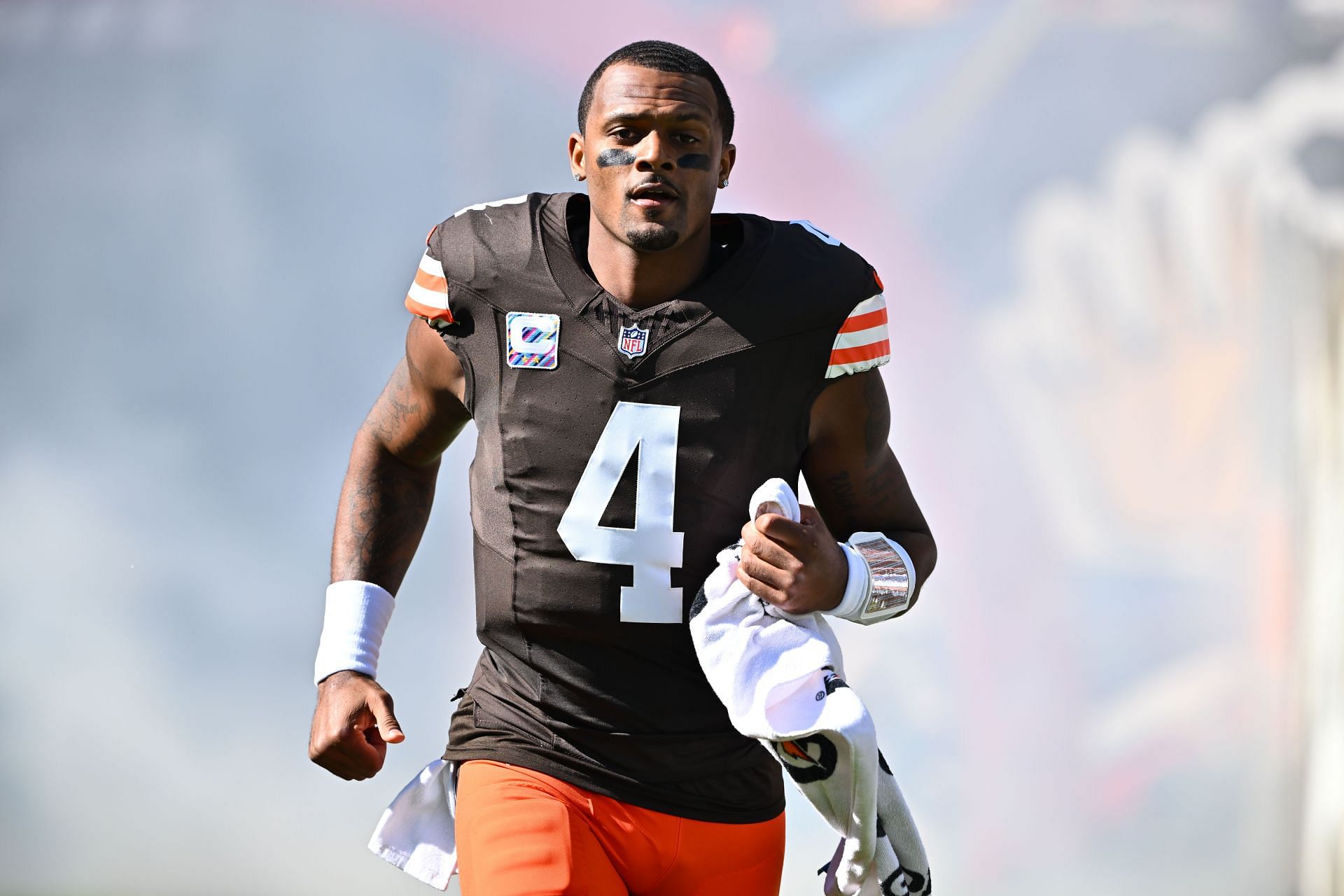
In 2022, the Cleveland Browns signed Deshaun Watson to a five-year, $230 million contract that was 100% guaranteed. From a technical perspective, this remains arguably the "worst" contract in history because of the precedent it attempted to set and the lack of an "out" for the organization.
Before this deal, fully guaranteed contracts were reserved for short-term "prove-it" deals or unique situations like Kirk Cousins’ three-year stint in Minnesota. By guaranteeing five years for a player who had not played in over a year and faced significant off-field scrutiny, the Browns surrendered all leverage.
By 2026, we can see the long-term ripple effects: the Browns were forced to continuously "restructure" the deal, pushing money into future years just to stay under the cap. This created a "ticking time bomb" effect where Watson’s cap hit eventually ballooned to over $70 million in a single season. Because the money was guaranteed, there was no scenario where the team could move on without incurring the largest dead cap hit in the history of the league at that time.

The Russell Wilson Fallout: A Masterclass in Dead Cap
While Watson’s deal was a structural disaster, Russell Wilson’s five-year, $245 million extension with the Denver Broncos in 2022 serves as the ultimate cautionary tale of timing and dead cap.
The Broncos' mistake wasn't just the dollar amount; it was signing the extension before Wilson had played a single snap for the team. When his performance dipped significantly, the team was trapped. By the time Denver decided to move on in 2024, they were forced to swallow an $85 million dead cap hit—the largest in NFL history at the time.
To put $85 million in perspective, that was roughly 33% of the total 2024 salary cap dedicated to a player who was no longer on the roster. This forced the Broncos into a "soft rebuild" where they had to release veteran leaders and rely almost exclusively on rookie-wage-scale players. The "worst" part of this contract wasn't the $245 million total value; it was the $85 million the team paid just to make Wilson go away.
Historical Comparison of Infamous NFL Contracts
| Player | Team | Year | Guaranteed Amount | Key Failure Point |
|---|---|---|---|---|
| Deshaun Watson | Cleveland Browns | 2022 | $230M (100%) | Full guarantee removed all team leverage. |
| Russell Wilson | Denver Broncos | 2022 | $161M | Massive dead cap hit ($85M) upon release. |
| JaMarcus Russell | Oakland Raiders | 2007 | $32M | Pre-2011 rookie wage scale "bankrupted" the team. |
| Albert Haynesworth | Washington | 2009 | $41M | Complete lack of cultural fit and effort. |
| Kirk Cousins | Minnesota Vikings | 2018 | $84M (100%) | First major fully guaranteed multi-year deal. |
Why JaMarcus Russell’s Contract Changed the League Forever
To understand why the "worst" contract isn't what you think, we must look at the 2007 deal for JaMarcus Russell. For younger fans, the dollar amounts ($61 million total) might seem small compared to the $200M+ deals of 2026. However, this contract was so "bad" that it literally forced a change in the NFL Collective Bargaining Agreement (CBA).
Before 2011, rookies were paid based on market leverage rather than a fixed scale. Russell, the first overall pick, signed a deal that made him one of the highest-paid quarterbacks in the league before he ever threw a pass. His failure was so absolute and the financial drain on the Raiders so severe that the NFL and the Players Association agreed to the Rookie Wage Scale in 2011.
The contract was the catalyst for an entire systemic shift in how the league operates. When a contract is so poor that the owners and players have to rewrite the rules of the league to ensure it never happens again, it earns a spot as one of the "worst" in history.
The Role of "Void Years" and Modern Cap Manipulation
In 2026, teams are using "void years" to mask bad contracts. A void year is a dummy year added to the end of a contract that exists only to spread out the signing bonus hit. While this helps teams sign big-name free agents today, it creates "ghost" contracts.
A contract might look like a 3-year, $60 million deal on paper, but if the team uses void years, they might still be paying for that player in 2028 and 2029 even if the player has retired. The "worst" contract is often the one that fans don't see—the accumulated debt of three or four "voided" players that prevents a team from signing a franchise cornerstone.
The Player's Perspective: When "Bad" is Actually Good
Ironically, what the media calls a "bad contract" is often a strategic masterpiece for the player. Kirk Cousins is the gold standard for this. By signing shorter, fully guaranteed contracts, Cousins maximized his career earnings ($300M+) despite never winning an MVP or a Super Bowl.
From the team's perspective, these were "bad" because they lacked flexibility. From the market perspective, they were "worst" because they inflated the floor for mid-tier quarterbacks. Every time a "B-tier" quarterback signs a "worst" contract (meaning they are overpaid relative to their rank), it resets the market for the elite players, making it even harder for teams to build a balanced 53-man roster.
Common Misconceptions About "Overpaid" Players
It is important to distinguish between a "bad player" and a "bad contract."
- Performance vs. Structure: A player can be the worst in the league, but if their contract has $0 in remaining guarantees, the team can cut them tomorrow. That is a bad signing, but a safe contract.
- The "One-Year" Trap: Fans often scream about a player making $25 million in a single season. If that deal is a one-year "rental," it cannot be the worst in history. It ends quickly. The true "worst" contracts are the ones that linger like a mortgage on a house that burned down.
- The Cap Percentage Myth: Raw dollar amounts (e.g., $50 million) matter less than the percentage of the cap. In 2026, with the cap approaching $300 million, a $40 million salary is more manageable than a $25 million salary was in 2015. The "worst" contracts are those that took up 20% or more of the cap while providing zero on-field value.
Questions People Frequently Ask
What is "Dead Cap" and why does it make a contract bad?
Dead cap refers to money that has already been paid to a player (usually as a signing bonus) but has not yet been "charged" against the team's salary cap limit. When a player is cut, all that remaining money hits the cap immediately. A contract becomes "the worst" when the dead cap hit is so high that the team literally cannot afford to replace the player they just fired.
Why was Deshaun Watson’s contract considered "market-breaking"?
It was the first five-year, top-of-market deal to be 100% guaranteed. Other owners were reportedly furious because it removed their primary negotiation tool: the ability to cut a player for poor performance. If every star demanded a Watson-style deal, the financial risk for NFL owners would skyrocket.
Can a team ever "get out" of a bad contract early?
Teams use the Post-June 1st Designation to soften the blow. This allows a team to spread the dead cap hit over two seasons instead of one. However, the team still pays the full amount; they just get a little more breathing room in the current year.
Is there a "worst" contract for a player?
Yes. Sometimes players sign long-term deals right before the market explodes. For example, a player signing a 7-year deal in 2022 might find themselves making half as much as a comparable player who signed in 2025. These are "bad" for the player because they are underpaid relative to their value, but they are "great" for the team.
How do "Guaranteed for Injury" clauses work?
Some contracts are only guaranteed if the player suffers a career-ending injury. This protects the player's health but allows the team to cut them if they simply play poorly. The truly "worst" contracts are "fully guaranteed," meaning the player gets paid regardless of injury, performance, or even conduct in some cases.
Final Recommendation for Analyzing Future Deals
When evaluating if a new signing is the "worst" contract in NFL history, ignore the total headline number (e.g., "$300 Million!!"). Instead, look at the guaranteed money at signing and the Year 3 trade/cut flexibility.
If a team cannot move on from a player after three seasons without losing more than $40 million in cap space, the contract is a high-risk gamble. In the 2026 era of the NFL, the teams that win are not necessarily the ones with the most talent, but the ones who have avoided "anchor contracts"—those massive, immovable deals that pull an entire franchise to the bottom of the standings while the cap continues to rise.
Image Gallery
Select an image to open it in a new tab.



Declan O'Connor
Higher Education and Campus Culture Reporter
