
A refrigerant pressure switch acts as a critical safety and operational sentinel within a cooling system, monitoring the thermodynamic state of the refrigerant. By sensing pressure fluctuations, it automatically engages or disengages the compressor to prevent catastrophic mechanical failure during abnormal operating conditions, such as system leaks, blockages, or extreme ambient temperature shifts.
The Fundamental Role of Refrigerant Pressure Switches
At the heart of any vapor-compression refrigeration cycle lies the compressor. This component is essentially the "heart" of your HVAC system, circulating refrigerant to facilitate heat transfer. However, compressors are delicate instruments. They require specific pressure ranges to operate efficiently and safely. A refrigerant pressure switch is an electromechanical or electronic device installed directly into the refrigerant lines, wired into the control circuit of the compressor’s contactor or the system's control board.
When the system operates within its design parameters, the switch remains in its normal state—usually "closed" to allow current to flow to the compressor. If the pressure drops too low (indicating a potential leak or freeze-up) or rises too high (indicating a restriction or failure of the condenser fan), the switch "opens" or "closes" (depending on the logic), breaking the electrical circuit and forcing the compressor to shut down. This prevents the compressor from overheating, liquid slugging, or suffering internal damage that would necessitate an expensive replacement.
The Two Primary Types: High-Pressure vs. Low-Pressure Switches
While modern, complex systems may use transducers and sensors, the majority of standard residential and commercial systems utilize two specific types of pressure switches. Understanding the difference between them is vital for troubleshooting and system maintenance.
1. The High-Pressure Switch (HPS)
The High-Pressure Switch is a safety device typically located on the discharge line—the high-side of the system between the compressor and the condenser. Its primary purpose is to protect the compressor from excessive discharge pressures.
Common triggers for an HPS trip include:
- Condenser Fan Failure: If the outdoor fan stops spinning, the condenser cannot reject heat, causing pressure to skyrocket.
- Dirty Condenser Coils: Dust, debris, or cottonwood buildup acts as insulation, preventing heat transfer and leading to elevated head pressures.
- Overcharge: Adding too much refrigerant increases the system pressure beyond the manufacturer's rated capacity.
- Non-condensables: Air or moisture trapped in the lines can cause an artificial spike in pressure.
2. The Low-Pressure Switch (LPS)
The Low-Pressure Switch is usually located on the suction line—the low-side of the system between the evaporator and the compressor. It monitors the "pull" of the system. Its function is two-fold: protecting the compressor and providing operational control.
Common triggers for an LPS trip include:
- Refrigerant Leaks: As the charge level drops, the suction pressure decreases until it hits the switch's set point.
- Evaporator Freeze-up: If the airflow across the evaporator is restricted (due to a dirty filter or blocked vents), the coil temperature drops, eventually freezing the moisture in the air. The pressure then plummets.
- Restriction in the Metering Device: A clogged expansion valve or filter-drier will prevent refrigerant flow to the evaporator, resulting in a low-pressure reading on the suction side.
Mechanical Operation and Logic
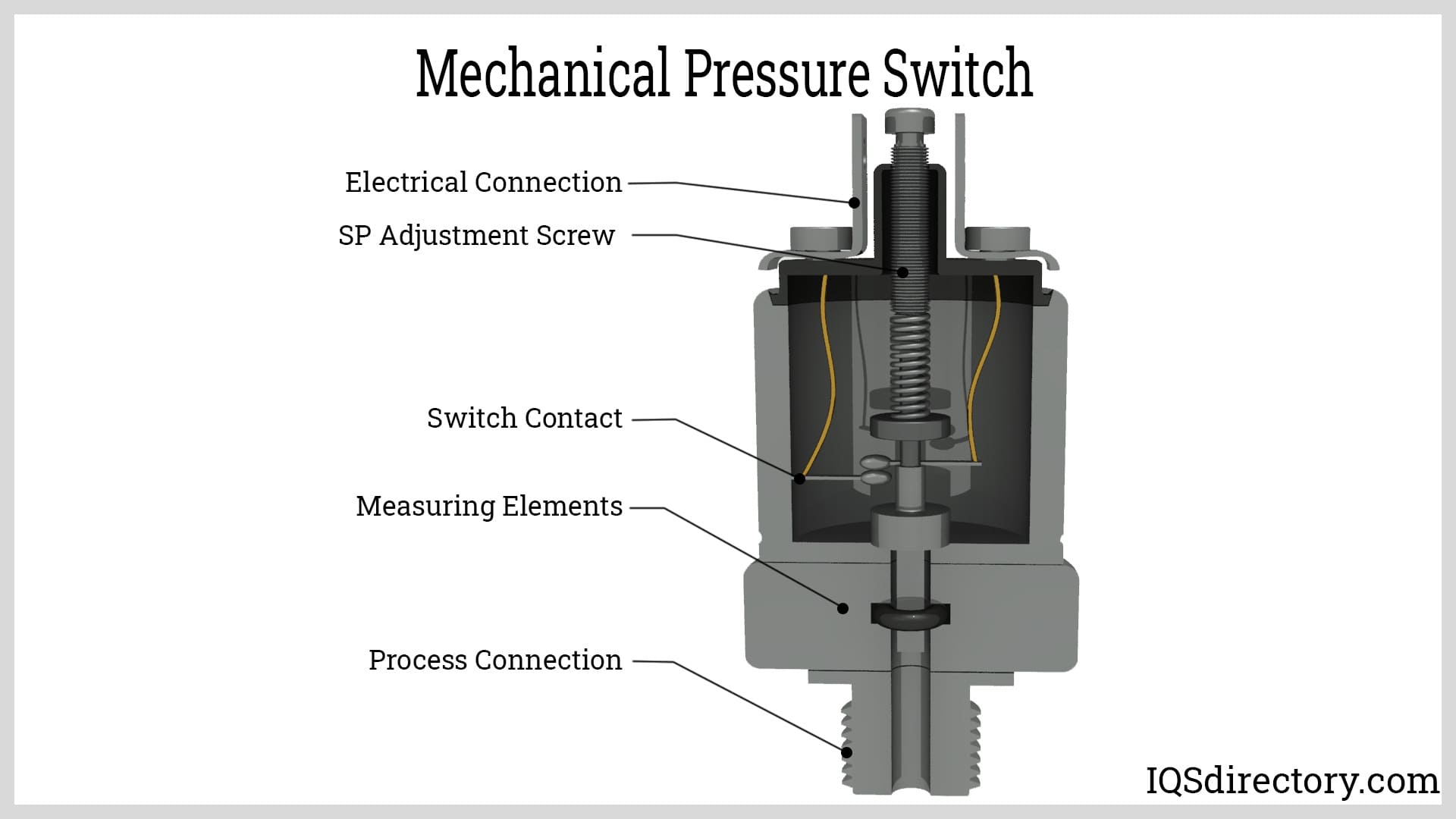
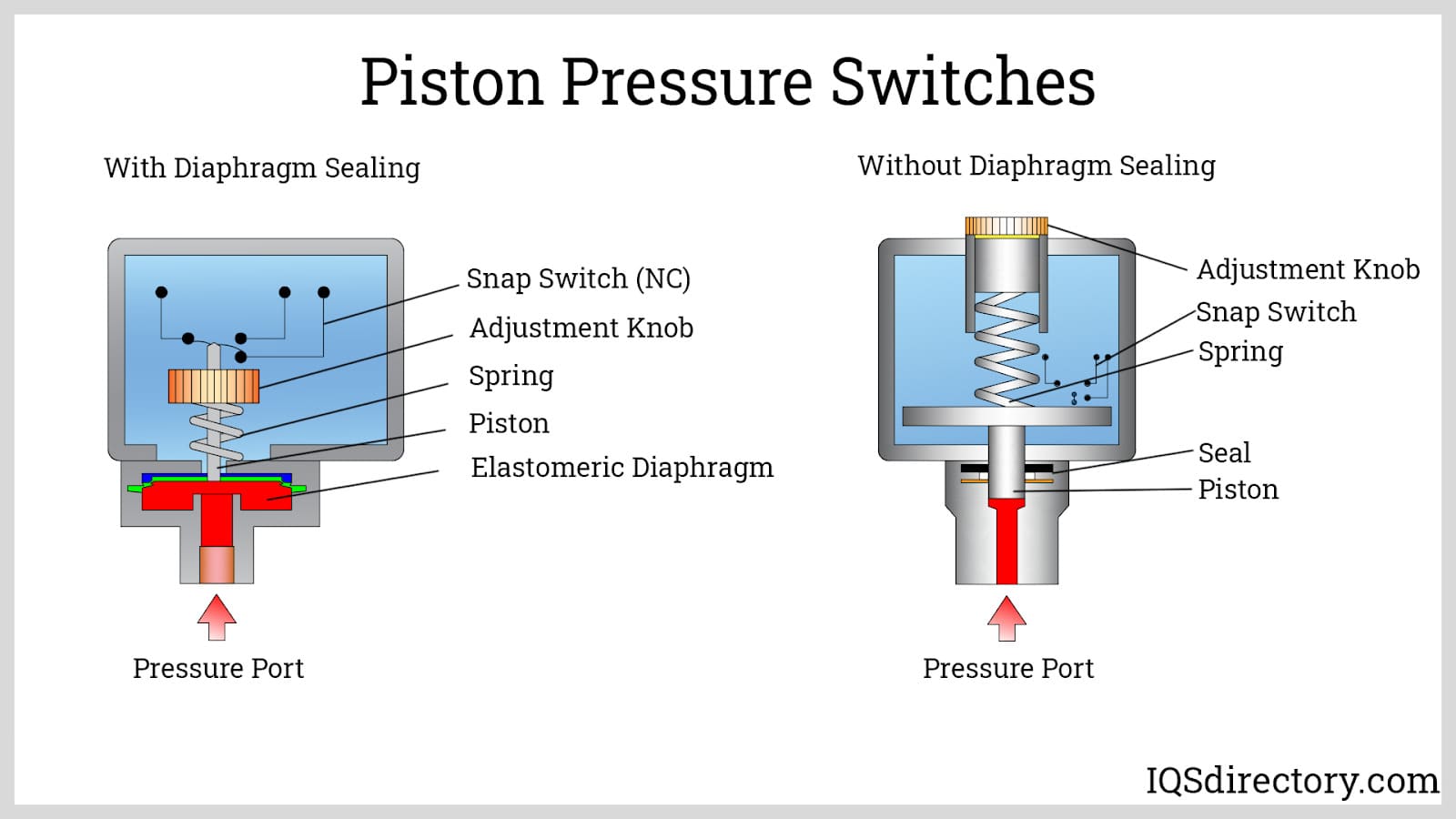
The physical architecture of a pressure switch typically involves a bellows or diaphragm linked to a spring-loaded set of electrical contacts. The refrigerant pressure acts against the bellows. When the pressure changes, the bellows expands or contracts, pushing a mechanical arm that opens or closes the electrical circuit.
Many pressure switches are "fixed" at the factory, meaning they have a pre-determined cut-out and cut-in point. Others are "adjustable," allowing technicians to calibrate them to specific system requirements. In 2026, many high-end systems have transitioned to using pressure transducers that send a continuous electrical signal (voltage or current) to the system's microprocessor. This allows for more granular control, such as ramping down a variable-speed compressor before a full shut-down is required.
Comparison of Pressure Switch States
| Feature | Low-Pressure Switch (LPS) | High-Pressure Switch (HPS) |
|---|---|---|
| Location | Suction Line (Low side) | Discharge Line (High side) |
| Primary Risk Mitigated | Loss of charge, evaporator freezing | Blockage, fan failure, overcharge |
| Circuit Logic | Normally Closed (Opens on drop) | Normally Closed (Opens on rise) |
| Common Reset Type | Usually Automatic (restarts when pressure rises) | Often Manual (requires physical button or power cycle) |
Troubleshooting: Why Your System Might Be Short Cycling
If you hear your HVAC system turning on and off in rapid succession—a phenomenon known as "short cycling"—a pressure switch is often the culprit. However, it is essential to distinguish between the switch failing and the switch doing its job.
- Diagnostic Reality: Most of the time, the switch is not "bad." It is reporting a legitimate problem. Before replacing a switch, a technician must verify the actual pressures using an external manifold gauge set.
- Electrical Continuity: If the gauge readings confirm the pressure is within the manufacturer's safe operating window but the compressor is not running, the switch may have failed in an "open" position. Testing for continuity across the switch terminals while the system is under pressure is the standard verification method.
- Chattering Contacts: Over years of operation, the internal electrical contacts can become pitted or burnt. This causes intermittent connection issues, leading to erratic operation.
Maintenance and Professional Considerations
It is important to emphasize that refrigerant pressure switches are integrated into a pressurized circuit. Attempting to replace or service these devices without proper EPA (Environmental Protection Agency) certification and recovery equipment is both illegal and dangerous. Refrigerant under high pressure can cause severe frostbite or eye injury, and the release of refrigerants is strictly regulated under global environmental standards.
If you suspect a faulty pressure switch, the correct procedure is:
- Verify Pressure: Use calibrated gauges to determine if the system pressure is actually outside of nominal operating ranges.
- Check Control Voltage: Use a multimeter to see if 24V (or the appropriate control voltage) is present at both sides of the switch.
- Inspect Wiring: Look for signs of corrosion on the spade terminals, which can create resistance and trigger false readings.
Frequently Asked Questions
1. Can I bypass a pressure switch to get my AC running? Never bypass a pressure switch. Doing so removes a critical safety device that prevents the compressor from destroying itself. If the switch is tripping, there is a fundamental issue with the system (like a leak or obstruction) that must be addressed, or the compressor will likely fail shortly after the bypass.
2. Why does my high-pressure switch need to be reset manually? Manual reset switches are designed for situations where a serious fault occurred. By requiring a physical action to restart the system, manufacturers ensure that a technician investigates the cause of the high pressure rather than allowing the system to continue "banging" against the high-pressure limit, which would eventually damage the valves.
3. What is the difference between "cut-in" and "cut-out" settings? The "cut-out" setting is the pressure at which the switch stops the compressor. The "cut-in" setting is the pressure at which the switch allows the compressor to restart. The difference between these two values is called the "differential." A properly designed differential prevents the system from oscillating rapidly (cycling) when pressures are near the limit.
4. How long do these switches typically last? Under normal operating conditions, a pressure switch can last as long as the compressor itself—often 15 to 20 years. However, factors like high humidity (which causes terminal corrosion), extreme vibrations, and electrical surges can lead to premature failure.
5. Are all pressure switches the same? No. Switches are calibrated for specific refrigerants (e.g., R-410A, R-454B) and specific operating pressures. Using an incorrect switch can result in a system that never cycles or, worse, one that operates at dangerous pressures without ever triggering a shut-down. Always consult the technical specifications of your specific unit.
Final Next Actions for Homeowners and Operators
If you suspect your pressure switch is the source of an issue, do not reach for a screwdriver. First, inspect your system for obvious signs of distress. Are your outdoor condenser coils covered in grass clippings or debris? Is your indoor air filter clean? These simple checks resolve many issues that trigger pressure switches.
If the system remains inoperative or continues to cycle, contact a licensed HVAC professional. Provide them with the model and serial number of your condenser unit. Request that they verify the refrigerant pressures before considering the replacement of any electrical component. By focusing on the root cause—the pressure imbalance—rather than the sensor itself, you ensure the longevity and efficiency of your cooling system.

Image Gallery
Select an image to open it in a new tab.



Ingrid Bjornson
Global Cyber Policy and Regulation Analyst
