Copper futures prices and their associated costs are determined by global supply and demand dynamics, macroeconomic indicators, exchange-traded contract specifications, storage fees, and financing charges. Trading or hedging copper requires navigating margin requirements, commission structures, and contango or backwardation pricing curves that influence the overall expense of holding positions.
Introduction to Copper Futures Markets
Copper is one of the most critical industrial metals globally, acting as a vital economic barometer due to its extensive use in construction, electronics, power generation, and transportation. Because physical copper is bulky, expensive to store, and subject to logistical constraints, industrial users, producers, and speculators rarely exchange physical metal on the spot market for every transaction. Instead, they rely on copper futures contracts traded on major global derivatives exchanges.
Understanding copper futures prices and costs requires looking beyond the headline spot or front-month contract price. The actual financial commitment involves navigating a complex ecosystem of contract sizing, margin requirements, physical delivery specifications, storage fees, and financing costs. Whether you are an industrial manufacturer hedging against price volatility or an investor seeking exposure to industrial commodities, breaking down how these prices are formed and what expenses accrue over time is essential for managing risk and capital efficiently.
Core Exchanges and Contract Specifications
Copper futures are standardized agreements to buy or sell a specific quantity of copper at a predetermined price on a future delivery date. To understand copper futures prices, you must first understand where they are traded and how their underlying contracts are structured.
Major Global Exchanges
The pricing of copper is globally integrated, but three primary exchanges dominate international commerce and price discovery:
- COMEX (Commodity Exchange): A division of the CME Group based in the United States, COMEX is the benchmark exchange for North American copper pricing and hedging. COMEX contracts are typically denominated in U.S. dollars per pound.
- LME (London Metal Exchange): As the world center for industrial metals trading, the LME utilizes a unique warrant system and prompt-date structure. LME contracts are quoted in U.S. dollars per metric ton.
- SHFE (Shanghai Futures Exchange): Serving the massive Chinese industrial market, the SHFE heavily influences domestic Chinese pricing and imports. SHFE contracts are denominated in Chinese Yuan (CNY) per metric ton and include value-added tax (VAT).
Contract Size and Denominations
Each exchange sets strict parameters for its copper futures contracts, dictating the financial exposure per contract:
- COMEX Copper (HG): Standard contracts represent 25,000 pounds of high-grade copper. Prices are quoted in cents and hundredths of a cent per pound. A price movement of one cent represents a $250 change in the contract's notional value.
- LME Copper: Standard contracts represent 25 metric tons of grade A copper. Because contract sizes and units differ between COMEX (pounds) and LME (metric tons), market participants often monitor arbitrage opportunities between the two venues.
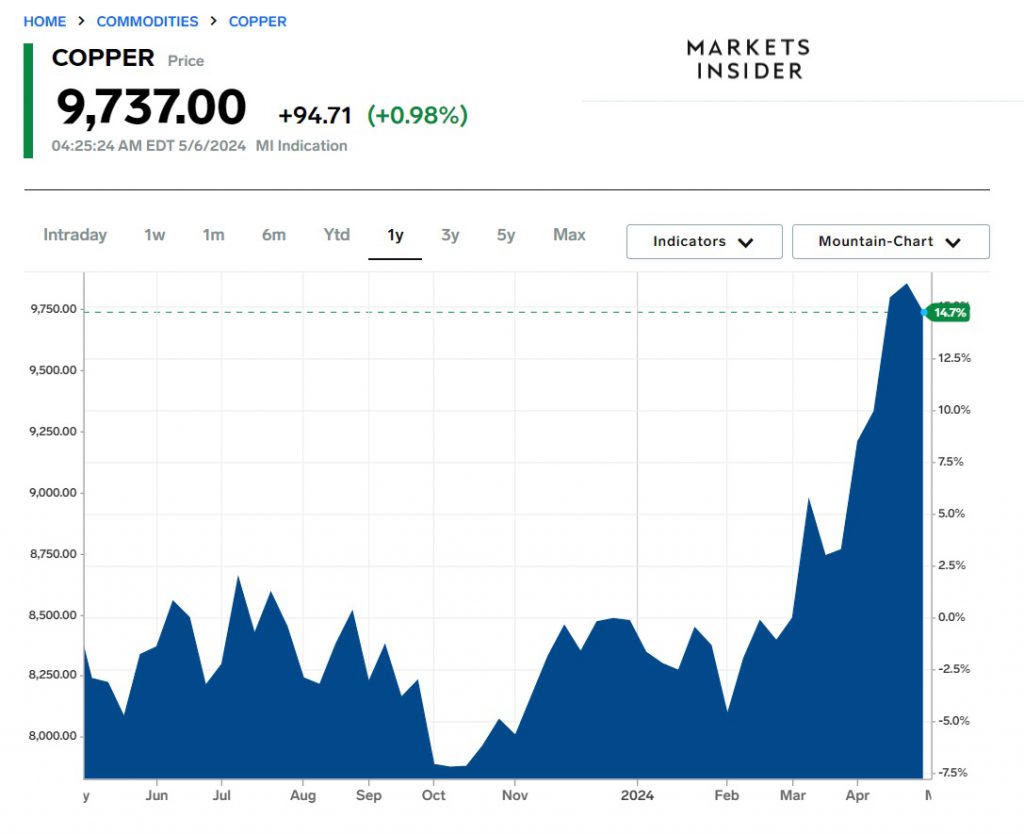
Mechanics of Copper Futures Pricing
The price of a copper futures contract is not merely a guess about what copper will cost tomorrow. It is an economic calculation influenced by the cost of carry, inventory levels, and forward-looking macroeconomic sentiment.
The Cost of Carry Model
In commodity markets, the theoretical price of a futures contract is determined by the cost of carry model. This model establishes that the futures price should equal the spot price plus the cost of storing the physical metal, insuring it, and financing the purchase (interest rates) over the duration of the contract:
$$\text{Futures Price} = \text{Spot Price} + \text{Storage Costs} + \text{Insurance} + \text{Financing Costs (Interest)} - \text{Convenience Yield}$$
When futures prices are higher than spot prices—a condition known as contango—it indicates that the market is paying for the convenience and cost of deferred delivery, often reflecting ample current supply and high interest rates or storage costs. Conversely, when spot prices exceed futures prices—known as backwardation—it signals an immediate scarcity of physical metal, encouraging holders to sell immediately rather than store the asset.
Macroeconomic Drivers of Copper Prices
Often referred to as "Dr. Copper" for its perceived ability to diagnose the health of the global economy, copper prices react swiftly to macroeconomic shifts:
- Global Industrial Production: Manufacturing activity, particularly in major economies like China, the United States, and the European Union, dictates baseline demand.
- Energy Transition and Electrification: The rapid expansion of electric vehicles (EVs), renewable energy generation, and grid modernization requires vast amounts of copper wiring and components, altering long-term structural demand.
- Currency Fluctuations: Because copper is globally priced in U.S. dollars, a weaker dollar typically makes copper cheaper for holders of other currencies, driving up demand and prices, while a stronger dollar often depresses prices.
Breakdown of Costs Associated with Copper Futures
Trading or holding copper futures involves several distinct layers of cost that go well beyond the initial purchase price or margin deposit. Failing to account for these expenses can rapidly erode trading capital or hedging efficacy.
| Cost Category | Description | Impact on Trader / Hedger |
|---|---|---|
| Initial & Maintenance Margin | Performance bond required by brokers and clearinghouses to open and maintain a futures position. | Tied-up capital; risk of margin calls if prices move against the position. |
| Brokerage Commissions & Fees | Transaction fees charged by executing brokers, exchange fees, and regulatory clearing fees per contract. | Direct transactional drag that accumulates with high-frequency or short-term trading. |
| Storage & Rent (Warehouse) | Costs associated with storing physical copper in exchange-approved warehouses (relevant for delivery). | Accrues daily/monthly for those taking physical delivery or holding long-term LME warrants. |
| Financing & Interest Costs | The cost of capital borrowed to fund margin requirements or the purchase price of physical metal. | Increases during high-interest-rate environments, making physical carry more expensive. |
| Roll Yield | The cost or credit realized when closing an expiring futures contract and opening a deferred-month contract. | Can result in losses (negative roll yield) in steep contango markets or gains in backwardation. |
Margin Requirements and Leverage
Futures trading relies on leverage. Instead of paying the full notional value of a 25,000-pound COMEX copper contract (which can exceed $100,000 depending on market prices), traders deposit an initial margin—typically a fraction (e.g., 5% to 10%) of the total contract value.
While leverage magnifies potential returns, it equally magnifies potential losses. If market prices move unfavorably, brokers issue margin calls requiring additional funds to maintain the position. If unmet, the broker will forcibly liquidate the contract, locking in realized losses.
The Impact of Roll Yield
Because futures contracts have specific expiration months (such as March, May, July, September, and December), market participants who wish to maintain a long-term position must "roll" their contracts forward before expiration. This involves selling the near-term contract and buying a later-dated contract.
In a market structure characterized by contango, rolling forward requires selling a lower-priced near-term contract and buying a higher-priced deferred contract, resulting in a continuous loss known as negative roll yield. Conversely, in backwardation, rolling forward can generate a positive yield because the trader sells a higher-priced near-term contract and buys a cheaper deferred contract.
Physical Delivery Versus Cash Settlement
Most retail speculators and financial funds do not intend to take or make physical delivery of thousands of pounds of copper. They square off or roll their positions before the contract's first notice day or last trading day, settling the financial difference in cash.
However, for industrial consumers (such as cable manufacturers) and primary producers (such as mining companies), physical delivery is a crucial mechanism for locking in raw material costs or securing sales channels.
When physical delivery occurs:
- The seller must deliver warrant-backed copper meeting strict purity standards (minimum 99.99% copper cathode purity for COMEX Grade 1) to an exchange-approved depository.
- The buyer must pay the full invoice amount, taking title to the metal along with the associated warehouse rent and insurance obligations moving forward.
- Logistical expenses, such as freight, rail, or trucking charges from the warehouse to the end-use facility, become the responsibility of the receiving party.
Risk Management and Hedging Strategies
For businesses exposed to raw material price fluctuations, understanding futures prices and costs enables the creation of effective hedging programs. Hedging transforms an unpredictable market exposure into a locked-in cost structure.
Short Hedges for Producers
Mining companies face the risk of falling copper prices reducing their profitability. By taking a short position in copper futures, a producer can lock in a selling price. If physical copper prices drop, the gains realized on the short futures position offset the lower revenue received when selling the physical metal in the cash market.
Long Hedges for Consumers
Manufacturers requiring steady supplies of copper face the risk of rising input costs squeezing profit margins. By taking a long position in copper futures, a manufacturer locks in a purchase price. If market prices surge, the profit on the futures contract helps offset the higher cost of acquiring physical copper for production.
Frequently Asked Questions
What determines the daily settlement price of copper futures?
Exchanges determine daily settlement prices through a weighted average of trades executed during a specific closing period (the "settlement window") or via exchange committee algorithms if trading volume is insufficient. This price is vital for calculating daily margin requirements and marking open positions to market.
Why do COMEX and LME copper prices sometimes diverge?
While both exchanges track global copper fundamentals, divergence occurs due to regional supply constraints, differences in contract specifications (pounds versus metric tons), local inventory levels, transportation tariffs, and regional import tariffs or trade policies, such as those impacting China.
What is a margin call in copper futures trading?
A margin call is a demand from a brokerage firm for additional funds to bring an account's equity back up to the required maintenance margin level. This occurs when adverse price movements reduce the account equity below the safety threshold established by the clearinghouse.
How do interest rates affect copper futures prices?
Higher interest rates increase the cost of carry. Because it costs more to finance the purchase and storage of physical commodities, high interest rates tend to widen contango, making deferred futures contracts more expensive relative to spot prices.
Can individual retail investors trade copper futures?
Yes, individual investors with approved futures trading accounts can trade copper futures. However, due to the large contract sizes, high volatility, and leverage risks, adequate capital capitalization and risk management protocols—such as stop-loss orders—are necessary to prevent significant financial loss.
Conclusion and Next Actions
Mastering copper futures prices and costs requires analyzing global macroeconomic trends, understanding the mechanics of contango and backwardation, and calculating total operational expenses—including margins, storage, commissions, and roll yields. If you are preparing to trade or hedge copper futures, your next steps should include opening a specialized derivatives brokerage account, reviewing the specific contract guidelines of the COMEX or LME, and establishing a strict risk management framework to handle margin volatility.
Image Gallery
Select an image to open it in a new tab.
Simon Caldwell
Enterprise Technology and Systems Editor
