The Comprehensive Procedure in Illinois for Filing a Workers’ Compensation Claim
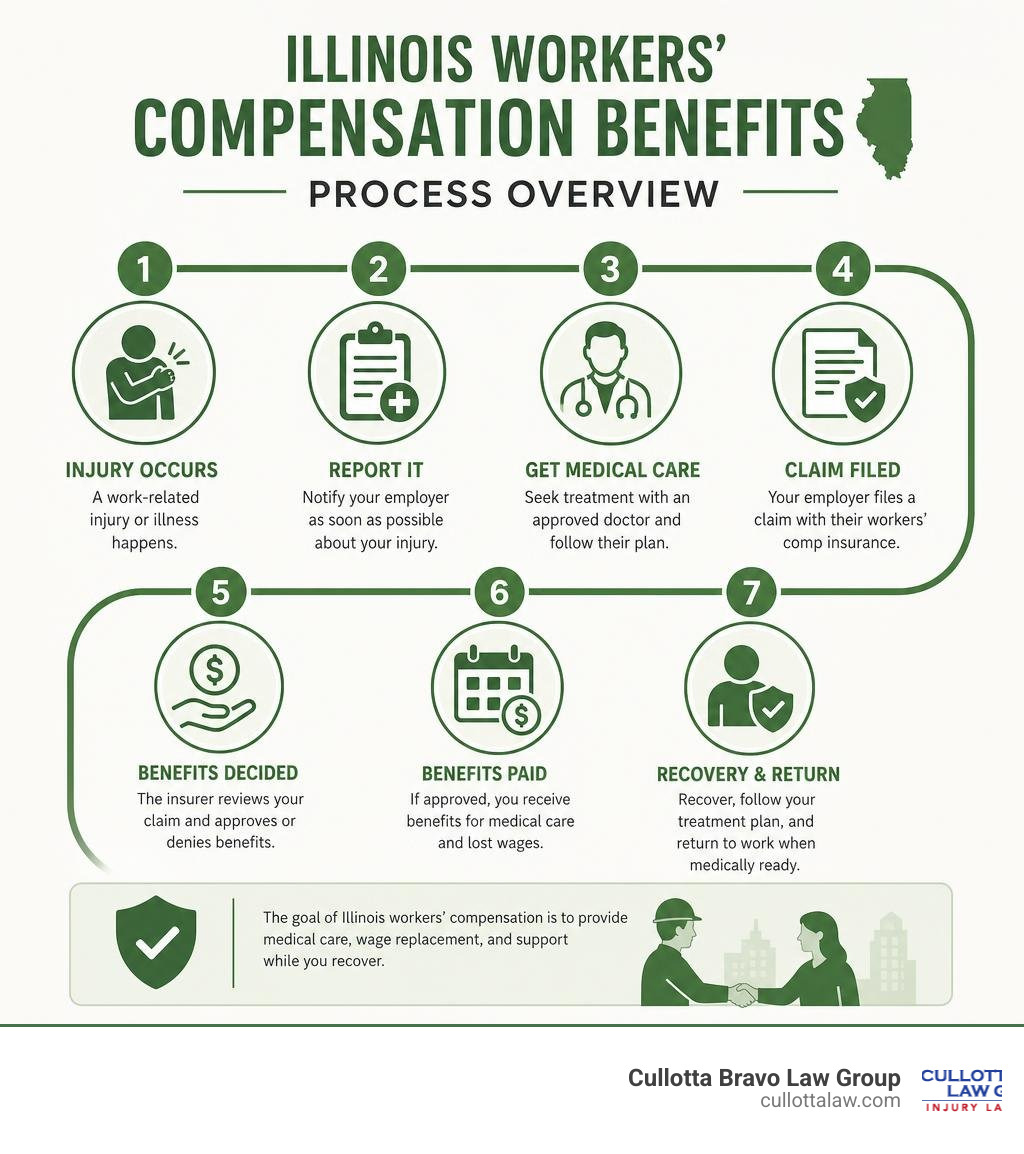
Filing a workers’ compensation claim in Illinois requires prompt notification to your employer, seeking necessary medical treatment, and ensuring your employer provides the required paperwork to the Illinois Workers’ Compensation Commission. You must strictly adhere to statutory deadlines for reporting injuries and filing formal petitions to preserve your right to benefits, including medical expenses, temporary disability payments, and vocational rehabilitation.
Understanding the Illinois Workers’ Compensation Act
The Illinois Workers’ Compensation Act is designed to provide employees with a streamlined administrative path to receive medical benefits and wage loss compensation following work-related injuries or illnesses. Unlike a civil lawsuit where a plaintiff must prove negligence, the Illinois system is "no-fault." This means that generally, you do not need to prove that your employer was careless; you only need to demonstrate that your injury arose out of and in the course of your employment.
However, because this is an administrative process regulated by the Illinois Workers’ Compensation Commission (IWCC), the procedure is highly structured. Understanding the timelines and documentation requirements is the primary factor in ensuring your claim is not denied or dismissed due to procedural errors.
Step 1: Immediate Notification to Your Employer
The most critical first step in the Illinois procedure is providing notice to your employer. Under the Illinois Workers’ Compensation Act, you must notify your employer of your injury as soon as possible, but no later than 45 days after the accident.
While the law allows for a 45-day window, providing notice immediately is vital for the viability of your claim. Delayed notice often leads to "notice disputes," where an employer or their insurance carrier denies the claim on the grounds that the injury did not occur at work, or that the delay prevented them from conducting a timely investigation.
How to Provide Notice:
- Written vs. Verbal: While oral notice is technically permitted, it is strongly recommended that you provide notice in writing. This creates a clear evidentiary trail.
- What to Include: Your written notice should include the date, time, and location of the incident, a description of how the injury occurred, and the parts of your body that were affected.
- Retention: Keep a copy of the notification for your personal records, especially if you sent it via email or submitted a physical incident report form to your supervisor.
Step 2: Seeking Medical Attention
If you are injured at work, your immediate priority is your health. You should inform your medical provider that your injury is work-related. This is a crucial distinction, as workers’ compensation medical billing differs significantly from standard private health insurance billing.
In Illinois, the employer generally has the right to direct your medical care if they have a Preferred Provider Program (PPP). If they do not, you are typically entitled to choose your own health care providers. It is important to ask your employer if they have a designated provider network. If you seek treatment outside of a designated network without authorization, you may risk having those medical bills denied for payment under the workers’ compensation insurance policy.
Step 3: Employer’s Obligation to Report
Once you have reported the injury, your employer is required to record the injury in their records. If you are off work for more than three days, the employer must report the injury to their insurance carrier or, if self-insured, to the Illinois Workers’ Compensation Commission.
Do not assume that simply reporting the injury to your boss constitutes "filing a claim" with the state. The employer’s internal report to their insurance company is not the same as filing a formal petition with the IWCC. If your employer refuses to file a report or denies that the injury is work-related, you must take the initiative to contact the IWCC directly.
Step 4: Filing a Formal Claim with the IWCC
If the insurance company denies your claim, fails to pay for medical treatment, or does not pay temporary total disability (TTD) benefits when you are unable to work, you must file a formal document known as an Application for Adjustment of Claim.
Filing this application is the official act of starting the litigation process before an arbitrator at the Commission. This form serves as your formal entry into the state’s adjudication system. You can file this form electronically through the IWCC’s online portals or by mail.
Statutory Filing Deadlines (Statute of Limitations):
- General Rule: You generally have three years from the date of the injury to file an Application for Adjustment of Claim.
- Exceptions: If your employer paid you some benefits (such as temporary disability payments or medical bills) after the accident, the time limit for filing an application may be extended. However, relying on these exceptions is risky; you should always aim to file well within the three-year window.
Comparison of Claim Stages
| Stage | Action | Primary Purpose |
|---|---|---|
| Initial Report | Oral or written notice to supervisor | Establishes the date and circumstances of the injury. |
| Medical Treatment | Examination and diagnosis | Documents the medical necessity and work-relatedness. |
| Insurance Claim | Employer submits report to carrier | Triggers initial benefits payment or denial. |
| Formal Petition | Application for Adjustment of Claim | Moves the case into the legal jurisdiction of the IWCC. |
Handling Denials and Disputes
If your claim is denied, you have the right to a hearing. A dispute usually arises regarding the nature and extent of the injury, the necessity of medical treatment, or whether the injury truly occurred in the course of employment.
When a claim is disputed, your case will be assigned to an arbitrator. During the arbitration process, both sides will present evidence. This includes medical records, expert medical testimony (IME reports), and testimony from the employee regarding the work environment. It is strongly advised that at this stage, you consult with an attorney who specializes in Illinois workers’ compensation, as the rules of evidence and procedure in these hearings are strictly enforced.
Important Considerations for 2026
As of 2026, the Illinois Workers’ Compensation Commission continues to emphasize the importance of electronic filing. The Commission has streamlined its digital interface to ensure that claims are processed more efficiently. If you are representing yourself (pro se), you must ensure your contact information on file with the Commission is current, as all notices regarding your hearing dates or status updates will be sent to the address provided on your application.
Additionally, be aware of "Temporary Total Disability" (TTD) calculations. In 2026, these benefits are generally paid at two-thirds of your average weekly wage, subject to minimum and maximum limits set by the state legislature. Ensure that your employer is calculating these figures correctly based on your actual earnings prior to the injury.
Common Mistakes to Avoid
- Waiting too long to report: Even if the injury seems minor initially, reporting it early creates a paper trail if the injury worsens over time.
- Omitting body parts: When you describe your injury, be thorough. If your back hurts but you also have radiating pain in your leg, include both. Subsequent claims for unmentioned body parts can be difficult to append later.
- Missing follow-up appointments: Failure to attend doctor-ordered appointments can be used as evidence by the insurance carrier to argue that you are not following medical advice or that your condition has improved.
- Signing documents without reading: Do not sign any "settlement" or "final release" documents provided by an insurance adjuster without fully understanding what rights you are waiving.
Frequently Asked Questions
1. Does the Illinois Workers’ Compensation Commission charge a fee to file a claim? No, there is no fee to file an Application for Adjustment of Claim with the Illinois Workers’ Compensation Commission. It is a state administrative process provided to ensure employees can seek redress.
2. Can I be fired for filing a workers' compensation claim? Illinois is an "at-will" employment state, but it is illegal to fire an employee in retaliation for exercising their rights under the Workers’ Compensation Act. If you believe you were terminated for filing a claim, you may have grounds for a separate civil action for retaliatory discharge.
3. What happens if my employer does not carry workers’ compensation insurance? If an employer fails to carry mandated insurance, they are in violation of Illinois law. In such cases, you may still file a claim, and you may also be able to seek assistance through the Injured Workers' Benefit Fund, which was established to provide benefits to employees whose employers failed to secure insurance.
4. How long does the resolution process take? The timeframe varies significantly based on the severity of the injury and the willingness of the insurance carrier to settle. Simple cases may resolve in months, while complex cases involving permanent disability or surgery may take over a year to reach a final settlement or trial.
5. What is an Independent Medical Examination (IME)? An IME is an examination requested by the insurance company. They hire a physician of their choosing to evaluate your condition. Because this physician is paid by the insurance carrier, their findings often differ from those of your own treating physician. You are generally required to attend these exams, but you should discuss the implications with legal counsel first.
Final Recommendations
The procedure in Illinois for filing a workers’ compensation claim is built on strict deadlines and specific documentation requirements. If you have been injured, your first priority is to provide written notice to your employer. Following that, ensure your medical providers are aware that your condition is work-related. If you encounter any resistance from your employer or their insurance carrier, or if your medical bills remain unpaid, immediately contact the Illinois Workers’ Compensation Commission or a qualified professional to discuss filing a formal Application for Adjustment of Claim. Do not attempt to navigate complex legal disputes regarding permanent impairment or vocational rehabilitation without professional guidance, as these are technical areas governed by specific statutes that change periodically.

Image Gallery
Select an image to open it in a new tab.


Mateo Castillo
Decentralized Finance and E-Payments Strategist
