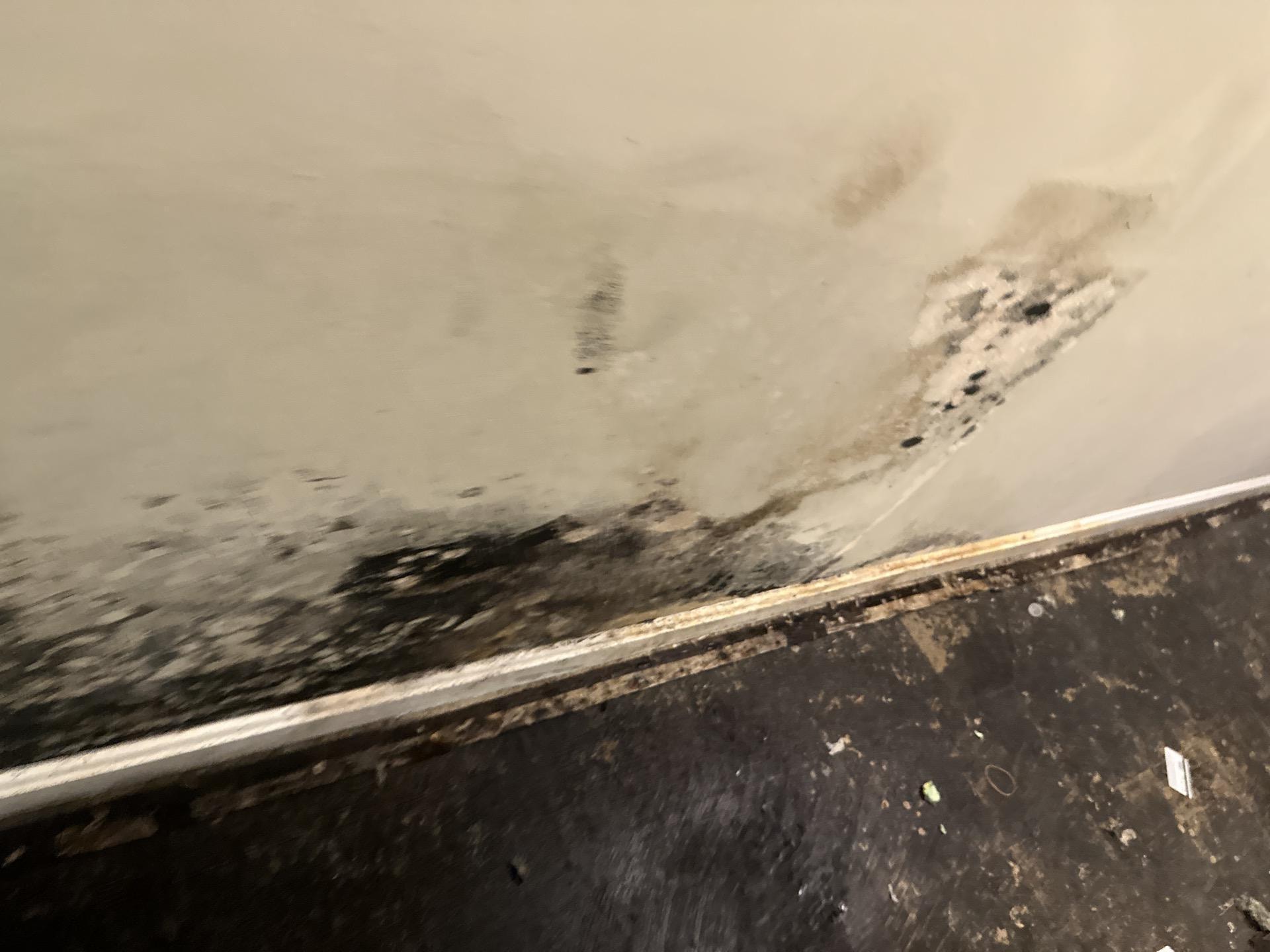
Maryland does not currently require a specific, standalone state license for mold remediation professionals, as the 2008 Mold Remediation Services Act was never fully implemented. Instead, mold cleanup is regulated under the Maryland Home Improvement Commission (MHIC), which requires contractors to hold a home improvement license for residential projects involving structural repairs or material removal.
The Landscape of Mold Regulation in Maryland
As of 2026, Maryland’s regulatory environment for mold remediation remains a complex tapestry of home improvement laws, landlord-tenant statutes, and common law disclosure requirements. Unlike asbestos or lead paint, which are strictly regulated by the Maryland Department of the Environment (MDE) with specific certification tracks, mold does not have a dedicated state-level enforcement agency that oversees "mold-only" licenses.
The absence of a specific "Mold Remediation License" often surprises homeowners and commercial property managers. In 2008, the Maryland General Assembly passed the Maryland Mold Remediation Services Act. This law was intended to create a formal licensing structure for companies and individuals. However, due to budgetary constraints and administrative shifts in the subsequent decade, the regulations were not fully promulgated, and the licensing program was effectively shelved.
Consequently, the burden of regulation falls primarily under the Maryland Home Improvement Commission (MHIC), which operates under the Department of Labor. If a mold remediation project involves the removal of drywall, the replacement of subflooring, or any other structural alteration to a residential property, the contractor must hold a valid MHIC license. This ensures the contractor is bonded and contributes to the Guaranty Fund, providing a layer of financial protection for consumers.
Licensing Requirements for Professionals
While there is no "Mold Specialist" badge issued by the state, the legal requirement for an MHIC license is the primary tool for oversight. In Maryland, "home improvement" is broadly defined to include the repair, replacement, or improvement of any part of an existing residential building.
The MHIC License Requirement
For any project where the cost of labor and materials exceeds a minimal threshold—or involves the structural integrity of the home—the contractor must be licensed by the MHIC. This is a critical distinction for property owners. If you hire a "mold expert" who is not MHIC-licensed to tear out moldy walls in your basement, that contractor may be operating illegally.
The MHIC license requires:
- Proof of Experience: At least two years of experience in home improvement work or related education.
- Financial Solvency: Proof of financial stability or a surety bond.
- Examination: Passing an exam that covers Maryland’s home improvement laws and business practices.
- Insurance: General liability insurance is mandatory to protect against property damage or injury.
Professional Certifications (IICRC)
In the absence of state-mandated technical testing, Maryland courts and insurance companies typically look to industry-standard certifications as the benchmark for "professional" work. The most recognized body is the Institute of Inspection Cleaning and Restoration Certification (IICRC).
The IICRC S520 Standard for Professional Mold Remediation is the "gold standard" used in Maryland. While not a law, it is the standard of care to which professionals are held in litigation. A contractor who fails to follow S520 protocols—such as failing to establish negative air pressure or proper containment—may be found negligent in a Maryland court.
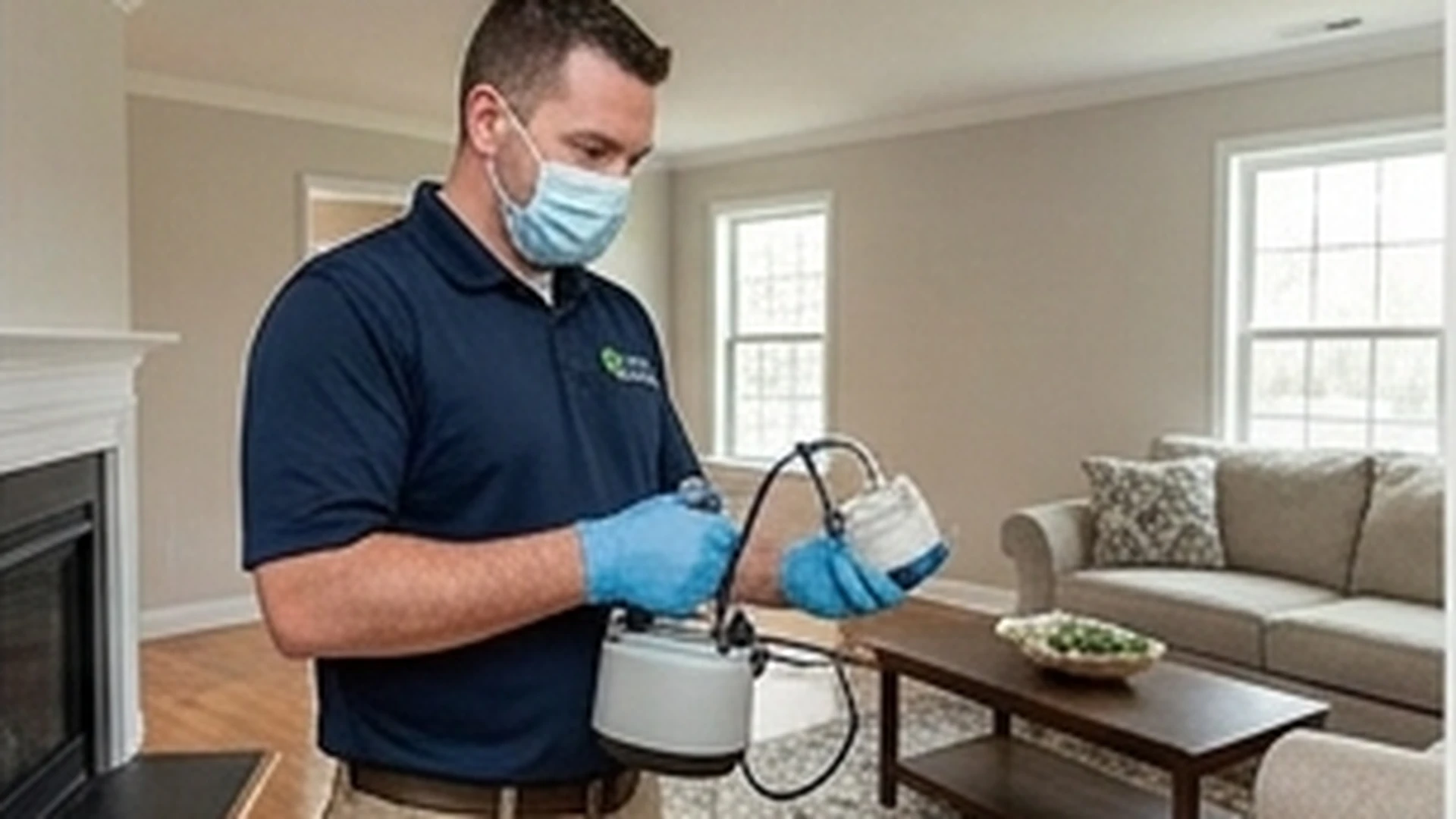
Tenant Rights and Landlord Obligations
In 2026, mold remains one of the most frequent sources of dispute between landlords and tenants in Maryland. The state does not have a specific "Maximum Exposure Limit" (MEL) for mold spores, primarily because individual sensitivity varies so widely. Instead, mold issues are litigated under the Warranty of Habitability and the Rent Escrow Law.
The Warranty of Habitability
Under Maryland Code, Real Property § 8-211, landlords have an obligation to provide a property that is free from conditions that present a "serious and substantial threat to the life, health, and safety of the occupants." Mold, particularly when caused by chronic leaks, failing roofs, or inadequate ventilation, is frequently cited as a breach of this warranty.
The Maryland Rent Escrow Law
If a landlord fails to remediate a significant mold problem after being notified, tenants in Maryland have the right to seek a rent escrow. This process allows the tenant to pay their rent into a court-supervised account rather than to the landlord.
- Notice: The tenant must provide written notice of the mold issue via certified mail.
- Reasonable Time: The landlord is given a reasonable time (usually 30 days) to fix the underlying cause (e.g., a pipe leak) and remediate the mold.
- Filing: If the landlord fails to act, the tenant files a Rent Escrow action in the District Court.
- Inspection: The court may order a local housing inspector to verify the mold and the conditions causing it.
It is important to note that Maryland law does not allow tenants to simply "stop paying rent" without following the escrow process. Doing so often leads to eviction proceedings regardless of the mold's severity.
Residential Real Estate Disclosures
For those selling a home in Maryland, mold is a significant disclosure item. Maryland law requires sellers to provide a Residential Property Disclosure and Disclaimer Statement.
Latent Defects
Sellers must disclose "latent defects." A latent defect is a condition that a purchaser would not reasonably be expected to observe by a careful visual inspection and which poses a direct threat to health or safety. If a seller has painted over a massive mold colony in the attic without remediating it, they have failed to disclose a latent defect.
Failure to disclose known mold issues can result in lawsuits for fraud or breach of contract. Buyers who discover mold after closing often rely on the fact that the seller had prior knowledge (e.g., previous insurance claims or repair estimates) that was suppressed during the sale.
Conflict of Interest: Testing vs. Remediation
One of the most important "unwritten" rules in Maryland’s mold industry—frequently reinforced by insurance adjusters and savvy consultants—is the separation of testing and removal.
To avoid a conflict of interest, it is highly recommended that property owners hire two different entities:
- An Environmental Consultant (IEP): An Indoor Environmental Professional to conduct air sampling, identify mold species, and write a "remediation protocol."
- A Remediation Contractor: A firm to execute the protocol and physically remove the mold.
In Maryland, a company that provides both the initial testing and the remediation is often viewed with skepticism, as they have a financial incentive to "find" mold that may not require professional intervention. Post-remediation verification (clearance testing) should always be performed by an independent third party to ensure the area is safe for re-occupancy.
Summary of Regulatory Authorities and Roles
| Entity | Role in Mold Remediation | Authority/Requirement |
|---|---|---|
| MHIC | Licensing | Required for residential work involving structural changes or material removal. |
| Maryland District Court | Enforcement | Handles Rent Escrow cases and habitability disputes between landlords and tenants. |
| MDE | Guidance | Provides technical assistance but does not issue mold licenses or certifications. |
| IICRC | Industry Standards | Provides the S520 Standard, which is the legal "standard of care" in Maryland. |
| Local Health Depts. | Inspection | May inspect rental properties for dampness and mold under local housing codes. |
| Maryland Realtors | Disclosure | Governs the disclosure of latent mold defects during property transfers. |
Professional Remediation Standards and Steps
If a mold problem in a Maryland property exceeds 10 square feet, the Environmental Protection Agency (EPA) and industry experts recommend professional remediation. In 2026, a standard professional remediation in Maryland follows these specific phases:
Phase 1: Assessment and Protocol
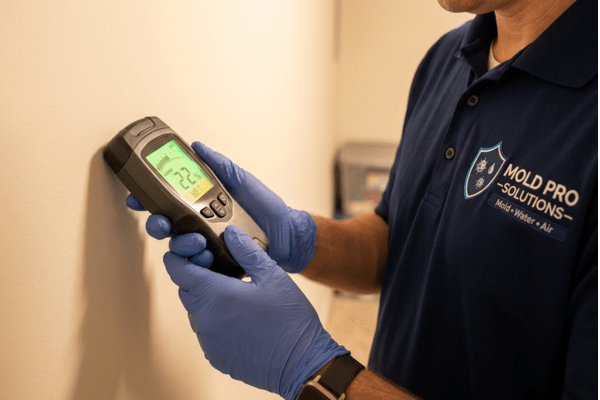
A professional assessment identifies the moisture source. Mold is a symptom; water is the cause. Without fixing the leak or humidity issue, mold will return. The assessment results in a "Remediation Protocol," a step-by-step plan for the cleanup.
Phase 2: Containment
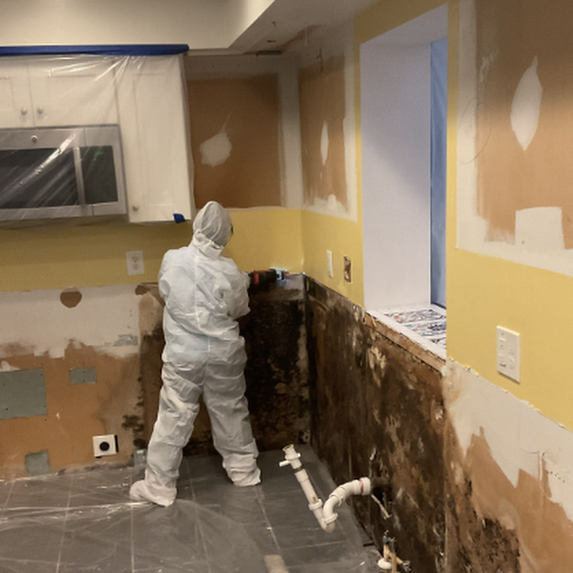
To prevent the spread of spores to unaffected areas of the home, contractors must build containment. This typically involves 6-mil polyethylene sheeting and the use of HEPA-filtered air scrubbers to create negative air pressure. This ensures that when moldy materials are moved, the spores are sucked into a filter rather than drifting into the kitchen or bedrooms.
Phase 3: Removal and Cleaning
Moldy porous materials (drywall, insulation, carpet) are bagged and removed. Non-porous materials (studs, concrete) are cleaned using HEPA vacuuming and "media blasting" or wire brushing. Antimicrobial sealants may be applied to remaining structural members to prevent future growth.
Phase 4: Clearance Testing
Before the containment is taken down, an independent consultant should perform a visual inspection and air quality testing. The "clearance" report confirms that the spore counts inside the contained area are similar to or lower than the outdoor ambient air levels.
Insurance and Liability Considerations
In Maryland, most standard homeowners' insurance policies have "mold sub-limits." While a policy might have $500,000 in general coverage, it may only offer $5,000 or $10,000 for mold remediation.
Sudden vs. Gradual: Insurance typically covers mold only if it is the result of a "sudden and accidental" peril, such as a pipe bursting. Mold resulting from a long-term slow leak or high basement humidity is often excluded as a "maintenance issue."
Property owners should verify that their remediation contractor carries Pollution Liability Insurance. Standard General Liability policies often exclude "fungus" or "bacteria." If a contractor accidentally spreads mold spores throughout a HVAC system, a standard policy will not cover the damage, leaving the property owner at risk.
Frequently Asked Questions
Is a mold license required in Maryland in 2026?
No, Maryland does not issue a specific "mold license." However, most residential mold remediation work requires a Maryland Home Improvement Commission (MHIC) license if it involves removing or replacing parts of the home (like drywall or flooring). Always check the contractor's MHIC status on the Maryland Department of Labor website.
Can I sue my landlord for mold in Maryland?
Yes, but it is a specific legal process. You generally cannot sue for "damages" easily without medical proof of injury. However, you can use the Rent Escrow Law to force repairs. You must give the landlord written notice and the opportunity to fix the issue before the court will intervene.
How much does mold remediation cost in Maryland?
Costs vary significantly based on the square footage and the complexity of the containment. Small bathroom remediations may cost between $1,500 and $3,500, while entire basement remediations involving structural cleaning and air scrubbing often range from $5,000 to $15,000.
Does the Maryland Department of the Environment (MDE) test for mold?
No, the MDE does not provide mold testing services for private homeowners or tenants. They provide informational resources, but testing must be handled by private environmental consultants.
What is the legal limit for mold spores in Maryland?
There are no federal or Maryland state standards for "safe" levels of mold spores. Because different people react differently to various species (like Stachybotrys vs. Aspergillus), the legal standard is usually based on a comparison between the indoor environment and the natural outdoor environment.
Are Maryland sellers required to test for mold before a sale?
No, there is no law requiring a pre-sale mold test. However, sellers must disclose "known" mold problems. Many buyers hire their own inspectors to perform air quality tests during the due diligence period.
Practical Recommendations
For property owners and managers in Maryland, navigating mold issues requires a proactive and documented approach. If you suspect a mold problem:
- Document Everything: Take photos of visible mold and any water intrusion (leaks, stains). Keep a log of all communications with landlords or contractors.
- Verify the License: If hiring a contractor, use the Maryland Department of Labor’s search tool to ensure they have an active MHIC license.
- Insist on a Protocol: Do not allow a contractor to start "tearing things out" without a written plan that includes containment and HEPA filtration.
- Prioritize the Source: Ensure the moisture source is identified and repaired first. Remediation without moisture control is a temporary and expensive fix.
- Seek Independent Testing: Always have a third party—not the remediation company—perform the final clearance testing to ensure the job was done correctly and the air is safe.
While Maryland's lack of a specific mold license might seem like a regulatory gap, the existing framework of home improvement laws and tenant protections provides significant recourse for those who know how to navigate the system.
Image Gallery
Select an image to open it in a new tab.

Vivian Cho
Executive IT and Emerging Technologies Reporter
