
Accidental death insurance is a supplemental policy that pays a benefit only if the insured dies due to a qualified accident. It is not a shortcut to comprehensive financial security because it excludes deaths caused by illness, disease, or natural causes—which represent the vast majority of all-cause mortality. While affordable, it serves as a narrow safety net rather than a substitute for standard term or permanent life insurance.
In the complex landscape of financial planning in 2026, consumers often seek ways to maximize coverage while minimizing monthly expenditures. Among the various products available, accidental death insurance—often packaged as Accidental Death and Dismemberment (AD&D)—frequently surfaces as an attractive, low-cost option. However, the low price tag is a direct reflection of the narrow window of risk it covers. Relying on this product as a primary life insurance solution is a fundamental misunderstanding of risk management. To secure a family's future, one must recognize that an "accident" is a specific legal and actuarial term, not a catch-all for any untimely passing.
Understanding the Scope: What Accidental Death Insurance Actually Is
Accidental death insurance is designed to provide a financial cushion in the event of a sudden, external, and violent occurrence that leads to the death of the policyholder. This type of insurance is typically "guaranteed issue," meaning it does not require a medical exam or a review of your health history. This ease of access is what often leads people to view it as a shortcut. If you have been denied traditional life insurance due to health issues, or if you are looking for a quick way to add a layer of protection, AD&D seems like a logical path.
However, the "accidental" definition is strictly enforced by insurers. To qualify for a payout, the death must be the direct result of an accident, independent of all other causes. Common examples include motor vehicle accidents, falls, drowning, or accidents involving heavy machinery. If a person suffers a stroke while driving and subsequently crashes their car, the primary cause of death may be determined as the stroke (a medical event), not the accident. In such cases, an accidental death policy likely would not pay out. This distinction is the primary reason why these policies cannot replace traditional life insurance, which covers death by any cause (after the initial contestability period).
The Financial Allure and the "Shortcut" Fallacy
The primary reason individuals mistake accidental death insurance for a shortcut is the cost-to-benefit ratio. In 2026, a standard term life insurance policy for a 40-year-old might cost significantly more than an AD&D policy with the same face value. This is because the insurance company knows the statistical probability of a 40-year-old dying from a sudden accident is much lower than the probability of them dying from a long-term illness or a sudden medical emergency like a pulmonary embolism.
When consumers see a $500,000 policy for $15 a month, they may feel they have "checked the box" for life insurance. This creates a dangerous "coverage gap." The "shortcut" here is purely psychological; it provides a sense of security that is not backed by the reality of mortality statistics. True financial security requires preparing for the most likely scenarios, not just the most dramatic ones.

Mortality Realities: Why Accidents are the Minority
To understand why accidental death insurance is not a complete solution, one must look at the leading causes of death. According to data maintained by the Centers for Disease Control and Prevention (CDC) and various global health organizations, the vast majority of deaths are attributed to non-accidental causes.
- Chronic Diseases: Heart disease and cancer remain the leading killers globally. These are medical conditions that are explicitly excluded from accidental death policies.
- Organ Failure: Deaths resulting from kidney, liver, or respiratory failure are considered natural or disease-related.
- Infections and Pandemics: Even in 2026, complications from viral or bacterial infections are classified as illnesses.
- Age-Related Decline: The gradual failure of the body due to old age is never covered by an accidental death policy.
Statistically, accidents (unintentional injuries) typically rank as the fourth or fifth leading cause of death, depending on the age demographic. While they are a significant risk for younger individuals, the risk of dying from a medical condition increases exponentially with age. By relying solely on an accidental death policy, a policyholder is essentially gambling that they will be among the small percentage of people whose death fits a very specific criteria.
The "Dismemberment" Component: Living with an Injury
Most accidental death policies are sold as AD&D (Accidental Death and Dismemberment). This adds a "living benefit" to the policy, which is another reason people are drawn to it. If an accident results in the loss of a limb, sight, hearing, or speech, the policy pays out a percentage of the total coverage amount.
While this is a valuable feature, it is still not a shortcut to disability insurance. AD&D payouts for dismemberment are usually "one-time" lump sums based on a schedule of benefits. For example, losing one hand might result in a 50% payout of the face value. While this helps with immediate costs, it does not provide the ongoing income replacement that a dedicated Long-Term Disability (LTD) policy offers. Again, the shortcut here fails to address the long-term financial reality of being unable to work due to an injury that doesn't involve the literal loss of a limb—such as severe back trauma or a traumatic brain injury that doesn't result in total paralysis.
Strict Exclusions: The Fine Print That Matters
Another reason accidental death insurance is not a shortcut is the extensive list of exclusions found in almost every policy. Even if a death is technically an "accident," the insurer may deny the claim if specific conditions are met. These exclusions are much more rigorous than those found in standard life insurance.
- Intoxication: If the insured is under the influence of alcohol or non-prescribed drugs at the time of the accident, the claim is almost universally denied.
- High-Risk Activities: Deaths resulting from "hazardous hobbies" like skydiving, car racing, or even certain types of scuba diving are often excluded unless a specific rider is purchased.
- Medical Procedures: Death resulting from surgical complications or medical malpractice is generally treated as a medical event, not an accident.
- Self-Inflicted Acts: Suicide is never covered under an accidental death policy, whereas standard life insurance policies typically cover suicide after a two-year "contestability period."
- Illegal Acts: If the accident occurs while the insured is committing a felony, the policy is void.
These exclusions mean that the path to a successful claim is narrow. A shortcut that requires you to avoid a massive list of common (or even uncommon) scenarios is not a reliable path to family protection.
Comparison: Accidental Death vs. Term Life Insurance
To visualize the differences, consider the following comparison between a standard AD&D policy and a comprehensive Term Life Insurance policy as they stand in 2026.
| Feature | Accidental Death (AD&D) | Term Life Insurance |
|---|---|---|
| Primary Requirement | Death must be caused by a sudden, external accident. | Death can be caused by almost anything (illness, accident, etc.). |
| Medical Exam | Generally not required (Guaranteed Issue). | Usually required for best rates (Fully Underwritten). |
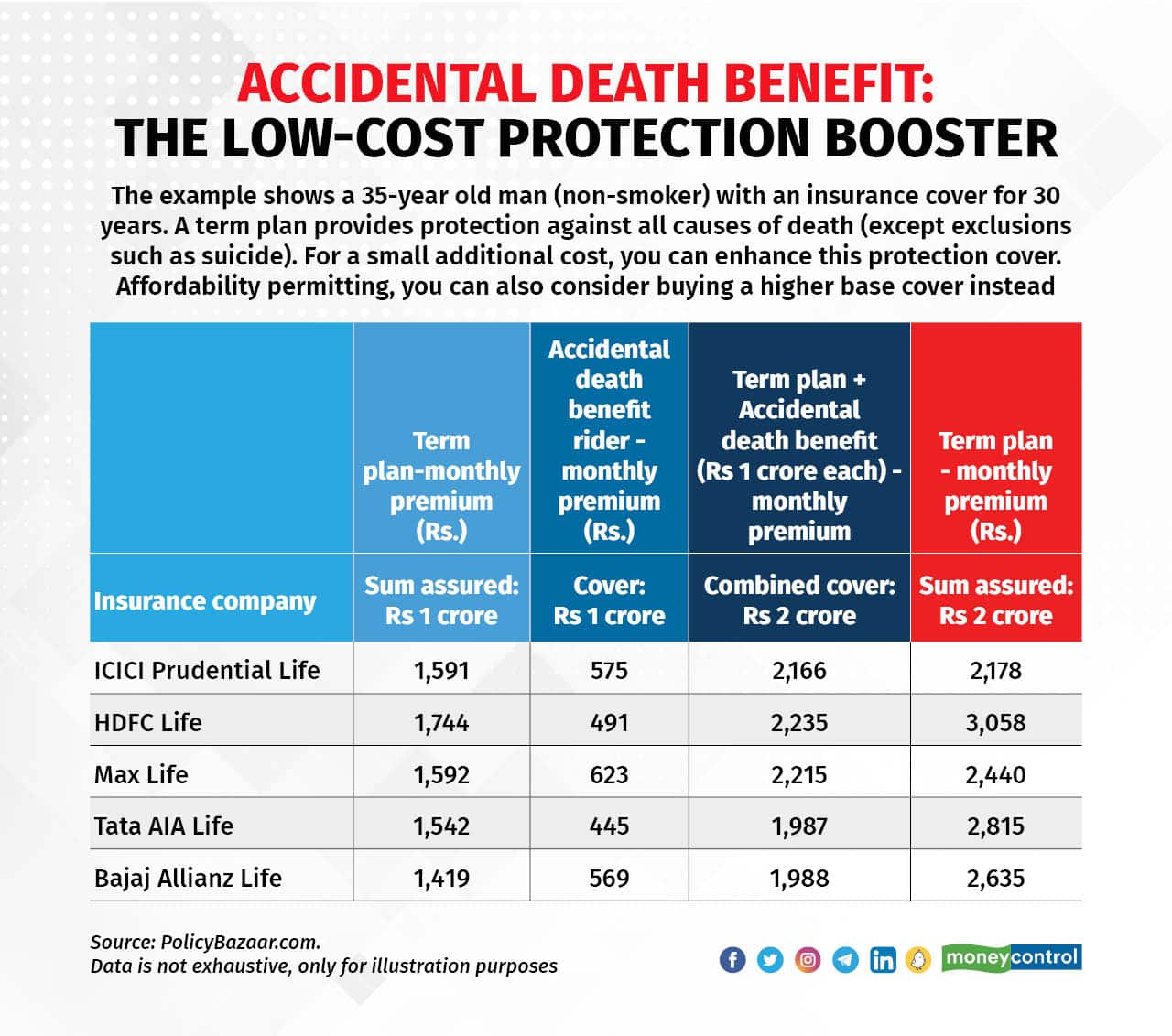
| Cost | Very low (often $10–$30/month for high coverage). | Moderate (based on age, health, and lifestyle). |
| Payout Likelihood | Low (statistically, fewer people die by accident). | High (covers the leading causes of death). |
| Dismemberment Benefits | Yes, pays for loss of limbs/senses. | No, usually requires a separate "Accelerated Death Benefit" rider. |
| Exclusions | Extensive (alcohol, high-risk hobbies, illness). | Minimal (suicide in first 2 years, fraud). |
| Purpose | Supplemental coverage for high-risk lifestyles. | Foundation of a financial plan / family protection. |
When Does Accidental Death Insurance Make Sense?
While not a shortcut or a replacement for life insurance, accidental death insurance does have a legitimate place in a diversified financial strategy. It should be viewed as a supplement, not a foundation.
High-Risk Occupations
For individuals who work in dangerous environments—such as construction, offshore drilling, or high-altitude utility repair—the risk of a fatal accident is significantly higher than the national average. In these cases, an AD&D policy provides an extra layer of protection on top of a standard life insurance policy, often referred to as "double indemnity."
Frequent Travelers
Those who spend a significant amount of time on the road or in the air may benefit from the added peace of mind that an accidental death policy provides. Many credit cards and employer-sponsored benefit packages actually include a small amount of AD&D coverage for this very reason.
Individuals with Severe Health Issues
If an individual is completely uninsurable through traditional channels due to a terminal illness or severe chronic condition, an accidental death policy might be the only coverage they can obtain. In this narrow context, it isn't a shortcut, but rather the "only available option" to provide at least some potential benefit to heirs.
The Strategy of Layering Coverage
Instead of looking for a shortcut, savvy consumers in 2026 use a "layering" or "laddering" strategy. This involves:
- The Base: Securing a Term Life or Permanent Life insurance policy that covers all causes of death. This ensures that if the insured dies of cancer, a heart attack, or old age, the family is protected.
- The Supplement: Adding a small AD&D policy (often through an employer) to provide extra funds in the event of a sudden, traumatic loss which might incur higher immediate costs (like specialized transport or accidental trauma cleanup).
- The Living Benefits: Maintaining disability insurance to cover the loss of income from illnesses or injuries that do not lead to death or dismemberment.
By avoiding the shortcut and building a tiered system, you ensure that the financial plan doesn't collapse because of a technicality in a policy's "definitions" section.
Frequently Asked Questions
Does accidental death insurance cover heart attacks?
No. A heart attack is considered a natural/medical cause of death. Even if the heart attack is sudden and unexpected, it is an internal bodily failure rather than an "external, violent, and accidental" event. However, if an accident causes a physical trauma that leads to heart failure, there may be a complex legal argument for coverage, but these claims are frequently contested.
Can I have both life insurance and accidental death insurance?
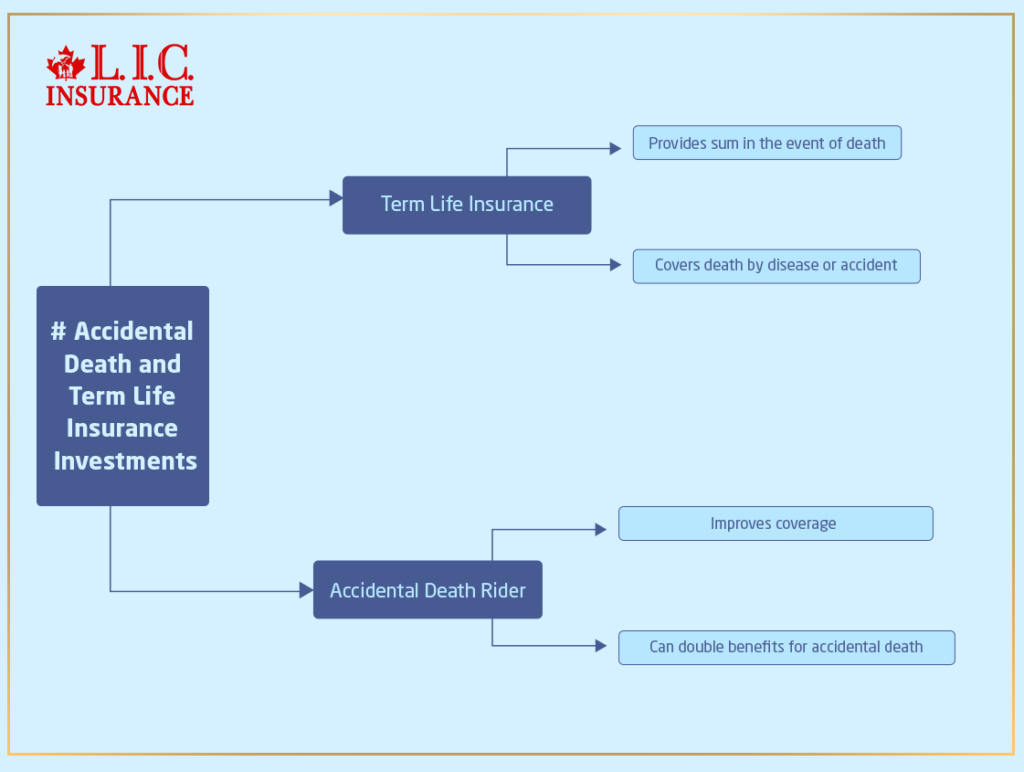
Yes, and this is the recommended approach. If you have both, and you die in a qualified accident, both policies will pay out. This is often called "double indemnity" if the accidental coverage is a rider on your main policy. If you die of a natural cause, only the standard life insurance policy will pay.
Why is accidental death insurance so much cheaper?
It is cheaper because the insurance company is taking on significantly less risk. Statistically, you are much more likely to die from a disease or age-related condition than a freak accident. The lower premium reflects the lower probability that the insurer will ever have to pay out the claim.
Is AD&D the same as worker's compensation?
No. Worker's compensation is a state-mandated insurance program that provides benefits to employees who are injured on the job, regardless of whether it was an accident or a repetitive strain. AD&D is a private insurance policy that pays out regardless of where the accident happens (work or home), but only for specific "accidental" outcomes.
What is the "contestability period" in these policies?
Most life insurance policies have a two-year contestability period where the insurer can investigate the application for fraud. Accidental death policies are often simpler since there is no medical underwriting, but they still have a "claims investigation" phase where the insurer will scrutinize the police report, autopsy, and toxicology results to ensure no exclusions apply.
Final Recommendation: Build a Foundation, Not a Facade
Accidental death life insurance is a specialized tool, not a universal solution. It provides a specific type of protection for a specific type of risk. When you treat it as a shortcut, you are building a financial facade—it looks like coverage from the outside, but it lacks the structural integrity to protect your family from the most common risks they will face.
For 2026 and beyond, the most prudent financial move is to prioritize a fully underwritten term or permanent life insurance policy. Use accidental death insurance only as a low-cost "add-on" to account for the unexpected nature of traumatic accidents. Real peace of mind comes from knowing that your beneficiaries are protected regardless of how you pass away, not just if you pass away in a manner that fits a specific insurance company's definition.
Image Gallery
Select an image to open it in a new tab.


Celine Dubois
Contemporary Living and Global Arts Columnist
