
To use a rule engine in Java, you must first select a framework like Drools or Easy Rules, define your domain model (Facts), and author business rules in a declarative language or Java DSL. You then initialize the engine's knowledge base, insert your data into the working memory, and trigger the execution session to evaluate conditions and fire actions.
The implementation of business logic within enterprise Java applications often faces the challenge of "spaghetti code"—a dense web of nested if-else statements and switch cases that become increasingly difficult to maintain. As of 2026, the strategy of externalizing this logic into a rule engine remains the standard for building agile, scalable, and readable systems. A rule engine is a sophisticated software component that manages complex decision-making processes by separating the "what" (the business rules) from the "how" (the application logic).
Understanding the Architecture of a Java Rule Engine
Before diving into the code, it is essential to understand the architectural components that make a rule engine function. Most Java-based engines, such as Drools, follow the Production System model. This model consists of three primary elements: the Production Memory, the Working Memory, and the Pattern Matcher.
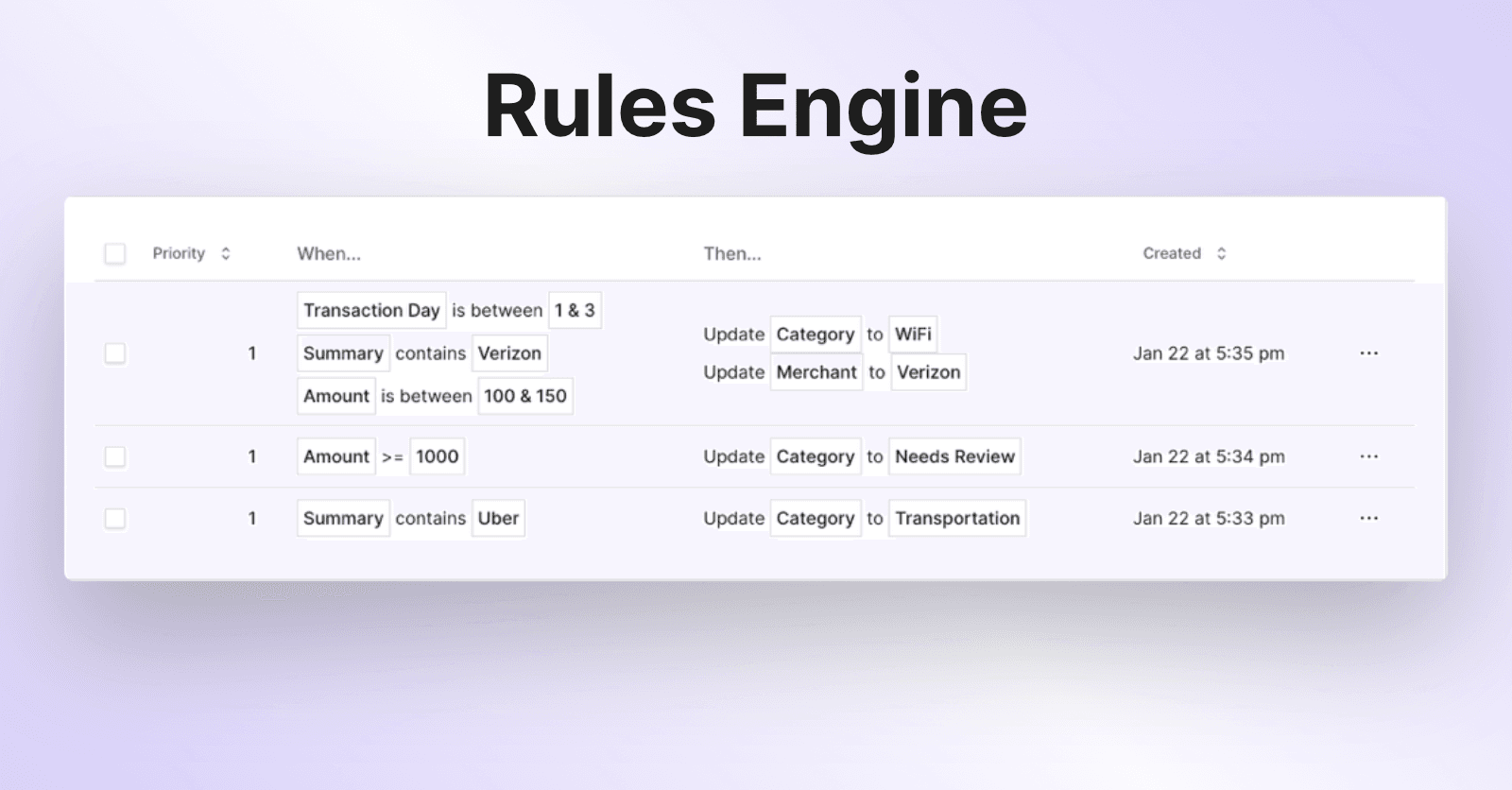
The Production Memory is where your rules are stored. These rules are typically structured as When-Then statements (also known as Left-Hand Side and Right-Hand Side). The Working Memory contains the data, or Facts, that the engine will evaluate. These facts are usually standard Java Objects (POJOs). Finally, the Pattern Matcher (often utilizing the Rete algorithm or its modern successors) is the brain of the engine. It determines which rules should fire based on the current state of the facts in the working memory.
By using this architecture, developers can modify business logic without recompiling the entire Java application. This decoupling is particularly valuable in industries like finance, insurance, and healthcare, where regulations change frequently and require immediate software adjustments.
Choosing the Right Engine for Your 2026 Project
In 2026, the Java ecosystem offers several mature options for rule management. Your choice depends on the complexity of your logic and your performance requirements.
Drools continues to be the industry heavyweight. It is a full-featured Business Rules Management System (BRMS) that supports complex event processing (CEP), temporal reasoning, and a powerful declarative language (DRL). It is ideal for large-scale enterprise applications where rules are managed by both developers and business analysts.
Easy Rules provides a lightweight, "plain old Java" approach. It avoids the steep learning curve of DRL by allowing you to define rules using Java annotations or a programmatic API. It is best suited for smaller projects or microservices where you need basic rule evaluation without the overhead of a massive framework.
Kogito represents the modern, cloud-native evolution of rules engines. It is designed specifically for Quarkus and Spring Boot environments, allowing rules to be compiled into high-performance executable code. This is the preferred choice for serverless and containerized Java applications in 2026.
Step-by-Step Implementation Using Drools
Implementing Drools requires a structured approach to ensure the engine scales effectively with your data.
1. Project Configuration and Dependencies
To begin, you must add the necessary libraries to your Maven or Gradle configuration. For a standard Drools 8.x or 9.x setup, you will need the kie-api, drools-compiler, and drools-mvel dependencies. These libraries provide the interfaces for the Knowledge Is Everything (KIE) ecosystem, which handles the lifecycle of rule resources.
2. Defining Business Facts
Facts are the data structures your rules will analyze. In Java, these are simple POJOs. For example, if you are building a discount engine, you might have a Customer class and a Product class. These classes should follow standard JavaBean conventions with private fields, getters, and setters. It is crucial that these objects are serializable if you plan to use the engine in a distributed environment.
3. Authoring the Rule File (.drl)
The .drl file is where you define your logic. A typical rule looks like this:
rule "Apply High Volume Discount" when $c : Customer( totalPurchases > 1000 ) $p : Product( category == "Electronics" ) then $p.setDiscount(0.15); update($p); end
In this example, the engine looks for a Customer object in the working memory where the totalPurchases field exceeds 1000. If found, it applies a 15% discount to any Product object categorized as Electronics. The update keyword tells the engine that the fact has changed, potentially triggering other dependent rules.
4. Building the Knowledge Session
To execute the rules, you must create a KieSession. This involves several steps:
- Use the KieServices factory to access the KIE environment.
- Create a KieContainer which loads the rules from your resources folder (typically src/main/resources).
- Open a session from the container.
There are two types of sessions: Stateless and Stateful. A Stateless session is a one-off execution—you pass data in, rules fire, and the session closes. This is ideal for simple calculations. A Stateful session remains open, allowing you to insert data over time and maintain a persistent state, which is necessary for complex event processing.
Implementing Lightweight Logic with Easy Rules
If the complexity of Drools feels excessive for your needs, Easy Rules offers a more direct path. To use Easy Rules, you define your logic directly in Java classes.
Defining Rules via Annotations
In Easy Rules, a rule is a class annotated with @Rule. You define the condition with the @Condition annotation and the action with @Action.
@Rule(name = "Weather Rule", description = "Checks the weather") public class WeatherRule { @Condition public boolean itRains(@Fact("rain") boolean rain) { return rain; } @Action public void takeAnUmbrella() { System.out.println("It rains, take an umbrella!"); } }
Triggering the Engine
Executing these rules is straightforward. You instantiate the RulesEngine, register your rule classes, and fire them against a set of Facts. This approach is highly readable and integrates seamlessly with standard Java unit testing frameworks like JUnit 5.
Java Rule Engine Comparison Matrix
| Feature | Drools | Easy Rules | Kogito |
|---|---|---|---|
| Logic Complexity | High / Complex Events | Low / Simple If-Then | High / Cloud-Native |
| Learning Curve | Steep (requires DRL) | Low (Java-based) | Moderate |
| Performance | Optimized via Rete/Phreak | Linear execution | Pre-compiled / Fast |
| Memory Usage | High (Stateful) | Very Low | Low (Optimized) |
| Best Use Case | Enterprise Legacy / Finance | Small Microservices | Serverless / Kubernetes |
Advanced Strategies: Stateless vs. Stateful Execution
Choosing between stateless and stateful execution is one of the most critical decisions in Java rule engine implementation.
Stateless Sessions are the "pure functions" of the rule world. They are thread-safe and do not retain any memory of previous interactions. In 2026, most RESTful microservices utilize stateless sessions because they scale horizontally with ease. You send a request containing all necessary facts, the engine computes the result, and returns the response.
Stateful Sessions are more powerful but require careful management. They are used for monitoring and "Inferred Logic." For instance, if you are building a fraud detection system, you need the engine to remember the last five transactions for a specific user to identify a pattern. Because stateful sessions consume memory, you must explicitly call dispose() when finished to prevent memory leaks in the Java Virtual Machine (JVM).
Performance Optimization and Best Practices
To ensure your Java rule engine operates efficiently in a production environment, follow these professional guidelines:
- Constraint Ordering: In your rule conditions, place the most restrictive constraints first. This allows the engine to "short-circuit" and discard irrelevant facts early, significantly reducing the number of evaluations the Rete algorithm must perform.
- Avoid Excessive Updates: Using the update() or modify() keywords in Drools triggers a re-evaluation of all rules. If not handled carefully, this can lead to infinite loops. Always use "guards" in your conditions to check if a change has already been applied.
- Use Rule Templates: For systems with thousands of similar rules (e.g., specific pricing for 5,000 different products), do not write 5,000 DRL rules. Instead, use rule templates or decision tables (Excel/CSV) to generate the logic dynamically from data.
- Pre-compile Rules: In 2026, there is no excuse for slow startup times. Use the KIE Maven plugin to compile your DRL files into executable Java classes during the build phase rather than at runtime.
Troubleshooting Common Implementation Errors
Even seasoned developers encounter hurdles when implementing rule engines. One of the most common issues is the Rule Activation Conflict. This occurs when multiple rules satisfy the same conditions. By default, the engine may fire them in an unpredictable order. To resolve this, use the salience attribute to assign priorities to your rules, ensuring that critical logic executes first.
Another frequent problem is Object Equality. Most rule engines rely on the equals() and hashCode() methods of your Fact classes to track objects in working memory. If these are not implemented correctly, the engine might treat two different instances as the same fact, or vice versa, leading to incorrect logic firing or missed conditions.
Related Resources and Documentation
For further exploration of the technical specifications and latest updates in 2026, consult the following authoritative sources:
- Drools Documentation - The official manual for Drools and the KIE ecosystem.
- Easy Rules GitHub - Source code and examples for the lightweight Java rule engine.
- Kogito Project - Documentation for cloud-native decision automation.
- JSR 94: Java Rule Engine API - The historical standard for rule engine interoperability.
Frequently Asked Questions
Is a rule engine better than using standard Java if-else statements?
Yes, when business logic is complex or changes frequently. While standard code is faster for simple, static logic, a rule engine provides better maintainability, allows non-developers to understand the rules, and decouples business policy from the technical application flow.
Can I use Excel spreadsheets as a rule engine in Java?
Yes. Drools specifically supports "Decision Tables" in .xls or .csv formats. This allows business analysts to manage rules in a familiar spreadsheet interface, which the Java engine then parses and executes as code.
Does using a rule engine slow down my Java application?
There is a slight overhead compared to native Java code, but modern engines like Drools use the Phreak algorithm, which is highly optimized for large datasets. In many cases, a well-structured rule engine can be faster than a poorly written, nested if-else structure because it evaluates conditions more efficiently.
How do I test my Java rules?
You should treat rules like any other code. Use JUnit to create unit tests where you insert specific facts into a session and assert that the expected rules fired or that the facts were modified as intended. Frameworks like Drools-Test-Coverage can also help ensure all your logic paths are exercised.
What is the difference between a Rule Engine and a Workflow Engine?
A Rule Engine focuses on "What should happen given this data?" (Decision making). A Workflow Engine (like Camunda or jBPM) focuses on "In what order should these steps happen?" (Process orchestration). Often, a workflow engine will call a rule engine at specific decision nodes to determine the next step in a process.
Final Implementation Recommendation
If you are starting a new project in 2026, the best approach for using a rule engine in Java is to adopt a Microservices-ready framework like Kogito or Drools 9+. Begin by isolating your business logic into a separate module or service. Start with a Stateless session to keep your application scalable and simple. Only move to more complex Stateful sessions or DRL-based logic if your requirements involve time-based events or massive, interconnected rule sets. By prioritizing the separation of concerns, you ensure your Java application remains maintainable and adaptable to future business changes.
Image Gallery
Select an image to open it in a new tab.

Celine Dubois
Contemporary Living and Global Arts Columnist
