Understanding the Phrase Wo Xi Huan: A Comprehensive Guide to Expressing Preference in Mandarin Chinese
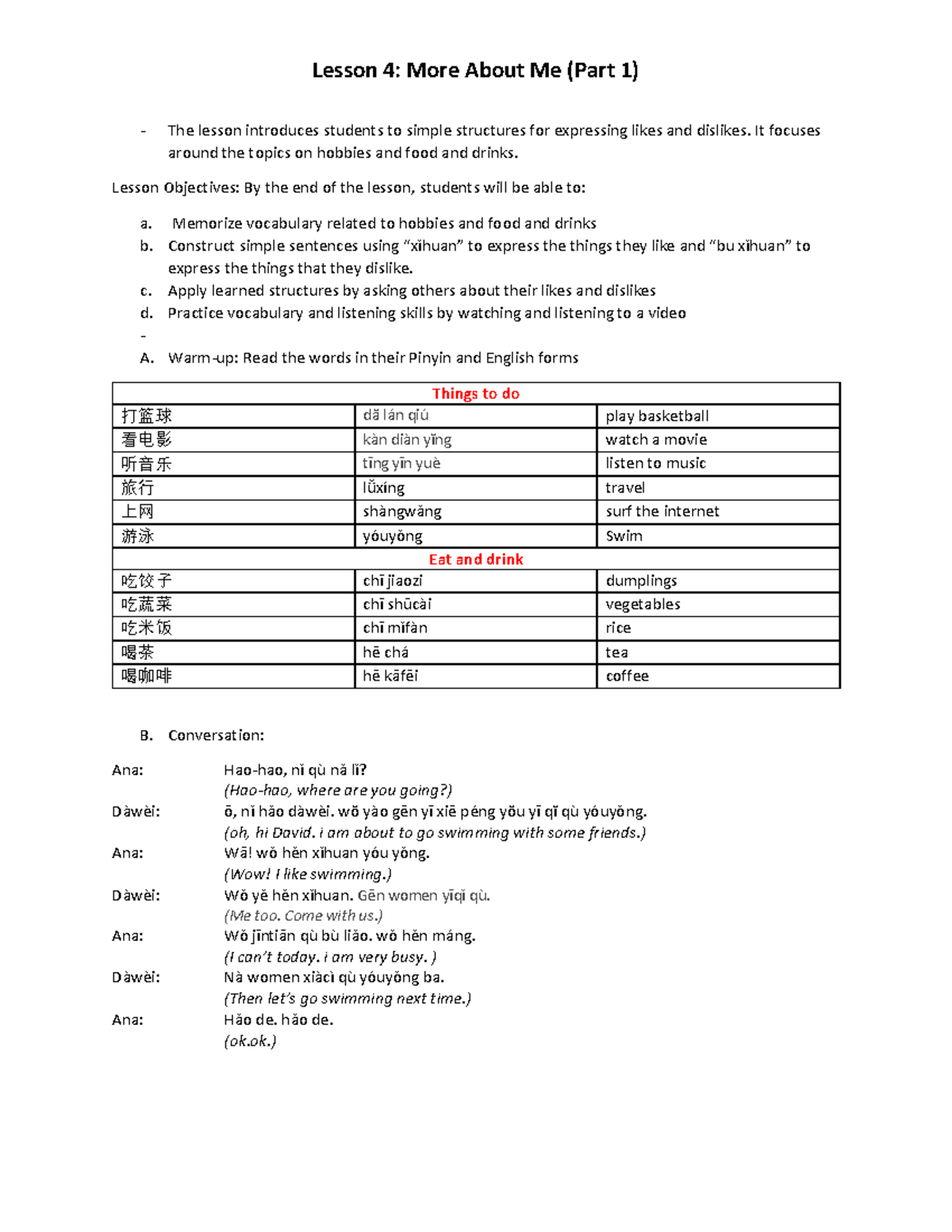
"Wo xi huan" (我喜欢) is one of the most fundamental and versatile phrases in Mandarin Chinese, translating directly to "I like." It serves as the primary linguistic tool for expressing personal preference, affection for objects or activities, and even romantic interest. Mastering this phrase requires understanding its grammatical flexibility, its role as a building block for more complex sentences, and its specific nuance when applied to people versus things.
The Linguistic Breakdown of Wo Xi Huan
To effectively use "wo xi huan," one must understand the individual components of the phrase. Mandarin Chinese is an isolating language, meaning its grammar relies heavily on word order and auxiliary particles rather than complex inflections.
- Wo (我): This is the first-person singular pronoun, meaning "I" or "me."
- Xi (喜): Historically derived from characters representing joy or celebration, here it functions as the root of "happiness" or "joy."
- Huan (欢): Used in contexts associated with delight or pleasure.
When combined, xihuan creates a verb that is slightly softer than "love" (ai, 爱). In Mandarin, "ai" is often reserved for deep, profound attachments, such as family members, spouses, or intense passions. "Wo xi huan," therefore, acts as a moderate, natural way to express that something brings you joy or that you hold a favorable opinion of a person, place, or object.
Syntactic Positioning
The phrase follows the standard Subject-Verb-Object (SVO) pattern used in English, making it relatively intuitive for English speakers to grasp:
- Subject: Wo (I)
- Verb: Xihuan (like)
- Object: [Target of interest]
For example, "Wo xihuan kafei" (我喜欢咖啡) translates to "I like coffee." The structure remains consistent regardless of whether the object is a noun, a gerund (verb functioning as a noun), or a clause.
Using Wo Xi Huan with Different Grammatical Objects
The versatility of the phrase is best demonstrated by the variety of objects it can precede. Depending on what you are describing, the grammatical construction around "wo xi huan" can expand significantly.
Expressing Preference for Nouns
This is the most straightforward usage. You simply place the noun directly after the verb.
- Wo xihuan zhongwen (I like Chinese language).
- Wo xihuan zhe ge di fang (I like this place).
Expressing Preference for Activities
When you "like to do" something, you append a verb after xihuan. In this context, the verb effectively becomes the object of your affection.
- Wo xihuan chi fan (I like to eat).
- Wo xihuan da lanqiu (I like playing basketball).
It is important to note that you do not need to add the "to" particle (like the English infinitive) when connecting the verb. You simply state the activity.
Expressing Complex Sentences
You can also use "wo xi huan" with sub-clauses, often by introducing the connector "de" (的) if you are describing a specific type of something you like.
- Wo xihuan ni zuo de fan (I like the food that you cook).

Nuances and Contextual Variations
While "wo xi huan" is standard, its impact changes based on tone, context, and the addition of modifiers.
Adding Modifiers for Degree
To specify how much you like something, you can add adverbs before xihuan.
- Wo hen xihuan (I really like it/I like it a lot).
- Wo feichang xihuan (I extremely like it/I love it).
- Wo bu xihuan (I do not like it).
Social Context: When to Use It for People
This is the most critical area for learners. Saying "Wo xihuan ni" (我喜欢你) is the standard way to say "I like you." In many social contexts, this is interpreted as a confession of romantic interest.
Unlike English, where "I like you" can be a very casual way to express friendship, in Chinese culture, the direct "wo xihuan ni" carries weight. If you are in a casual group setting, people often use more specific descriptors, such as "Wo xihuan he ni yi qi wan" (I like hanging out with you), to avoid the implication of romantic pursuit if that is not the intent.
Comparison Table: Expressing Feelings in Mandarin
Understanding the intensity of preference helps in choosing the right vocabulary for the right situation.
| Phrase | Chinese Characters | English Equivalent | Contextual Intensity |
|---|---|---|---|
| Wo xihuan | 我喜欢 | I like | Moderate; general preference |
| Wo hen xihuan | 我很喜欢 | I really like | Enthusiastic; clear preference |
| Wo ai | 我爱 | I love | Deep, emotional; usually romantic/family |
| Wo bu xihuan | 我不喜欢 | I don't like | Direct; polite way to decline/refuse |
| Wo duiyu ... hen xihuan | 我对于...很喜欢 | I have a high regard for... | Formal; used for abstract concepts |
Common Mistakes and Troubleshooting
Learners often encounter specific hurdles when integrating "wo xi huan" into natural speech.
Over-reliance on "Wo"
In conversational Mandarin, the subject is often dropped if it is clear from the context. If you are already in a conversation about your hobbies, you do not need to repeat "wo" every time. Simply saying "Xihuan" or "Hen xihuan" is often more natural and fluent.
Confusion with "Ai" (Love)
As mentioned, "ai" is a heavy word. Do not use "wo ai" for inanimate objects unless you are being poetic or hyperbolic. For example, "Wo ai tianqi" (I love the weather) sounds slightly unnatural to a native speaker, who would prefer "Wo hen xihuan zhe ge tianqi."
The Negation Trap
When negating the phrase, use "bu" (不). The tone change for "bu" is important: when followed by the fourth-tone "xi," "bu" changes to a second tone (bú). Beginners often miss this, but mastering the tone shift makes your speech sound significantly more native.
FAQ: Frequently Asked Questions
1. Can I use "wo xi huan" to express a desire for something?
While it expresses a preference, it is not the best way to say "I want." If you are at a restaurant and want to order, use "Wo yao" (I want) or "Wo xiang yao" (I would like to have). "Wo xihuan" implies you enjoy the item, not necessarily that you want it right now.
2. Is there a gender difference when saying "wo xi huan ni"?
No, the phrase "wo xi huan ni" is gender-neutral. It is used identically regardless of the speaker’s or the listener’s gender.
3. How do I ask someone if they like something?
To turn the statement into a question, add the question particle "ma" (吗) at the end: "Ni xihuan... ma?" (Do you like...?). This is the standard way to inquire about someone's preferences.
4. What if I want to say I like "doing" something?
You do not need to change the structure. Simply place the verb after "xihuan." For example, "Wo xihuan youyong" (I like swimming).
5. Is "wo xi huan" considered formal?
It is a neutral phrase suitable for almost all contexts, including professional ones. However, in highly formal, written, or academic Chinese, you might see "pianai" (偏爱 - to favor) or "reai" (热爱 - to be passionate about) used instead, though these are situational.
Recommendations for Further Practice
To move beyond the basic understanding of "wo xi huan," integrate the phrase into your daily routine by practicing "preference logs." Each day, list three things you like using the pattern "Wo xihuan [activity/noun]." Once this becomes reflexive, begin experimenting with degree adverbs like "hen" (very) or "ting" (quite).
As a final recommendation, pay close attention to native speakers in media or daily conversation to see how they pair "xihuan" with specific situational nouns. Language is as much about the objects of your preference as it is about the verb itself. Start by focusing on subjects you are passionate about, as your natural enthusiasm will make the grammar structures stick more effectively in your long-term memory.
Image Gallery
Select an image to open it in a new tab.
Ingrid Bjornson
Global Cyber Policy and Regulation Analyst
