Recognizing the Signs of Breast Cancer: A Comprehensive Guide to Early Detection
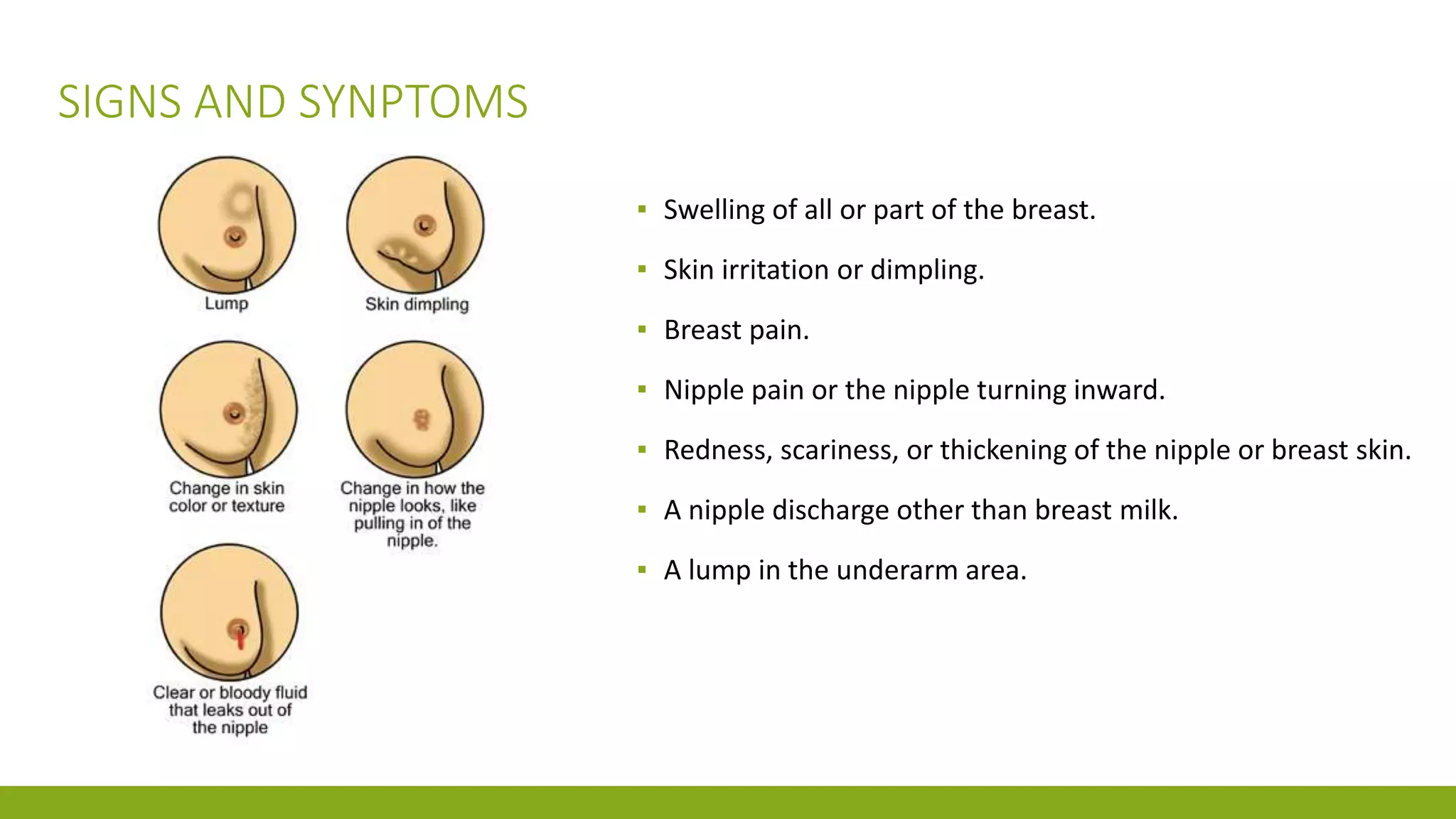
The most common signs of breast cancer include a new, painless lump with irregular edges, though some tumors can be soft or rounded. Other critical indicators involve swelling of all or part of a breast, skin dimpling, nipple retraction, redness or thickening of the nipple or breast skin, and unusual nipple discharge.
Breast cancer remains one of the most frequently diagnosed cancers among women globally, and as we move through 2026, the emphasis on early detection has never been more critical. While medical technology has advanced significantly, the first line of defense often remains the individual’s awareness of their own body. Understanding the specific signs and symptoms of breast cancer allows for earlier intervention, which is statistically linked to significantly higher survival rates and more effective, less invasive treatment options.
The Primary Indicators: Identifying Breast Lumps
The most widely recognized sign of breast cancer is the presence of a new lump or mass. However, not all lumps are created equal, and understanding the nuances of how these masses feel can help in communicating effectively with healthcare providers.
Texture and Shape
Malignant (cancerous) tumors are frequently characterized by their physical structure. They are often, though not always, hard to the touch and possess irregular, poorly defined edges. Unlike many benign cysts, which may feel like smooth, movable grapes under the skin, a cancerous mass is often fixed to the surrounding tissue. This means it may not move easily when pushed.
Pain Levels
A common misconception is that a cancerous lump must be painful. In reality, most early-stage breast cancers are completely painless. While some individuals do experience breast pain or tenderness, the absence of pain should never be used as a reason to delay a medical evaluation. Any new, persistent mass should be examined by a professional, regardless of whether it hurts.
Location
Lumps can occur anywhere in the breast tissue, but a significant portion are found in the upper outer quadrant, closest to the armpit. It is also vital to check the axillary area (the underarm) and the area around the collarbone, as breast cancer can spread to local lymph nodes before a primary tumor in the breast is large enough to be felt.
Skin and Texture Changes: Beyond the Lump
In many cases, breast cancer manifests through changes in the skin's appearance or texture rather than a distinct lump. These signs are often subtle in their early stages but become more pronounced as the condition progresses.
Skin Dimpling (Peau d'Orange)
One of the most specific skin signs is known as "peau d'orange," a French term meaning "orange peel skin." This occurs when the skin of the breast becomes indented or pitted, resembling the surface of an orange. This texture change is often caused by the infiltration of cancer cells into the lymphatic vessels of the skin or by the tumor pulling on the Cooper’s ligaments (the connective tissues that support the breast).
Redness and Heat
Persistent redness, a purple hue, or a rash-like appearance on the breast skin can be a warning sign. While these symptoms often mimic mastitis (an infection of the breast tissue common in breastfeeding individuals), if they do not resolve with antibiotics or if they occur in a non-lactating individual, they require immediate investigation.
Thickening of the Tissue
Sometimes, a portion of the breast may feel "thicker" or firmer than the surrounding area, even if no distinct lump is present. This thickening can be a sign of underlying changes in the ductal or lobular structures of the breast.

Nipple and Areola Variations
The nipple and the darkened area surrounding it (the areola) are highly sensitive to changes within the breast's ductal system. Monitoring this area is a vital component of breast self-awareness.
Nipple Retraction or Inversion
If a nipple that was previously "out" begins to pull inward, flatten, or point in a different direction, it may indicate that a tumor is pulling on the ducts behind the nipple. While some people have naturally inverted nipples from birth, a newly developed inversion is a significant clinical sign.
Unusual Discharge
Spontaneous nipple discharge—fluid that leaks without the nipple being squeezed—is a symptom that demands attention. While milky discharge can be related to hormonal changes or medications, discharge that is clear, yellow, or bloody is particularly concerning. Bloody discharge, specifically, is often associated with intraductal papillomas or, in some cases, ductal carcinoma.
Scaling and Crusting
The skin of the nipple or areola may become scaly, red, or crusty. This can sometimes be mistaken for eczema or dermatitis. However, if the condition persists or is limited to only one nipple, it may be a sign of Paget’s disease of the breast, a rare form of cancer that starts in the breast ducts and spreads to the skin of the nipple.
Inflammatory Breast Cancer: Unique Warning Signs
Inflammatory Breast Cancer (IBC) is an aggressive but less common form of the disease that often does not present with a discrete lump. Instead, IBC progresses rapidly and mimics the symptoms of an infection.
Rapid Swelling
IBC is characterized by the rapid onset of swelling. A breast may increase in size significantly over a matter of days or weeks. This is caused by cancer cells blocking the lymph vessels in the skin.
Heaviness and Tenderness
Individuals with IBC often report a sudden feeling of heaviness or aching in the breast. The skin may feel warm to the touch, and the entire breast may become extremely sensitive. Because IBC spreads through the lymphatic system rather than forming a solid tumor, it is frequently missed on traditional mammograms in its earliest stages, making clinical awareness of the physical symptoms paramount.
Comparing Benign vs. Potentially Malignant Changes
It is important to remember that most breast changes are not cancer. Fibrocystic changes, cysts, and fibroadenomas are common benign conditions. The following table provides a general comparison to help distinguish between common presentations.
| Feature | Benign (Non-Cancerous) Typically | Potentially Malignant (Cancerous) |
|---|---|---|
| Consistency | Soft, rubbery, or squishy | Hard, firm, or stony |
| Mobility | Moves easily under the skin | Fixed; feels attached to tissue |
| Edges | Smooth, well-defined borders | Irregular, "spiky," or poorly defined |
| Pain | Often tender, especially during cycles | Usually painless in early stages |
| Skin Changes | Generally none; skin remains smooth | Dimpling, puckering, or "orange peel" |
| Nipple Status | No change in position | New inversion or retraction |
| Symmetry | Often affects both breasts | Usually localized to one breast |
The Role of Breast Self-Awareness in 2026
By 2026, the medical community has largely transitioned from recommending rigid, monthly breast self-exams to a broader concept of "breast self-awareness." This approach encourages individuals to know what is normal for their bodies so they can notice changes immediately.
How to Practice Self-Awareness
Self-awareness involves observing the breasts in different positions—such as with arms at the sides, arms raised overhead, and hands pressed firmly on the hips (which contracts the chest muscles). This helps highlight any changes in contour or skin dimpling that might not be visible when the muscles are relaxed.
Timing and Consistency
For those who menstruate, the best time to check for changes is about a week after the period ends, when hormonal fluctuations are at their lowest and the breast tissue is least likely to be swollen or tender. For those who are post-menopausal, any day of the month is appropriate, provided it is done consistently enough to maintain familiarity with the tissue's baseline state.
Next Steps: Navigating the Diagnostic Process
If you identify any of the signs mentioned above, the first step is to schedule an appointment with a primary care physician or gynecologist. Finding a sign does not mean you have cancer, but it does mean you need a definitive answer.
Clinical Breast Exam
The physician will perform a manual exam to assess the size, texture, and mobility of any lumps and check the lymph nodes in the neck and underarm.
Diagnostic Imaging
Depending on your age and the nature of the sign, your doctor will order specific imaging. As of 2026, 3D Mammography (Digital Breast Tomosynthesis) is the standard of care for many diagnostic workups, as it provides a clearer view of overlapping breast tissue than traditional 2D mammography. If a lump is found, an Ultrasound is often used to determine if the mass is a fluid-filled cyst or a solid tumor. In some cases, a Breast MRI may be necessary for higher-resolution mapping.
Biopsy
The only way to confirm a diagnosis of breast cancer is through a biopsy. A radiologist or surgeon uses a needle to remove a small sample of the suspicious tissue, which is then analyzed by a pathologist. Modern biopsies are minimally invasive and are typically performed under local anesthesia.
Screening Guidelines and Preventative Care
While recognizing signs is vital, screening is designed to find cancer before any signs or symptoms appear. According to the American Cancer Society, screening guidelines are essential for early detection.
- Ages 40 to 44: Individuals should have the choice to start annual breast cancer screening with mammograms.
- Ages 45 to 54: Annual mammograms are strongly recommended.
- Ages 55 and Older: Transitioning to mammograms every two years is common, or continuing annual screening if desired.
- High-Risk Individuals: Those with a family history of breast cancer or a known BRCA1 or BRCA2 gene mutation may require earlier and more frequent screening, often including MRIs alongside mammograms.
Common Questions About Breast Cancer Signs
Does breast pain usually mean I have cancer?
No. In the vast majority of cases, breast pain (mastalgia) is related to hormonal changes, caffeine intake, or musculoskeletal issues. While inflammatory breast cancer can cause tenderness, a typical "lump" cancer is usually painless. However, new and persistent pain in a specific spot should still be evaluated.
Can men get breast cancer?
Yes. Although it is much less common, men have breast tissue and can develop breast cancer. The signs are similar: a hard lump behind the nipple or areola, skin changes, or nipple discharge. Because men have very little breast tissue, these signs are often easier to feel but are frequently ignored until the cancer has progressed.
I found a lump, but my last mammogram was clear. What should I do?
You must still see a doctor. Mammograms are highly effective but not perfect; they can sometimes yield false negatives, particularly in individuals with dense breast tissue. A "clear" mammogram from six months ago does not negate the significance of a new physical symptom found today.
Are all breast lumps cancerous?
No. Approximately 80% of breast lumps that are biopsied turn out to be benign. Cysts, fibroadenomas (non-cancerous tumors), and fat necrosis (damaged fat tissue) are all common causes of lumps that are not malignant.
Is nipple discharge always a sign of cancer?
Not necessarily. Discharge can be caused by hormonal imbalances, certain medications, or benign growths like papillomas. However, if the discharge occurs without stimulation, is only in one breast, or is bloody/clear, it is a clinical priority for investigation.
Practical Recommendations
If you notice a change in your breast tissue, do not wait. Document the date you first noticed the change, any associated symptoms (like skin redness or pain), and whether the change fluctuates with your menstrual cycle. Contact your healthcare provider immediately to request a diagnostic (not screening) mammogram and ultrasound. Early detection through the recognition of these signs remains the most effective way to ensure a successful treatment outcome and long-term health.
Image Gallery
Select an image to open it in a new tab.






Omar Farooq
EdTech Innovation and Virtual Pedagogy Journalist
