Understanding the specific types of knots and their intended uses is essential for ensuring mechanical safety, maintaining the structural integrity of a rope, and preventing equipment failure in high-stakes environments. Using the correct knot for a specific task ensures that the line remains secure under tension while remaining untieable after a heavy load has been applied.
The Science and Necessity of Proper Knot Selection
Knots are not merely tangles of cordage; they are sophisticated applications of physics involving friction, tension, and geometry. When a rope is knotted, the fibers are subjected to various stresses, including compression and shearing. In any technical application—whether it be maritime, search and rescue, arboriculture, or construction—the selection of a knot determines the "residual strength" of the rope.
Every knot introduces a bend in the rope. These bends create stress concentrations where the fibers on the outside of the curve are stretched while those on the inside are compressed. This uneven distribution of force inevitably weakens the rope. A well-chosen knot minimizes this loss of strength, whereas a poorly chosen or incorrectly tied knot can reduce a rope’s breaking strength by as much as 50% to 60%. As of 2026, advancements in synthetic fiber technology, such as Ultra-High-Molecular-Weight Polyethylene (UHMWPE) or Dyneema, have made knot selection even more critical, as these materials are incredibly slick and prone to "slipping" if the wrong hitch or bend is applied.
Understanding Knot Categories
To understand why knots matter, one must first understand how they are categorized. Professionals classify knots based on their function. Using a knot from the wrong category is a common cause of accidents.
1. Loops
A loop knot creates a fixed or sliding circle at the end of a rope. These are used for securing a line to a fixed point or for creating a harness. The Bowline is perhaps the most famous loop knot, often referred to as the "King of Knots" due to its security and the fact that it does not slip or bind under load.
2. Bends
Bends are used to join two separate ropes together. This is a critical distinction; using a "hitch" to join two ropes is a recipe for failure. The Sheet Bend is the standard for joining ropes of different diameters, while the Double Fisherman’s Knot is preferred for permanent joins in climbing and rescue scenarios due to its high security.
3. Hitches
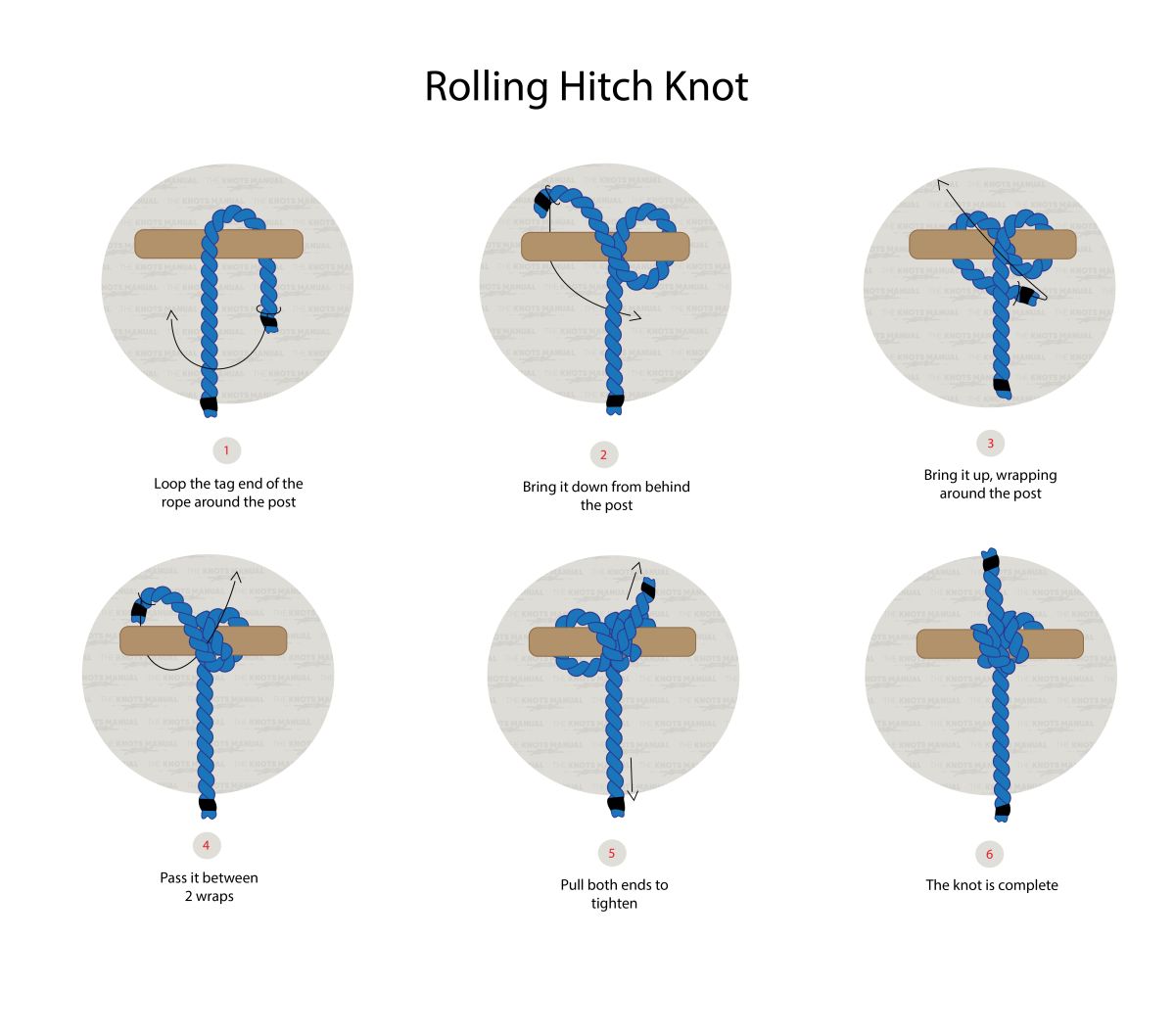
Hitches are used to fasten a rope to an object, such as a post, a ring, or another rope. Unlike loops, hitches generally rely on the object they are tied around to maintain their shape. The Clove Hitch and the Timber Hitch are staples in construction and forestry because they are quick to tie and can handle significant lateral tension.
4. Binding Knots
Binding knots are used to constrict an object or hold multiple objects together. The Square Knot (Reef Knot) is the most common binding knot, though it is frequently misused. It is designed for securing parcels or bandages, not for bearing weight or joining lines.

The Impact of Knot Geometry on Rope Strength
When a knot is tied, the "tightness" of the curves (the radius of the bends) directly impacts the rope’s breaking point. This is known as the Efficiency Rating.
- Figure-Eight Loop: Generally retains about 75-80% of the rope's original strength.
- Bowline: Retains approximately 60-70% of the strength.
- Overhand Knot: Can reduce strength by as much as 50%.
In professional rigging and climbing, the Figure-Eight is often preferred over the Bowline because its "round" curves distribute the load more evenly across the fibers. In 2026, safety standards in the industrial sector mandate the use of high-efficiency knots to maximize the lifespan of expensive synthetic cordage. Using a low-efficiency knot leads to premature rope wear and potential catastrophic failure during heavy lifts.
Critical Considerations for Different Environments
The context in which a knot is used changes the requirements for that knot. Why a knot matters in a backyard is different from why it matters on a high-alpine rescue.
Maritime and Sailing
In nautical environments, knots must withstand constant cycles of loading and unloading (the "working" of the ship). They must also be resistant to the effects of salt water and UV degradation. A knot like the Round Turn and Two Half Hitches is vital here because it can be tied and untied while the line is under tension, allowing sailors to adjust lines safely in heavy seas.
Climbing and Life Safety
In arboriculture and rock climbing, the primary concern is "security." A knot must not only hold a load but also remain stable when it is not under tension (to prevent it from "shaking loose"). This is why climbers use "stopper knots" or "backthrows" to ensure that the tail of the rope cannot slip back through the primary knot.
Search and Rescue (SAR)
For SAR teams, knots must be "easy to inspect." In high-stress environments, a knot that looks distinct and is easy for a second person to verify (the "two-person check" rule) is superior to a more complex knot that might be marginally stronger but harder to verify visually.
Modern Materials and Knot Slippage
As we progress through 2026, the use of high-tech fibers like Technora, Vectran, and Spectra has become standard in many industries. These fibers are designed for high strength-to-weight ratios but are characterized by low friction.
Traditional knots that work perfectly on nylon or hemp often fail on these modern materials. For example, a standard Sheet Bend may "capsize" (turn inside out and fail) when used on modern slick synthetics. This has led to the adoption of "modified" versions of classic knots, such as the Becket Bend or the Triple Fisherman’s, which incorporate extra wraps to increase the surface area of friction. Understanding these nuances is the difference between a secure load and a dangerous accident.
Comparison of Common Professional Knots
| Knot Name | Category | Efficiency (%) | Ease of Untying | Best Use Case |
|---|---|---|---|---|
| Figure-Eight Follow-Through | Loop | 75-80% | Moderate | Climbing harnesses and life-safety |
| Bowline | Loop | 60-70% | Easy | General utility and sailing |
| Clove Hitch | Hitch | 60-65% | Very Easy | Temporary mooring and light binding |
| Sheet Bend | Bend | 50-55% | Easy | Joining two ropes of different sizes |
| Double Fisherman's | Bend | 70-75% | Difficult | Joining ropes for rescue or long-term use |
| Prusik | Friction | N/A | Easy | Ascending a rope or tensioning lines |
The Art of Dressing and Setting a Knot
One of the most overlooked reasons why knot types and their specific application matter is the process of "dressing" the knot. Dressing a knot means arranging the strands so they are parallel and not crossing over each other unnecessarily.
A "sloppy" knot—even if it is technically the correct type—can fail. When a knot is not dressed properly, the internal friction creates "hot spots" where the rope can melt or shear against itself. Furthermore, "setting" the knot (tightening each strand individually before applying a full load) ensures that the knot takes its intended shape. In professional engineering and rescue, an undressed knot is considered a failed knot.
Common Mistakes and How to Avoid Them
- Using a Reef Knot (Square Knot) for Critical Loads: This is perhaps the most dangerous mistake in knot-tying. The Reef Knot is designed for binding (like a shoelace or a package). If used to join two ropes that will be under heavy tension, it can easily slip or capsize.
- Confusing the Bowline with the "Left-Handed" Bowline: While similar, the tail of the bowline should ideally end up on the inside of the loop to prevent it from snagging on external objects.
- Failure to Leave a Long Tail: Many knots fail because the "tail" (the loose end) is too short. Under heavy load, the rope can "creep" through the knot. A general rule of thumb is to leave a tail length at least six times the diameter of the rope.
- Neglecting the "Nip": The "nip" is the part of the knot where the rope crosses over itself to create pressure. If the nip is not properly seated, the knot will not hold.
Practical Steps for Mastering Knots
- Start with the "Essential Five": Master the Bowline, Figure-Eight, Clove Hitch, Sheet Bend, and Taut-Line Hitch. These cover roughly 90% of all practical needs.
- Practice with Different Materials: Tie your knots in paracord, static climbing rope, and slick synthetic line to see how the behavior changes.
- Learn to Tie in the Dark: In emergencies, you may not have a light source. Tactical and rescue professionals practice until knot-tying becomes muscle memory.
- Inspect Your Rope: A knot is only as good as the cordage. Check for fraying, glazing (melting), or chemical damage before tying.
Frequently Asked Questions
Which knot is the strongest for joining two ropes?
The Double Fisherman's knot is widely considered the most secure and strongest bend for joining two ropes of similar diameter. It is essentially two strangling knots backed up against each other. While it is difficult to untie after being heavily loaded, its security makes it the standard for life-safety applications where a permanent or semi-permanent join is required.
Why is the Bowline called the "King of Knots"?
The Bowline is prized because it is easy to tie, easy to untie (even after bearing thousands of pounds of weight), and is highly secure when loaded. Its utility spans from maritime use to general construction. However, it should be noted that for life-safety (climbing), it is often backed up with a stopper knot because it can shake loose if not kept under constant tension.
Can I use the same knots for natural fiber and synthetic ropes?
Generally, yes, but with caution. Natural fibers like hemp or manila have high internal friction, which helps knots "bite." Modern synthetic ropes, particularly those made of polypropylene or UHMWPE, are much slicker. For these materials, you often need to add extra "turns" or "tucks" to a standard knot—such as using a Triple Sheet Bend instead of a Single Sheet Bend—to prevent slipping.
What is the difference between a knot, a hitch, and a bend?
This is a fundamental distinction in ropework. A "knot" is a general term, but technically refers to a knot tied in a single rope (like a loop). A "hitch" attaches a rope to an object (like a post or a ring). A "bend" joins two separate ropes together. Using the wrong tool for the job—like using a hitch where you need a bend—is a primary cause of knot failure.
Why does a knot reduce the breaking strength of a rope?
A knot forces the rope to take sharp turns. The fibers on the outside of the turn carry most of the load and are stretched to their limit, while the fibers on the inside are compressed. This creates an imbalance where the rope reaches its breaking point at the "nip" of the knot long before the rest of the rope would have failed. This is why knot efficiency is a critical factor in engineering and safety.
Recommendations for 2026
For anyone involved in activities ranging from DIY home improvement to professional rigging, the recommendation is clear: Never rely on a single "universal" knot. Invest time in learning the specific geometries of the five essential knots mentioned above.
Furthermore, as rope materials continue to evolve in 2026, always check the manufacturer’s specifications for "knotability." High-performance ropes often come with specific recommendations for which bends and hitches are compatible with their fiber coatings. When in doubt, utilize the Figure-Eight family of knots, as they remain the most consistent performers across the widest variety of rope types and loading conditions.
Image Gallery
Select an image to open it in a new tab.
Ingrid Bjornson
Global Cyber Policy and Regulation Analyst
