Lionel Messi and the Argentina National Team: A Definitive Career Analysis

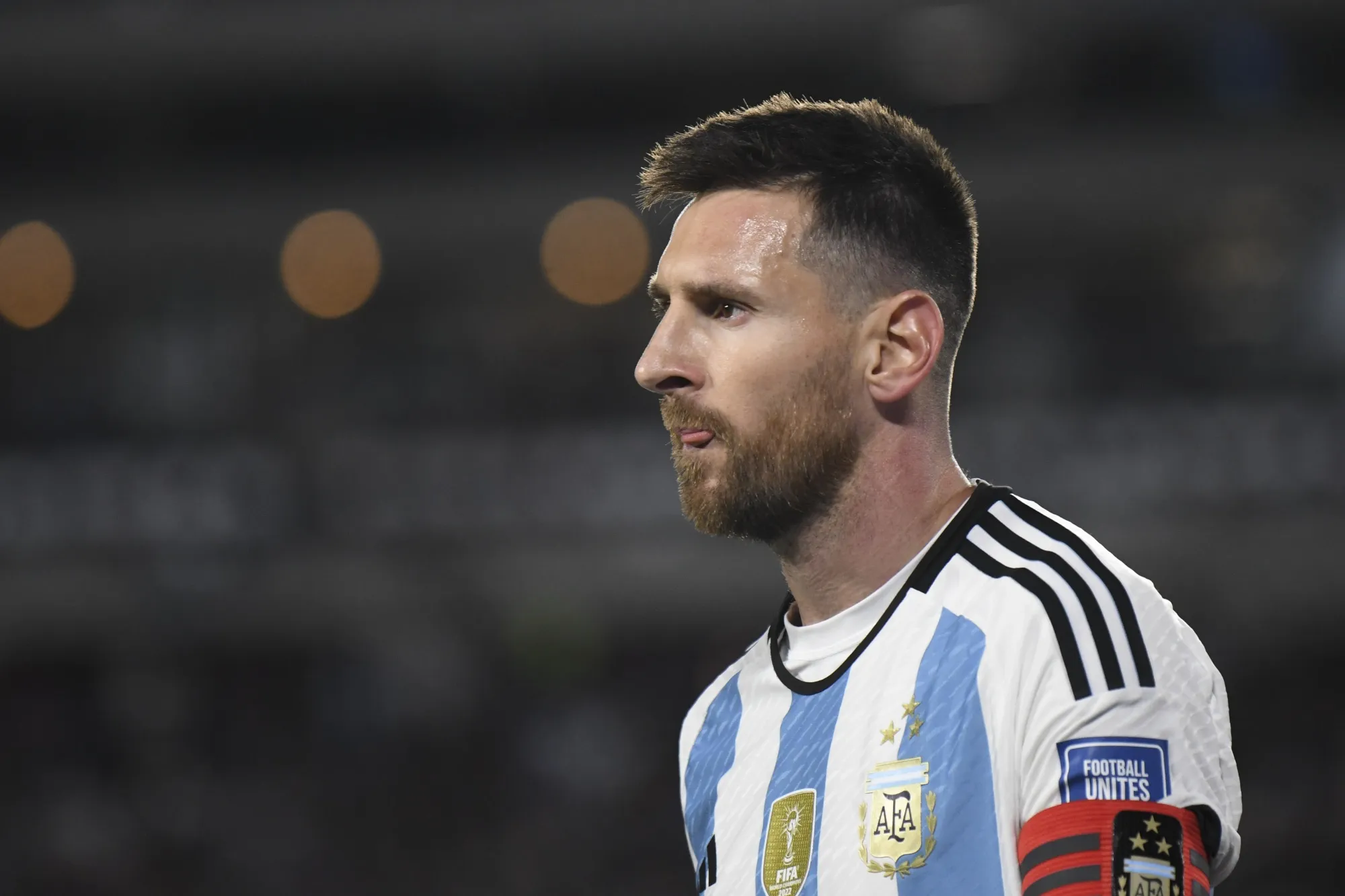
Lionel Messi is the captain and most decorated player in the history of the Argentina national football team. As of 2026, he remains the definitive figure of the "Albiceleste," having transitioned from a scrutinized prodigy to a global icon who led his nation to a 2021 Copa América title, the 2022 Finalissima, and the 2022 FIFA World Cup trophy.
For over two decades, the narrative of international football has been inextricably linked to Lionel Messi’s relationship with Argentina. This relationship has evolved through distinct phases: the early promise of a youth international, the agonizing years of final-round defeats, and the eventual late-career renaissance that solidified his status as perhaps the greatest player to ever grace the pitch. To understand why Messi plays for Argentina—and how he has redefined the national identity of the sport—one must examine the technical, emotional, and statistical milestones of his journey.
The Genesis of a Legend: Messi’s Arrival in the Albiceleste
The story of Lionel Messi and Argentina almost didn't happen. Having moved to Barcelona at the age of 13 to join the famed La Masia academy, Messi was eligible to represent Spain. The Royal Spanish Football Federation made several attempts to recruit him, but Messi’s loyalty to his homeland was unwavering. He famously stated that he never considered playing for any nation other than Argentina.
His international career began in earnest with the Under-20 team. In 2005, Messi led Argentina to victory in the FIFA World Youth Championship in the Netherlands. He finished the tournament as the top scorer and the best player, signaling the arrival of a generational talent. This success was a prerequisite for his senior team call-up, which occurred on August 17, 2005, in a friendly against Hungary.
However, his senior debut is remembered for all the wrong reasons. Entering the pitch as a second-half substitute, Messi was sent off just two minutes later after an incident with defender Vilmos Vanczák. Despite this rocky start, he was quickly integrated into the squad for the 2006 World Cup in Germany, where he became the youngest Argentine to play and score in a World Cup during the match against Serbia and Montenegro.
The Era of Final Heartbreak (2014–2016)
The middle period of Messi’s international career was defined by a paradox: he was arguably the best player in the world at the club level with FC Barcelona, yet he faced immense scrutiny and criticism within Argentina for a perceived lack of success with the national team. This era was marked by three consecutive summers of profound disappointment that nearly ended his international career.
The 2014 World Cup Final
In 2014, Messi led Argentina to the World Cup Final in Brazil. Throughout the tournament, he was the team's primary offensive engine, scoring vital goals in the group stages and providing the assist for Angel Di María in the Round of 16. However, Argentina fell 1-0 to Germany in extra time. Despite winning the Golden Ball as the tournament’s best player, Messi’s distraught expression while looking at the trophy became a symbol of a missed opportunity.
The Copa América Double-Blow (2015–2016)
The heartbreak continued in the 2015 Copa América and the 2016 Copa América Centenario. In both tournaments, Argentina reached the final only to lose to Chile on penalty shootouts. After the 2016 defeat, where Messi missed his penalty, the emotional weight became unbearable. He announced his retirement from international football in the mixed zone after the game, stating, "For me, the national team is over. I've done all I can."
This retirement lasted only a few weeks. A massive public campaign in Argentina, coupled with a realization of his own enduring passion, led him to reverse his decision. He returned to score the hat-trick against Ecuador that secured Argentina's qualification for the 2018 World Cup, proving that he remained the team’s indispensable savior.

The Scaloneta and the Path to Global Dominance
The turning point for Messi and Argentina came after the 2018 World Cup. With the appointment of Lionel Scaloni as head coach—initially on an interim basis—the team underwent a cultural and tactical shift. Scaloni built a squad that did not just rely on Messi but functioned to support him, utilizing younger, high-energy midfielders like Rodrigo De Paul and Leandro Paredes.
This era, nicknamed "La Scaloneta," broke the 28-year trophy drought. In 2021, Argentina defeated Brazil 1-0 in the Copa América Final at the Maracanã Stadium. For Messi, it was the validation he had sought for nearly twenty years. This victory acted as a psychological catalyst, removing the "weight of the world" from his shoulders and allowing him to play with a sense of joy that had often been missing in previous years.
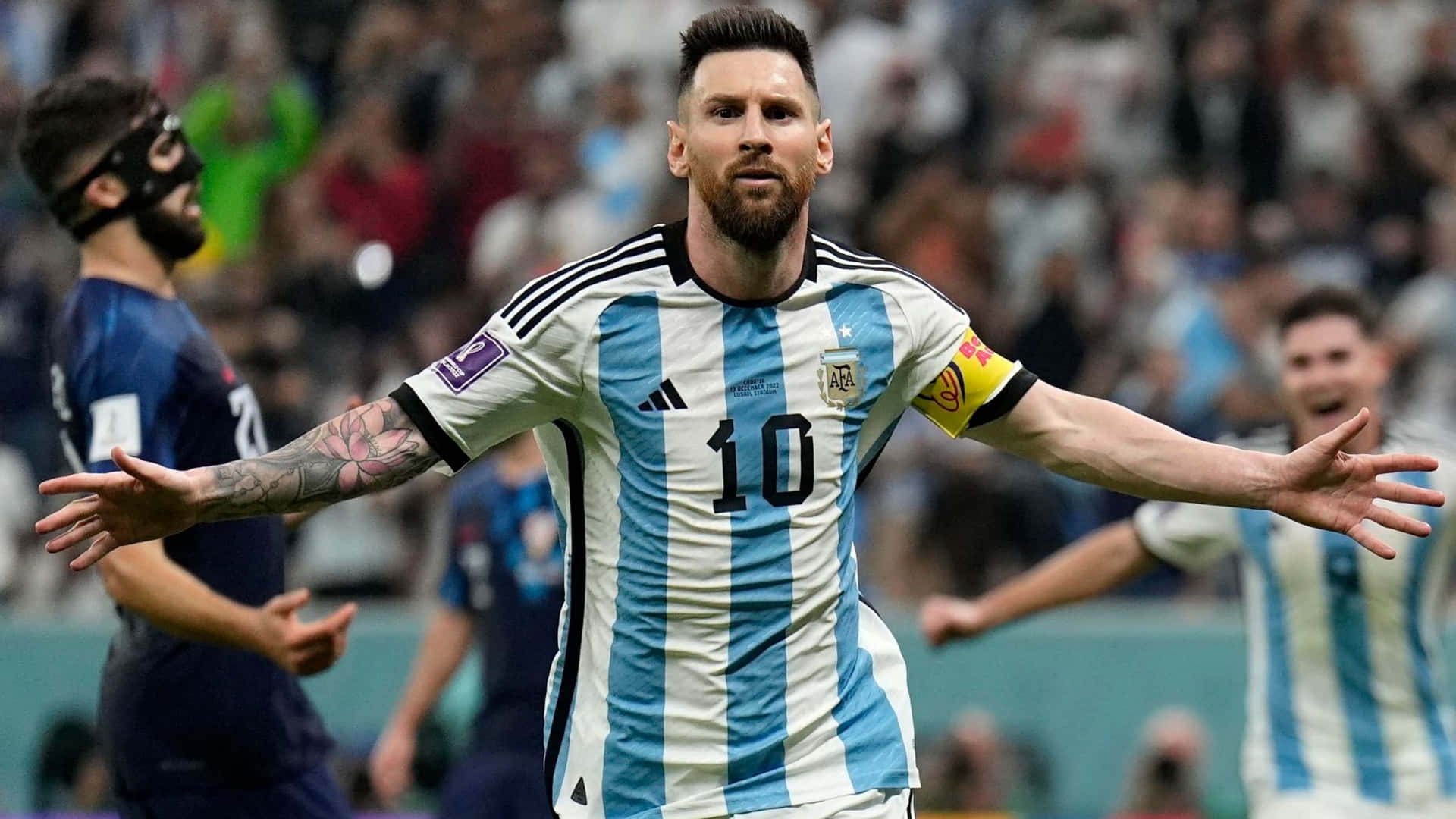
The momentum carried into the 2022 Finalissima, where Argentina dismantled Italy, and culminated in the 2022 FIFA World Cup in Qatar. At age 35, Messi produced one of the greatest individual tournament performances in history, scoring seven goals and providing three assists. In the final against France, widely considered the greatest football match ever played, Messi scored twice and converted his penalty in the shootout to secure Argentina’s third star.
Tactical Versatility: How Messi’s Role Evolved
To understand how Messi still plays for Argentina in 2026, one must look at his tactical evolution. He is no longer the explosive, touchline-hugging winger of his youth. His game has matured into that of a "Total Playmaker."
- The False 9 Era: Under various managers, Messi functioned as a False 9, dropping deep to pull defenders out of position and creating space for runners like Gonzalo Higuaín or Sergio Agüero.
- The Facilitator: In the current era, Messi often operates in the "Zone 14" area—the space just outside the opposition penalty box. His role is to dictate the tempo of the game, using his unparalleled vision to execute line-breaking passes.
- Conservation of Energy: Modern sports science and tactical discipline allow Messi to "walk" during certain phases of the game. By conserving his energy during defensive transitions, he maintains the burst of speed and cognitive clarity needed for decisive offensive actions.
This tactical flexibility has allowed Argentina to integrate younger talents like Julián Álvarez and Enzo Fernández, who provide the defensive work rate that allows Messi the freedom to create.
Career Statistics and International Records
Lionel Messi’s impact is most clearly seen in the record books. He holds virtually every significant record for the Argentina national team, surpassing legends like Gabriel Batistuta and Diego Maradona.
| Category | Record / Statistic | Context |
|---|---|---|
| Total Caps | 180+ | The most appearances in Argentine history. |
| Total Goals | 105+ | The all-time leading scorer for Argentina. |
| World Cup Goals | 13 | The highest for an Argentine in World Cup history. |
| World Cup Apps | 26 | The all-time record for any player in World Cup history. |
| Major Trophies | 4 | World Cup (2022), Copa América (2021), Finalissima (2022), Olympics (2008). |
| Assists | 50+ | Leading provider of assists in the team's history. |
Note: Statistics are reflective of his standing as of the 2026 competitive cycle.
Messi in 2026: The Legacy and the Future
In 2026, the question of "if" Messi plays for Argentina has transitioned into "how" he contributes to the next generation. Having moved to Inter Miami in Major League Soccer (MLS) in 2023, Messi’s club career has allowed him a more manageable schedule, which has been instrumental in prolonging his international availability.
His presence in the locker room is now as significant as his presence on the pitch. He serves as a mentor to the "Next Gen" of Argentine talent, ensuring that the winning culture established between 2021 and 2024 remains intact. For the fans, every match Messi plays for Argentina is treated as a celebration—a "long goodbye" to a player who redefined what was possible for a South American athlete on the world stage.
The 2026 World Cup, hosted across North America, represents a full-circle moment. Playing in the region where he currently resides at the club level, Messi continues to be the primary draw for the Albiceleste, proving that his influence transcends age and physical decline.
Common Obstacles and Challenges
Despite his success, Messi’s journey with Argentina has not been without significant hurdles. Understanding these challenges provides context for his eventual triumph.
- Comparison to Diego Maradona: For most of his career, Messi was unfairly compared to Maradona. The lack of a World Cup trophy was used as a cudgel against him by critics who claimed he lacked "leadership" or "passion." It wasn't until 2022 that these comparisons were finally settled in the eyes of the public.
- Systemic Instability: Between 2004 and 2018, the Argentine Football Association (AFA) went through numerous leadership crises and coaching changes. This lack of a long-term project often left Messi stranded in dysfunctional tactical systems.
- Physical Demands: The travel requirements for South American qualifiers (CONMEBOL) are among the most grueling in the world. Messi’s ability to maintain elite performance while flying across continents for decades is a testament to his professional discipline.
FAQ
When did Messi start playing for the Argentina senior team?
Messi made his senior debut on August 17, 2005, in a friendly against Hungary. His debut lasted only two minutes, as he received a red card shortly after coming on as a substitute. Despite this, he quickly became a permanent fixture in the squad, participating in the 2006 FIFA World Cup less than a year later.
How many World Cups has Messi played in for Argentina?
As of 2026, Messi has participated in five FIFA World Cups: 2006 (Germany), 2010 (South Africa), 2014 (Brazil), 2018 (Russia), and 2022 (Qatar). He is the only Argentine player to have scored in four different World Cup tournaments.
Has Messi ever won a trophy with Argentina?
Yes, Messi has won several major international trophies. After years of near-misses, he won the Copa América in 2021, the Finalissima in 2022, and the FIFA World Cup in 2022. Earlier in his career, he also won an Olympic Gold Medal (2008) and the FIFA World Youth Championship (2005).
Why did Messi briefly retire from the Argentina national team in 2016?
Messi announced a brief retirement following Argentina's loss to Chile in the 2016 Copa América Centenario final. It was the team's third consecutive loss in a major final in three years. The decision was driven by extreme emotional frustration and the immense pressure from the Argentine media and fans. He reversed his decision just a few months later to help the team qualify for the 2018 World Cup.
Is Messi playing in the 2026 World Cup?
In the current 2026 timeframe, Messi has remained part of the Argentina national team setup. While he has emphasized taking his career "year by year" following the 2022 victory, his continued fitness and high-level performance with Inter Miami have kept the door open for his participation in the 2026 tournament as the ultimate leader of the defending champions.
Practical Recommendations for Fans and Analysts
For those following Messi’s ongoing journey with Argentina, several key actions can enhance your understanding of his current status:
- Monitor AFA Official Dispatches: For the most accurate information on squad selections and injury updates, always refer to the Argentine Football Association (AFA) official website.
- Analyze Advanced Metrics: Use platforms like FBref or Opta Analyst to see how Messi’s role has shifted from a high-volume dribbler to a high-value passer in his later years.
- Watch the Qualifiers: The CONMEBOL qualification process is the best way to see how the team integrates new talent around Messi. These matches often provide more tactical insight than high-profile friendlies.
- Follow Official Broadcasters: For live matches and exclusive interviews, ensure you are accessing content through authorized FIFA or CONMEBOL partners to get verified commentary and footage.
Lionel Messi’s tenure with Argentina is more than a sports career; it is a cultural epic that mirrors the resilience of the nation itself. From the "boy who wouldn't play for Spain" to the man who lifted the World Cup in Lusail, his journey remains the gold standard for international football excellence.
Image Gallery
Select an image to open it in a new tab.




Lars Thomsen
Global Labor Markets and Economic Strategy Editor
