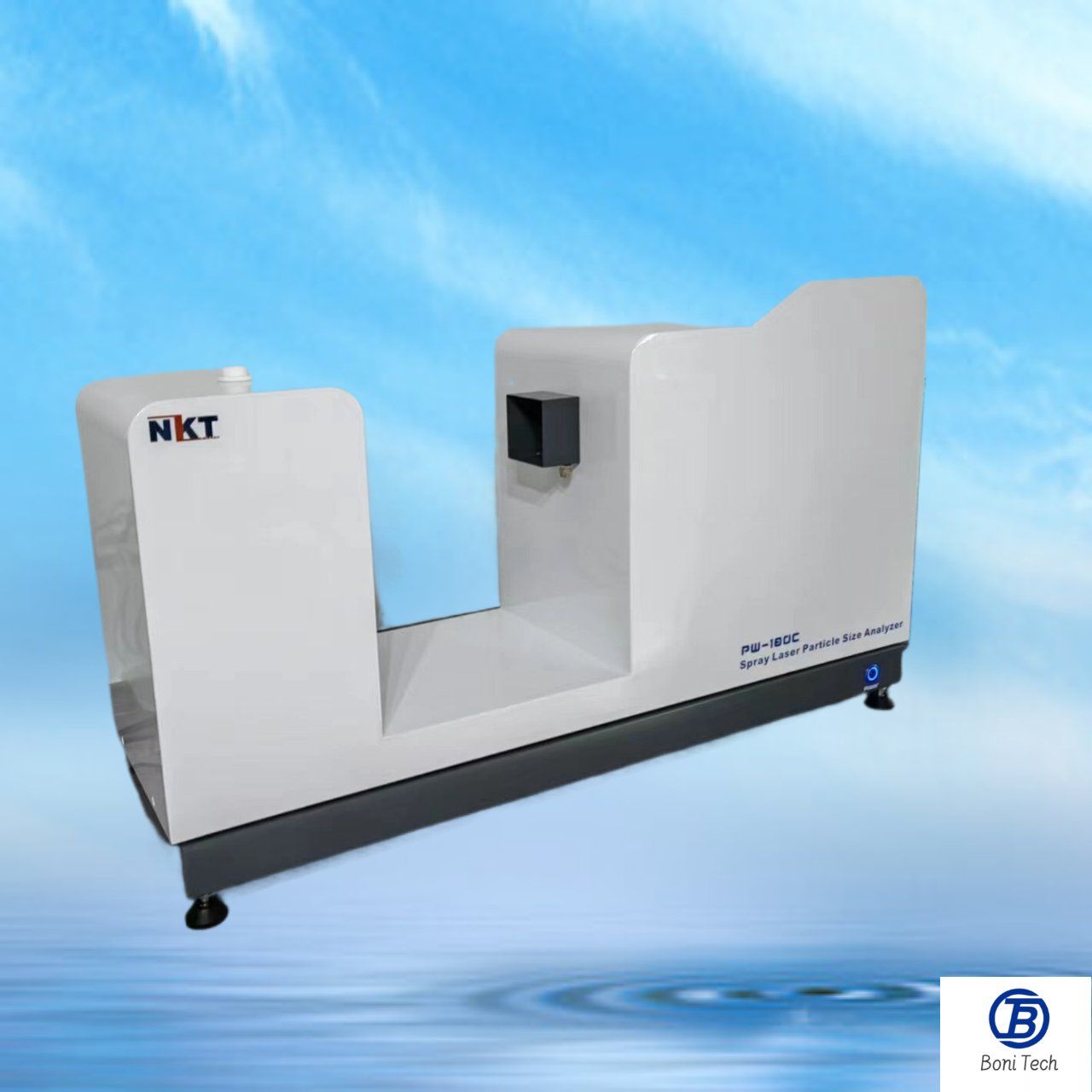
Laser particle size measurement relies on laser diffraction and dynamic light scattering to determine the physical dimensions of particulate matter in liquids, gases, or powders. By analyzing how particles scatter, absorb, or reflect light, laboratories and industrial facilities rapidly quantify size distributions ranging from nanometers to millimeters across pharmaceuticals, chemicals, and advanced materials.
Introduction to Laser Particle Size Measurement
In modern manufacturing, quality control, and scientific research, understanding the physical dimensions of particulate matter is critical. Whether developing a new pharmaceutical inhaler, optimizing cement formulation, or analyzing airborne pollutants, the size of individual particles dictates product performance, reactivity, stability, and safety. Laser particle size measurement has emerged as the gold standard in analytical laboratories and factory floors alike.
Unlike legacy techniques such as mechanical sieving or manual microscopy—which are often labor-intensive, slow, and prone to operator bias—laser-based systems provide rapid, highly repeatable, and statistically robust data. By leveraging the physical properties of light interaction with matter, these systems can analyze thousands of particles in seconds. This comprehensive guide explores the core operating principles, instrumental configurations, methodological prerequisites, data interpretation strategies, and practical troubleshooting steps required to master laser particle size analysis.
Fundamental Operating Principles
To accurately interpret particle size data, an analyst must understand the physical principles governing how light interacts with microscopic and sub-microscopic matter. Modern instrumentation primarily relies on two distinct yet complementary phenomena: laser diffraction and dynamic light scattering (DLS).
Laser Diffraction (Static Light Scattering)
Laser diffraction is the dominant technique for measuring particles ranging from approximately 0.1 micrometers ($\mu m$ to 3,000 $\mu m$. The fundamental premise is straightforward: when a beam of monochromatic, coherent light (usually from a laser diode or helium-neon laser) encounters particles suspended in a fluid medium or dispersed in air, the light is scattered in all directions.
- Angular Dependence: The angle at which light is scattered is inversely proportional to the size of the particle. Large particles scatter light intensely at narrow angles relative to the main laser beam. Conversely, smaller particles scatter light at much wider angles with lower intensity.
- The Scattering Pattern: A multi-element photodetector array measures the 2D spatial intensity pattern of the scattered light across a wide range of angles.
- Mathematical Inversion: Converting this raw light-intensity angular distribution into a particle size distribution requires mathematical algorithms. Most modern systems utilize the Mie scattering theory, which accounts for the refractive index and absorption coefficient of both the particles and the suspension medium. For larger particles (typically above 40 $\mu m$), approximations such as the Fraunhofer diffraction theory are sometimes applied, though Mie theory remains more accurate for sub-micron and transparent materials.
Dynamic Light Scattering (DLS)
For nanoparticles and sub-micron suspensions (typically from 0.3 nanometers to 10 $\mu m$), laser diffraction loses sensitivity. Instead, dynamic light scattering—also known as photon correlation spectroscopy (PCS)—is utilized.
- Brownian Motion: Particles in a liquid suspension are in constant, random thermal motion, known as Brownian motion. Smaller particles move more rapidly than larger particles.
- Intensity Fluctuations: As the laser illuminates these moving particles, the scattered light constructively and destructively interferes, creating a time-dependent speckle pattern. By measuring the rate at which these intensity fluctuations occur using high-speed photon detectors and digital correlators, the system calculates the translational diffusion coefficient.
- Stokes-Einstein Equation: Using the measured diffusion coefficient, solvent viscosity, and absolute temperature, the instrument applies the Stokes-Einstein equation to determine the hydrodynamic diameter of the particles.
Key Technical Specifications and Instrument Components
Selecting or operating a laser particle size analyzer requires a thorough understanding of its hardware architecture and performance parameters. A typical system consists of several core components working in unison.
| Component / Parameter | Description & Function | Typical Operating Range / Value |
|---|---|---|
| Light Source | Generates monochromatic, coherent light; commonly red He-Ne lasers or blue diodes. | Wavelengths typically 405 nm to 632.8 nm |
| Optical Bench | Houses the laser, beam expanders, spatial filters, and Fourier transform lenses. | Maintains alignment to within microns |
| Sample Dispersion Unit | Ensures representative particles enter the measurement zone without agglomeration. | Wet dispersion (recirculators) or dry dispersion (feeders) |
| Detector Array | Logarithmically spaced photodetectors that capture scattered light across wide angles. | From 0.02° up to 140° scattering angles |
| Dynamic Range | The span of particle sizes measurable in a single analytical configuration. | 0.01 $\mu m$ to 3,500 $\mu m$ (Diffraction systems) |
| Repeatability & Accuracy | Statistical measure of measurement consistency across multiple runs. | Typically $< 1%$ relative standard deviation (RSD) |
Method Development and Sample Preparation
Even the most advanced laser particle size analyzer will yield invalid data if the sample preparation and method parameters are flawed. Achieving accurate results requires rigorous adherence to standardized protocols.
1. Sampling and Representative Extraction
Before measurement, the bulk material must be representatively sampled. Taking a small scoop from the top of a powder drum can introduce severe sampling bias. Analysts should use mechanical rifflers, rotary sample dividers, or cone-and-quartering techniques to ensure the test sample mirrors the entire batch.
2. Dispersion Media Selection
For wet dispersion methods, selecting the correct dispersant is critical:
- Solubility: The particles must be insoluble in the liquid medium; otherwise, dissolution during measurement will skew the size distribution downward.
- Refractive Index Contrast: A significant difference between the refractive index of the particle and the liquid dispersant enhances optical contrast and signal-to-noise ratio.
- Surfactants: Hydrophobic powders often require a trace amount of surfactant (such as Triton X-100 or Tween-20) or sodium pyrophosphate to reduce surface tension and break down agglomerates.
3. Energy Optimization (Sonication)
Agglomerates—clusters of primary particles held together by van der Waals forces or electrostatic interactions—frequently form during storage.
- Built-in Ultrasonics: Most wet dispersion units feature integrated ultrasonic probes or baths.
- Titration of Energy: Analysts must optimize sonication time and power. Insufficient sonication leaves agglomerates intact, registering falsely large particle sizes. Excessive sonication can fracture fragile primary crystals, registering falsely small sizes.
4. Obscuration Control
In laser diffraction, obscuration refers to the percentage of light attenuated (scattered or absorbed) by the particles passing through the laser beam.
- Operating within the manufacturer’s recommended obscuration window (typically 5% to 20% for wet systems, and 1% to 5% for dry systems) prevents multiple scattering, where light scattered by one particle is subsequently scattered by another, corrupting the diffraction pattern.
Data Interpretation and Reporting Metrics
Laser particle size analyzers output complex mathematical distributions rather than a single number. Understanding how to read these outputs is essential for quality assurance.
Equivalent Sphere Diameter
Because real-world particles are irregularly shaped (spherical, needle-like, flake-like, or jagged), laser systems report results as an equivalent sphere diameter—the diameter of a sphere that would produce the equivalent scattering pattern or hydrodynamic behavior.
Statistical Diameters ($Dv$-Values)
Particle size distributions are commonly reported using volumetric percentile metrics known as $Dv$-values (or $Dx$-values):
- $Dv10$: The particle size below which 10% of the sample volume resides. Often used to monitor the presence of fine particles.
- $Dv50$ (Median Diameter): The median particle size by volume; exactly 50% of the distribution is larger and 50% is smaller.
- $Dv90$: The particle size below which 90% of the sample volume resides. Highly sensitive to the presence of oversized particles or agglomerates.
Span Calculation
To quantify the width or polydispersity of a particle size distribution, analysts calculate the Span:
$$\text{Span} = \frac{Dv90 - Dv10}{Dv50}$$
A lower span indicates a narrow, highly monodisperse particle distribution, whereas a higher span points to a broad, highly polydisperse system.
Common Sources of Error and Troubleshooting
When laser particle size data fails validation or exhibits poor repeatability, systematic diagnostic checks can identify the root cause.
- Air Bubbles in Wet Systems: Dissolved gases can nucleate into microbubbles in the dispersion liquid, scattering light and appearing as large particles. Solution: Degas the liquid dispersant using a vacuum chamber or run an automated degassing cycle before introducing the sample.
- Optical Contamination: Residue on the measurement cell windows (fouling) scatters stray light, artificially inflating the fine-particle fraction ($Dv10$). Solution: Clean optical windows thoroughly with appropriate solvents (e.g., ethanol, deionized water, or acetone) and verify background measurements before analysis.
- Incorrect Optical Constants: Entering an incorrect refractive index or imaginary absorption coefficient into the Mie calculation software causes mathematical artifacts, leading to distorted distribution curves (such as ghost peaks in the sub-micron range). Solution: Consult literature values or experimentally measure the refractive index of the specific material.
- Incomplete Dispersion: If successive measurements show a progressive decrease in particle size, the sample is likely breaking down gradually under shear or sonication. Solution: Standardize the stirring speed and pre-sonication protocol to ensure a steady state is reached before data acquisition.
Industrial Applications
Laser particle size measurement plays a vital role across diverse industrial sectors:
- Pharmaceuticals: Particle size directly controls active pharmaceutical ingredient (API) dissolution rates, bioavailability, and pulmonary deposition efficiency in dry powder inhalers (DPIs).
- Additive Manufacturing (3D Printing): Metal and polymer powders used in selective laser sintering (SLS) require strict particle size distributions (typically 15 $\mu m$ to 45 $\mu m$) to ensure optimal flowability and bed packing density.
- Coatings and Pigments: The tinting strength, gloss, opacity, and shelf stability of paints and inks depend entirely on controlling pigment particle dimensions below critical optical thresholds.
- Geotechnical and Environmental Engineering: Analyzing soil textures, sediment transport in rivers, and atmospheric particulate matter ($PM_{2.5}$ and $PM_{10}$) relies heavily on laser diffraction methodologies.
Conclusion and Recommended Next Actions
Mastering laser particle size measurement requires a systematic approach encompassing method development, optical parameter selection, rigorous sample dispersion, and careful data verification. To implement or optimize a measurement workflow in your facility:
- Conduct a comprehensive risk assessment of your current sampling and dispersion protocols.
- Verify that optical models (Mie theory parameters) align with the exact chemical composition of your test materials.
- Establish routine cleaning and background verification schedules to prevent optical contamination and ensure long-term data integrity.
Image Gallery
Select an image to open it in a new tab.
Lars Thomsen
Global Labor Markets and Economic Strategy Editor
