
Yes, you can qualify for life insurance with atrial fibrillation (Afib), though the underwriting process is more rigorous than for someone without a heart rhythm disorder. Approval and premium costs depend heavily on the severity of your condition, the frequency of episodes, how well your symptoms are managed, and the presence of other cardiovascular risk factors.
Understanding Underwriting for Heart Conditions
When you apply for life insurance, the insurer’s primary goal is to assess your "mortality risk"—the statistical likelihood of an early claim. Underwriters view Atrial Fibrillation as a condition that requires careful scrutiny because it is associated with an increased risk of stroke, heart failure, and systemic embolization.
When you disclose an Afib diagnosis, an underwriter does not simply look at the label. They perform a clinical audit of your cardiovascular health. They will review your medical records, including electrocardiograms (EKG), echocardiograms, and notes from your cardiologist. They are looking for stability. If your Afib is paroxysmal (occurring in brief, intermittent episodes) and well-controlled with medication or an ablation procedure, your chances of securing a competitive policy rate are significantly higher than if you have persistent or permanent Afib with poorly controlled heart rates.
Key Factors Influencing Approval and Premiums
Insurance companies use specific criteria to bucket applicants into risk classes, ranging from "Preferred Plus" to "Table Rated" (substandard) or "Decline." While every carrier has its own actuarial guidelines, the following variables are almost universal in the evaluation process:
1. Frequency and Duration of Episodes
Underwriters analyze the "burden" of your Afib. A patient who experiences one episode per year that reverts to normal sinus rhythm spontaneously is viewed differently than a patient experiencing daily or weekly palpitations. Chronic or permanent Afib generally presents a higher risk profile because of the sustained potential for blood clotting.
2. Underlying Cardiac Health
Afib is rarely an isolated issue; it is often a symptom of underlying heart structural problems. If your Afib is caused by valvular heart disease, cardiomyopathy, or significant hypertension, the risk rating increases. Conversely, if your heart structure is normal—a state often called "Lone Afib"—you are likely to receive a more favorable rating.
3. Management and Compliance
Are you taking your prescribed anticoagulants (blood thinners) as directed? Are you attending regular follow-ups with your cardiologist? Evidence of medical non-compliance is one of the fastest ways to get declined or rated at a higher premium. Insurers want to see that you are actively managing your stroke risk.
4. The CHADS2 or CHA2DS2-VASc Score
Many insurance companies utilize standard medical risk-stratification scores, such as the CHA2DS2-VASc scale, to estimate your risk of stroke. While this is primarily a clinical tool for doctors to determine the necessity of anticoagulation, it provides insurers with a validated, data-driven look at your risk profile. Factors such as your age, history of diabetes, history of stroke, or vascular disease will impact this score, and by extension, your insurance rating.
Potential Underwriting Outcomes
Because life insurance underwriting is subjective to each carrier’s internal risk appetite, you may see vastly different offers across the marketplace.
| Underwriting Outcome | Likely Clinical Profile |
|---|---|
| Standard/Standard Plus | Lone Afib, infrequent episodes, no structural heart disease, stable on low-dose medication. |
| Substandard (Table Rating) | Frequent episodes, requires multiple medications, presence of mild hypertension or high cholesterol. |
| Declined | Recent stroke history, symptomatic heart failure, significant structural disease, or failure to follow treatment. |
Note: Table ratings act as a multiplier on your premium. If your base rate is $100 per month, a "Table B" rating might increase that cost by 25% or 50%, depending on the specific insurance company’s internal guidelines.
Steps to Maximize Your Chances of Approval
If you have Afib, you must be more strategic about how and when you apply for life insurance. Simply submitting a random application to the first carrier you find may result in a decline or an unnecessarily high premium.
1. Gather Your Medical Evidence: Before applying, contact your cardiologist’s office. Ensure your medical records are up to date and clearly state the type of Afib, the date of diagnosis, your current treatment plan, and any diagnostic testing results (like an echocardiogram or stress test).
2. Focus on Stability: If you have recently changed your medication or just had a surgical intervention like an ablation, wait. Most insurers require a period of stability—often six to twelve months—to ensure the treatment is effective and your rhythm has stabilized. Applying while in a period of clinical flux often leads to a decline or a "postpone" decision.
3. Choose the Right Carrier: Some life insurance companies are known as "impaired risk" specialists. These carriers have medical directors who are more comfortable underwriting heart rhythm disorders. A generic mass-market carrier may have a rigid, automated system that flags your medical history and issues an immediate decline, whereas a specialty carrier will have a human underwriter look at your specific case.
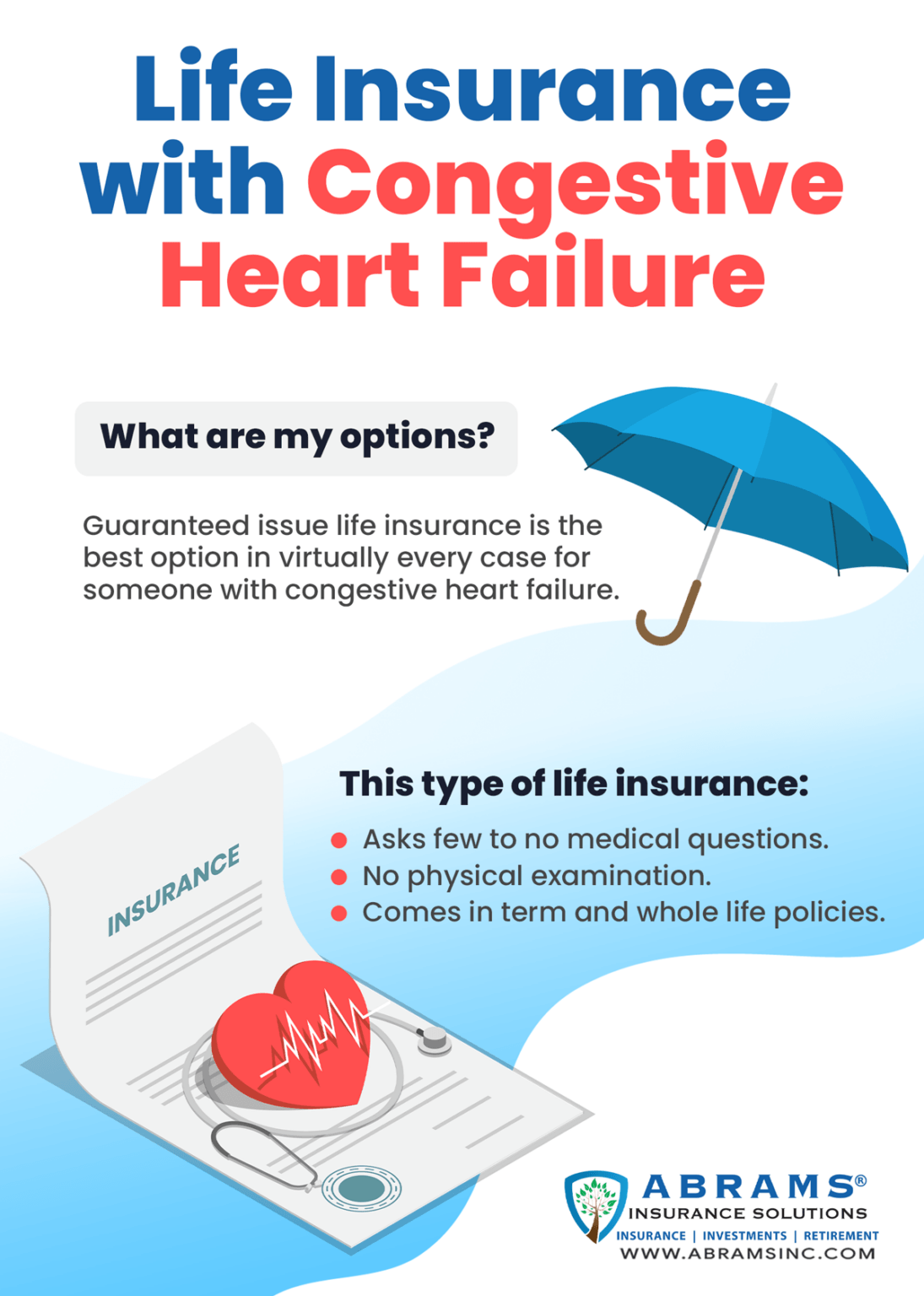
4. Consider Simplified or Guaranteed Issue Policies: If you have severe, unmanaged Afib and cannot qualify for traditional, medically underwritten term life insurance, you might consider Simplified Issue or Guaranteed Issue policies. These typically do not require a medical exam, but they come with lower coverage limits and higher premium costs. Use these only as a last resort.
Common Mistakes to Avoid
- Withholding Information: Never omit your diagnosis on the application. Life insurance companies share information through databases like the MIB (Medical Information Bureau). If you lie on your application, the insurance company will find out during the verification process, and your application will be denied for "material misrepresentation."
- Ignoring Co-morbidities: Do not focus solely on your heart rhythm. If you have Afib and are also a smoker, obese, or have poorly managed diabetes, your mortality risk is compounded. Your best chance for a good rate is to present a clean, well-managed file for all of your health conditions, not just your heart.
- Failing to Use an Independent Broker: If you have a complex medical history, do not go to a "captive" agent who only sells for one company. An independent life insurance broker can perform a "pre-screen" or "informal inquiry" with several insurance companies to see who is likely to offer the best rating for your specific profile before you officially submit the application.
Frequently Asked Questions
Does having an ablation procedure make me uninsurable? No, in many cases, it makes you a better candidate. If you had a successful catheter ablation that resulted in the cessation of Afib episodes, and you have remained in normal sinus rhythm for over a year without the need for anti-arrhythmic drugs, you may qualify for much better rates than if you were still on medication for persistent Afib.
Will I be required to take a medical exam? Usually, yes. For traditional term or whole life insurance, companies will require a paramedical exam. This includes a blood draw, a urine sample, and blood pressure readings. These tests help the insurer verify the health information you provided, specifically checking for signs of other issues like high blood sugar or kidney function.
Does being on blood thinners automatically mean I am high risk? Being on an anticoagulant like warfarin or a direct oral anticoagulant (DOAC) is often viewed as a positive by underwriters. It shows you are actively mitigating your stroke risk. The insurer is more concerned with why you need the medication than the fact that you are taking it.
Can I get life insurance if I am over 65 and have Afib? Yes, age is just one factor. If you are older, the insurer will place more weight on your "stability of life"—how your Afib is managed in the context of your overall longevity. You may be required to provide more detailed records of your annual check-ups to confirm that your condition has not progressed.
What if I am denied coverage? A denial from one company is not a universal rejection. If you are denied, ask your broker for the specific reason. Sometimes, you can re-apply after a year of stability or after a change in your medical regimen. If a full-underwritten policy is impossible, look for Guaranteed Issue Whole Life products, which provide coverage without medical exams, though at a significantly higher cost per thousand dollars of coverage.
Next Action: Consult an Impaired Risk Specialist
If you have Afib, your path to life insurance should begin with a consultation with an independent agent who specializes in "impaired risk" or "high-risk" life insurance. These agents know which insurance company’s medical guidelines are most favorable to your specific cardiac situation. Ask them to perform an informal inquiry before you apply. This allows the agent to present your clinical summary to multiple underwriters anonymously to gauge the likely rating, saving you the risk of receiving a formal "decline" on your permanent insurance record.
Image Gallery
Select an image to open it in a new tab.




Akira Tanaka
International Academic Trends Correspondent
