Choosing Tesla Auto Insurance in California: A Complete Guide to Coverage, Rates, and Carriers
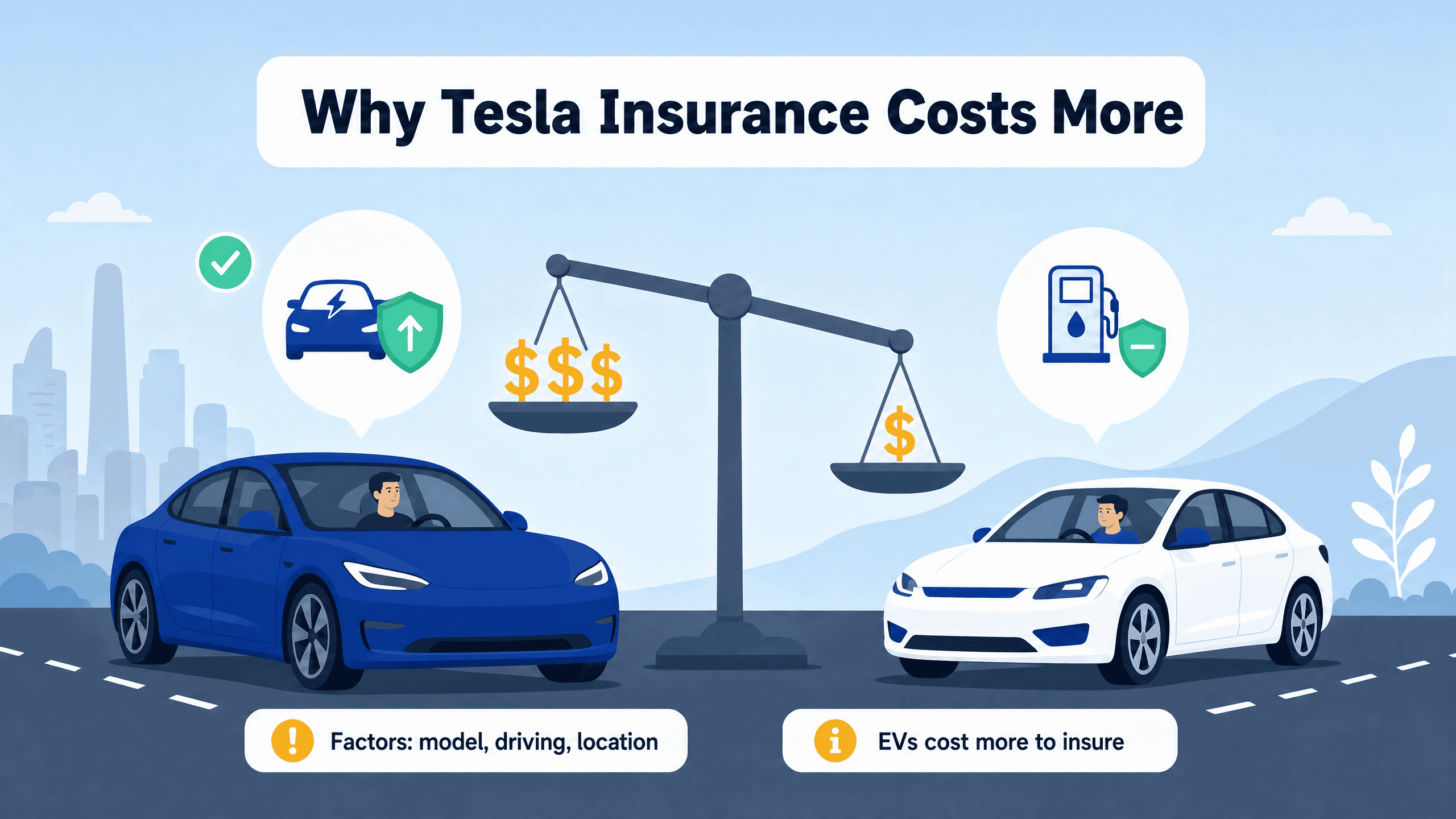
Choosing Tesla auto insurance in California requires evaluating OEM-backed Tesla Insurance alongside traditional carriers like State Farm, AAA, and Farmers. Because California regulations prohibit real-time driving behavior tracking for rate setting, Tesla Insurance in California relies on standard rating factors rather than real-time Safety Scores. Drivers must weigh repair network access and original equipment manufacturer (OEM) replacement guarantees against claims processing speed and customer service reliability.
Disclaimer: Insurance regulations, minimum coverage mandates, and underwriting practices change over time. This guide is for informational purposes only and does not constitute formal financial, legal, or insurance advice. Consult a licensed California insurance agent or broker to evaluate specific policy needs.
The Unique Landscape of Insuring a Tesla in California
Insuring an electric vehicle (EV) built by Tesla involves distinct financial and operational factors compared to insuring an internal combustion engine vehicle. Tesla vehicles incorporate proprietary technologies, structural aluminum components, battery pack integration within the chassis, and an extensive array of sensors powering Autopilot and Full Self-Driving (FSD) capabilities. These design choices contribute to safety ratings, but they also significantly alter repair economics and claims evaluations.
In California, high labor rates, elevated collision repair costs, and specialized Tesla Approved Body Shop requirements drive average insurance premiums well above the national median for standard passenger vehicles. When a Tesla suffers structural damage or sensor misalignment, repairs require certified technicians, calibrated tooling, and specific factory software diagnostic suites. Consequently, minor fender benders often involve sub-frame alignment checks, radar and camera recalibration, or high-voltage battery isolations, raising the threshold for total-loss decisions by insurers.
| Category | Details |
|---|---|
| Repair Complexity | Structural aluminum, gigacastings, battery enclosure safety, sensor recalibration. |
| Regulatory Constraint | California Prop 103 restricts real-time telematics/Safety Score for rate pricing. |
| Carrier Dynamics | Direct OEM policy vs. traditional carriers offering OEM endorsements & bundle discounts. |
Regulatory Constraints: Proposition 103 and Telematics
A major distinction for California drivers is the regulatory framework established by Proposition 103 and enforced by the California Department of Insurance (CDI). Under California law, auto insurers are strictly limited in how they calculate premium rates. The primary mandatory rating factors must be weighted in the following order:
- The insured driver's safety record.
- The number of miles driven annually.
- The number of years of driving experience.
Because the state limits real-time telematics tracking for rate-setting purposes, Tesla Insurance in California operates differently than it does in states like Texas, Arizona, or Ohio. In those states, Tesla uses real-time telemetry gathered directly from the vehicle—monitoring aggressive turning, hard braking, tailgating, and night driving—to adjust monthly premiums via a dynamic Safety Score.
In California, Tesla Insurance is prohibited from using real-time Safety Score metrics to set or adjust your base premium. Instead, Tesla Insurance operates as a traditional policy underwritten by Tesla Insurance Services (and its fronting partner carriers like State National Insurance Company), relying on historical driving records, declared mileage, vehicle model variant, garage location, and basic demographic data permitted by CDI guidelines.
Tesla Insurance vs. Traditional Auto Insurers in California
When shopping for Tesla coverage in California, vehicle owners generally choose between two primary paths: Tesla’s proprietary insurance product or established third-party insurance carriers.
Tesla Insurance (OEM Product)
Tesla Insurance was launched to leverage the automaker’s direct knowledge of vehicle repair mechanics and data to offer competitive rates.
Advantages:
- Direct Integration: Purchasing and managing policies takes place entirely within the Tesla mobile application, streamlining onboarding for new buyers at delivery.
- OEM Part Guarantees: Tesla Insurance explicitly aims to use original Tesla components for covered collision and comprehensive repairs.
- Competitive Baseline Rates: For certain driver profiles—particularly younger drivers or those in high-density urban areas where third-party insurers charge steep premiums—Tesla Insurance often provides lower upfront pricing.
Disadvantages:
- Claims Processing Delays: A common criticism among policyholders centers on administrative responsiveness. Customer support relies heavily on app-based communication, leading to reported delays in claim settlement, adjuster assignment, and rental car approvals.
- Lack of Multi-Policy Bundling: Unlike traditional carriers, Tesla Insurance does not offer native homeowners, renters, or umbrella policies, eliminating the potential for combined multi-policy discounts.
Traditional Insurance Carriers
Carriers such as State Farm, AAA (CSAA or Auto Club of Southern California), Farmers, Progressive, and Wawanesa insure a significant portion of Tesla vehicles in California.
Advantages:
- Comprehensive Bundling: Drivers can bundle auto coverage with property, life, or umbrella policies, which frequently reduces total annual insurance expenditure across all accounts.
- Established Agent Networks: Local independent or captive agents provide direct human contact, expedited claims handling, and dedicated claims representatives.
- Established Claims Infrastructure: Larger carriers often possess mature claims handling workflows, established direct-repair networks, and rapid rental car authorization protocols.
Disadvantages:
- Higher Base Premiums for EVs: Some carriers price Tesla policies higher due to historical claims severity data and structural repair expenses.
- Aftermarket Part Provisions: Standard policies may contain clauses permitting reconditioned or non-OEM aftermarket parts where available, unless an OEM endorsement is added to the policy.

Detailed Carrier Comparison Matrix
The table below highlights key policy features, regulatory factors, and operational mechanics across insurance options for California Tesla owners.
| Policy Feature / Dimension | Tesla Insurance (California) | Traditional Carriers (State Farm, AAA, Farmers) | Regional/Specialty Carriers (e.g., Wawanesa) |
|---|---|---|---|
| Real-Time Safety Score Pricing | Prohibited by California CDI rules; fixed monthly rates based on traditional factors. | Not utilized for core rating; optional telematics apps yield flat policy discounts. | Not utilized for dynamic rate adjustments. |
| Policy Purchasing & Management | In-App digital onboarding; seamless VIN population. | Web portal, phone agent, or localized branch office. | Web portal or customer service phone line. |
| OEM Parts Authorization | Standard practice for structural and panel repairs. | Requires optional OEM Parts Endorsement on standard policies. | Varies by policy tier; aftermarket preferred if available. |
| Bundling Discounts (Home/Life) | Not available. | Available (typically 10%–25% savings across combined policies). | Home/Renters bundling available depending on carrier footprint. |
| Glass & Panoramic Roof Coverage | Comprehensive line item; standard deductible applies unless full glass waiver is bought. | Comprehensive line item; optional zero-deductible full glass endorsement available. | Standard comprehensive deductible applies. |
| Claims & Support Channels | App-based ticketing, primary phone line, central adjusters. | Local agent support, 24/7 dedicated call centers, direct repair shops. | Regional call centers and online claim submission portals. |
Critical Coverage Options Every California Tesla Owner Needs
Selecting an auto insurance policy requires choosing coverage limits and endorsements appropriate for high-value electric vehicles. Relying on state minimum limits leaves vehicle owners vulnerable to catastrophic financial loss.
| Coverage Area | Details |
|---|---|
| Liability Coverage | 100k/300k/100k Minimum (250k/500k/100k Preferred). Mandatory minimums leave severe financial gap. |
| Comprehensive | Low Deductible ($250-$500). Covers glass, vandal, flood, animal strikes. |
| Collision | Moderate Deductible ($500-$1,000). Covers single & multi-vehicle collisions. |
| Uninsured Motorist | Matches Bodily Injury Liability Limits. Crucial protection against uninsured drivers. |
| Endorsements | Gap / Auto Loan Payoff & OEM Repair Parts |
1. Extended Liability Limits
California law mandates basic liability limits (which were updated via California Assembly Bill 2338 to $30,000 for bodily injury per person, $60,000 for total bodily injury per accident, and $15,000 for property damage liability).
Given the average cost of modern vehicles in California, a $15,000 property damage limit is insufficient. If a driver is at fault in an accident involving a luxury car or multiple vehicles, repair costs can quickly exceed $15,000. Recommended minimum liability configurations for Tesla owners are:
- Bodily Injury Liability: $100,000 per person / $300,000 per accident (or $250,000 / $500,000).
- Property Damage Liability: $100,000 minimum per accident.
2. Comprehensive and Collision Coverage
Comprehensive covers non-collision events such as theft, vandalism, fire, falling objects, weather damage, and animal impacts. Collision covers impacts with other vehicles or stationary objects.
Due to the specialized construction of Tesla vehicles (such as aluminum castings and underbody battery shield assemblies), even minor structural impacts can lead to substantial repair bills. Keeping collision and comprehensive deductibles between $500 and $1,000 balances upfront premium costs with out-of-pocket exposure during a claim.
3. Glass and Panoramic Roof Protection
Every Tesla model features substantial glass surface area, including expansive windshields, glass roof panels, and rear hatch glass. Panoramic roof panels are integrated into the vehicle's structural integrity and thermal sealing.
Replacing a Tesla windshield or roof panel requires specialized glass installation and camera recalibration for Autopilot forward-facing cameras. Standard comprehensive coverage applies to glass damage, but drivers should evaluate:
- Full Glass Endorsements: Some traditional carriers offer zero-deductible glass repairs or replacements.
- Deductible Selection: A high $1,000 comprehensive deductible means paying out of pocket for windshield cracks that cost $900 to $1,400 to replace and calibrate.
4. Uninsured and Underinsured Motorist Coverage (UM/UIM)
A notable portion of California motorists drive with insufficient liability limits or no active insurance policy. Uninsured Motorist Bodily Injury (UMBI) and Uninsured Motorist Property Damage (UMPD) protection cover medical costs and physical repairs if an uninsured driver strikes your vehicle. Selecting UM/UIM limits that match your primary bodily injury limits protects your household from absorbing high medical expenses or unrecoverable vehicle damage.
5. Loan/Lease Gap Coverage
Teslas experience depreciation patterns typical of modern technological hardware and premium automobiles. If you finance or lease your vehicle with a low down payment, the outstanding loan balance may exceed the fair market value (FMV) during the first two to three years of ownership.
If the car is totaled, standard collision coverage pays only the actual cash value (ACV) of the vehicle at the time of loss, minus your deductible. Gap insurance covers the financial difference between the ACV payout and your remaining loan balance. While Tesla Financial Services mandates gap-equivalent provisions in leasing agreements, buyers financing through credit unions or third-party lenders must secure gap protection through their policy or lender.
Factors Influencing Tesla Rates in California
Insurance pricing relies on statistical risk modeling. Understanding the primary cost drivers helps owners optimize their coverage choices.
| Factor | Details |
|---|---|
| Vehicle Trim & Performance | Base variants cost less to insure than Plaid or Performance trims. |
| Annual Verified Mileage | Lower annual mileage yields direct premium reductions under Prop 103. |
| Garage Location | ZIP code risk, claim rates, theft, and urban traffic density. |
| Driving Record & Experience | Clean records qualify for California Good Driver discount mandates. |
Trim Level and Performance Variants
Insurance rates vary across the Tesla product lineup:
- Model 3 and Model Y (Standard Range / Long Range): Represent the lowest average premium costs in the lineup due to parts availability and volume production scale.
- Performance and Plaid Variants (Model 3, Model Y, Model S, Model X): Dual or tri-motor configurations with faster acceleration profiles fall into higher risk categories, leading to higher collision premiums.
- Cybertruck: Stainless steel alloy body panels, structural gigacastings, and unique structural components place it in a specialized insurance category with limited historical actuarial data, often resulting in higher initial quotes.
Annual Mileage Verification
Because California Proposition 103 mandates annual mileage as a key rating factor, reporting precise odometer readings is critical. Drivers commuting short distances or working remotely can secure substantial discounts by providing verified odometer readings annually. Misreporting mileage can result in premium readjustments or audit delays during a claim.
Location and Urban Traffic Density
Insurance rates reflect local risk factors. A Tesla garaged in high-density urban areas like downtown Los Angeles, San Francisco, or Oakland will face higher collision and comprehensive premiums than the same vehicle garaged in rural northern California or suburban parts of the Central Valley. Factors include local accident frequencies, repair shop labor rates, auto theft statistics, and vandalism claims.
Step-by-Step Guide: How to Select and Secure Coverage
Follow this structured process to evaluate and finalize auto insurance for a Tesla in California.
- Gather VIN & Vehicle Delivery Details
- Generate Base Quote via Tesla Mobile Application
- Request Comparative Quotes from Independent Carriers
- Evaluate OEM Parts & Glass Coverage Endorsements
- Verify Mileage, Good Driver Discounts, & Finalize Policy
Step 1: Obtain the VIN and Configuration Details
Before requesting final quotes, secure your Vehicle Identification Number (VIN) from your Tesla account once assigned. Quotes generated with a specific VIN account for exact trim configurations, safety hardware suites, and option packages.
Step 2: Request a Base Quote via the Tesla App
If you own a Tesla or have an order linked to your Tesla account, request an insurance quote directly in the app.
- Open the Tesla App.
- Navigate to the Insurance section or delivery tasks.
- Input your desired coverage limits, deductibles, and California driver license information.
- Note the monthly policy rate, which functions as your baseline estimate.
Step 3: Collect Comparative Quotes from Major Insurers
Contact at least three traditional insurance carriers operating in California (e.g., State Farm, AAA, Progressive, Farmers) or work with an independent insurance broker. Provide identical coverage limits across all requests:
- Liability limits (e.g., $100k/$300k/$100k).
- Comprehensive and Collision deductibles ($500 or $1,000).
- Uninsured motorist limits.
- Rental car reimbursement caps.
Step 4: Compare Multi-Policy Bundling Savings
Calculate total household insurance expenditures, not just auto rates. A traditional carrier's auto policy may cost $30 per month more than Tesla Insurance, but bundling home, renters, or umbrella policies with that carrier may yield a $50 per month overall savings across all accounts.
Step 5: Confirm Policy Terms and Delivery Timing
Select your preferred insurer and schedule policy activation to coincide with your vehicle delivery date. California law requires proof of active financial responsibility (insurance) matching your VIN before taking delivery at a Tesla delivery center or receiving home delivery.
Common Pitfalls to Avoid
When insuring a Tesla in California, vehicle owners frequently encounter avoidable pitfalls:
- Assuming Safety Score Pricing Applies in CA: Drivers relocating from other states often expect their premium to decrease via smooth driving habits. In California, real-time driving behavior tracking for rates is prohibited by CDI rules. Your premium remains fixed throughout the policy term unless traditional factors change.
- Selecting California State Minimum Liability Limits: Choosing standard minimum liability limits ($30k/$60k/$15k) leaves significant financial exposure if your vehicle causes an accident involving high-value vehicles or multiple injuries.
- Ignoring Repair Network Protocols: Failing to check if your insurer approves repairs at certified Tesla Approved Body Shops can lead to unexpected out-of-pocket labor expenses if your carrier caps hourly labor reimbursement rates below local market costs.
- Overlooking Glass Coverage Deductibles: Setting a $1,000 comprehensive deductible without a glass endorsement means paying for windshield or roof panel replacements out of pocket.
Frequently Asked Questions
Does Tesla Insurance use the Safety Score to adjust monthly premiums in California?
No. Under California Insurance Code regulations enforced by the California Department of Insurance (CDI) and Proposition 103 mandates, insurers cannot use real-time telematics data—such as Tesla's Safety Score—to adjust insurance rates. Tesla Insurance rates in California are based on traditional rating factors, including driving history, years of experience, vehicle model, geographic location, and reported annual mileage.
Why are insurance rates for Teslas often higher than comparable gas-powered sedans?
Tesla insurance rates reflect higher average repair costs. Key factors include specialized structural aluminum construction, integrated high-voltage battery enclosures, high labor rates at certified collision centers, and mandatory camera and sensor recalibration for active safety systems following repairs.
Can I repair my Tesla at any body shop under standard insurance policies?
While you have the legal right in California to choose your repair facility, insurers only reimburse labor and parts up to reasonable and customary market rates. Because Tesla structural repairs require specialized tooling, equipment, and certified training, using a non-certified shop can void vehicle warranties or lead to incomplete safety calibrations. Ensure your policy covers repairs at Tesla Approved Body Shops.
Is Gap Insurance necessary when financing a Tesla in California?
Gap insurance is strongly recommended if you finance a Tesla with a small down payment (less than 15–20%). Because vehicle depreciation can outpace loan principal reduction during the first few years, gap insurance covers the difference between the car's actual cash value and your remaining loan balance if the vehicle is written off as a total loss.
How does annual mileage affect my Tesla insurance premium in California?
Proposition 103 mandates annual mileage as one of the top three rating factors for California private passenger auto insurance. Accurately reporting lower annual mileage (for example, under 7,500 miles per year) leads to direct rate reductions. Insurers may periodically request odometer verification to maintain low-mileage discount tiers.
What happens if my Tesla insurance policy lapses at delivery?
Tesla delivery centers in California will not release a vehicle without proof of active insurance coverage that meets California minimum financial responsibility laws and lists the vehicle's specific VIN. A lapse in coverage can delay delivery, jeopardize financing terms, and expose you to administrative penalties from the California DMV.
Final Recommendation and Next Steps
Choosing the right auto insurance policy for a Tesla in California requires balancing upfront cost against repair protection and claims service quality. While Tesla Insurance offers streamlined purchasing through the mobile app and competitive base pricing for many driver profiles, its lack of multi-policy bundling and app-centric customer support lead some owners to prefer traditional carriers.
Next Steps for Tesla Buyers and Owners:
- Obtain Your VIN: Secure your specific VIN from your Tesla account prior to delivery.
- Run Dual Comparisons: Request an in-app quote from Tesla Insurance and comparative quotes from at least two traditional carriers (such as State Farm, AAA, or Farmers).
- Calculate Total Household Costs: Include potential home, renters, or umbrella multi-policy discounts when evaluating non-Tesla carriers.
- Verify Specific Policy Endorsements: Confirm that your selected policy includes original OEM parts coverage, adequate comprehensive deductibles for glass replacement, and liability limits of at least 100k/300k/100k.
- Set Effective Date: Bind your chosen policy to take effect on or before your scheduled delivery day to ensure a smooth vehicle handoff.
Image Gallery
Select an image to open it in a new tab.


Ingrid Bjornson
Global Cyber Policy and Regulation Analyst
