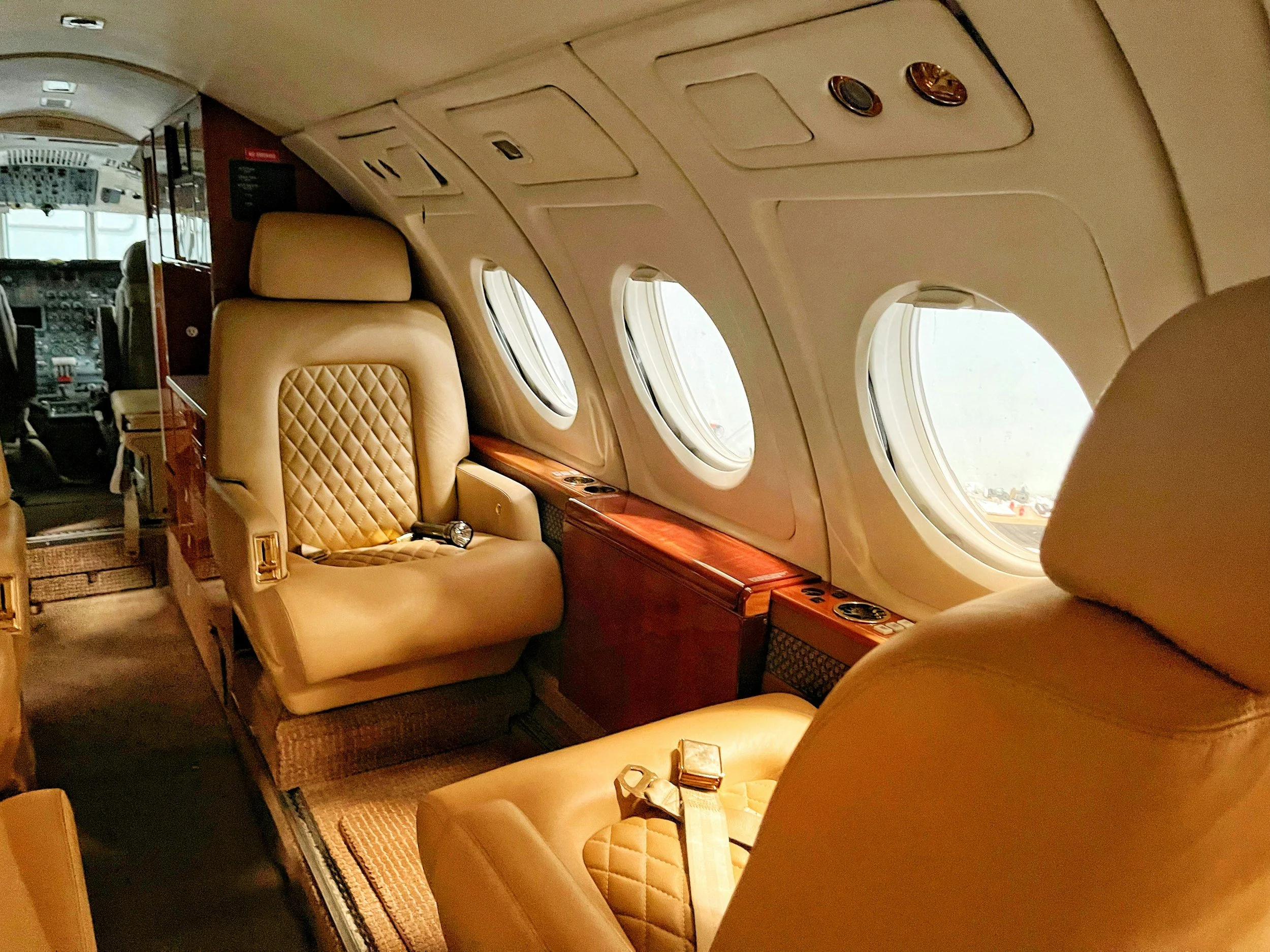
Private jet fractional ownership, often referred to as a "jet timeshare," frequently results in a higher total cost per flight hour than chartering or jet cards due to heavy asset depreciation, fixed monthly management fees, and significant capital lock-up. For most flyers traveling fewer than 50 to 75 hours annually, the financial burden and lack of liquidity make the fractional model a suboptimal investment compared to more flexible aviation alternatives.
Defining the Private Jet Timeshare: Fractional Ownership Explained
The term "timeshare" in the context of private aviation is a colloquialism for fractional ownership. In this model, an individual or a corporation purchases a specific portion of a tail number—typically ranging from 1/16th (equivalent to 50 flight hours per year) to 1/2 (400 hours). While the buyer technically owns a piece of a specific aircraft, they are actually gaining access to a fleet of similar or identical jets managed by a provider like NetJets, Flexjet, or Airshare.
The primary appeal of this model has historically been "guaranteed availability." Unlike the charter market, where a plane must be sourced and booked based on market supply, a fractional owner is contractually guaranteed a jet with as little as 4 to 10 hours' notice. However, in 2026, the premium paid for this guarantee has come under intense scrutiny as the aviation market has matured and alternative access models have become more sophisticated.
To understand why the cost is rarely worth it, one must dissect the four-layered pricing structure of fractional ownership: the initial acquisition cost, the monthly management fee, the occupied hourly rate, and the end-of-term residual value.
The Massive Upfront Capital Commitment
The most immediate barrier to entry—and the first reason the cost-benefit analysis often fails—is the initial acquisition cost. Purchasing a 1/16th share of a modern light jet, such as a Phenom 300E or a Citation CJ4 Gen2, can easily require an upfront payment of $600,000 to $900,000. For mid-size or large-cabin jets, this figure can soar into the millions.
This capital is effectively "locked" for the duration of the contract, which typically lasts five years. When evaluating the true cost, many flyers fail to account for the opportunity cost of that capital. In a financial environment where conservative investments might yield 4% to 7%, a $1 million investment in a jet share represents a "lost" $40,000 to $70,000 in annual returns. When added to the actual flight costs, the effective hourly rate increases significantly.
Furthermore, these shares are not liquid assets. Unlike a stock or even a piece of real estate, you cannot simply list your 1/16th share of a Challenger 3500 on an open exchange. You are usually bound by a "buy-back" clause in your contract, which gives the provider the right (and often the sole obligation) to purchase the share back at the end of the term, often at a price they determine based on "fair market value."

The Monthly Management Fee: Paying Even When You Don't Fly
One of the most significant "hidden" costs of the private jet timeshare is the Monthly Management Fee (MMF). This is a fixed cost that owners must pay regardless of whether they fly one hour or fifty hours in a given month.
The MMF covers the infrastructure required to keep the fleet operational. This includes:
- Pilot Salaries and Training: Maintaining a roster of type-rated pilots who are available 24/7.
- Insurance: Massive fleet-wide policies that protect the owner and the provider.
- Hangarage: The cost of storing aircraft across a global network of bases.
- Administrative Overhead: The software and staff required to manage complex scheduling and repositioning.
In 2026, MMFs for a 1/16th share frequently range from $12,000 to $20,000 per month. This means that before you even turn an engine, you are committed to spending $144,000 to $240,000 per year. For a flyer who only ends up using 25 hours of their 50-hour allocation, the "management" cost alone adds $5,760 to $9,600 to every flight hour, on top of the actual flying expenses.
The Occupied Hourly Rate and Variable Surcharges
Once the acquisition and management fees are settled, owners pay an Occupied Hourly Rate (OHR) for the time they are actually in the air. While these rates are often advertised as being "lower than charter," this is frequently an illusion created by the exclusion of surcharges.
The OHR typically covers fuel (up to a base price), basic catering, and landing fees. However, almost all fractional contracts include:
- Fuel Surcharges: As fuel prices fluctuate, owners are billed for the difference between the base price in their contract and the current market rate.
- CPI Adjustments: Monthly and hourly fees are usually indexed to the Consumer Price Index, meaning costs rise every year with inflation.
- International Fees: Flights outside of the "primary service area" (usually the continental U.S. and parts of Europe) incur massive premiums.
- De-icing Fees: In winter months, a single de-icing procedure can cost between $5,000 and $15,000, which is often passed directly to the owner.
When these variable costs are aggregated, the gap between fractional ownership and high-end charter services often vanishes, leaving the owner with all the risk and none of the savings.
The Depreciation Trap: The Ultimate Value Killer
The primary reason fractional ownership is rarely "worth it" from a wealth-preservation standpoint is depreciation. Aircraft are rapidly depreciating assets. A new private jet can lose 10% to 20% of its value in the first year alone, and the curve remains steep for the first five to seven years.
When a fractional contract ends (usually at the five-year mark), the provider will buy back the share. However, they subtract a "remarketing fee" (often 7% to 10%) and calculate the price based on the depreciated value of the aircraft.
Consider this scenario: You buy a $1,000,000 share. Over five years, the aircraft depreciates by 40%. The "market value" of your share is now $600,000. After the provider takes their 10% remarketing fee ($60,000), you receive $540,000 back. You have effectively "lost" $460,000 in equity.
When you distribute that $460,000 loss over the 250 hours you flew (50 hours/year for 5 years), you add an extra $1,840 per hour to your total cost of flying. Most prospective owners fail to include this "exit cost" when comparing fractional ownership to chartering, where you simply pay for the flight and have no further financial exposure.
Comparing Private Aviation Models (2026 Estimates)
| Feature | Fractional Ownership (Timeshare) | Jet Card / Membership | On-Demand Charter |
|---|---|---|---|
| Upfront Cost | $600,000 - $5M+ (Acquisition) | $100,000 - $500,000 (Deposit) | $0 |
| Monthly Fees | $12,000 - $40,000 | $0 - $2,500 | $0 |
| Availability | Guaranteed (4-10 hours) | Guaranteed (24-72 hours) | Subject to market |
| Asset Risk | High (Depreciation) | None | None |
| Commitment | 3 - 5 Years | 12 - 24 Months | Per Flight |
| Best For | 75+ Hours per year | 25 - 50 Hours per year | < 25 Hours per year |
Contractual Rigidity and Exit Barriers
Exiting a private jet timeshare is notoriously difficult. Most contracts are "closed-ended," meaning you are committed for the full term. If your financial situation changes, or if your travel needs decrease, you cannot simply stop paying the monthly management fees.
Some providers offer a "resale" program, but these are often secondary to the provider's own inventory. The provider has no incentive to help you sell your share when they are trying to sell new shares themselves. This creates a "liquidity lock" that can be financially devastating during economic downturns.
Furthermore, the "guaranteed availability" often comes with caveats. During "Peak Interest Days" (holidays, major sporting events), providers may shift your departure time by several hours or require you to use a different (sometimes smaller) aircraft type. If you are paying a premium for total control, these "blackout-lite" restrictions can be a major source of frustration.
Tax Implications and Section 179 Limits in 2026
Historically, one of the main justifications for fractional ownership was the ability to use bonus depreciation to write off the entire cost of the acquisition in the first year. However, as of 2026, tax laws regarding private aviation have shifted.
Under the phase-out schedule that began years prior, the aggressive tax benefits that once made jet "ownership" a clever accounting move have diminished. While Section 179 expensing still exists for business use, the requirements to prove 100% business necessity have become more stringent. If a portion of your flying is personal—which it often is in a "timeshare" model—the tax benefits are pro-rated and significantly reduced.
Without the "tax shield" to offset the acquisition cost and depreciation, the math for fractional ownership becomes even harder to justify. Individuals are often better off keeping their capital invested in income-generating assets and paying for charter flights with the proceeds, rather than seeking a tax deduction on a rapidly depreciating hull.
Better Alternatives to the Jet Timeshare
For the vast majority of private flyers, two alternatives provide better value and more flexibility than fractional ownership.
1. The "Heavy" Jet Card
For those flying 25 to 50 hours a year, a jet card offers the same "guaranteed availability" as a timeshare without the capital risk. You deposit a set amount (e.g., $250,000) and draw down against it at fixed hourly rates. There is no depreciation to worry about, and no $15,000 monthly bill when you aren't using the service.
2. Strategic On-Demand Chartering
In 2026, the charter market is highly digitized. Using an experienced broker or a high-end charter app allows you to see real-time "empty leg" flights and wholesale pricing. Because you aren't tied to a specific fleet, you can choose a light jet for a quick solo trip and a large-cabin jet for a family vacation, paying only for exactly what you need at that moment.
Common Pitfalls: The "Occupied Hour" Deception
A major mistake new fractional owners make is misunderstanding occupied hours vs. flight hours. Most fractional contracts charge you for "occupied hours"—the time from when the wheels leave the ground with you on board to the time they touch down. However, they also often include a "taxi time" adjustment (e.g., 12 minutes per segment) added to every flight.
Furthermore, if you fly to a remote location and want the plane to stay with you, you may be charged "wait time" or "crew overnight fees." If the provider has to fly the plane back to a hub because they need it for another owner, you don't pay for that "deadhead" leg in a fractional model (which is a benefit), but you have already paid for that privilege many times over through your Monthly Management Fees.
FAQ
Is there any scenario where a private jet timeshare is worth it?
Yes, fractional ownership begins to make financial sense if you fly more than 75 to 100 hours per year and require guaranteed availability during peak periods. At that volume, the high fixed costs (MMF) are spread over more hours, lowering the effective hourly rate. It is also beneficial for corporations that need a consistent, "off-balance-sheet" flight department without the complexity of managing their own aircraft.
What is a "remarketing fee" in a fractional contract?
A remarketing fee is a charge imposed by the jet provider at the end of your contract term to cover the costs of finding a new buyer for your share. It is typically 7% to 10% of the share's current market value. This fee is one of the primary reasons owners receive much less than expected when exiting the program.
Can I sell my jet share to someone else?
Generally, no. Most fractional contracts give the provider the "Right of First Refusal" and strictly limit your ability to transfer the share to a third party. You are usually required to sell the share back to the provider at a price dictated by their valuation formulas.
Are fuel surcharges included in the hourly rate?
Usually, no. Most fractional providers quote a "Base Hourly Rate." Fuel surcharges are added on top of this rate and fluctuate monthly based on the market price of Jet-A fuel. In times of high energy prices, these surcharges can add 20% to 30% to the base cost.
How does "Guaranteed Availability" work during holidays?
While availability is guaranteed, "Peak Interest Days" (such as the Super Bowl, Christmas, or Art Basel) often have different rules. The provider may require a longer lead time for booking (e.g., 48-72 hours instead of 10) and may exercise the right to move your departure time by several hours to optimize fleet movements.
Final Recommendation: How to Decide
Before committing to a private jet timeshare in 2026, perform a Total Cost of Ownership (TCO) analysis over a five-year horizon. Sum the acquisition cost, five years of management fees, and your projected hourly costs. From that total, subtract the likely (not the optimistic) residual value of the share after depreciation and remarketing fees.
Divide that final number by your total projected flight hours. If the resulting hourly rate is more than 20% higher than the current market rate for a high-quality charter of the same aircraft class, the "timeshare" is not worth it. For most, the flexibility of a jet card or the simplicity of on-demand chartering provides a far superior balance of luxury and fiscal responsibility.
Image Gallery
Select an image to open it in a new tab.


Ingrid Bjornson
Global Cyber Policy and Regulation Analyst
