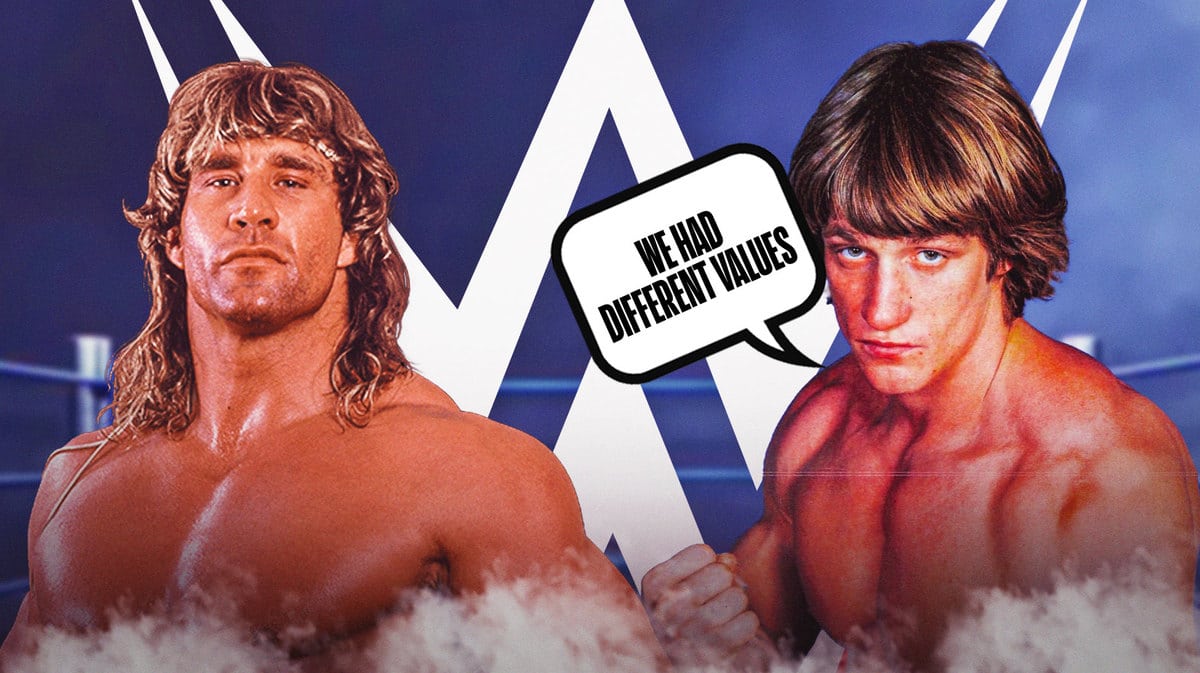
The myth of Kerry Von Erich portrays him as a tragic "Golden Warrior" whose ascent to the pinnacle of professional wrestling was thwarted solely by a cruel family curse and a devastating motorcycle accident. However, a critical analysis of his technical limitations, inconsistent promotional skills, and the internal politics of World Class Championship Wrestling (WCCW) reveals that Kerry’s professional ceiling was likely established long before his physical decline.
Kerry Von Erich, often referred to as the "Modern Day Warrior" and the "Texas Tornado," remains one of the most visually iconic figures in the history of the industry. In 2026, as wrestling historians look back on the 1980s boom, the narrative often frames Kerry as a "lost" megastar who should have been the next Hulk Hogan. While his physical charisma was undeniable, the "what-if" scenario surrounding his career often ignores the tangible evidence of his in-ring performance, his struggle with the microphone, and the structural realities of the territories he inhabited.
The Illusion of the "Golden Warrior"
The cornerstone of the Kerry Von Erich myth is his physical appearance. Standing 6'2" and possessing a physique that looked like a Greek statue, Kerry was the quintessential babyface for the television age. In the early 1980s, WCCW’s superior production values—which utilized multiple camera angles and high-end lighting—helped mask his deficiencies and amplify his strengths.
However, when comparing Kerry to his brothers, particularly David and Kevin, the technical disparity becomes evident. David Von Erich was widely regarded by peers and promoters as the "total package." David possessed a natural wrestling psychology, a menacing heel persona when needed, and a commanding presence on the microphone. Kevin Von Erich was the superior athlete, possessing a high-flying style and a chaotic energy that felt authentic.
Kerry, by contrast, was often described as "wooden" in his early years. His wrestling style relied heavily on a few high-impact moves, such as the Discus Punch and the Iron Claw. While these were effective in short, television-style matches, they often failed to sustain interest in the grueling 30-to-60-minute Broadway draws required of a top-tier NWA (National Wrestling Alliance) champion. The myth suggests he was a natural prodigy, but the reality is that he was a product of a heavily protected environment where his father, Fritz Von Erich, controlled the narrative.
The 18-Day NWA Championship: A Tribute, Not a Transition
The defining moment of Kerry’s career was his victory over Ric Flair for the NWA World Heavyweight Championship at the David Von Erich Memorial Parade of Champions on May 6, 1984. This event is often cited as proof that Kerry was destined for the top.
In reality, this title change was a reactionary booking decision fueled by emotion rather than a long-term strategic shift. Following the sudden death of David Von Erich in Japan in February 1984, the NWA needed a way to honor his memory and keep the Dallas territory from collapsing under the weight of the tragedy.
Ric Flair has noted in several interviews and his own autobiography that the title change was a "tribute" win. The NWA Board of Directors, usually hesitant to move the belt, agreed to the switch to satisfy the grieving Texas crowd. Kerry’s reign lasted only 18 days before he dropped the title back to Flair in Yokosuka, Japan. The short duration was not due to an injury or a sudden change of heart; it was because the NWA leadership did not believe Kerry had the stamina, the travel-readiness, or the promotional "gift of gab" to carry the NWA banner across its global territories.
The Promo Problem and the Lack of "The It Factor"
In the 1980s, the ability to cut a promo was just as important as in-ring ability. Hulk Hogan, Ric Flair, Randy Savage, and Dusty Rhodes all shared a common trait: they could talk fans into the building. Kerry Von Erich, unfortunately, struggled significantly in this area.
His promos were often characterized by stuttering, loss of focus, and a lack of clear narrative. While his "aw-shucks" Texas charm worked for the local Dallas market, it lacked the sophistication and intensity required for a national stage. When he eventually moved to the World Wrestling Federation (WWF) in 1990 as the "Texas Tornado," his promos remained a glaring weakness. In an era where Larger-Than-Life characters were defined by their voices, Kerry often felt like a silent film star in a talkie.
This deficiency is frequently omitted from the myth. The narrative suggests that the motorcycle accident in 1986 robbed him of his greatness, but his inability to connect verbally was a pre-existing condition that likely would have prevented him from ever supplanting the likes of Hogan or Warrior at the top of the card.
The 1986 Accident: Fact vs. Fatalism
The motorcycle accident in June 1986 is the fulcrum of the Kerry Von Erich tragedy. Kerry lost his right foot (though he kept this a secret for years, even from fellow wrestlers), which forced him to learn how to wrestle on a prosthetic.
The myth argues that this accident ended Kerry's chance at being a true world-beater. However, the decline of WCCW was already underway before Kerry crashed his bike. The territory was suffering from:
- Over-exposure: Fans were beginning to tire of the Von Erich vs. Freebirds feud.
- Steroid Allegations: The physical transformation of the brothers raised questions even in the mid-80s.
- Fritz’s Management: Fritz Von Erich’s insistence on keeping his sons as the only top-tier stars stifled the growth of other talent, leading to a stagnant product.
Kerry’s physical recovery was miraculous, and his work as the "Texas Tornado" in the WWF proved he could still perform at a high level. But the idea that he would have been the face of the WWF if he had two feet is a stretch. By 1990, the WWF was moving toward characters with high-concept gimmicks and intense, manic energy (Ultimate Warrior). Kerry’s laid-back, "Modern Day Warrior" persona felt like a relic of the early 80s territory days rather than the future of sports entertainment.
Deconstructing the "Von Erich Curse"
The most pervasive part of the Kerry Von Erich myth is the "Von Erich Curse." This narrative suggests that a supernatural string of bad luck haunted the family. While the loss of five brothers is an undeniable human tragedy, framing it as a "curse" obscures the very real, human factors that led to their downfalls.
- Pressure and Expectations: Fritz Von Erich placed immense pressure on his sons to be the heroes of Texas.
- Substance Abuse: The wrestling culture of the 80s was rife with painkillers, muscle relaxers, and performance-enhancing drugs. Kerry’s legal troubles and personal struggles were symptomatic of a systemic issue within the industry and his family’s dynamics, not a mystical curse.
- Mental Health: The lack of professional support for the brothers as they dealt with the deaths of their siblings created a cycle of trauma that went unaddressed.
By attributing Kerry's failures and eventual suicide in 1993 to a "curse," the myth absolves the industry and the family's environment of their roles. It turns a preventable human tragedy into an inevitable destiny, which does a disservice to the historical record.
Comparative Performance Analysis
To understand why Kerry’s "top-tier" status is a myth, one must compare him to the titans of his era across several categories.
| Criteria | Kerry Von Erich | Ric Flair | Hulk Hogan | Ultimate Warrior |
|---|---|---|---|---|
| In-Ring Psychology | Basic / Power-based | Elite / Masterful | Simplistic but Effective | High Energy / Limited |
| Promo Ability | Poor to Below Average | Elite / Legendary | Elite / Iconic | Unique / Intense |
| Durability | Low (Post-1986) | High | High | Moderate |
| Marketability | High (Regional) | High (National) | Elite (Global) | Elite (Global) |
| Versatility | Limited (Pure Babyface) | High (Heel/Face) | Moderate (Mostly Face) | Limited (Pure Babyface) |
The table illustrates that while Kerry excelled in marketability and look, he lagged behind in the essential categories of psychology and promo ability. This suggests that his peak was always destined to be that of a top regional star or a mid-card national champion (such as his Intercontinental Title run), rather than the "Face of the Industry" many claim he would have been.
The WWF "Texas Tornado" Run: A Reality Check
When Kerry joined the WWF in 1990, the company gave him a massive push. He defeated Mr. Perfect for the Intercontinental Championship at SummerSlam 1990, just weeks after his debut. This was the perfect opportunity to prove the "myth" correct—that Kerry could be a national superstar.
However, the run quickly fizzled. He held the title for only three months. The reasons for his cooling off were the same issues that plagued him in Texas: a lack of compelling promo work and a wrestling style that, while serviceable, didn't stand out in a roster filled with dynamic workers like Bret Hart, Shawn Michaels, and Curt Hennig. Furthermore, his reliance on substances was becoming an open secret in the locker room, making him a liability for a company that was under intense federal scrutiny for steroid distribution at the time.
FAQ: Debunking the Common Narratives
Did the motorcycle accident actually cost Kerry the WWF Championship?
No. There is no evidence from WWF internal documents or interviews with Vince McMahon suggesting Kerry was ever considered for the WWF World Heavyweight Title. While he was a popular mid-carder, his reliability and promo skills were not at the level required to carry the company during the transition from the Hogan era.
Was Kerry the most talented of the Von Erich brothers?
Most wrestling historians and peers cite David Von Erich as the most talented. David had the best grasp of ring psychology and the most potential for a long-term NWA World Title reign. Kevin was arguably the better pure athlete. Kerry had the best "look," which is often confused with being the most talented.
Would WCCW have survived if Kerry hadn't been injured?
Likely not. WCCW's downfall was caused by a combination of the "Black Saturday" incident (where WWF took over Georgia Championship Wrestling's time slot), the national expansion of the WWF, and Fritz Von Erich’s poor business decisions, including leaving the NWA to form the World Class Wrestling Association (WCWA). Kerry's injury was a blow, but the promotion was already structurally unsound.
Why is the "myth" so persistent?
The myth persists because Kerry was a sympathetic figure. His "Golden Warrior" persona was deeply beloved in Texas, and his ability to wrestle on a prosthetic leg was an incredible feat of willpower. People prefer the story of a "fallen god" over the more mundane reality of a talented but flawed athlete struggling with the weight of expectations.
Recommendation for Wrestling Historians
When researching the Von Erich family, it is essential to separate the emotional resonance of their story from the technical realities of their careers. To truly understand Kerry’s place in history, one should watch his matches from the 1982-1984 period—his peak physical years—and compare his ring work to contemporaries like Ted DiBiase or Jake "The Snake" Roberts.
Focusing on the "Why" of his career requires looking at the systemic failures of the 1980s wrestling industry. Rather than mourning a "what-if" that likely wouldn't have happened, historians should appreciate Kerry for what he was: a charismatic regional icon who achieved remarkable success despite significant personal and physical hurdles, but whose ultimate ceiling was fixed by more than just bad luck.
Image Gallery
Select an image to open it in a new tab.
Omar Farooq
EdTech Innovation and Virtual Pedagogy Journalist
