
Dogs perceive their owners through a complex multisensory framework that prioritizes scent and sound over high-resolution vision. While they see fewer colors and less detail than humans, they recognize their owners through unique "olfactory fingerprints," distinct vocal frequencies, and emotional resonance, viewing their human companions as essential family members and a primary "secure base."
The Visual Spectrum: What Dogs Actually See When They Look at You
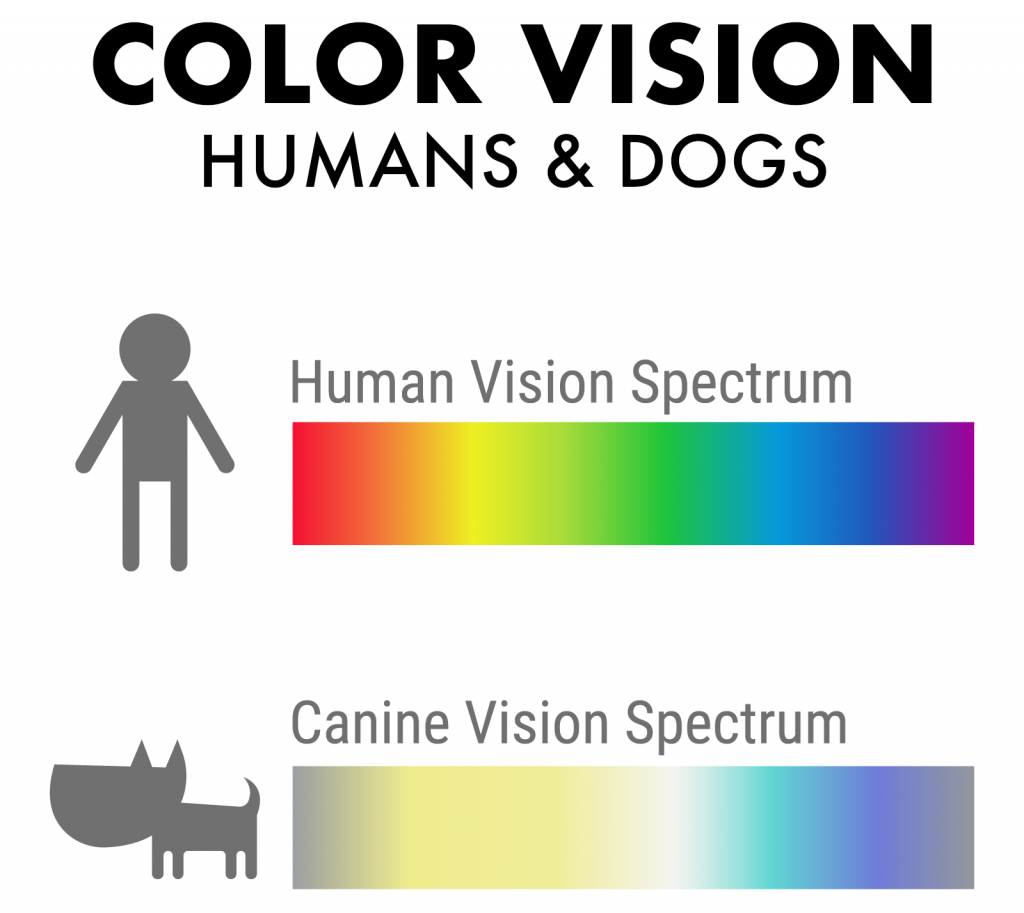
To understand how a dog sees their owner, we must first dispel the myth that dogs see only in black and white. Canine vision is dichromatic, meaning they possess two types of color-detecting cone cells in their eyes, whereas most humans have three. This results in a visual palette similar to a human with red-green color blindness. When a dog looks at their owner, they primarily see shades of blue, yellow, and gray. A bright red shirt will appear as a dark brownish-gray or black to a dog, while a blue sweater will remain vibrant.
However, visual acuity—the sharpness of the image—is where dogs differ significantly from humans. The average dog has roughly 20/75 vision. This means that a detail a human can clearly see from 75 feet away, a dog would need to be 20 feet away to distinguish. Consequently, your dog may not recognize your face from across a large park based solely on features until you move or speak. They rely heavily on your silhouette, your specific gait (the way you walk), and your body language.
Dogs are also highly attuned to motion and peripheral vision. Their eyes are set further apart on the sides of their head than human eyes, providing a wider field of view but less depth perception. They are evolutionarily programmed to detect subtle changes in posture or hand signals. Even if they cannot see the fine lines of your facial expression from a distance, they can immediately "see" your emotional state through the tension in your shoulders or the pace of your movement.
The Olfactory Portrait: Why Your Scent Is Your True Identity
While humans are visual creatures, dogs are olfactory ones. A dog’s sense of smell is estimated to be 10,000 to 100,000 times more acute than a human's. For a dog, "seeing" their owner is as much about the nose as it is about the eyes. You have a unique olfactory fingerprint—a combination of skin cells, sweat, pheromones, and the products you use—that tells your dog exactly who you are, where you have been, and even how you are feeling.
Neuroscience has provided fascinating insights into this connection. In fMRI (Functional Magnetic Resonance Imaging) studies conducted by researchers such as Gregory Berns at Emory University, it was discovered that when a dog smells the scent of their familiar owner, the caudate nucleus—a region of the brain associated with positive expectations and reward—lights up significantly. Interestingly, this reaction is often stronger when smelling the owner than when smelling a familiar dog or a stranger.
This means that to your dog, your scent is a "reward" in itself. They don't just recognize you; your presence triggers a neurological pleasure response. Furthermore, because scent lingers, dogs use it to perceive time. As your scent fades in the house throughout the day, your dog can actually "smell" how long you have been gone and anticipate your return based on the remaining concentration of your aroma.

Auditory Recognition: The Sound of Your Voice and Heartbeat
Beyond sight and smell, dogs use their highly developed sense of hearing to identify and interpret their owners. Dogs can hear frequencies up to 45,000 to 65,000 Hz, far beyond the human limit of 20,000 Hz. This allows them to hear the specific "ping" of your car engine blocks away or the unique jingle of your keys before you even reach the door.
Research published in Current Biology indicates that dogs have dedicated "voice areas" in their brains, similar to humans. They are capable of distinguishing between different human voices and are particularly sensitive to the emotional prosody (the tone and pitch) of their owner's voice. They can tell the difference between a happy, high-pitched greeting and a stern, low-frequency command, even if the words are the same.
In many cases, dogs are also attuned to their owner’s heartbeat. When you are cuddling or sitting close, a dog may detect the physiological changes in your heart rate. Because they correlate these sounds with your subsequent actions (like playing when you’re excited or resting when you’re calm), your internal rhythms become part of the "image" they have of you.
The "Secure Base" Effect: The Psychological Bond
One of the most profound ways dogs "see" their owners is as a secure base, a psychological concept typically used to describe the relationship between a human infant and their caregiver. In unfamiliar or stressful situations, a dog will often look to their owner for cues on how to react. If the owner is calm, the dog feels safe enough to explore the environment.
This bond is reinforced by the "oxytocin feedback loop." When a dog and their owner look into each other’s eyes, both experience an increase in oxytocin, often called the "love hormone" or "bonding hormone." This is the same chemical mechanism that facilitates bonding between mothers and infants. Unlike wolves, who generally view direct eye contact as a challenge or threat, domesticated dogs have evolved to use eye contact with humans as a tool for social bonding and communication.
To your dog, you are not just a source of food or shelter; you are a central pillar of their social and emotional world. They see you as a leader, a protector, and a member of their "family" (or pack), though the modern understanding of dog behavior suggests they view us more as parental figures than "alpha" wolves.
Comparison of Human vs. Canine Perception
To better understand the differences in how we perceive the world compared to our dogs, consider the following technical breakdown of sensory capabilities.
| Sensory Feature | Human Capability | Canine Capability |
|---|---|---|
| Visual Field | ~180 Degrees | ~240-250 Degrees (varies by breed) |
| Color Perception | Trichromatic (Blue, Green, Red) | Dichromatic (Blue, Yellow) |
| Visual Acuity | 20/20 (Typical) | 20/75 (Approximate) |
| Night Vision | Poor (Low rod density) | Excellent (Tapetum Lucidum & high rod density) |
| Olfactory Receptors | ~5-6 Million | ~220-300 Million |
| Hearing Range | 20 Hz – 20,000 Hz | 40 Hz – 60,000+ Hz |
| Primary Identification | Visual features / Faces | Scent signature / Voice / Silhouette |
Facial Recognition and Emotional Contagion
Despite having lower visual acuity, dogs have evolved specialized brain regions to process human faces. A study published in The Journal of Neuroscience demonstrated that dogs have a specific "face-processing area" in their temporal cortex. This suggests that over thousands of years of domestication, dogs have prioritized the ability to read human facial expressions.
However, they don't just see your face; they "see" your emotions through emotional contagion. Dogs are remarkably sensitive to cortisol (the stress hormone) and adrenaline. If you are anxious, your dog can smell the chemical change in your sweat and see the micro-tensions in your facial muscles. This is why dogs often "comfort" their owners when they are sad or stressed. They aren't just reacting to your tears; they are perceiving a holistic shift in your chemical and physical presence.
Common Misconceptions and Troubleshooting Behavioral Signals
Many owners misinterpret how their dogs see them due to human-centric biases. Understanding these can improve your relationship.
- The "Guilty Look": When a dog cringes or looks away after doing something "bad," owners often think the dog "sees" their mistake and feels guilt. In reality, the dog is reacting to the owner's body language (anger or disappointment). They see a threat and are offering appeasement signals to diffuse the tension.
- Recognition at a Distance: If your dog doesn't come when called at a distance, it may not be disobedience. At 100 feet, you are likely a blurry, unrecognizable shape. If the wind is blowing away from them, they can't smell you, either. Using distinct hand signals or a high-pitched whistle can help them "see" you better in these contexts.
- TV and Screens: Modern LED screens have high refresh rates that dogs can perceive, but because their vision is optimized for motion and blue/yellow light, they may not "see" you clearly in a video call. They are more likely to recognize your voice coming from the device than your face on the screen.
Professional Perspective: Limitations and Safety
Note: While understanding canine perception can improve your bond, it is not a substitute for professional veterinary or behavioral advice. If your dog’s perception seems to change—such as bumping into furniture or failing to recognize you—it may indicate a medical issue like cataracts, SARDS (Sudden Acquired Retinal Degeneration Syndrome), or canine cognitive dysfunction.
When interacting with dogs, especially those that are not your own, remember that their "view" of you is influenced by their past experiences. A dog that has had negative experiences with tall men may "see" any tall man as a potential threat, regardless of that person's actual intent. Always allow a dog to "see" you with their nose first by offering the back of your hand from a safe distance, allowing them to process your identity through their primary sense.
Summary of Practical Guidance for Owners
To better communicate with a dog based on how they see you:
- Use Visual Contrast: If you are training your dog, wear colors that stand out against the background (blue is often highly visible to them).
- Exaggerate Body Language: Because they see motion better than detail, use clear, distinct hand signals for commands.
- Maintain Scent Consistency: Abrupt changes in your personal scent (heavy perfumes or new detergents) can momentarily confuse a dog or change their "image" of you.
- Use Your Voice: Since they recognize your vocal frequency so well, use consistent verbal cues and tones for specific expectations.
By understanding that your dog perceives you as a multi-layered "sensory event"—a specific smell, a familiar sound, and a comforting presence—you can build a deeper, more empathetic bond that transcends the limitations of human sight.
FAQ
Can dogs recognize their owners on a smartphone screen? While some dogs may show interest in a screen, many find it difficult to recognize their owners visually on a smartphone. This is due to the 2D nature of the image, the lack of scent, and the way dogs process light. However, they are very likely to recognize their owner’s voice coming from the speaker.
Do dogs see us as "bigger dogs" or something else? Current research in canine ethology suggests dogs distinguish between humans and other dogs. They don't see us as "alpha dogs" but rather as social partners and caregivers. Their behavior toward humans (like bringing toys or seeking comfort) is distinct from how they interact with their own species.
Can my dog see me in total darkness? While dogs cannot see in absolute, 100% darkness, they see much better in low light than humans do. This is due to a structure called the tapetum lucidum, which reflects light back through the retina. In a typical dark room, they can see your silhouette and movements quite clearly.
Why does my dog stare at me? Staring is often a way for dogs to gather information about your emotional state or to "ask" for direction. In a bonded relationship, a long, soft gaze also triggers the release of oxytocin in both the dog and the owner, serving as a form of "silent affection."
Does my dog recognize my face or just my smell? They recognize both, but smell is their primary "verification" tool. While dogs have a specific brain region for facial recognition, they usually use a combination of your scent, your voice, and your physical shape to be 100% certain of your identity.
Image Gallery
Select an image to open it in a new tab.


Declan O'Connor
Higher Education and Campus Culture Reporter
