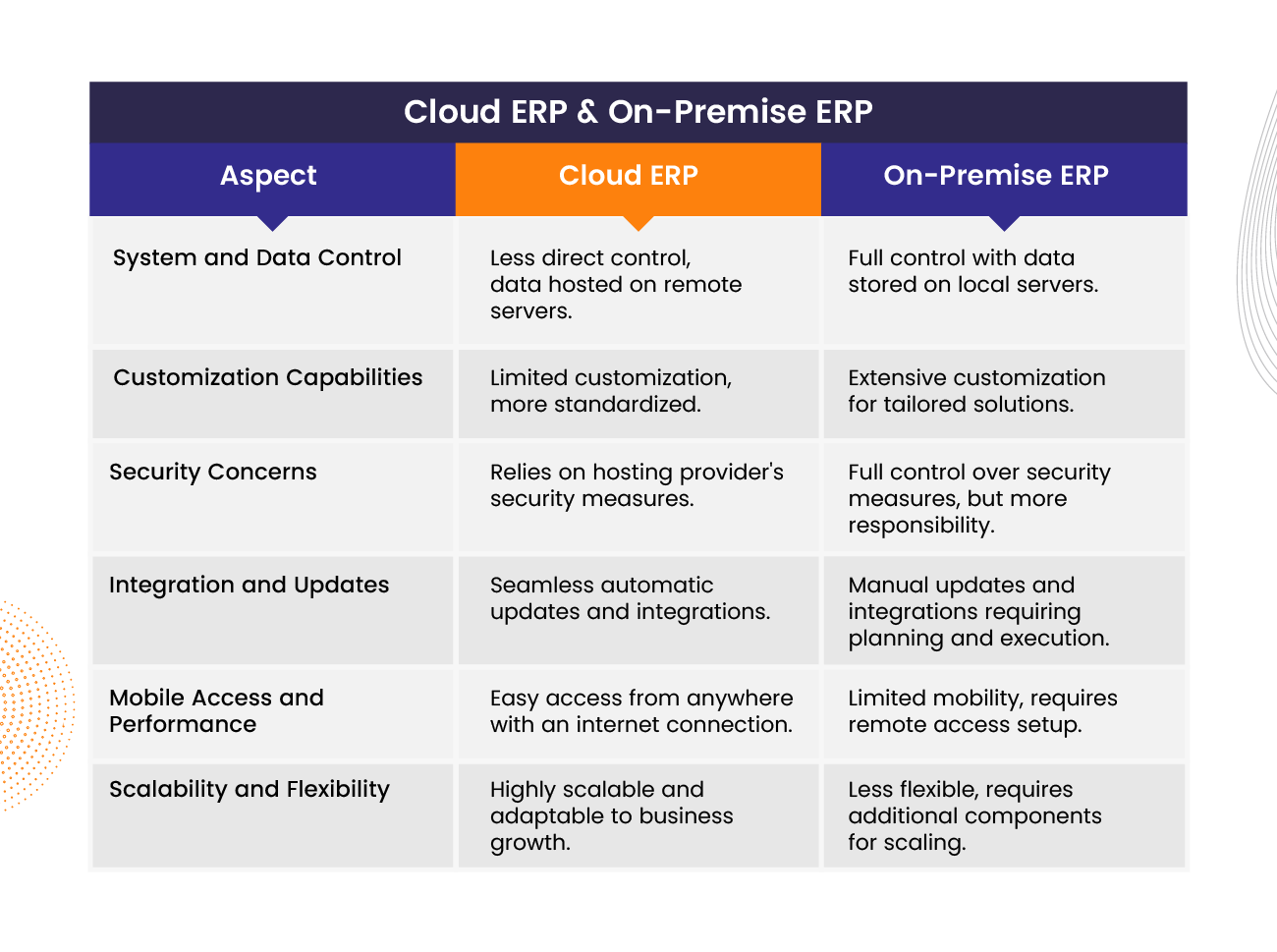
Determining which model protects your data better depends on your organization’s specific risk profile and regulatory requirements. Cloud security typically offers superior automated threat detection and hyperscale resilience, while traditional off-premise (colocation) security provides granular hardware control and physical isolation, often preferred for niche compliance or air-gapped legacy systems.
Defining the 2026 Security Landscape
In 2026, the distinction between "cloud" and "off-premise" has become increasingly nuanced. To evaluate which protects your data better, it is essential to define these terms as they are used in modern enterprise environments. Off-premise security is a broad category encompassing any data storage or processing that occurs outside your organization's physical walls. This includes public cloud providers like AWS, Azure, and Google Cloud, but it also includes traditional managed hosting and colocation data centers.
When we compare "cloud vs off-premise," the debate usually centers on the Public Cloud model (highly automated, multi-tenant, software-defined) versus the Traditional Off-Premise model (dedicated hardware, manual configuration, physical separation). While both move the hardware away from your office, the security philosophy behind them differs fundamentally.
The security of your data is no longer just about the strength of the lock on the server room door. It is about the robustness of the identity management, the speed of patching, and the visibility provided across the entire stack. As we navigate the complex threat environment of 2026—characterized by AI-driven social engineering and sophisticated supply chain attacks—the "better" choice is the one that minimizes the human error component of your security posture.
The Pillars of Cloud Security
Cloud security in 2026 is built on the foundation of the Shared Responsibility Model. This model dictates that the cloud service provider (CSP) is responsible for the "security of the cloud" (the physical infrastructure, cables, and host software), while the customer is responsible for "security in the cloud" (their data, applications, and access controls).
Automated Patching and Vulnerability Management
One of the most significant advantages of the cloud is the speed of remediation. In a cloud environment, providers deploy patches for underlying hypervisors and infrastructure services at a scale and speed that internal IT teams cannot match. Because the cloud is software-defined, vulnerability scanning is often continuous rather than scheduled. If a new zero-day vulnerability is discovered, a public cloud provider can often shield their entire customer base from the network level before individual customers even realize the threat exists.
Identity and Access Management (IAM)
In 2026, Zero Trust Architecture (ZTA) is the standard for cloud security. Cloud providers offer deeply integrated IAM tools that allow for granular permissions. Security is no longer tied to a physical location or a IP range; instead, it is tied to the identity of the user and the health of their device. This prevents "lateral movement"—the process where a hacker gains access to one low-level system and hops across the network to reach sensitive data.
Hyperscale Resilience
Cloud providers operate across multiple "Availability Zones" (AZs) and regions. From a data protection standpoint, this provides inherent defense against physical disasters, localized outages, or physical attacks on a single data center. Data is often replicated across multiple geographic locations automatically, ensuring that even if a catastrophic event occurs at one site, your data remains secure and accessible.
The Case for Traditional Off-Premise (Colocation) Security
While the cloud offers automation, traditional off-premise solutions—specifically colocation and managed private hosting—offer a different level of control that some organizations find more secure for their specific needs.
Physical Isolation and Dedicated Hardware
In a traditional off-premise setup, you are often renting a specific cage or rack in a data center. You own or lease the specific physical servers. This eliminates the "noisy neighbor" effect and the theoretical (though rare) risk of cross-tenant data leakage. For organizations handling highly sensitive intelligence data or proprietary trade secrets, the knowledge that their data sits on a physical drive that no other company’s code touches provides a layer of psychological and technical assurance.
Granular Hardware Control
Standard cloud providers use "commodity hardware" optimized for the masses. Traditional off-premise environments allow you to select specific hardware-level security features, such as Trusted Platform Modules (TPM) or specific Hardware Security Modules (HSM) that you physically control. If your security policy requires you to hold the physical keys to your encryption hardware, a traditional off-premise data center may be the only way to satisfy that requirement.
Regulatory and Sovereignty Requirements
Despite the advancement of cloud "Sovereign Clouds" in 2026, some jurisdictions or specific industry regulators still mandate that data be stored on non-multitenant infrastructure. Traditional off-premise hosting allows for custom-built environments that meet these exact legal "check-boxes" which might be difficult or more expensive to replicate in a public cloud environment.
Comparing Security Capabilities
To determine which model protects your data better, we must look at how each handles the primary vectors of data loss and breach.
| Security Feature | Public Cloud Security | Traditional Off-Premise (Colo) |
|---|---|---|
| Physical Security | Provider managed; world-class standards (SOC2, ISO). | Jointly managed; high-end physical barriers. |
| Threat Detection | AI-driven, platform-wide telemetry. | Limited to what you install on your hardware. |
| Data Encryption | Seamless, integrated KMS/HSM services. | Manual implementation; total key control. |
| DDoS Protection | Massive scale; often included at the edge. | Requires third-party hardware or services. |
| Compliance | Wide array of built-in certifications. | Custom-built to specific audit needs. |
| Scalability | Instantaneous growth without security gaps. | Physical upgrades required; risk of misconfig. |
| Responsibility | Shared (Provider + Customer). | Customer-heavy (Hardware + Software). |
The Shared Responsibility Trap
The most common reason for data breaches in both cloud and off-premise environments is not a failure of the provider, but a misconfiguration by the user. However, the nature of these mistakes differs between the two.
In the Cloud, the biggest risk is the "open bucket" or overly permissive IAM roles. Because the cloud is accessible via the internet by design, a single checkbox left unchecked can expose millions of records. However, modern Cloud Security Posture Management (CSPM) tools in 2026 are highly effective at flagging these errors in real-time.
In Traditional Off-Premise, the biggest risk is technical debt. Because patching and hardware updates are manual, systems often fall behind. A server in a colocation facility might run an outdated version of an OS for years because "it's too risky to reboot," whereas cloud environments encourage "immutable infrastructure" where servers are replaced rather than patched, reducing the window of vulnerability.
Technical Depth: The Role of AI in 2026 Security
In 2026, the battle for data protection is fought with artificial intelligence. Cloud providers have a distinct advantage here because of the sheer volume of data they process. By analyzing trillions of signals across their global networks, providers like Microsoft and Google can identify a new malware strain or a botnet attack pattern in milliseconds.
When you use a public cloud, you benefit from this collective intelligence. Your small database is protected by the same AI-driven shield that protects global banks. In a traditional off-premise environment, your security is limited to the intelligence your specific tools can gather. Unless you are a massive enterprise with a 24/7 Security Operations Center (SOC), you likely cannot replicate the threat-hunting capabilities inherent in modern cloud platforms.
Cost Considerations of Data Protection
Protecting data is not free, and the way you pay for security differs significantly between these models:
- Cloud (OpEx): Security costs are often "baked in" to the per-hour or per-GB cost. While it may look more expensive on paper, it includes the cost of the security staff, the power, the hardware refreshes, and the automated tools.
- Off-Premise (CapEx/OpEx Hybrid): You pay for the space and power, but the security software, hardware firewalls, and—most importantly—the expert personnel required to run them are separate costs. In 2026, the shortage of qualified cybersecurity professionals makes the "DIY" security of traditional off-premise environments significantly more expensive for most mid-sized organizations.
Which Model Should You Choose?
Choose Cloud Security if:
- You need to scale rapidly and maintain a consistent security posture.
- You want to leverage AI-driven threat detection and automated patching.
- Your team is lean and cannot manage hardware-level security updates.
- You require global distribution with high availability.
Choose Traditional Off-Premise Security if:
- You have a legacy application that requires a specific, non-standard hardware configuration.
- Regulatory requirements strictly forbid multi-tenant environments.
- You require absolute control over the physical encryption hardware and keys.
- You are operating an "air-gapped" system that must not be reachable via the public internet.
Common Security Mistakes to Avoid
Regardless of the choice between cloud and off-premise, several recurring mistakes can compromise your data:
- Lack of Multi-Factor Authentication (MFA): In 2026, password-only access is effectively zero security. Phishing attacks are now too sophisticated for passwords to survive.
- Shadow IT: Using cloud services or off-premise servers without the knowledge of the IT security department leads to unmonitored data silos.
- Assuming "Off-Premise" Equals "Secure": Just because a server is in a professional data center doesn't mean the data inside the server is encrypted or backed up.
- Ignoring the Exit Strategy: Data protection also includes the ability to move your data. Ensure your security model doesn't result in "vendor lock-in" that makes it impossible to migrate if the provider's security standards slip.
Frequently Asked Questions
Is data in the cloud more vulnerable to government snooping than off-premise data?
In 2026, many cloud providers offer "Confidential Computing" and sovereign cloud options that encrypt data even while it is being processed in memory. This makes it technically difficult for anyone, including the provider or a government body, to access the data without your keys. Traditional off-premise solutions offer more physical control but may lack these advanced "encryption-in-use" technologies.
Does "off-premise" mean I don't need a firewall?
No. Whether you are in the cloud or a colocation facility, a firewall (either software-defined or physical) is your first line of defense. In the cloud, this is usually a Web Application Firewall (WAF) or Security Group. In off-premise, it is often a physical appliance.
Can I achieve the same level of security in a traditional off-premise setup as in the cloud?
Yes, but it requires significantly more manual effort and investment. You would need to purchase, configure, and maintain the same level of DDoS protection, AI-threat detection, and redundancy that cloud providers offer as a standard service. For most organizations, this is cost-prohibitive.
How does 2026-era AI affect cloud vs off-premise security?
AI has made "manual" security nearly impossible. Attackers use AI to find vulnerabilities at lightning speed. Cloud environments respond better to this because they use AI to fight AI. Traditional off-premise setups often lag behind because they rely more on human intervention to update rules and signatures.
Which is better for small businesses?
For small businesses, cloud security is almost always better. It provides enterprise-grade security tools (like those used by Fortune 500 companies) at a fraction of the cost, without requiring the business to hire a full-time hardware security expert.
Final Recommendation
For the vast majority of organizations in 2026, cloud security protects data better because it removes the burden of hardware maintenance and provides access to world-class automated defense mechanisms. The collective intelligence of a major cloud provider creates a "herd immunity" against new threats that a single off-premise facility cannot match. However, if your organization operates in a highly specialized sector with extreme regulatory constraints or requires air-gapped hardware, a traditional off-premise colocation model remains a valid, albeit more complex, alternative.
Image Gallery
Select an image to open it in a new tab.
Zara El-Hashem
Sociocultural Dynamics and Academics Writer
