Patagonia spans two countries—Argentina and Chile—resulting in a complex time zone landscape. Most of Argentine Patagonia operates on UTC-3 (Argentina Time) year-round, while Chilean Patagonia typically alternates between UTC-4 and UTC-3 due to daylight saving transitions. However, the Magallanes region in Chile remains on UTC-3 permanently, aligning it with Argentina.
Determining the exact time in Patagonia requires more than a simple glance at a world clock. Because this vast wilderness area covers over a million square kilometers across the southern tip of South America, the "local time" depends entirely on your specific longitude and which side of the international border you stand on. For travelers, researchers, and logistics coordinators operating in 2026, understanding these distinctions is vital for border crossings, flight connections, and safely planning outdoor excursions.
The Dual-Country Time System of Patagonia
Patagonia is not a single administrative entity but a shared geographical region. To answer "what time is it," one must first identify the jurisdiction: the Argentine provinces (such as Santa Cruz or Tierra del Fuego) or the Chilean regions (such as Aysén or Magallanes).
Argentine Patagonia: The Consistency of UTC-3
In the Argentine portion of Patagonia, timekeeping is remarkably straightforward. The entire country of Argentina currently observes Argentina Time (ART), which is UTC-3. Unlike many other nations at high latitudes, Argentina does not currently utilize Daylight Saving Time (DST).
This lack of seasonal change was a policy decision aimed at simplifying the national electrical grid and federal administration. Whether you are visiting the jagged peaks of El Chaltén in July or the whale-watching shores of Puerto Madryn in January, the clock remains fixed at UTC-3.
Chilean Patagonia: A Regional Split
Chilean Patagonia is more complex because Chile employs a seasonal time change for most of its territory, but makes a specific exception for its southernmost reaches.
- Continental Chile Time: The Aysén Region and northern parts of Chilean Patagonia follow the standard national schedule. They use Chile Standard Time (CLT, UTC-4) during the southern winter and Chile Summer Time (CLST, UTC-3) during the southern summer.
- Magallanes and Chilean Antarctica: This region, which includes major hubs like Punta Arenas and Puerto Natales (the gateway to Torres del Paine), operates on Magallanes Time. This zone remains on UTC-3 all year long.
This means that for a significant portion of the year, the "End of the World" (Ushuaia in Argentina and Punta Arenas in Chile) shares the exact same time, despite being in different countries.
2026 Daylight Saving Time Schedule for Chile
If you are traveling through the northern sections of Chilean Patagonia in 2026, you must account for the transition dates. These changes affect the Aysén Region but notably do not affect the Magallanes Region.
| Event | Date in 2026 | Action | Impacted Chilean Patagonia Regions |
|---|---|---|---|
| End of Summer Time | Saturday, April 4, 2026 | Clocks go back 1 hour (UTC-3 to UTC-4) | Aysén, Los Lagos (Northern Patagonia) |
| Start of Summer Time | Saturday, September 5, 2026 | Clocks go forward 1 hour (UTC-4 to UTC-3) | Aysén, Los Lagos (Northern Patagonia) |
| Magallanes Transition | N/A | No change (Stays UTC-3) | Punta Arenas, Puerto Natales, Torres del Paine |
For travelers crossing from El Calafate (Argentina, UTC-3) to Torres del Paine (Chile, UTC-3) in May 2026, the time will remain the same. However, if you were to travel further north into the Aysén region of Chile during that same month, you would enter a zone that is one hour behind Argentina.

The Significance of Longitude and Solar Time
One of the most interesting aspects of Patagonian time is the discrepancy between clock time and solar time. Most of Patagonia is located geographically in what should naturally be the UTC-4 or even UTC-5 zone. However, because Argentina opted to stay on UTC-3 for political and economic reasons, the sun often rises and sets much later than one might expect.
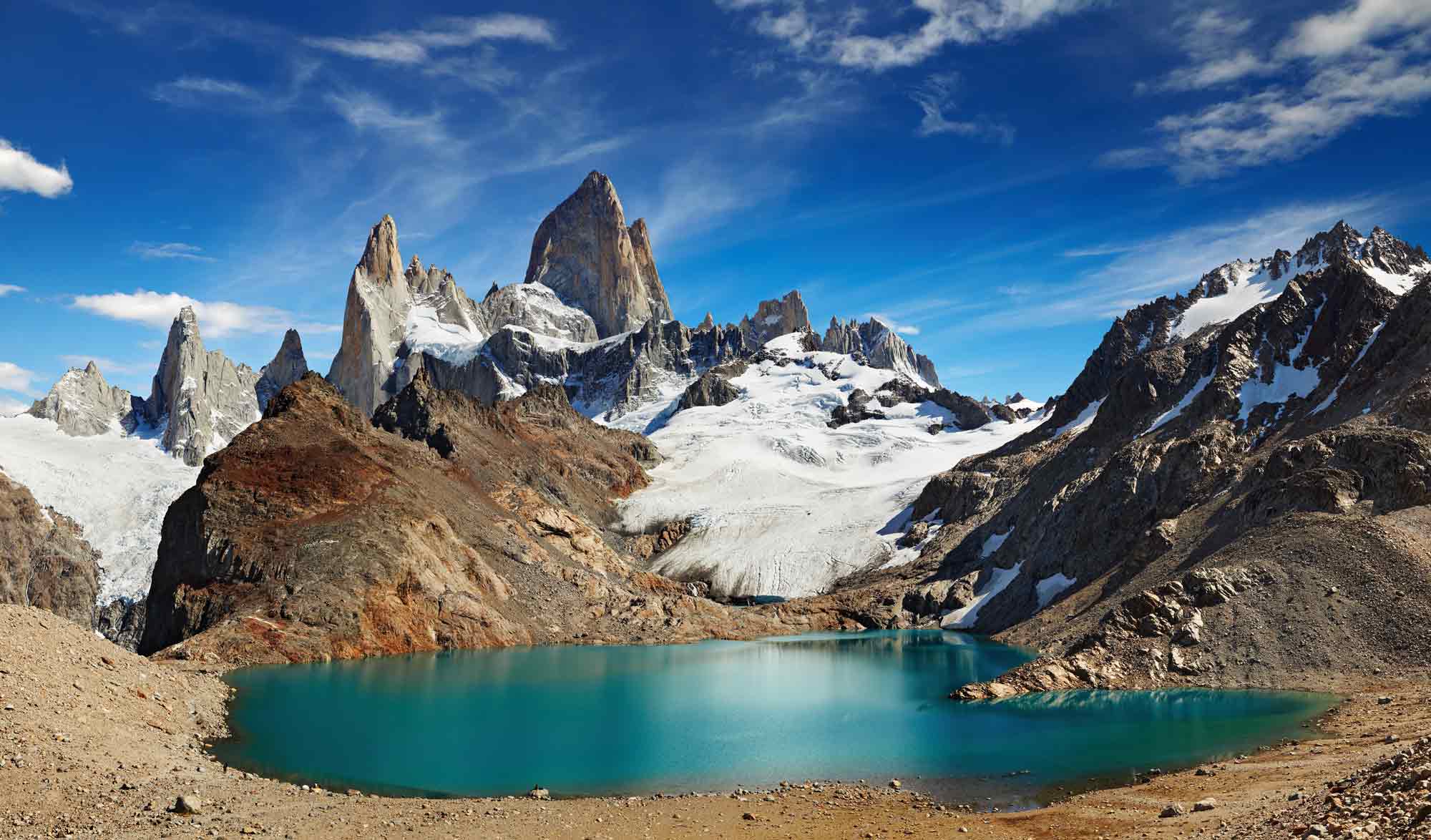
In western Argentine Patagonia, "Solar Noon"—the moment when the sun is at its highest point—often occurs closer to 1:30 PM or 2:00 PM rather than 12:00 PM. This creates an environment where daylight extends very late into the evening, especially during the summer months. For hikers and photographers, this "late sun" is a massive advantage, providing extra hours of visibility for long treks in places like the Perito Moreno Glacier or the Fitz Roy massif.
Extreme Latitudes and Daylight Hours
Because Patagonia reaches so far south toward Antarctica, the amount of daylight varies dramatically between seasons. This is often more important for visitors than the actual clock time.
The Summer Solstice (December)
In December 2026, the southern tip of Patagonia will experience nearly 18 hours of daylight. In Ushuaia, the sun can rise as early as 4:50 AM and set after 10:10 PM. During this period, the "Golden Hour" for photography is significantly elongated, and the twilight period (civil twilight) can last for nearly an hour after the sun officially sets.
The Winter Solstice (June)
Conversely, in June, the region experiences very short days. The sun may not rise until 10:00 AM and can set by 5:00 PM. Travelers visiting in the winter must be strictly aware of the time to ensure they are not caught on remote trails after dark, as temperatures drop precipitously the moment the sun disappears.
Logistics and Practical Time Management
Navigating the various zones requires attention to detail, particularly regarding transportation and communication.
Border Crossings
The border between Argentina and Chile is one of the most active in South America for tourism. If you are taking a bus from Bariloche (Argentina) to Puerto Montt (Chile) during the winter of 2026, you will gain an hour upon crossing the border. If you forget to adjust your watch, you may arrive at your destination or a connecting transfer much earlier than anticipated.
Flight Schedules
Airlines such as Aerolíneas Argentinas, LATAM, and Sky Airline always list departure and arrival times in local time. If you are flying from Buenos Aires (UTC-3) to Punta Arenas (UTC-3), there is no change. However, a flight from Santiago (which may be on UTC-4 in winter) to Punta Arenas (UTC-3) will result in a "loss" of an hour, even though you are staying within the same country.
Digital Synchronization
Most modern smartphones and GPS devices use Network Time Protocol (NTP) to update automatically. However, in remote areas of Patagonia where cell service is non-existent, your phone may fail to update when crossing the border. It is highly recommended to manually verify the local time offset in your settings before heading into national parks like Los Glaciares or Torres del Paine.
Comparing Time in Major Patagonian Hubs
To help visualize the landscape, the following table reflects the time offsets as they will stand during the two primary seasons of 2026.
| City / Location | Country | Winter (July 2026) | Summer (Dec 2026) | Time Zone Name |
|---|---|---|---|---|
| Ushuaia | Argentina | UTC-3 | UTC-3 | ART (Argentina Time) |
| El Calafate | Argentina | UTC-3 | UTC-3 | ART (Argentina Time) |
| Bariloche | Argentina | UTC-3 | UTC-3 | ART (Argentina Time) |
| Punta Arenas | Chile | UTC-3 | UTC-3 | Magallanes Time |
| Puerto Natales | Chile | UTC-3 | UTC-3 | Magallanes Time |
| Coyhaique | Chile | UTC-4 | UTC-3 | CLT / CLST |
Frequently Asked Questions
Does Patagonia have its own time zone?
No, Patagonia is split between Argentina Time (UTC-3) and various Chilean time zones (UTC-4/UTC-3). There is no single "Patagonian Time," though the Magallanes region in Chile and the entirety of Argentine Patagonia often share UTC-3.
Why does the Magallanes region in Chile have a different time?
The Chilean government recognized that the southern regions suffer from a lack of evening light during the winter due to their high latitude. By staying on UTC-3 (Summer Time) all year, residents of Punta Arenas and surrounding areas enjoy an extra hour of daylight in the afternoon, which improves safety and reduces energy consumption.
Is Ushuaia on the same time as Buenos Aires?
Yes. Argentina maintains a single time zone for the entire country. Despite being thousands of miles south of the capital, Ushuaia operates on the same UTC-3 offset as Buenos Aires.
What is the best way to track time while hiking in Patagonia?
Relying on a satellite-linked sports watch (like a Garmin or Suunto) is the most effective method. These devices calculate time based on GPS coordinates rather than cell tower signals, ensuring accuracy even when you are deep in the backcountry of the Andes.
Are there any time differences between the Atlantic and Pacific coasts of Patagonia?
Generally, yes, during the winter months. The Atlantic coast (Argentina) is on UTC-3, while parts of the Pacific coast (Northern Chilean Patagonia) are on UTC-4. However, in the far south, both coasts align at UTC-3.
Final Recommendation for Travelers
When planning a trip to Patagonia in 2026, always use UTC-3 as your primary reference point, as it covers the vast majority of the tourist circuit including Ushuaia, El Calafate, and Torres del Paine. If your itinerary includes the Aysén Region or the Lake District in Chile between April and September, explicitly double-check your bus and ferry bookings to account for the one-hour difference (UTC-4). To avoid confusion, set your primary digital devices to "Automatic" but keep a manual backup watch set to the time of your next confirmed transport departure.
Image Gallery
Select an image to open it in a new tab.



Omar Farooq
EdTech Innovation and Virtual Pedagogy Journalist
