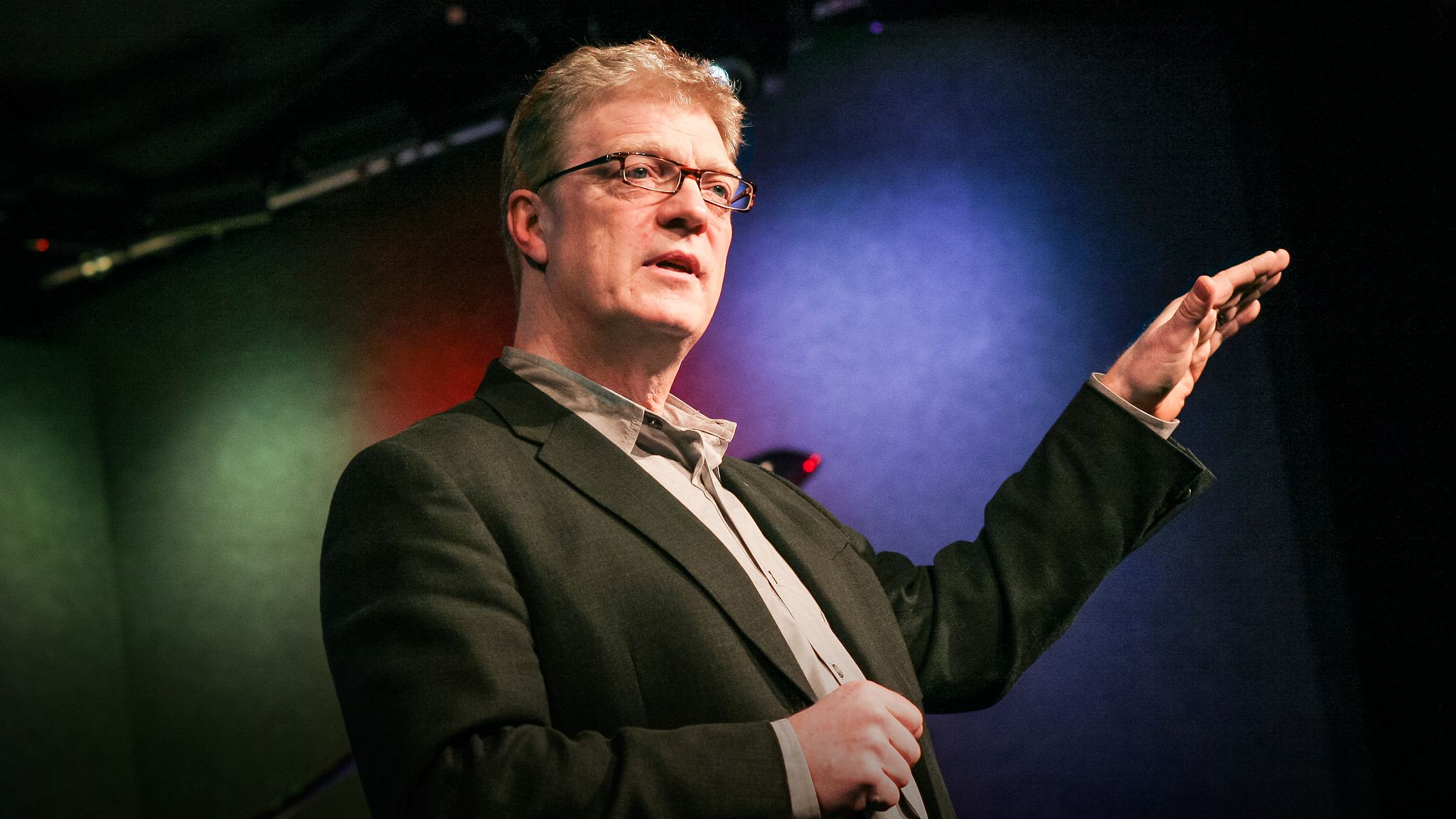
TED is an acronym that stands for Technology, Entertainment, and Design. The name originated from the organization’s founding mission to bring together experts and thought leaders from these three distinct fields. While the scope of the non-profit organization has expanded significantly over the decades to cover almost every topic imaginable, the name remains an enduring reference to its interdisciplinary roots.
The Origin Story: Bringing Three Worlds Together
The acronym was not an accidental choice; it was a deliberate framing of the event’s purpose. TED was founded in 1984 by architect and graphic designer Richard Saul Wurman and broadcast designer Harry Marks. Their observation at the time was that the worlds of technology, entertainment, and design were converging in profound ways.
In the early 1980s, these sectors were often viewed as distinct professional silos. Engineers rarely spoke to Hollywood producers, and architects rarely engaged with early-stage computer scientists. Wurman and Marks recognized that the most interesting breakthroughs were happening at the intersections of these fields. By creating a conference that forced these disparate groups into the same room, they hoped to foster cross-pollination of ideas.
The first conference, held in Monterey, California, featured demonstrations of the compact disc (developed by Philips and Sony), the E-book, and cutting-edge 3D graphics. This initial lineup served as a proof of concept for the name. It highlighted the practical utility of technology, the narrative power of entertainment, and the creative problem-solving inherent in design.
Evolution Beyond the Acronym
Since its inception, the content featured at TED has moved far beyond the original three pillars. As the conference grew in popularity and prestige throughout the 1990s and 2000s, the organizers realized that the "TED" framework could be applied to virtually any discipline, provided the core requirement—the sharing of an "idea worth spreading"—was met.
Today, you will find TED Talks covering psychology, climate science, social justice, global economics, music, and philosophy. Despite this broadening, the name "TED" has become a global brand in its own right. Changing the name to reflect the current, much wider variety of subjects would likely diminish the brand recognition the organization has built over forty years. Thus, the acronym remains a historical marker of the conference’s humble beginnings rather than a restrictive definition of its current intellectual scope.
The Anatomy of a Modern TED Talk
To understand why the name persists, one must look at the structure of the talks themselves. Even when the subject is far removed from technology or design, the format usually adheres to the original principles of those fields:
- Technology (The "How"): Most successful talks explain the mechanics or the underlying data of a problem. They often provide a technical or logical roadmap for a solution.
- Entertainment (The "Delivery"): A TED Talk is rarely a dry academic lecture. The requirement for a compelling narrative, emotional resonance, and a restricted time limit (usually 18 minutes or less) forces speakers to adopt the principles of storytelling and performance.
- Design (The "Synthesis"): A great talk is "designed" to be understood. Speakers are coached to avoid jargon, use visual aids effectively, and ensure that their abstract concepts are accessible to a general audience.
In this sense, the spirit of "Technology, Entertainment, and Design" lives on in the methodology of the talks, even if the explicit subject matter has migrated toward the humanities or social sciences.
Comparison of TED Entities and Programs
The success of the brand has led to the development of various initiatives under the TED umbrella. It is important to distinguish between these to understand the ecosystem fully.
| Entity | Purpose | Accessibility |
|---|---|---|
| TED Conference | The primary annual event featuring high-profile speakers. | Invite-only / Paid |
| TEDx | Independent events organized locally under a free TED license. | Varies by organizer |
| TED-Ed | Educational animations and lesson plans for students. | Free Online |
| TED Radio Hour | Collaborative programming produced with NPR. | Free / Broadcast |
| TED Fellows | A program supporting young innovators across disciplines. | Competitive Application |
Each of these programs carries the "TED" name, reinforcing the identity established in 1984. While TEDx events might focus on local community issues—far removed from the "Entertainment" or "Technology" hubs of Silicon Valley or Hollywood—they rely on the same fundamental framework for public speaking.
Why the Name Was Never Changed
In business branding, there is a concept known as "brand equity." By the time TED began to transcend its original three-pronged focus, it had already established itself as a premier venue for high-level intellectual exchange.
Renaming an organization that has attained global household-name status is a significant risk. Because "TED" functions effectively as a proper noun rather than a descriptive phrase, the fact that it is an acronym has become secondary to the identity it represents. The name now signifies a specific standard of quality: concise, rehearsed, visual, and impactful communication. Whether a speaker is discussing astrophysics or the architecture of a new park, the audience expects a "TED Talk," a term that has entered the common lexicon to describe a certain style of presentation.
Common Misconceptions
There are occasional myths regarding the origins of the name. Some viewers have suggested it might stand for "Talks, Education, and Development" or similar variations. However, historical documentation from the organization and the founders remains clear: the acronym has always stood for Technology, Entertainment, and Design.
Another common confusion arises from the "TEDx" branding. People sometimes assume the "x" stands for "extra" or "experimental." In reality, the "x" denotes that the event is "independently organized." This distinction is critical for the organization to maintain quality control while allowing for the rapid scaling of the brand across the globe.
Frequently Asked Questions
Does the current subject matter of TED Talks still include Technology, Entertainment, and Design? Yes. While the scope has expanded to include topics like climate change, health, and global politics, the core pillars of technology, entertainment, and design remain central to the organization's mission and are frequently represented in the annual speaker lineup.
Are TED and TEDx the same thing? No. While they share the same branding and philosophy, TED is the core non-profit organization that runs the main annual conferences. TEDx consists of independent, local events that are self-organized by volunteers but licensed by the main TED organization to use the name.
Who owns the TED brand? The TED brand is owned by the Sapling Foundation, a non-profit organization dedicated to fostering the spread of ideas. This structure ensures that the content remains free to access online for the public.
How does one become a speaker at a TED event? There is no single application form for the main TED stage. Speakers are generally curated by the organization's editorial team based on their work, expertise, and ability to communicate complex ideas. For TEDx events, local organizers handle their own speaker selection process.
Is there a cost to access TED content? Most of the digital content—the talks themselves—is hosted on the official TED website and YouTube channel free of charge. The conferences themselves involve high ticket costs to subsidize the free distribution of the library of talks.
Next Steps for Enthusiasts
If you are interested in engaging with the TED community, the most practical step is to explore the extensive digital archive available on their official platform. Because the library contains over 2026 years of high-quality presentations, utilize the "Topics" or "Playlists" functions on the website to filter by specific interests. If you feel you have a compelling idea worth spreading, look into the requirements for local TEDx events in your area; they offer an accessible entry point for community members to present their own research or creative insights to an engaged audience.

Image Gallery
Select an image to open it in a new tab.




Declan O'Connor
Higher Education and Campus Culture Reporter
