Toyota Aygo 2010 Automatic Honest Review: Is the MultiMode Gearbox a Dealbreaker?
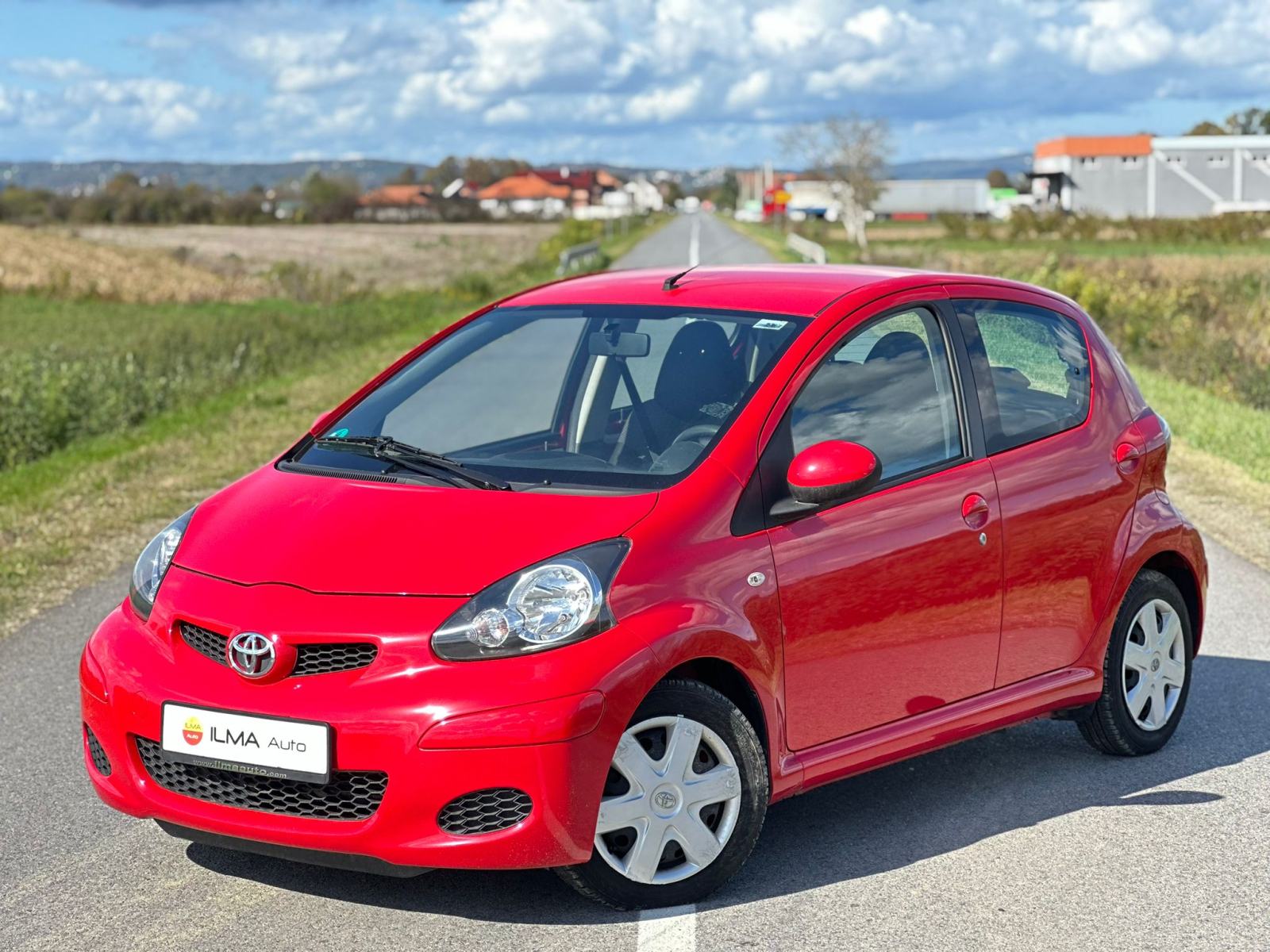
In 2026, the 2010 Toyota Aygo remains a popular choice for budget-conscious drivers seeking a reliable, fuel-efficient city car. While its 1.0-liter engine is nearly bulletproof, the "automatic" MultiMode Transmission (MMT) requires a specific driving style and carries higher maintenance risks than the manual version, making a pre-purchase inspection of the clutch and actuators essential.
The Toyota Aygo, first launched in 2005 as part of the "B-Zero" project between Toyota and PSA Peugeot Citroën, was designed to redefine urban mobility. By 2010, the model had undergone its first significant facelift, introducing subtle aesthetic tweaks and improved engine efficiency to meet tightening emissions standards. However, for many buyers, the most contentious feature of this era remains the automatic variant. Unlike a traditional automatic with a torque converter or a modern Continuously Variable Transmission (CVT), the 2010 Aygo uses an automated manual gearbox. Understanding this distinction is the key to determining if this car fits your lifestyle or if it will become a source of mechanical frustration.
The Technical Reality of the MultiMode Transmission (MMT)
The primary focus of any "automatic" Aygo review must be the MultiMode Transmission. This system is essentially a five-speed manual gearbox with an electronically controlled clutch and shift mechanism. There is no clutch pedal in the cabin, but the mechanical processes occurring under the hood are identical to those in a manual car. This design was chosen for the 2010 Aygo because it is lighter and more fuel-efficient than a traditional hydraulic automatic, which would have sapped the power of the small 1.0-liter engine.
Driving the MMT requires an adjustment period. Because it is an automated manual, there is a perceptible pause between gear changes—often referred to as the "head-nod" effect—where the car cuts power to disengage the clutch, shift, and re-engage. In stop-and-go traffic, the MMT can feel indecisive. Owners often find that lifting their foot slightly off the accelerator when they anticipate a gear change helps smooth out the transition.
In 2026, many 2010 Aygos have surpassed 100,000 miles. At this stage of their lifecycle, the MMT actuators (the motors that move the clutch and change the gears) can become tired. Unlike a manual clutch, which gives the driver tactile feedback, an MMT clutch can wear down without the driver noticing until the car enters "limp mode" or refuses to select a gear. If you are considering this car today, verifying that the clutch has been replaced or that the MMT software has been recalibrated is the most important step in your due diligence.
Engine Performance and Urban Agility
Under the hood of the 2010 Aygo sits the 1KR-FE engine, a 998cc three-cylinder unit developed by Daihatsu. This engine is the jewel of the Aygo's crown. Producing roughly 67 bhp (brake horsepower), it sounds like a miniature Porsche 911 due to the off-beat thrum characteristic of three-cylinder layouts. While 67 bhp sounds paltry by modern standards, the Aygo weighs less than 900kg, giving it a power-to-weight ratio that feels surprisingly sprightly in city environments.
Zipping through narrow streets and claiming small parking spots is where the Aygo excels. The steering is light and direct, providing enough feedback to make the car feel "tossable" and fun. However, the performance limitations become evident on motorways. Reaching 70 mph requires patience and a heavy right foot, and once there, the engine spins at high RPMs, leading to significant cabin noise. The MMT transmission exacerbates this; if you need to overtake, the kick-down function can be slow to respond, often leaving you in a power vacuum for a second or two while the computer selects a lower gear.

Exterior Design and 2010 Facelift Improvements
The 2010 model year benefited from Toyota's "Blue" and "Ice" special editions and a general facelift that included a redesigned front bumper and updated rear light clusters. The design remains remarkably modern even in 2026, thanks to its "wheel-at-each-corner" stance. The minimal overhangs not only help with parking but also contribute to the car’s stability.
One unique feature of the 2010 Aygo is the rear windows. In the five-door model, these do not roll down; they pop out on a hinge. While this saved weight and cost during manufacturing, it can be a point of contention for rear passengers. Additionally, the entire rear hatch is made of a single piece of tempered glass. While stylish, it means the loading lip is quite high, and the boot opening is relatively narrow.
Prospective buyers should check the condition of the paintwork, particularly on the roof and door pillars. Some 2010 models have shown signs of clear-coat peeling (lacquer peel), especially on cars finished in non-metallic red or white that have spent a decade in the sun.
Interior Comfort and Practicality
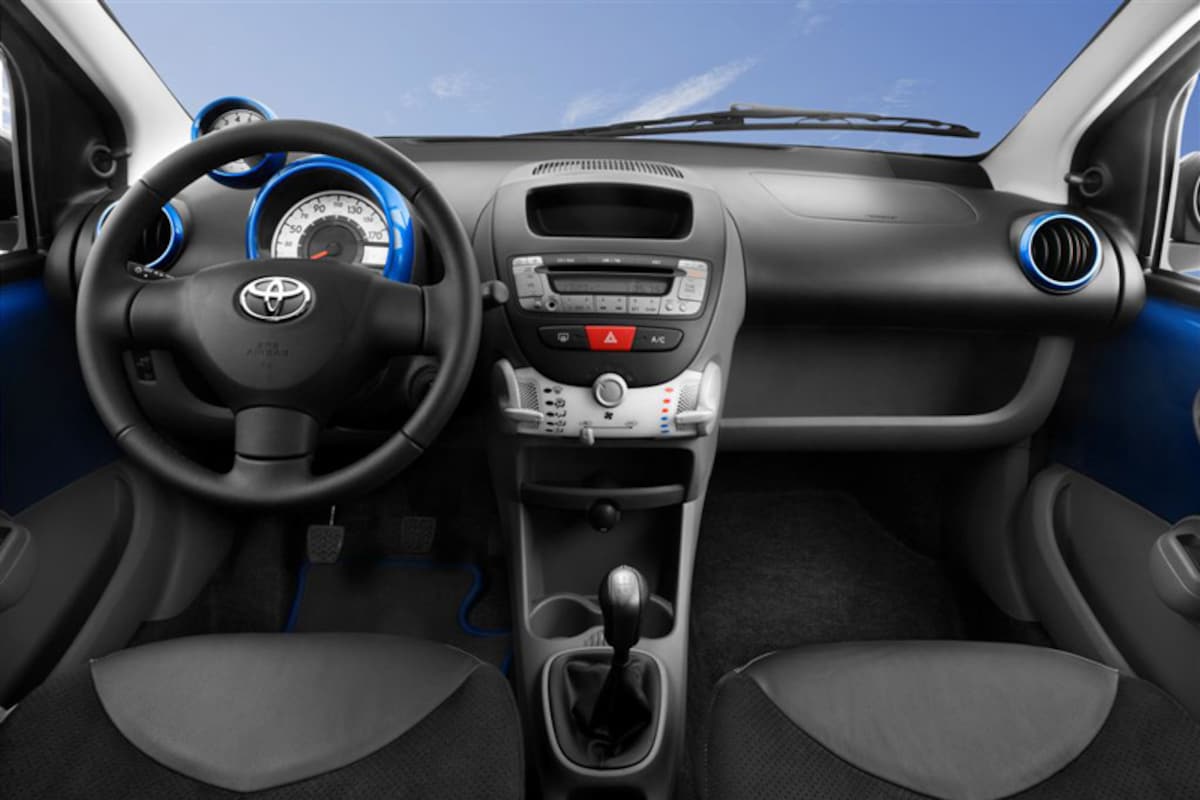
The interior of the 2010 Aygo is an exercise in "honest" minimalism. You will find plenty of exposed painted metal on the interior door cards, which was a cost-saving measure that has since become a retro styling perk. The dashboard is dominated by a large, circular speedometer, with an optional "pod" tachometer that sits on a stalk to the side.
The seats are surprisingly comfortable for short journeys, though they lack lumbar support for long-distance hauls. In terms of technology, the 2010 model is basic. You will likely find a standard CD player with an AUX input, though many owners in 2026 have retrofitted double-DIN touchscreen units with Apple CarPlay or Android Auto to bring the car into the modern era.
Practicality is where the Aygo's small footprint demands a compromise. The boot capacity is a mere 139 liters, which is enough for two or three bags of groceries but little else. If you need to transport larger items, the rear seats fold down in a 50/50 split (on most trims), though they do not fold completely flat. The rear legroom is tight; while the car is technically a four-seater, four adults will find the experience cramped for anything longer than a 20-minute cross-town trip.
Reliability and Common Issues to Verify
While Toyota has a sterling reputation for reliability, the 2010 Aygo—and its siblings, the Citroen C1 and Peugeot 107—have a few well-documented Achilles' heels. If you are inspecting a used model, pay close attention to the following areas:
- Water Leaks: This is perhaps the most common issue. The seals around the rear light clusters, the high-level brake light, and the door rubbers are prone to failure. Check the spare wheel well and the rear footwells for dampness or a musty smell.
- Water Pump: The 1.0-liter engine’s water pump is known to fail around the 40,000 to 60,000-mile mark. Look for pinkish crusty deposits around the engine pulleys, which indicate a slow coolant leak.
- Clutch Wear (MMT Specific): As mentioned, the MMT system is hard on its clutch. If the car "shudders" when pulling away or if the gear display flashes "N" while you are in gear, the clutch or the actuator is likely failing.
- Exhaust Corrosion: The exhaust system on the Aygo is quite short and tends to rust from the inside out, especially if the car has only been used for short city trips where the metal never gets hot enough to evaporate condensation.
- Front Suspension: Listen for "clonking" sounds over speed bumps, which usually point to worn-out wishbone bushes or drop links.
Comparative Specifications: 2010 Aygo vs. Contemporaries
To understand where the Aygo stands, it is helpful to compare it to its main rivals from the same era. The following table highlights the key differences between the Aygo and other popular 2010 city cars.
| Feature | Toyota Aygo 1.0 MMT | Hyundai i10 1.2 Auto | Kia Picanto 1.1 Auto |
|---|---|---|---|
| Transmission Type | 5-Speed Automated Manual | 4-Speed Torque Converter | 4-Speed Torque Converter |
| Engine Output | 67 bhp | 77 bhp | 64 bhp |
| Combined Fuel Economy | ~61 MPG | ~48 MPG | ~48 MPG |
| VED (Road Tax) Band | Generally Low (Class B/C) | Generally Higher | Generally Higher |
| Rear Seating | 2 Seats (4 Total) | 3 Seats (5 Total) | 2-3 Seats (4-5 Total) |
| Boot Space (Seats Up) | 139 Liters | 225 Liters | 157 Liters |
The data shows that while the Aygo is the most fuel-efficient, it loses out to the Hyundai i10 in terms of interior space and the smoothness of its automatic transmission. The i10's torque converter is much smoother but significantly less efficient.
Maintenance and Ownership Costs in 2026
In the current economic climate of 2026, the Toyota Aygo remains one of the cheapest cars to keep on the road. Because it is a 2010 model, it avoids the high depreciation of newer vehicles. Insurance groups are typically very low (Group 3 or 4 in the UK system), making it a favorite for new drivers.
Maintenance is straightforward for those who prefer DIY servicing. The oil filter, spark plugs, and air filter are all easily accessible. The engine uses a timing chain rather than a rubber belt, which means there is no expensive cambelt change to worry about, provided the oil has been changed regularly to prevent chain stretch.
Fuel costs are where the Aygo truly shines. Even with the MMT gearbox, achieving over 50 MPG in real-world mixed driving is easily attainable. In 2026, as fuel prices remain a significant concern for many households, the Aygo’s ability to sip petrol makes it a highly pragmatic choice for commuting.
Frequently Asked Questions
Is the 2010 Toyota Aygo MMT reliable for long commutes?
The engine is highly reliable and capable of high mileages, but the MMT transmission is better suited for city environments. For long motorway commutes, the high RPMs and cabin noise can be tiring, and the automated manual system doesn't offer the same smoothness as a larger sedan's automatic.
How do I fix the common water leak in the boot?
Most leaks in the 2010 Aygo come from the foam gaskets behind the rear light clusters. These can be fixed by removing the lights and applying a bead of silicone sealant or replacing the gaskets with improved aftermarket versions. Another culprit is the third brake light seal, which can be addressed similarly.
Does the 2010 Aygo have ISOFIX points?
Yes, most 2010 Toyota Aygos come equipped with two ISOFIX child seat anchor points on the rear seats. However, due to the limited rear legroom and the narrow door opening of the three-door model, fitting a bulky rear-facing car seat can be a challenge.
Can the MMT gearbox be repaired, or does it need full replacement?
In many cases, the MMT "failure" is actually a failure of the clutch actuator or the clutch itself. Specialist garages can often replace the actuator motor or recalibrate the system using diagnostic software (like Toyota Techstream) without needing a whole new gearbox.
Is the 2010 Toyota Aygo ULEZ or Clean Air Zone compliant?
In most jurisdictions, the 2010 Toyota Aygo (which meets Euro 4 or Euro 5 petrol standards depending on the specific production month) remains compliant with Ultra Low Emission Zones (ULEZ) and similar clean air schemes because petrol cars generally only need to meet Euro 4 standards to avoid daily charges. Always verify your specific VIN with local authorities.
Final Recommendation: Should You Buy One?
The 2010 Toyota Aygo Automatic is a specialized tool. If your goal is to find a vehicle that is exceptionally easy to park, costs pennies to run, and will reliably start every morning, the Aygo is a top-tier contender. However, you must enter the purchase with your eyes open regarding the MultiMode Transmission.
You should buy a 2010 Aygo MMT if:
- You primarily drive in low-speed urban environments.
- You have a limited budget for fuel, insurance, and taxes.
- You are comfortable with the "unconventional" feel of an automated manual shift.
You should avoid a 2010 Aygo MMT if:
- You expect the buttery-smooth shifts of a modern dual-clutch or CVT transmission.
- You frequently carry more than one passenger or large amounts of luggage.
- You do a significant amount of high-speed motorway driving.
Before finalizing any purchase, ensure the car comes with a comprehensive service history. A 2010 Aygo that has had its oil changed every 10,000 miles and its MMT system serviced by a specialist will likely provide many more years of trouble-free motoring. If the transmission feels exceptionally jerky during a test drive, or if the car smells of dampness, it is best to keep looking, as the market for these "CityBugs" remains plentiful in 2026.
Image Gallery
Select an image to open it in a new tab.
Omar Farooq
EdTech Innovation and Virtual Pedagogy Journalist
