The NHL enforcer role has evolved from a specialized fighter who rarely played meaningful minutes into a versatile "heavy" player who must contribute to puck possession and scoring. In modern hockey, the traditional "goon" is extinct, replaced by physical forwards who provide a protective deterrent while maintaining the speed and skill required by the contemporary game.
The transformation of the National Hockey League (NHL) over the last two decades is perhaps most visible in the changing profile of the "enforcer." Once a staple of every roster, the dedicated fighter—a player whose primary skill was the ability to drop the gloves—has been phased out by a combination of rule changes, advanced analytics, and a heightened focus on player safety. By 2026, the role of the enforcer is no longer a standalone position but a secondary characteristic of a "power forward" or a "heavy" fourth-liner.
The Historical Context of the Traditional Enforcer
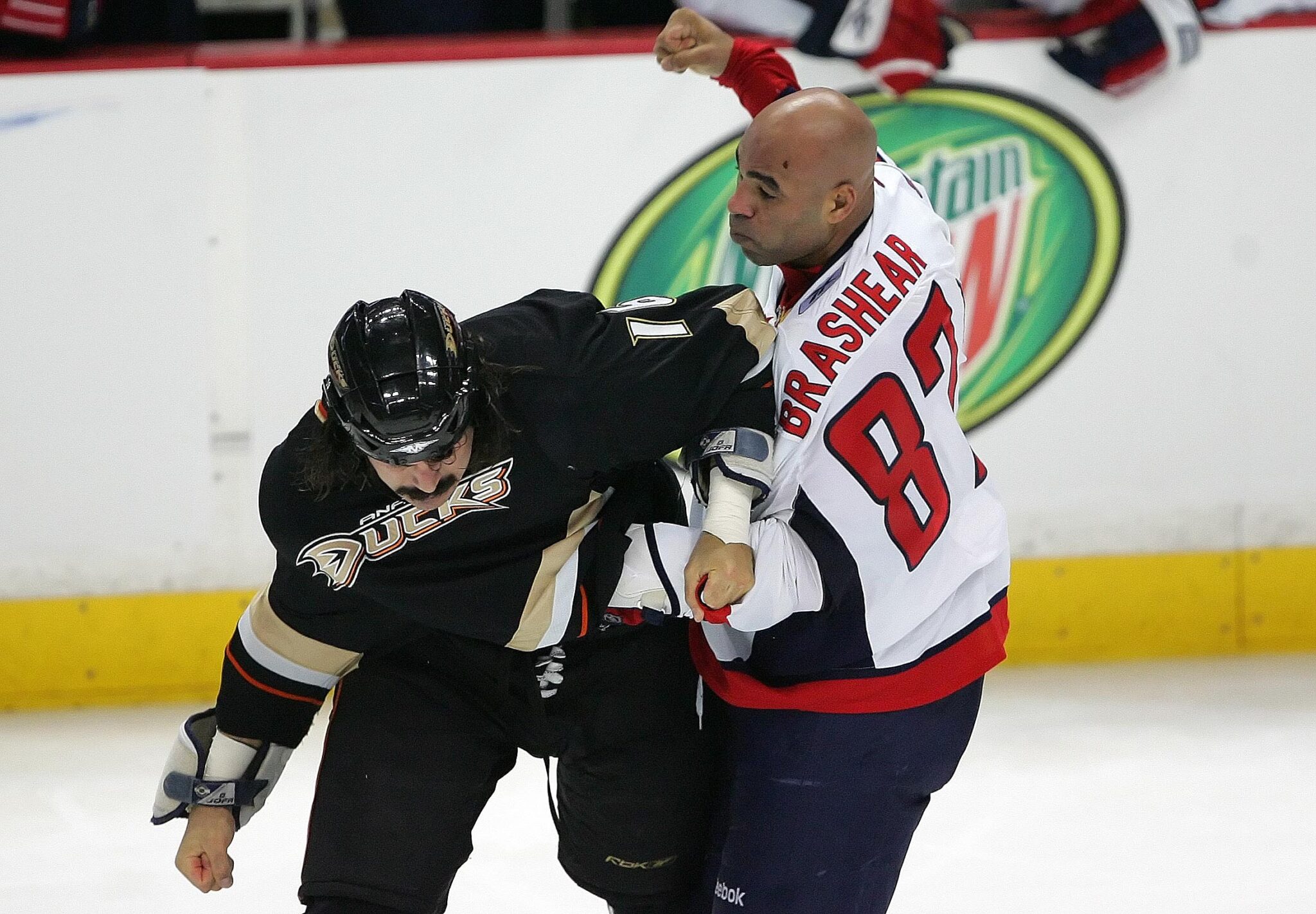
To understand the modern role, one must look back at the era of the "Broad Street Bullies" in the 1970s and the subsequent peak of the enforcer in the 1980s and 90s. During this time, the enforcer served as a specialized tactical tool. Their primary objective was to protect their team’s star players from liberties taken by the opposition. If a superstar like Wayne Gretzky or Mario Lemieux was targeted with a late hit or a slash, the enforcer’s job was to "police" the ice, often through a staged fight.
This era was governed by "The Code," an unwritten set of rules that dictated how and when players should fight. Fighting was seen as a way to regulate the game's temperature, preventing cheap shots from escalating into full-scale brawls. However, these players often skated fewer than five minutes per game and possessed limited technical hockey skills. They were hired for their fists, not their skating or shooting.
The Catalysts for Change: Safety and Science
The decline of the traditional enforcer was accelerated by tragic events and scientific advancements regarding brain health. The summer of 2011 was a watershed moment for the NHL, following the deaths of three prominent enforcers: Derek Boogaard, Rick Rypien, and Wade Belak. These tragedies, combined with growing awareness of Chronic Traumatic Encephalopathy (CTE), forced a league-wide reckoning.
The NHL Department of Player Safety (DoPS), established in 2011, began taking a harder line on illegal hits to the head. As the league prioritized the health of its athletes, the optics of "staged" fights—those occurring immediately after a face-off for no organic reason—became increasingly difficult to defend. The legal pressure from retired players regarding concussion management further pushed the league toward a game defined by speed rather than brute force.
How Rule Changes Legislated the Goon Out of the Game
The NHL did not ban fighting outright, but it introduced several structural changes that made it nearly impossible to carry a one-dimensional fighter on a roster.
- The Instigator Rule: While this rule existed previously, its strict enforcement and the associated game misconducts made players hesitant to start fights, especially late in games.
- The Visor Mandate: In 2013, the NHL made visors mandatory for all players entering the league. Fighting with a visor often leads to hand injuries for the attacker and "cutting" for the defender, naturally discouraging spontaneous bouts.
- The Helmet Rule: Players are now penalized for intentionally removing their own helmets before a fight. This change, aimed at preventing heads from hitting the ice during a fall, removed the "honor" of removing gear before a scrap.
- Three-on-Three Overtime: The introduction of wide-open overtime formats prioritized skating and skill. Teams could no longer afford to waste a roster spot on a player who could not be trusted in high-stakes, high-speed situations.
The Impact of Analytics and the Salary Cap
The "Moneyball" era of hockey arrived with the widespread adoption of advanced metrics like Corsi and Fenwick (measures of shot attempts and puck possession). Data revealed a harsh truth for traditional enforcers: when they were on the ice, their teams were almost always being outshot and outplayed.
In a hard-salary-cap environment, every dollar and every roster spot must be optimized. Teams realized that a fourth-line player who can kill penalties, win 50% of their face-offs, and contribute 10–15 goals a season is infinitely more valuable than an enforcer who only fights. This led to the rise of the "skilled fourth line," where speed and defensive reliability replaced the intimidation factor.
Defining the Modern "Heavy" Player in 2026
In 2026, the "enforcer" has been rebranded as a "heavy" or "physical" player. These athletes are expected to play 10 to 12 minutes per game and possess the skating ability to keep up with the league's elite stars. The modern version of this role focuses on "deterrence" through clean, hard hitting and the ability to win puck battles in the corners.
The modern physical player must be a "Swiss Army Knife." They are often used to wear down the opposition's top defensive pairs by finishing every check and playing a relentless "north-south" game. While they will still drop the gloves to defend a teammate, it is rarely their only contribution to the game.
Characteristics of the 2026 Modern Enforcer
- Elite Skating: Must be able to close gaps quickly to land hits.
- Puck Protection: Uses their size to cycle the puck and maintain offensive zone pressure.
- Net-Front Presence: Screens the goalie and hunts for "greasy" rebound goals.
- Discipline: Avoids taking "bad" penalties that put the team at a disadvantage.
Comparing the Old Guard and the New Era
The differences between the traditional enforcer and the modern physical player are stark. The following table highlights the shift in expectations and performance metrics.
| Feature | Traditional Enforcer (1990-2010) | Modern Heavy Player (2026) |
|---|---|---|
| Average Time on Ice (TOI) | 3–6 Minutes | 10–14 Minutes |
| Primary Skill | Fighting / Intimidation | Forechecking / Puck Possession |
| Scoring Production | 0–5 Points per season | 15–30 Points per season |
| Penalty Minutes (PIM) | 200+ per season | 50–90 per season |
| Special Teams Role | None | Penalty Kill / Net-Front Power Play |
| Skating Ability | Below Average | Average to Above Average |
| Draft Pedigree | Often late rounds or undrafted | Often mid-round "power forward" prospects |
The "Deterrent" Theory: Does It Still Work?
A common debate in modern hockey circles is whether having a "tough" player actually prevents opponents from targeting star players. Critics argue that the speed of the game makes it impossible for an enforcer to "police" the ice in real-time. By the time a hit happens, the enforcer is often on the bench or at the other end of the ice.
However, many coaches and general managers still believe in the psychological value of "team toughness." The presence of a player like Tom Wilson or Arber Xhekaj (to name examples of the archetype) creates a sense of accountability. While they may not prevent every hit, they ensure that the "price of admission" for targeting a star player is high. In the 2026 playoffs, physical play remains a key component of success, as the game tightens up and space becomes a premium.
Case Studies: The New Breed of Physicality
Several players in the current era exemplify the successful merger of physicality and skill.
The Power Forward Blueprint
Players who can score 20 goals while leading the team in hits are the most coveted assets in the league. These players are often used on the top two lines to create space for smaller, more skilled linemates. Their "enforcement" comes through their physical dominance in the offensive zone, making life miserable for opposing defensemen.
The Defensive Specialist "Heavy"
Some teams utilize their physical players as defensive stoppers. These players are tasked with shutting down the opponent's top line. Their "toughness" is displayed through shot-blocking, winning board battles, and clearing the crease. Fighting is a tool they use only when necessary to stop an opponent's momentum or respond to a perceived injustice on the ice.
The Future of Physicality in the NHL
As we look toward the late 2020s, the role of the enforcer will likely continue to blend into the general expectations for all bottom-six forwards. The "specialist" is gone, and in its place is a more athletic, more intelligent player. The league's emphasis on skill does not mean the game is soft; rather, the "violence" has become more functional.
We are seeing a rise in "team toughness" rather than "individual toughness." Instead of one player being responsible for the team's protection, the entire roster is expected to play a physical, supportive style. This shift has arguably made the game safer while maintaining the high-intensity physical competition that fans expect from professional hockey.
Frequently Asked Questions
Is fighting still allowed in the NHL in 2026?
Yes, fighting is still permitted in the NHL, though it has reached historic lows. Players who fight are assessed a five-minute major penalty. The league has not banned fighting but has implemented numerous rules to discourage "staged" fights that do not occur organically within the flow of the game.
What happens to enforcers when they retire?
The transition can be difficult for former enforcers due to the physical toll of the role. However, the NHL and the NHL Players' Association (NHLPA) have significantly expanded their post-career support programs. Many former enforcers now work in player development, scouting, or as "player transition" coaches to help young athletes manage the mental and physical demands of the professional game.
Why do teams still want "tough" players if fighting is down?
Toughness in modern hockey is about more than fighting. It is about the ability to win battles for the puck under pressure, "finish" hits to fatigue the opposition, and stand one's ground in front of the net. These "heavy" players are essential for winning in the playoffs, where the game is more physical and less space is available for pure finesse players.
Do advanced analytics support having physical players?
Analytics have shifted the definition of a "good" physical player. Modern metrics favor players who use their physicality to regain puck possession. A hit that results in a turnover is highly valued, whereas a hit that takes the player out of defensive position is viewed as a negative. Statistics now track "puck recoveries after hits," which helps teams identify which physical players are actually helping them win.
Can a player still make the NHL solely by being a good fighter?
No. In the current NHL landscape, a player must be a competent skater and have a high "hockey IQ" to maintain a roster spot. Even the most physical players in the league must be able to execute defensive systems and contribute to the team's transition game. The era of the "one-tool" fighter has ended.
Practical Recommendations for Following the Modern Game
For fans or scouts looking to understand the modern enforcer role, focus on the following actions:
- Watch the Forecheck: Pay attention to which players are consistently the first ones into the offensive zone to initiate contact. This is where modern "enforcement" begins.
- Monitor "Puck Battles Won": Look at the stats for board battles. The most effective modern physical players are those who come out of the corner with the puck.
- Observe Net-Front Battles: Notice which players the coaches put in front of the opposing goalie during power plays. This requires a high degree of physical "toughness" and the ability to take a beating to create a scoring chance.
- Evaluate Penalty Killing: Many modern "heavies" are excellent penalty killers. Their ability to use their reach and strength to disrupt passing lanes is a key part of their value proposition.
By 2026, the NHL enforcer has successfully transitioned from a blunt instrument to a precision tool. While the "goon" era is a piece of history, the spirit of the enforcer—protecting teammates and playing with an edge—remains a vital, albeit more sophisticated, part of the sport.
Image Gallery
Select an image to open it in a new tab.


Ingrid Bjornson
Global Cyber Policy and Regulation Analyst
