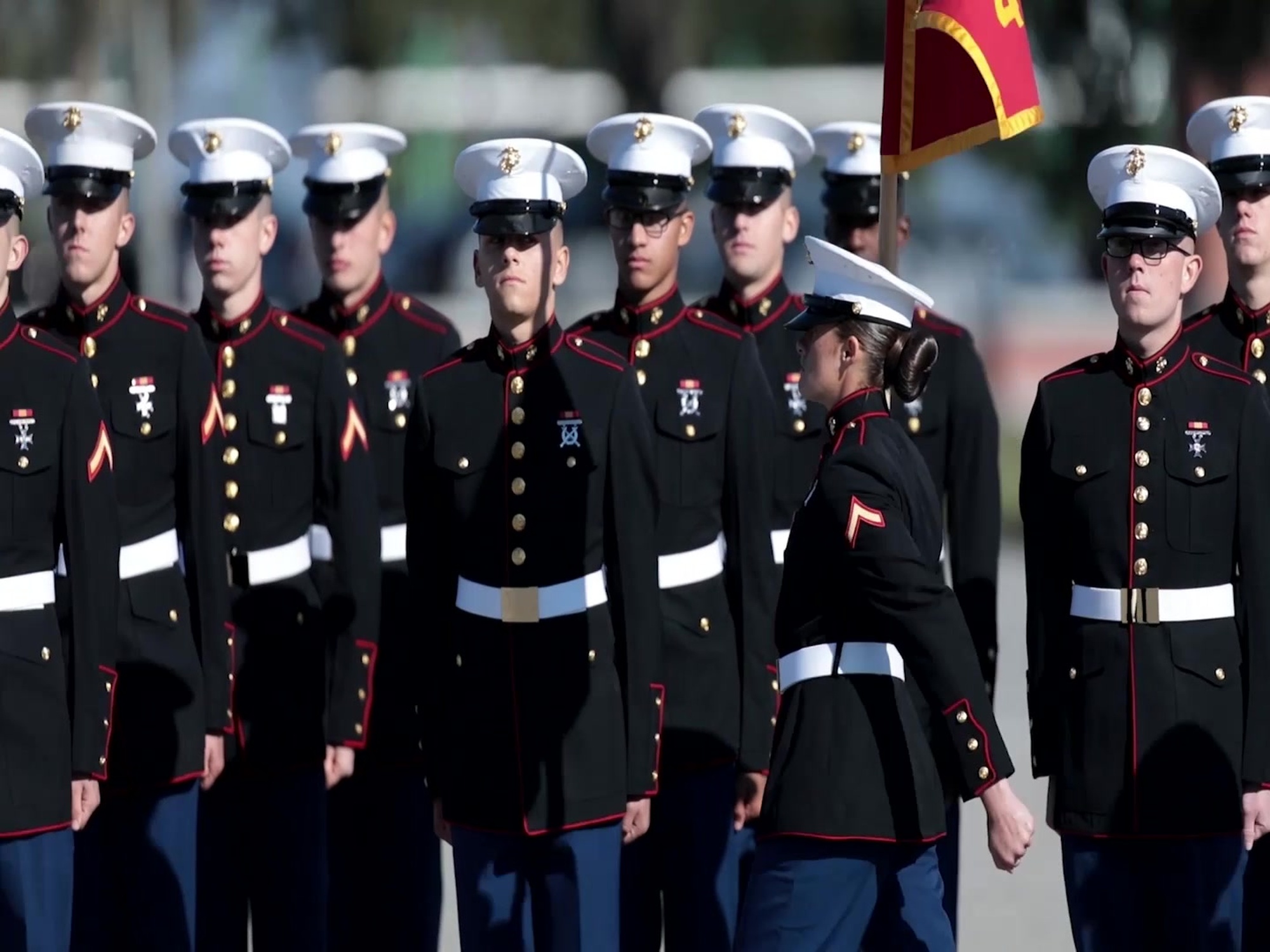
A standard United States Marine Corps (USMC) rifle company typically consists of approximately 175 to 182 Marines. This number varies based on the specific unit’s mission, the current Table of Organization and Equipment (TO&E), and recent structural shifts under Force Design modernization initiatives, which have refined squad sizes and technical roles within the company.
Understanding the Marine Corps Company Structure
In the hierarchy of the U.S. Marine Corps, a company serves as the fundamental tactical unit capable of independent operations for short durations. It is the largest unit that a single commander—typically a Captain—can lead while maintaining direct personal contact with nearly all subordinates. As of 2026, the structure of a Marine company reflects years of refinement aimed at making the unit more lethal, technologically integrated, and capable of distributed operations in littoral (coastal) environments.
The personnel count is not a static number but a target defined by the Table of Organization (T/O). While a company might have a "paper strength" of 180, its actual "manning strength" may fluctuate based on deployments, training cycles, and administrative transfers. To understand the total headcount, one must look at the three primary building blocks: the Company Headquarters, the Rifle Platoons, and the Weapons Platoon.
The Company Headquarters (HQ) Element
The Headquarters element provides the command, control, and administrative support necessary for the company to function. It is not a combat unit in the traditional sense, but it contains the leadership and specialists required to direct the company's combat power.
A typical HQ element includes:
- Company Commander (CO): A Captain (O-3) who holds ultimate responsibility for the unit.
- Executive Officer (XO): A First Lieutenant (O-2) who assists the CO and manages the logistics and administrative flow.
- First Sergeant (1stSgt): The senior enlisted advisor (E-8) who focuses on personnel welfare, discipline, and administrative matters.
- Company Gunnery Sergeant (Company Gunny): A technical expert (E-7) who manages logistics, ammunition, and gear.
- Communications/Radio Operators: Marines responsible for maintaining links with higher headquarters (Battalion) and subordinate platoons.
- Corpsmen: While technically U.S. Navy personnel, several Hospital Corpsmen are attached to the company HQ and platoons to provide medical care.
The Three Rifle Platoons
The bulk of the company’s manpower resides in its three rifle platoons. Each platoon is commanded by a Second or First Lieutenant and a Platoon Sergeant (Staff Sergeant). Under the Force Design updates finalized leading into 2026, a rifle platoon typically consists of about 40 to 45 Marines.
Each platoon is divided into three squads. The squad is the smallest tactical unit, and its size has been a point of significant analysis in recent years. While the traditional 13-man squad was the gold standard for decades, the 2026 Marine rifle squad often utilizes a 15-man or 12-man configuration depending on the specific integration of "systems operators" (Marines dedicated to drone flight and electronic warfare).
The Weapons Platoon
Unique to the rifle company is the Weapons Platoon. This unit provides the heavy organic firepower that allows a company commander to suppress enemies without immediately calling for outside support. It usually consists of roughly 40 Marines and is divided into specific sections:
- Mortar Section: Operating 60mm mortars for indirect fire support.
- Machine Gun Section: Utilizing Medium Machine Guns (like the M240B/G) for sustained fire.
- Anti-Armor Section: Armed with shoulder-fired rockets and missiles (such as the Javelin or SMAW) to defeat enemy vehicles and fortified positions.
Personnel Variations by Company Type
Not every "company" in the Marine Corps is an infantry rifle company. The Marine Corps is a "combined arms" force, meaning it utilizes various types of units that work in concert. Each has a different manning requirement based on the complexity of its equipment.
Weapons Company (Battalion Level)
A Weapons Company exists at the Battalion level and is much larger than a standard Rifle Company. It contains the battalion’s heavy mortars (81mm), heavy machine guns (.50 cal and Mk19), and anti-tank missile platoons (TOW). These units can exceed 200 Marines because of the logistical tail required to move and maintain heavy weaponry and vehicles.
Headquarters and Service (H&S) Company
The H&S Company is the largest in a battalion, often exceeding 300 personnel. It contains the Battalion Commander's staff, the intelligence section, logistics, supply, and the scout sniper platoon. Its primary purpose is to support the three line companies (Rifle Companies) in the field.
Artillery Batteries
In the Marine Artillery, a "company" is referred to as a Battery. An artillery battery’s size is dictated by the number of guns (typically six) it operates. Because artillery requires significant numbers of Marines for fire direction, gun crews, and ammunition hauling, a battery usually mirrors the size of a rifle company (150–180 Marines) but with a very different MOS (Military Occupational Specialty) distribution.

Comparison of Marine Corps Unit Sizes (2026 Estimates)
| Unit Level | Typical Personnel Count | Commanding Officer | Primary Sub-units |
|---|---|---|---|
| Fire Team | 4 | Corporal | Individuals |
| Squad | 12 - 15 | Sergeant | 3 Fire Teams |
| Platoon | 40 - 45 | 2nd / 1st Lieutenant | 3 Squads |
| Rifle Company | 175 - 182 | Captain | 3 Rifle Platoons, 1 Weapons Platoon |
| Weapons Company | 200 - 230 | Major / Captain | Heavy Machine Guns, Mortars, Anti-Armor |
| H&S Company | 250 - 350 | Major / Captain | S-1 through S-6 Staff Sections |
| Battalion | 800 - 1,000 | Lieutenant Colonel | 3 Rifle Co, 1 Weapons Co, 1 H&S Co |
The Impact of Force Design 2030 on Company Size
As the Marine Corps progressed toward its 2030 goals, the year 2026 stands as a pivotal point where most units have transitioned to the new organizational standards. The objective was to move away from "legacy" heavy structures toward lighter, more agile units capable of fighting in a contested maritime environment.
Integration of New Roles
In 2026, a Marine company is more likely to include specialized roles that didn't exist in large numbers a decade ago. This includes:
- Small Unmanned Aerial System (sUAS) Operators: Every squad now has Marines trained to operate organic drones for scouting.
- Electronic Warfare (EW) Specialists: Personnel dedicated to detecting enemy signals or protecting the company’s communication from being jammed.
- Precision Fires Personnel: Increased training for lower-level leaders to call in precision-guided munitions from sea-based or air-based assets.
The 15-Man Squad Debate
For years, the USMC experimented with the 15-man squad to account for the increased cognitive load of modern technology. This included a Squad Leader, an Assistant Squad Leader, and a Squad Systems Operator, alongside three fire teams of four. While this increases the company's total headcount slightly, it provides the redundancy needed for high-intensity conflict where casualties are expected.
Logistic and Administrative Reality
While the T/O might state a company should have 182 Marines, the administrative reality—often called the "Morning Report"—usually shows a different number. Several factors contribute to why a Captain might actually only have 160 Marines available on any given day:
- Light Duty/Medical: Marines recovering from injuries who cannot deploy or participate in heavy training.
- TAD (Temporary Additional Duty): Marines sent to specialized schools (e.g., Sergeants Course, Jungle Warfare School, or Corporals Course).
- FAP (Fleet Assistance Program): Marines borrowed by the base for security, mess duty, or other administrative roles.
- End of Active Service (EAS): Marines who are "short-timers" preparing to exit the military and are no longer included in tactical planning.
The manning level is a critical metric for the Department of Defense. If a company’s strength drops below 80%, it is often considered non-deployable until it receives "boots on the deck" from an Infantry Training Battalion.
The Role of the Company Commander and First Sergeant
The "Command Team" (The CO and 1stSgt) manages this group of ~180 individuals. Their dynamic is the engine of the company. The CO focuses on the tactical employment of the Marines—where to move, how to attack, and how to coordinate with the Official Website of the United States Marine Corps.
The First Sergeant, conversely, handles the "human" element. This involves tracking the 180 separate careers, disciplinary issues, family problems, and administrative paperwork required by the military bureaucracy. In a company of nearly 200 people, the 1stSgt is often the most overworked individual, serving as the bridge between the junior Enlisted Marines and the Officer leadership.
Common Misconceptions About Company Size
"A company is always 200 people"
This is a rounding error often used in civilian media. While a company plus attached units (like an attached tank platoon or engineer squad) might reach 200, the organic "line" company is almost always smaller.
"All companies are the same"
A Marine Logistics Company or a Maintenance Company in a Combat Logistics Battalion (CLB) will have a completely different structure. These units are often "task-organized," meaning their size changes constantly based on how many trucks, generators, or computers they are assigned to fix or operate.
"The Navy personnel don't count"
Hospital Corpsmen are vital members of the company. While they are sailors, they wear Marine uniforms (with Navy insignia), undergo the same physical training, and deploy into the same combat zones. A rifle company typically has one Corpsman per platoon and a "Senior Line Corpsman" at the HQ level, totaling about 4–5 sailors who are functionally "Marines" in every way but their branch of service.
FAQs
What is the difference between a Marine company and an Army company?
While both generally range between 100 and 200 soldiers/Marines, the internal structure differs. U.S. Army infantry companies often have different squad sizes (9 soldiers) compared to the Marine Corps (12-15 Marines), and the Marine Corps maintains a larger "Weapons Platoon" organically at the company level.
Who is the highest-ranking person in a Marine company?
The Company Commander, usually a Captain (O-3). Occasionally, in a period of transition, a Major (O-4) might command a company, or a senior First Lieutenant (O-2) might serve as an acting commander.
How many squads are in a Marine company?
There are typically nine rifle squads in a standard rifle company (three per platoon). Additionally, there are specialized sections in the weapons platoon that function similarly to squads but are focused on mortars, machine guns, or anti-armor missiles.
Does a company stay together during a deployment?
Generally, yes. The company is the primary unit of "belonging" for a Marine. While squads or platoons may be detached for specific missions, the company usually lives, trains, and fights as a cohesive entity under the direction of the Company Commander.
How many officers are in a Marine company?
A standard rifle company has six officers: the Company Commander (Captain), the Executive Officer (1stLt), and three Platoon Commanders (usually 2ndLts or 1stLts). The Weapons Platoon Commander is also an officer (usually a 1stLt).
Summary of Next Steps for Research
If you are researching Marine Corps structures for a writing project, military career planning, or historical analysis, your next step should be to look at the Table of Organization and Equipment (TO&E) for a specific year. The USMC is currently in a state of high-speed evolution.
For the most accurate, real-time data on current unit strengths and MOS distributions, consult the Marine Corps Gazette or the United States Marine Corps Training and Education Command (TECOM) for updated doctrine papers. These sources provide the "why" behind the numbers, explaining how modern threats like loitering munitions and long-range precision fires are forcing the "company" to become more technologically dense, even if the total number of Marines remains relatively stable around the 180 mark.
Image Gallery
Select an image to open it in a new tab.
Akira Tanaka
International Academic Trends Correspondent
