The Hawks and Mighty Ducks Explained: The History of Disney’s Greatest Hockey Rivalry
The rivalry between the Hawks and the Mighty Ducks is a foundational narrative arc in sports cinema, centering on the ideological conflict between elite, win-at-all-costs athletics and the inclusive, community-driven spirit of underdog hockey. Originating in the 1992 film The Mighty Ducks, this feud defines the transformation of Gordon Bombay and the evolution of youth sports culture.
The Genesis of the Rivalry: The 1973 Peewee Championship
To understand the friction between the Hawks and the Ducks, one must look back to 1973. The conflict is not merely between two teams but between two versions of the same man: Gordon Bombay. Long before the "Mighty Ducks" existed, the Hawks were the undisputed kings of the Minnesota Peewee Hockey League, led by the ruthless Coach Jack Reilly.
In 1973, Gordon Bombay was the Hawks' star player. During the state championship game, the outcome rested on a single penalty shot. Reilly told a young Bombay, "A thin line separates hero from zero," and "it's not even a sport, it's a war." Under this immense psychological pressure, Bombay’s shot hit the post, and the Hawks lost. This failure defined the next two decades of Bombay’s life, leading him to abandon hockey and become a cynical, win-at-any-cost defense attorney.
The Hawks, under Reilly’s continued leadership, remained the gold standard of youth hockey—privileged, highly disciplined, and exclusionary. They represented the "Minnesota North" establishment: wealthy, well-equipped, and unforgiving. When Bombay is sentenced to community service coaching the worst team in the league, District 5, he is forced to confront the very machine that broke him.
Coach Jack Reilly and the "Hawk" Philosophy
Jack Reilly is the primary antagonist of the original narrative, and his philosophy is the "Hawk" identity. To Reilly, hockey is a zero-sum game where the only value is found in the trophy case. This mindset is characterized by several specific traits that distinguish the Hawks from their rivals:
- Intimidation Tactics: The Hawks utilized physical dominance and psychological warfare to unnerve opponents before the puck even dropped.
- The "Cull" Mentality: Reilly only kept the absolute best players, often scouting and poaching talent from other districts to ensure a monopoly on skill.
- Strict Hierarchy: There was no room for individuality; players were expected to be cogs in a winning machine.
- The Elite Equipment Gap: As a well-funded program, the Hawks had access to professional-grade gear and private ice time, luxuries that District 5 lacked.
This philosophy created a "villainous" aura around the team. They weren't just talented; they were perceived as "the corporate side of sports," making them the perfect foil for a ragtag group of kids playing on a frozen pond with patched-up skates.

The Transformation: From District 5 to the Mighty Ducks
When Gordon Bombay first meets District 5, they are the antithesis of the Hawks. They are uncoordinated, poorly equipped, and lack basic fundamentals. The initial games between the two teams are lopsided disasters. In their first meeting, the Hawks defeat District 5 by a score of 17-0.
The "Mighty Ducks" identity was born out of a need for a new culture that rejected the Hawk philosophy. Financed by Gerald Ducksworth, Bombay’s boss, the team received new equipment and a new name. However, the true change was internal. Bombay realized that to beat the Hawks, he couldn't out-Reilly Reilly. He had to rediscover the "fun" of the game.
The Ducks' philosophy became "Ducks Fly Together." This emphasized teamwork, the inclusion of "misfit" talents (like the figure skating skills of Tammy and Tommy Duncan or the brute strength of Fulton Reed), and the idea that the team is only as strong as its weakest link. This stood in direct opposition to the Hawks' individualistic pursuit of glory.
The Adam Banks Incident: A Turning Point in the Feud
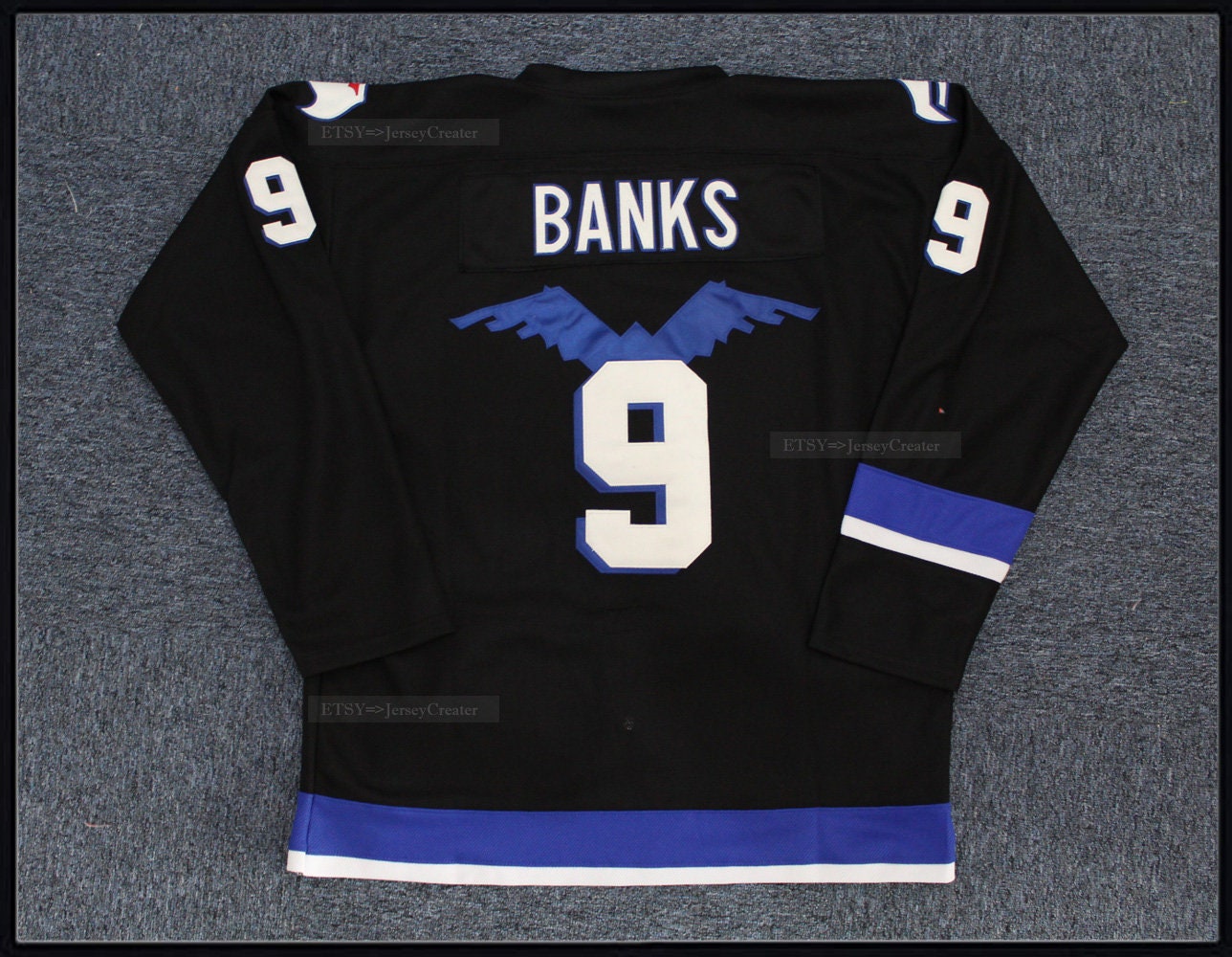
Perhaps the most significant event in the Hawks-Ducks rivalry is the "re-districting" of Adam Banks. Banks was the Hawks’ best player, a pure goal-scorer with NHL-level potential. During the 1992 season, it was discovered that due to a boundary change, Banks actually lived in District 5, not the Hawks' territory.
Coach Reilly attempted to hide this fact to keep his star player. When Bombay discovered the truth, he faced a moral dilemma: let Banks stay with the Hawks (where he was happy and winning) or force him to join the struggling Ducks. Bombay chose the latter, not to spite Banks, but to follow the rules that Reilly had always weaponized against others.
Banks’ transition from a Hawk to a Duck serves as the emotional bridge between the two philosophies. Initially, the Ducks hated him because he represented the "elite" enemy, and the Hawks hated him as a "traitor." Banks eventually earned the Ducks' respect through his skill and sacrifice, proving that the "Hawk" identity was something players were taught, not something they were born with. His presence on the Ducks leveled the playing field, making the eventual showdown a battle of skill rather than just a battle of resources.
Tactical Comparison: Hawks vs. Ducks (1992 Era)
The following table breaks down the technical differences between the two programs during their peak rivalry period in the early 1990s.
| Feature | The Hawks (1973–1992) | The Mighty Ducks (1992–1996) |
|---|---|---|
| Core Philosophy | Winning is the only thing. | Ducks fly together; inclusion. |
| Coaching Style | Authoritarian, fear-based. | Mentorship, creative, joy-based. |
| Key Player Archetype | The "Total Package" (McGill, Larson). | The "Specialist" (Fulton, Knuckle-puck). |
| Primary Strategy | Power plays and physical checks. | Unorthodox plays (The Flying V). |
| Recruitment | Geographically elite / Poaching. | Community-based / Open-door policy. |
| Financial Status | High (Private sponsors, luxury gear). | Moderate (Ducksworth sponsorship). |
The 1992 Championship Game: The Final Showdown
The climax of the first film is the state championship game between the Hawks and the Ducks. This game is the mechanical explanation of how the "Ducks" philosophy actually works in a high-stakes environment.
The Hawks relied on their standard playbook: heavy hitting and isolating the Ducks' best players. They even went as far as to intentionally injure Adam Banks, removing him from the game. This move backfired, as it galvanized the Ducks and exposed the moral bankruptcy of Reilly’s "war" mentality.
The game concluded with a mirror image of the 1973 championship. Charlie Conway, the heart of the Ducks, was awarded a penalty shot with the game on the line. Unlike Reilly, who pressured Bombay with the fear of failure, Bombay told Charlie to "just have fun" and "triple deke" the goalie. Charlie succeeded where Bombay had failed, not because he was a better athlete, but because he was playing in a healthier psychological environment. The Ducks' victory signaled the end of the Hawks' era of unopposed dominance in the league.
The Evolution of the Rivalry in "The Mighty Ducks: Game Changers"
Fast-forwarding to the modern era, specifically the events chronicled in the 2021-2022 series The Mighty Ducks: Game Changers, the rivalry underwent a fascinating and ironic reversal. By this time, the "Mighty Ducks" had become the very thing they once hated.
In the decades following their 1992 victory, the Ducks grew into a powerhouse program. They became elite, ultra-competitive, and exclusionary. They were no longer the underdogs; they were the "new Hawks." They cut kids who weren't "pro-prospects" and focused entirely on national rankings.
The rivalry shifted when a new underdog team, the "Don’t Bothers" (led by Evan Morrow and coached by Alex Morrow and eventually a retired Gordon Bombay), emerged to challenge the now-corporate Ducks. This narrative arc "explained" the Hawks vs. Ducks dynamic by showing that the "Hawk" mentality is a systemic issue in youth sports that can infect any organization, regardless of its name. The rivalry transitioned from a battle between two specific teams to a battle against the "toxic" culture of modern youth athletics.
Psychological and Cultural Impact
The Hawks vs. Ducks rivalry is often cited in sports psychology and coaching clinics as a case study in "Achievement Goal Theory."
- The Hawks represent "Ego Orientation": Success is defined by being better than others and winning.
- The Ducks represent "Task Orientation": Success is defined by personal improvement, effort, and team cohesion.
This cultural touchstone helped shift the public perception of youth sports in the 1990s, encouraging a move toward "positive coaching" models. The "Flying V" and the "Quack" chant became symbols of solidarity that transcended the film, used by real-world hockey teams to emphasize unity over individual stardom.
Key Players in the Rivalry
- Gordon Bombay: The pivot point. He was the "Greatest Hawk" who became the "Greatest Duck," bridging the gap between the two worlds.
- Jack Reilly: The embodiment of the Hawk legacy. His refusal to evolve led to his eventual ousting from the league.
- Charlie Conway: The "Anti-Hawk." He lacked the raw physical talent of the Hawks' stars but possessed the leadership and emotional intelligence they lacked.
- Adam Banks: The bridge. He proved that excellence (the Hawk trait) and heart (the Duck trait) could coexist in a single player.
- Fulton Reed: The disruptor. His "slapshot" represented a type of raw, unrefined power that the Hawks' structured system didn't know how to handle.
Common Misconceptions About the Rivalry
A common misconception is that the Hawks were "cheaters." While Coach Reilly encouraged dirty play (such as the "take him out" order on Adam Banks), the Hawks were a legally rostered, highly skilled team. Their villainy stemmed from their ethics, not necessarily their violation of the rulebook (until the Banks eligibility scandal).
Another misconception is that the rivalry ended in 1992. In the film sequels, the spirit of the Hawks lived on through other antagonists, such as Team Iceland in D2 and the Varsity team at Eden Hall Academy in D3. Each of these opponents represented a different facet of the original Hawk philosophy: nationalistic superiority and class-based elitism.
Summary of the Feud's Resolution
The rivalry effectively resolved when the "Duck" way proved sustainable across generations. While the Hawks focused on the short-term goal of the Peewee trophy, the Ducks focused on the long-term development of the individuals. By the time we reach 2026, the legacy of the rivalry is seen in how modern youth leagues balance competitive play with player well-being. The "Hawks" serve as a cautionary tale of what happens when the game becomes more important than the players.
Frequently Asked Questions
Why were the Hawks so much better than the Ducks at first? The Hawks were a "select" team with a massive budget, professional coaching, and access to year-round ice time. District 5 (the Ducks) was a community-based team consisting of whoever lived in the neighborhood, many of whom could not afford basic equipment or league fees.
Is the "Triple Deke" a real hockey move? While the term is synonymous with the movie, a "deke" (short for decoy) is a standard hockey maneuver used to fakes out a defender or goalie. The "Triple Deke" as depicted—a series of three rapid lateral moves—is a legitimate, albeit difficult, skill used by elite players to open up the net.
Did the Hawks ever appear in the sequels? The Hawks as a team do not play a major role in D2 or D3, as the scale of the competition moved to the international stage and prep school hockey, respectively. However, the philosophy of the Hawks is the primary "ideological villain" in every installment of the franchise.
What happened to Coach Reilly after the 1992 game? After his loss and the exposure of his unethical coaching methods, Reilly's influence in the Minnesota hockey scene waned. In the expanded lore and "Game Changers" context, he is remembered as a relic of a bygone, overly aggressive era of youth sports.
Practical Recommendation for Fans and Coaches
To truly appreciate the nuances of the Hawks and Mighty Ducks rivalry, one should re-watch the 1992 original followed by the first season of Game Changers. This provides a complete "circular" understanding of how team cultures evolve. For coaches, the rivalry serves as a reminder to prioritize "Task Orientation" (the Ducks) over "Ego Orientation" (the Hawks) to ensure long-term athlete retention and mental health.
Image Gallery
Select an image to open it in a new tab.


Declan O'Connor
Higher Education and Campus Culture Reporter
