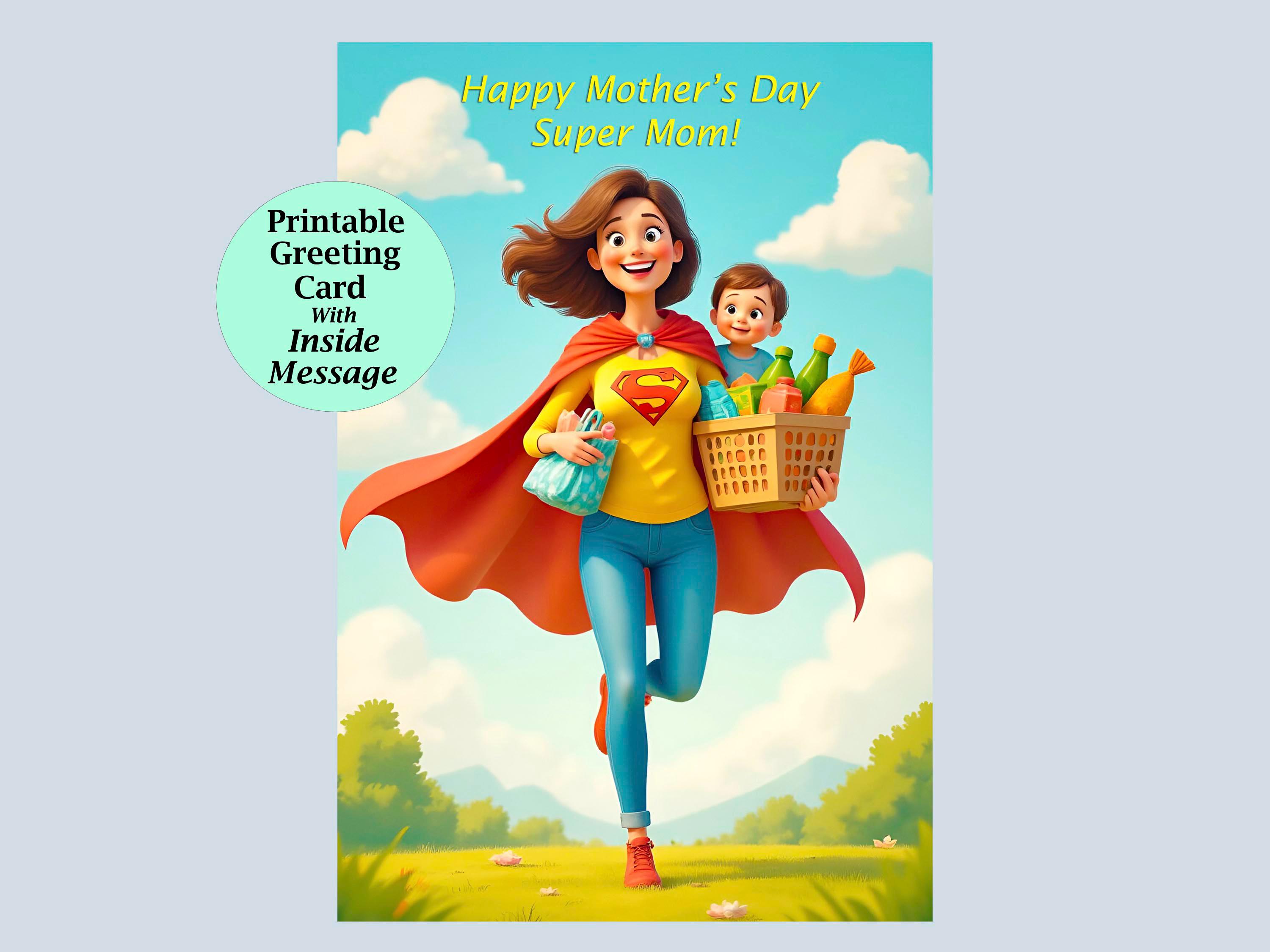
The "hero mother" myth is a social construct suggesting that mothers can and should excel simultaneously in professional, domestic, and caregiving roles without significant external support. This ideal is misleading because it rebrands systemic failures—such as inadequate childcare, wage gaps, and unequal domestic labor—as a test of individual maternal strength, leading to chronic burnout, guilt, and mental health crises.
The Evolution of the Super Parent Archetype
The concept of the "Super Parent," specifically the "Supermom," gained significant cultural traction in the late 20th century. As women entered the workforce in record numbers, the societal expectation was not that domestic responsibilities would be halved, but rather that women would simply "do it all." By 2026, this archetype has shifted from the power-suit-wearing executive of the 1980s to the "Hero Mother" of the digital age—a figure who manages a high-stress career, maintains an aesthetically perfect home, and practices "intensive parenting" with tireless grace.
This evolution is rooted in the "intensive mothering" ideology first identified by sociologist Sharon Hays. This ideology posits that mothering should be child-centered, expert-guided, emotionally absorbing, and labor-intensive. When combined with the demands of the modern workforce, this creates an impossible standard. The "hero" label is often applied to mothers who appear to be navigating these conflicting demands successfully, but this label serves as a double-edged sword. It celebrates the struggle rather than addressing the structural inequities that make the struggle necessary.
The myth persists because it serves economic and social functions. By framing motherhood as a heroic solo mission, society can justify the lack of robust parental leave policies or subsidized childcare. If a mother is a "hero," she is expected to find a way to make it work, regardless of the obstacles.
The "Intensive Mothering" Ideology: A Framework for Burnout
Intensive mothering is not a biological imperative; it is a cultural choice that has become the dominant parenting philosophy in many Western societies. This framework requires mothers to invest an unprecedented amount of time, money, and emotional energy into their children. In 2026, even with advancements in home automation and remote work, the time spent on direct childcare has increased compared to the mid-20th century, despite more mothers being in the paid workforce.
The misleading nature of this ideal lies in its rejection of "good enough" parenting. Instead, it demands "optimal" parenting at every turn. Every meal must be organic and balanced, every developmental milestone must be tracked and optimized, and every emotional outburst must be met with perfect, regulated empathy. When a mother inevitably falls short of these perfectionist standards, she does not blame the system; she blames herself.
This internal pressure is the primary driver of parental burnout. Unlike standard occupational burnout, parental burnout is characterized by an overwhelming sense of exhaustion related to one's parental role, emotional distancing from one's children, and a sense of parental ineffectiveness. By perpetuating the hero mother myth, we ignore the reality that human capacity is finite.

The Digital Lens: How Social Media Distorts Parental Reality
Social media platforms have transformed the hero mother myth from a vague cultural ideal into a 24/7 visual performance. Platforms like Instagram and TikTok curated a "perfect" version of motherhood that is almost entirely detached from reality. The "aesthetic" of motherhood—minimalist playrooms, coordinated outfits, and calm, staged interactions—creates a benchmark that is physically and financially impossible for the average family.
This digital distortion leads to "social upward comparison," where parents compare their "behind-the-scenes" reality with everyone else's "highlight reel." In 2026, the rise of AI-enhanced imagery and hyper-curated "momfluencer" content has only deepened this divide. The myth is reinforced when mothers see others seemingly "having it all," not realizing the staff, childcare, or sheer exhaustion hidden behind the frame.
The danger of this digital ideal is that it commodifies motherhood. It suggests that if you just buy the right products or follow the right "gentle parenting" coach, you too can achieve hero status. This shifts the focus away from community support and toward individual consumption, further isolating mothers in their pursuit of an unachievable goal.
The Economic and Structural Trap
The hero mother myth is not just a psychological burden; it is an economic trap. In the United States and many other regions, the cost of childcare in 2026 continues to outpace inflation, often consuming a significant portion of a household's take-home pay. The myth tells mothers that if they are "strong enough," they can manage the "Second Shift"—the term coined by Arlie Hochschild to describe the domestic labor performed by women after their paid workday ends.
| Feature | The Hero Mother Ideal | The Sustainable Reality |
|---|---|---|
| Support System | Solo performance; asking for help is a weakness. | Dependent on a "village" (family, friends, paid help). |
| Work-Life Balance | Seamless integration; "doing it all" at 100%. | Prioritization and trade-offs; acknowledging limits. |
| Domestic Labor | Primary responsibility falls on the mother. | Equitable distribution of tasks and mental load. |
| Child-Rearing | Intensive, expert-led, and hyper-focused. | "Good enough" parenting; focusing on core needs. |
| Self-Care | Seen as a luxury or "reward" for hard work. | A fundamental necessity for mental health. |
| Mental Load | Managed entirely by the mother in silence. | Shared cognitive labor and visible planning. |
Data from the U.S. Bureau of Labor Statistics and similar global agencies consistently show that women perform a disproportionate share of unpaid labor, including housework and caregiving. The "hero" narrative masks this inequality by framing it as a natural maternal instinct rather than an unfair distribution of labor. When we call mothers "heroes" for working 80 hours a week (40 paid, 40 unpaid), we are romanticizing labor exploitation.
The Cognitive Load: The Invisible Work That Breaks the Myth
The mental load, or cognitive labor, is the invisible work involved in managing a household and family. It includes remembering school spirit days, planning meals, tracking doctor appointments, and managing the emotional well-being of every family member. The hero mother myth assumes that mothers are naturally "better" at this, leading to a situation where the mother becomes the "Chief Operating Officer" of the home.
This constant mental processing leads to decision fatigue. In 2026, the sheer volume of information parents must process—from school safety protocols to digital privacy for children—is staggering. When a mother is expected to carry this load alone while also maintaining a professional identity, the result is "maternal depletion." This is a state of total exhaustion that impacts physical health, cognitive function, and emotional regulation.
To dismantle the myth, the mental load must be made visible. It is not enough for a partner to "help out" by doing the dishes; they must also take on the cognitive responsibility of knowing when the dishes need to be done and ensuring the soap is replenished. The super parent ideal fails because it ignores the weight of this invisible labor.
Systemic Failure vs. Personal Inadequacy
Perhaps the most misleading aspect of the hero mother myth is its tendency to pathologize individual mothers for failing to meet an impossible standard. When a mother feels overwhelmed, she is often told to practice "self-care"—a bubble bath, a glass of wine, or a meditation app. While these may provide temporary relief, they do nothing to address the root causes of her stress.
The problem is not that mothers aren't "resilient" or "organized" enough; the problem is that modern society has stripped away the "village" and replaced it with individual responsibility. According to the American Psychological Association (APA), parental stress is a significant public health issue that requires systemic solutions, not just individual coping mechanisms.
The hero mother myth serves as a convenient distraction for policy-makers. If mothers are heroes who can overcome anything, there is less pressure to provide:
- Universal paid family and medical leave.
- Subsidized, high-quality childcare and early childhood education.
- Workplace flexibility that doesn't penalize parents.
- Mental health support specifically tailored for the postpartum period and beyond.
Moving Toward Sustainable Parenting: Practical Shifts
Deconstructing the hero mother myth requires a shift from "superhuman" to "human." This involves both internal mindset changes and external boundary setting.
1. Embracing "Good Enough" Parenting
The concept of the "good enough mother," introduced by pediatrician and psychoanalyst Donald Winnicott, suggests that children actually benefit from parents who are not perfect. A parent who occasionally fails allows the child to learn frustration tolerance and problem-solving. By aiming for "good enough" rather than "heroic," mothers can reduce their stress levels and foster more authentic relationships with their children.
2. Making the Mental Load Visible
Families should engage in regular "labor audits." This involves listing every task required to keep the household running—both physical and cognitive—and redistributing them based on capacity and fairness. Using tools like "Fair Play" cards or shared digital planners can help move the mental load from one person's head into a shared space.
3. Setting Boundaries with Work and Technology
In an era of remote and hybrid work, the boundaries between professional and personal life have blurred. Mothers must advocate for "the right to disconnect." This means setting clear hours where they are not available for work emails, allowing them to be present with their families—or, just as importantly, present with themselves.
4. Rebuilding the Village
Mothers should actively seek out community, whether through local parenting groups, co-housing arrangements, or "pod" parenting. Relying on others is not a sign of failure; it is a return to the communal way humans have raised children for millennia.
5. Prioritizing Radical Self-Compassion
Self-compassion involves treating oneself with the same kindness one would offer a friend. Instead of the "hero" narrative of "I must do it all," the self-compassion narrative is "I am doing the best I can in a difficult system, and it is okay to be tired."
FAQs
Is the "Hero Mother" myth the same as "Supermom"?
While the terms are often used interchangeably, the "Hero Mother" myth is a more modern iteration that emphasizes the "nobility" of maternal sacrifice. While "Supermom" was about efficiency and achievement, "Hero Mother" is about the endurance of struggle. Both are equally misleading as they suggest that individual effort can overcome systemic gaps.
Does the myth affect stay-at-home mothers differently than working mothers?
Yes, but both are pressured. Working mothers face the "maternal wall" at work (being seen as less committed) and the "second shift" at home. Stay-at-home mothers often feel they must justify their "hero" status by making home-making and child-rearing a 24/7, hyper-intensive professionalized activity, leading to isolation and a lost sense of self.
How can partners help dismantle the hero mother myth?
Partners can help by moving from "helpers" to "equal stakeholders." This involves taking full ownership of specific domains of household management (e.g., the partner is entirely responsible for laundry, from checking the bins to folding and putting away). Partners should also call out the "hero" narrative when they see it being used to guilt their significant other.
Are there any positive aspects to the "hero" label?
While the intent behind calling a mother a "hero" is usually complimentary, it is often a "backhanded compliment." It acknowledges the difficulty of the task but implies that the difficulty is acceptable or inevitable. True appreciation involves not just words of praise, but the active removal of burdens.
What are the signs that I’ve fallen into the super parent trap?
Key indicators include chronic irritability, a sense of "going through the motions," feeling resentful toward your partner or children, physical symptoms like tension headaches or insomnia, and the constant feeling that you are "failing" despite working at maximum capacity.
Recommended Next Steps
To begin moving away from the hero mother myth, start with a personal values assessment. Identify which aspects of parenting and life actually matter to you and your family, rather than what society or social media dictates. Choose one area of your life where you will intentionally lower your standards to "good enough." This might mean opting for store-bought snacks for the school party or letting the laundry sit unfolded for an extra day.
Finally, initiate an honest conversation with your support network or partner about the mental load. Use a concrete list of tasks to show the volume of cognitive labor you are carrying and agree on a plan to shift at least 20% of that load to someone else within the next month. Real strength lies not in doing everything, but in knowing when to stop.
Image Gallery
Select an image to open it in a new tab.



Simon Caldwell
Enterprise Technology and Systems Editor
