Facing Dental Anxiety: A Comprehensive Guide to Overcoming Fear and Restoring Oral Health

Facing dental anxiety involves a combination of psychological preparation, open communication with your dental provider, and utilizing modern sedation techniques. By identifying your specific triggers and choosing a clinician who specializes in anxious patients, you can transform the dental experience from a source of terror into a manageable, routine health necessity.
Dental anxiety is not merely a "fear of the dentist"; it is a spectrum of emotional responses that can range from mild unease to a paralyzing phobia known as dentophobia. As of 2026, research indicates that roughly 36% of the population experiences some form of dental fear, with an additional 12% suffering from extreme dental phobia. This condition often results in a "cycle of avoidance," where a patient skips routine cleanings due to fear, leading to more severe dental problems that eventually require the very invasive procedures they were trying to avoid.
Understanding the Spectrum: Anxiety vs. Phobia
It is crucial to distinguish between general anxiety and a clinical phobia. While the terms are often used interchangeably, understanding where you fall on this spectrum determines the level of intervention required.
- Dental Anxiety: This is characterized by a feeling of unease or worry before an appointment. You might experience "butterflies" in your stomach, have trouble sleeping the night before, or feel a general sense of dread while sitting in the waiting room. Most patients with anxiety can still complete their appointments, though they find the experience unpleasant.
- Dental Phobia: This is a more intense, irrational fear. Patients with dental phobia are often completely unable to enter a dental office. Physical symptoms may include panic attacks, crying, nausea, or a sudden drop in blood pressure (fainting). For these individuals, the fear is so great that they will endure significant physical pain from tooth decay or gum disease rather than seek treatment.
Identifying the Root Causes of Dental Fear
Facing dental anxiety effectively requires an honest assessment of why the fear exists. Understanding the "why" allows you to communicate specific needs to your dentist.
- Fear of Pain: This is the most common trigger. Many patients developed their fear during childhood, perhaps before the widespread use of modern, highly effective local anesthetics. Even though pain management has advanced significantly by 2026, the psychological memory of pain remains a powerful deterrent.
- Loss of Control: The dental chair is a vulnerable position. You are reclined, unable to see what is happening, and someone is working in a highly sensitive area of your body. For many, this lack of agency is the primary source of distress.
- The Sensory Environment: The high-pitched whine of the drill, the clinical smell of eugenol (clove oil), and the bright overhead lights can trigger a "fight or flight" response.
- Embarrassment: Patients who have avoided the dentist for years often feel intense shame about the state of their teeth. They fear judgment from the dentist or the dental hygienist, which further fuels the desire to avoid the office.
- Negative Past Experiences: A single traumatic event—such as a procedure where the anesthesia was insufficient—can create a lifelong association between the dentist and trauma.
Pre-Appointment Strategies for Managing Stress
Preparation begins long before you arrive at the clinic. Taking proactive steps can lower your baseline stress level, making the actual appointment much more manageable.
Selecting the Right Provider
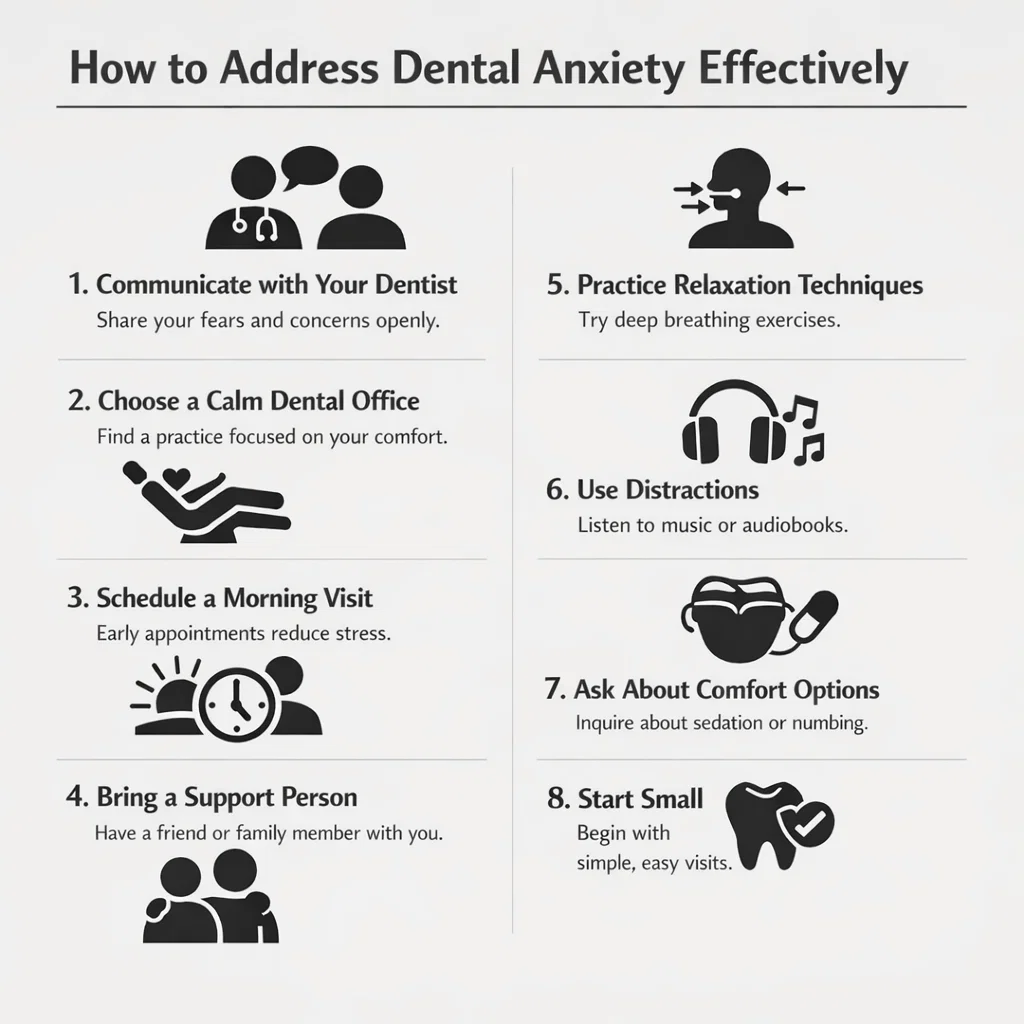
Not all dentists are equipped to handle high-anxiety patients. When searching for a provider in 2026, look for offices that specifically advertise "gentle dentistry," "sedation dentistry," or "patient-centered care." Check online reviews specifically for mentions of how the staff handles nervous patients. A high-quality office will offer a pre-appointment consultation (sometimes virtually) just to discuss your fears without any clinical work being done.
Strategic Scheduling
Schedule your appointment for a time when you are least likely to feel rushed. For many, this is early in the morning, so they don't have the entire day to ruminate on the upcoming visit. Ensure you have a light meal beforehand to keep your blood sugar stable, unless you are undergoing deep sedation which requires fasting.
The Support System
If your anxiety is high, do not go alone. Bring a trusted friend or family member who can sit in the waiting room or, if the dentist allows, in the treatment room with you. Their presence can provide a grounding influence and a sense of safety.
In-Office Communication and Behavioral Techniques
Once you are in the chair, the relationship between you and the dental team is the most important factor in managing anxiety.
The "Stop Signal" Establish a clear non-verbal signal with your dentist, such as raising your left hand. This gives you back a sense of control. Knowing that the dentist will stop immediately if you feel discomfort or need a break can significantly lower your heart rate and anxiety levels.
Exposure and Explanation Ask your dentist to use the "Tell-Show-Do" technique. They should explain what they are about to do, show you the instrument they will use (and perhaps let you feel it on your hand), and then perform the action. This removes the element of surprise, which is a major trigger for many.
Relaxation and Grounding Exercises
- 4-7-8 Breathing: Inhale through your nose for 4 seconds, hold for 7 seconds, and exhale slowly through your mouth for 8 seconds. This rhythmic breathing stimulates the parasympathetic nervous system, which counters the stress response.
- Progressive Muscle Relaxation: Starting from your toes and moving up to your jaw, consciously tense and then release each muscle group. This helps you identify where you are holding tension.
- Distraction Tools: Many modern offices provide noise-canceling headphones, weighted blankets, or Virtual Reality (VR) goggles to transport you away from the clinical environment.
Sedation Dentistry: Medical Interventions in 2026
For some, behavioral techniques are not enough. Sedation dentistry offers a pharmacological solution to bridge the gap between fear and treatment. As of 2026, these options are safer and more accessible than ever.
| Type of Sedation | Method of Delivery | Conscious Level | Recovery Time | Best For |
|---|---|---|---|---|
| Nitrous Oxide | Inhalation (Mask) | Fully Conscious | Immediate (5-10 mins) | Mild anxiety; patients who need to drive home. |
| Oral Sedation | Pill (Anxiolytic) | Drowsy / Light Sleep | Several Hours | Moderate anxiety; fear of needles. |
| IV Sedation | Intravenous Drip | "Twilight" Sleep | 4–6 Hours | Severe anxiety; long or complex procedures. |
| General Anesthesia | Inhalation/IV | Unconscious | 12–24 Hours | Extreme phobia; surgical cases; special needs. |
Nitrous Oxide (Laughing Gas) This is the most common form of sedation. It is a gas mixed with oxygen that you breathe through a nose mask. It induces a feeling of euphoria and relaxation. The major benefit is that the effects wear off almost immediately once the gas is turned off, allowing you to drive yourself home.
Oral Conscious Sedation Your dentist prescribes a sedative (usually from the benzodiazepine family, like Valium or Halcion) to be taken about an hour before the procedure. You will feel very sleepy and relaxed but will still be able to respond to the dentist’s instructions. You will need a driver to take you home, as the medication stays in your system for several hours.
IV Sedation (Twilight Anesthesia) This is administered by an anesthesiologist or a specially trained dentist. It works much faster than oral sedation and allows the provider to adjust the level of sedation instantly. Most patients have little to no memory of the procedure afterward.
Technological Advancements Reducing Anxiety
In 2026, technology has eliminated many of the traditional "scary" elements of dentistry. If you haven't been to a dentist in several years, you may be surprised by the following:
- Laser Dentistry: Lasers can now be used to treat cavities and gum disease, often replacing the traditional drill. Lasers are silent, do not vibrate, and in many cases, require no local anesthetic because they are so precise.
- The Wand (Computer-Controlled Anesthesia): One of the biggest fears is the "big needle." The Wand is a computer-assisted system that delivers anesthetic at a slow, constant pressure, making the injection virtually painless.
- Silent Electric Handpieces: Modern electric drills are significantly quieter than the air-driven turbines of the past, removing the high-pitched whine that triggers many patients.
- Digital Impressions: The messy, "goopy" impression trays that caused many patients to gag are being replaced by small intraoral scanners that create a 3D map of your mouth in seconds.
Long-Term Management: Cognitive Behavioral Therapy (CBT)
While sedation helps you get through an appointment, it does not "cure" dental anxiety. For a permanent solution, many patients turn to Cognitive Behavioral Therapy (CBT).
CBT involves working with a therapist to identify the distorted thought patterns that fuel your fear. For example, instead of thinking, "I am going to choke and die in the chair," a therapist helps you reframe the thought to, "I am in a safe environment with a trained professional, and I have a signal to stop at any time." Over several sessions, patients use "graded exposure"—gradually getting closer to the feared object—until the phobia loses its power. According to the American Psychological Association, CBT is one of the most effective treatments for specific phobias, including dental fear.
Common Mistakes When Facing Dental Anxiety
- Waiting for an Emergency: The worst time to visit the dentist is when you are in extreme pain. Not only is the procedure likely to be more complex, but your anxiety will be at its peak.
- Self-Medicating: Never take unprescribed sedatives or alcohol before an appointment. These can interact dangerously with the local anesthetics used by the dentist.
- Hiding Your Fear: Dentists are not mind readers. If you don't tell them you are anxious, they will follow their standard protocol, which might be too fast or too clinical for your comfort.
Frequently Asked Questions
Is dental anxiety considered a mental health issue? While dental anxiety is a common emotional response, extreme dental phobia is classified as a "specific phobia" in the DSM-5 (Diagnostic and Statistical Manual of Mental Disorders). It is a recognized psychological condition that warrants professional empathy and specialized care.
Does insurance cover sedation for dental anxiety? Coverage varies by provider and plan. In 2026, many insurance companies cover nitrous oxide, but deeper forms of sedation like IV sedation are often only covered if the procedure is surgical (like wisdom tooth extraction) or if there is a documented medical or psychological necessity. Always check with your insurance carrier beforehand.
Can I be "put under" for a simple cleaning? Yes, this is often referred to as "Sleep Dentistry." While it is more expensive and requires specialized staff, many offices offer oral or IV sedation even for routine cleanings for patients with extreme phobia.
Will the dentist be mad that I haven't been there in years? Professional dentists in 2026 are trained to be non-judgmental. Their primary goal is to help you restore your health, not to scold you. Most dentists who specialize in anxious patients are actually happy that you made the courageous step to return to care.
What if my child has dental anxiety? Pediatric dentists are specifically trained in child psychology. They use techniques like "Tell-Show-Do" and often have offices designed to look like play areas. Early positive experiences are the best way to prevent lifelong dental anxiety.
Summary of Recommendations
If you are facing dental anxiety, your next step should not be to book a major procedure. Instead:
- Search for a "Sedation" or "Gentle" dentist in your area and read recent patient reviews.
- Request a "Meet and Greet" consultation. This is a non-clinical visit to see the office, meet the staff, and discuss your anxiety levels without sitting in the dental chair.
- Start small. If you haven't been in years, start with a simple consultation and perhaps digital X-rays. Build trust with the team before moving on to cleanings or fillings.
- Be vocal about your needs. Use your "stop signal" and ask for the specific distractions (music, blankets, or sedation) that will help you feel safe.
Taking these steps ensures that you remain in control of your health journey, preventing small dental issues from becoming major medical complications.

Image Gallery
Select an image to open it in a new tab.


Vivian Cho
Executive IT and Emerging Technologies Reporter
