The Evolution of Car Model Names: From Alphanumeric Codes to Evocative Branding
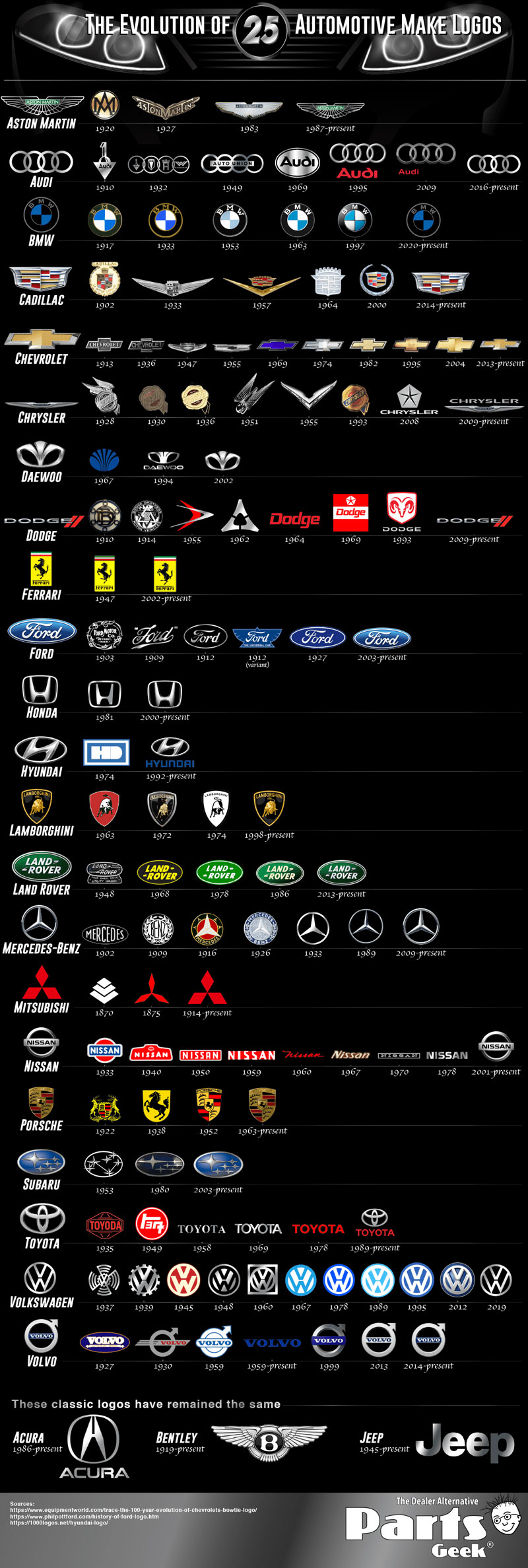
The evolution of car model names reflects a shift from purely functional descriptions of mechanical specifications to sophisticated branding exercises designed to evoke emotion, lifestyle, and technological status. Initially defined by horsepower or chassis numbers, modern naming conventions now balance digital-first alphanumeric systems for luxury electric vehicles with heritage-inspired nameplates for enthusiast markets.
The Early Industrial Era: Functional and Sequential Designations
In the infancy of the automotive industry, manufacturers viewed cars primarily as pieces of industrial machinery. Consequently, the naming conventions were utilitarian, often reflecting the engine’s power or the sequence in which the vehicle was designed. Henry Ford’s early naming strategy is the most famous example of this sequential approach. Before the 1908 Ford Model T, there were the Models A, B, C, F, K, N, R, and S. These were not marketing names intended to suggest speed or luxury; they were simply chronological markers in a manufacturing log.
Simultaneously, early European manufacturers used horsepower ratings to identify their products. A vehicle like the Rolls-Royce 40/50 hp (later known as the Silver Ghost) told the buyer exactly what to expect from the engine's taxable and actual output. This clinical approach was common because the primary consumer base consisted of engineers, early adopters, and the wealthy elite who prioritized technical specifications over lifestyle branding.
As the market expanded in the 1920s and 30s, the first hints of evocative naming appeared. Manufacturers realized that a name could differentiate a product in an increasingly crowded marketplace. The 1926 Pontiac Chief or the Stutz Bearcat began to move away from dry technical data, opting instead for names that implied strength, speed, or cultural prestige. This era marked the beginning of the "nameplate" as a distinct asset of the automotive corporation.
The Mid-Century Boom: Aspiration and the Golden Age of Nameplates
Following World War II, the global automotive market underwent a radical transformation. In the United States, the suburban explosion and the rise of the middle class turned the automobile into a primary symbol of social status and personal identity. Marketing departments replaced engineering departments as the primary architects of a car’s public identity.
During the 1950s and 60s, car names were designed to evoke themes of travel, exoticism, and power. Names like the Chevrolet Corvette (named after a fast naval vessel) and the Ford Thunderbird tapped into the era's fascination with speed and the burgeoning jet age. Manufacturers looked to geography for inspiration, leading to iconic names like the Chrysler Newport, the Chevrolet Malibu, and the Pontiac Catalina. These names suggested a lifestyle of leisure and coastal luxury, even if the vehicle was merely being used for a daily commute in the Midwest.
The muscle car era of the late 1960s pivoted toward aggressive, predatory themes. The Plymouth Barracuda, AMC Javelin, and Dodge Charger used nomenclature to signal performance and dominance. This period established the "heritage" names that many manufacturers, including Ford and Dodge, continue to leverage in 2026 to maintain emotional connections with consumers.

The Logic of Alphanumerics: Standardizing Global Luxury
While American manufacturers leaned into evocative names, European brands—particularly German ones—perfected the alphanumeric system. Brands like BMW, Mercedes-Benz, and Audi argued that a consistent, logical naming structure emphasized engineering precision over marketing fluff.
BMW’s three-digit system, established firmly with the 1972 5 Series, provided a clear hierarchy: the first digit indicated the vehicle size (Series), while the following two digits traditionally indicated the engine displacement. Mercedes-Benz adopted a similar "Class" system (C-Class, E-Class, S-Class). This approach had several advantages:
- Global Uniformity: A "3 Series" means the same thing in Tokyo, Berlin, and New York, bypassing the need for linguistic translation or cultural adaptation.
- Brand Primacy: When a car is named the "Acura TLX" rather than the "Acura Legend," the consumer is more likely to remember the brand (Acura) rather than just the model name.
- Tiered Prestige: Higher numbers or later letters in the alphabet (e.g., Audi A8 vs. A4) immediately communicate a vehicle's position in the luxury hierarchy.
In the 1990s and 2000s, many non-European brands followed suit. Cadillac moved from names like Seville and Eldorado to alphanumeric codes like STS and CTS. Infiniti and Lexus built their entire identities on these systems, ensuring that the brand name remained the most prominent part of the vehicle's identity.
Linguistic Challenges and the Global Marketplace
As car manufacturers became truly global entities, the evolution of car model names hit a significant hurdle: language. A name that sounds powerful in one language can be nonsensical or offensive in another. One of the most cited (though often mythologized) examples is the Chevrolet Nova, which in Spanish translates roughly to "doesn't go" (no va). While the impact on sales is often debated, the lesson for manufacturers was clear: naming a car is a linguistic minefield.
Other genuine examples include the Mitsubishi Pajero, which is a derogatory term in several Spanish-speaking countries, forcing the company to rename it the Montero in those regions. Similarly, the Toyota MR2 sounded uncomfortably like the French word for "shit" (merde) when spoken aloud, leading to its renaming as the "MR" in France.
By the mid-2010s, manufacturers began employing specialized naming agencies that use proprietary software to check potential names against thousands of dialects and cultural slurs. This "defensive naming" has contributed to the rise of abstract, made-up words like Camry (derived from the Japanese word for "crown") or Elantra, which carry no baggage and can be trademarked globally.
The EV Transformation: Rebranding the Future
The transition to electric vehicles (EVs) has forced the most significant shift in naming conventions since the post-war era. As of 2026, manufacturers are navigating the challenge of identifying their electric fleets while maintaining a connection to their internal combustion engine (ICE) history.
Volkswagen launched its ID. series (ID.3, ID.4, ID. Buzz), where "ID" stands for "Intelligent Design" and "Identity." This reflects a move back toward a systematic, alphanumeric approach, but with a digital-first aesthetic. Audi utilized the e-tron suffix, though it has since integrated it into its standard numbering system (e.g., the Q8 e-tron) to signal that electric propulsion is no longer a niche sub-brand but the new standard.
Tesla, under Elon Musk, famously used its models to create the "S-E-X-Y" lineup (Model S, Model 3, Model X, Model Y), a rare instance of a modern manufacturer using a naming convention for a meta-joke. However, even Tesla adhered to a "Model [Identifier]" format that echoes the early days of Ford, suggesting a return to simplicity in the face of complex new technology.
Comparing Naming Strategies in the Modern Era
The following table illustrates the three primary philosophies currently dominating the automotive landscape in 2026.
| Naming Strategy | Primary Objective | Key Examples | Typical Brands |
|---|---|---|---|
| Evocative / Heritage | Emotional connection and storytelling. | Mustang, Bronco, Land Cruiser | Ford, Toyota, Jeep |
| Alphanumeric / Systematic | Hierarchy, technical logic, and brand focus. | 3 Series, C-Class, A6, RX 350 | BMW, Mercedes, Lexus |
| Abstract / Geometric | Global trademarking and "clean slate" branding. | Ioniq, Ariya, Solterra, EV6 | Hyundai, Nissan, Subaru, Kia |
The Psychology of Sound and Phonetics in Naming
Behind every modern car name is a deep understanding of "sound symbolism." Linguists and marketers have found that certain sounds evoke specific physical attributes. For instance, "back vowels" (those produced in the back of the mouth, like "o" and "u") are often perceived as being larger or more masculine. This is why many SUVs and trucks have names with heavy, round vowel sounds, such as Tahoe, Yukon, or Colorado.
Conversely, "front vowels" (like "i" and "e") and "fricatives" (sounds like "s" or "v") are associated with speed, lightness, and precision. This logic applies to sports cars and compact vehicles like the Civic, Swift, or Viper. In 2026, as brands look to differentiate their EVs—which are inherently quieter—there is a noticeable shift toward "softer" phonetics that emphasize smoothness and sustainability over the aggressive, "growling" consonants of the internal combustion era.
Heritage vs. Innovation: The 2020s Revival Trend
One of the most prominent trends in car naming over the last few years has been the "revival" of historic nameplates. Rather than inventing new names for their electric or hybrid transitions, companies are reaching into their archives.
Ford’s decision to name its electric crossover the Mustang Mach-E was controversial but effective, leveraging decades of "Mustang" brand equity to sell a completely different type of vehicle. Similarly, the return of the Bronco and the Hummer EV demonstrates that in an era of rapid technological change, consumers find comfort in familiar names. This creates a "nameplate bridge" where the name provides the emotional soul while the drivetrain provides the modern utility.
FAQ
Why do some car brands use numbers while others use names? Luxury brands (BMW, Mercedes-Benz, Lexus) typically use numbers to keep the focus on the manufacturer's brand name and to establish a clear hierarchy of prestige and size. Mass-market brands (Ford, Toyota, Chevrolet) often use evocative names to build individual "personalities" for each vehicle, making them more relatable to a broader consumer base.
What is the most successful car model name in history? In terms of longevity and sales, the Toyota Corolla is widely considered the most successful nameplate. Since its introduction in 1966, it has become synonymous with reliability and has helped Toyota establish a dominant global presence, proving that a name doesn't need to be aggressive to be effective.
Do car names change depending on the country? Yes, frequently. For example, the vehicle known as the Honda Fit in the United States and Japan is sold as the Honda Jazz in Europe and parts of Asia. These changes occur due to trademark conflicts, linguistic nuances, or localized marketing strategies that suggest one name will resonate better with the local culture.
How do electric vehicles change how cars are named? EVs have introduced a need for "tech-forward" naming. Brands either create a sub-brand (like Hyundai's Ioniq) or add a suffix (like Audi's e-tron or Mercedes' EQ) to signify the electric powertrain. As the market moves toward 100% electrification, these "E" identifiers are expected to eventually disappear as the distinction becomes redundant.
Is there a legal process for naming a car? Yes. Manufacturers must conduct extensive trademark searches to ensure the name isn't already owned by another company in any of their target markets. This is often why we see "invented" words; it is much easier to trademark a unique string of letters like "Ariya" than it is to trademark a common noun.
Strategic Guidance for Consumers and Professionals
When evaluating a vehicle or studying the industry, it is essential to look past the nameplate to the underlying strategy. If a manufacturer uses an alphanumeric system, they are likely selling you on the prestige of the badge and the consistency of their engineering. If they use an evocative name, they are selling a lifestyle or an emotion.
For those in the marketing or automotive sectors, the lesson of 2026 is clear: the name is the first point of contact between a complex machine and a human being. Whether it is a heritage revival or a futuristic abstract code, the most successful names are those that accurately reflect the vehicle's "purpose" in the consumer's life. If you are tracking the value of a vehicle, remember that a strong nameplate (like Porsche 911) often contributes significantly to the car's long-term resale value compared to more generic or changing alphanumeric designations.
Image Gallery
Select an image to open it in a new tab.


Zara El-Hashem
Sociocultural Dynamics and Academics Writer
