Navigating the Intersection of Workers' Compensation Insurance and Unemployment Benefits

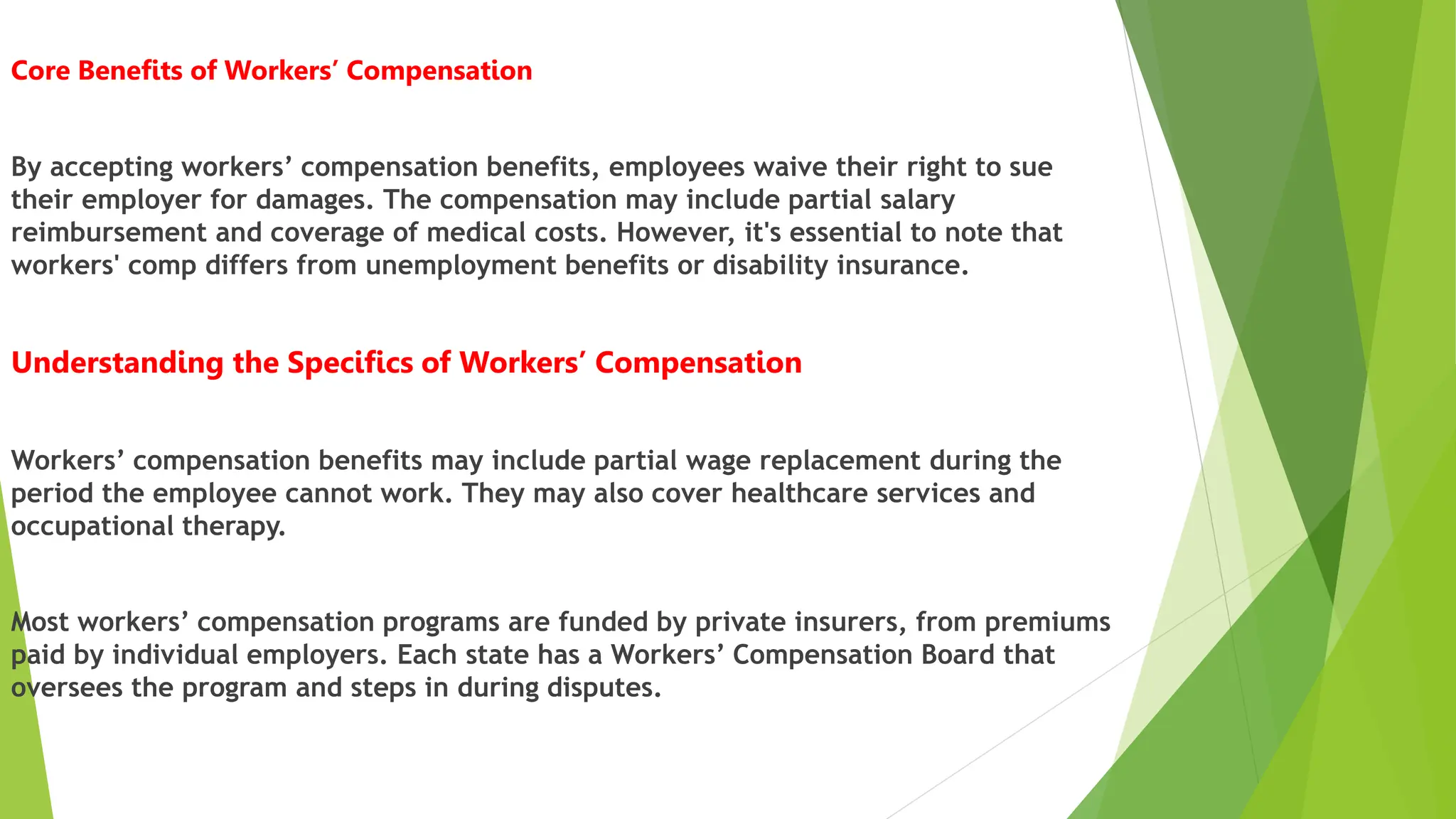
Workers' compensation and unemployment insurance are distinct social safety nets designed for different employment scenarios. Workers' compensation provides wage replacement and medical coverage for work-related injuries or illnesses, while unemployment insurance covers those who lose their jobs through no fault of their own. Because they serve different purposes, they are generally mutually exclusive for the same period, meaning you usually cannot collect full benefits from both simultaneously for the same injury or loss of employment.
Understanding the Fundamental Purpose of Each System
To grasp how these two systems intersect, it is essential to define their core mandates. Workers' compensation is a state-mandated insurance program that employers are required to provide to their employees. Its primary objective is to ensure that workers who are injured on the job or develop work-related illnesses receive necessary medical care and a portion of their lost wages without the need to sue their employers. It operates on a "no-fault" basis, meaning an employee is covered regardless of who caused the accident, provided the injury occurred within the scope of employment.
Conversely, unemployment insurance is a joint state and federal program designed to provide temporary financial assistance to workers who have lost their jobs through no fault of their own. Eligibility requires that the individual be "able and available" to work. This requirement is the primary point of conflict with workers' compensation. If a worker is injured to the point that they cannot perform any work, they generally fail the "able and available" test required for unemployment benefits.
The Problem of "Able and Available"
The most significant intersection between these two systems occurs at the definition of work capacity. Unemployment insurance requires that a recipient is ready, willing, and able to accept suitable work. If you are receiving temporary total disability benefits through workers' compensation, you are, by legal definition, medically unable to work.
In most jurisdictions, if you report that you are receiving workers' compensation benefits, the unemployment office will disqualify you from receiving unemployment checks for the same period. Attempting to claim both simultaneously can lead to allegations of fraud. State agencies maintain sophisticated data-sharing systems that cross-reference benefit payments. If an agency detects that you are collecting both, they will typically force you to repay the unemployment benefits, often with significant penalties and interest.
Scenarios Where Interaction Occurs
While they are generally mutually exclusive, there are specific, nuanced situations where these systems interact or follow one another.
1. Transitioning Between Programs
It is common for a worker to transition from one system to the other. For instance, if a worker suffers a work-related injury, they receive workers' compensation. Once they have recovered and are released by their physician to return to work, if their employer no longer has a position available for them, they may then become eligible for unemployment insurance. In this sequence, the benefits do not overlap; one ends before the other begins.
2. Partial Disability and Partial Unemployment
Some jurisdictions allow for a "light duty" return to work. If an employee returns to work on restricted duty but their hours are reduced or their pay is significantly lower due to their injury, they might be eligible for partial workers' compensation benefits to make up the difference in wages. In rare cases, if they are laid off while on light duty, the interaction between partial workers' compensation and partial unemployment becomes highly complex. Some states allow an offset where the unemployment benefit is reduced by the amount of the workers' compensation award, effectively preventing a "double dip" while providing a safety net.
3. Exhaustion of Benefits
If a worker reaches "maximum medical improvement" (MMI) and is permanently restricted, they may be forced out of the workforce. At this stage, they may no longer qualify for temporary disability payments under workers' compensation, as their condition is stable. If they are permanently unable to return to their former occupation, they might apply for unemployment benefits while seeking retraining or alternative employment. However, this is legally fraught, as they must still certify they are "able and available" for some form of work.
Comparison Table: Workers' Compensation vs. Unemployment Insurance
| Feature | Workers' Compensation | Unemployment Insurance |
|---|---|---|
| Primary Trigger | Work-related injury or illness | Involuntary job loss (no fault) |
| Eligibility | Employment status; medical proof | "Able and available" to work |
| Funding | Employer-paid premiums | Employer-paid payroll taxes |
| Wage Replacement | Percentage of pre-injury wages | Percentage of historical earnings |
| Legal Status | Statutory insurance entitlement | Social safety net program |
| Duration | Tied to medical recovery | Time-limited by state law |
Jurisdictional Variations and Legal Risks
It is vital to recognize that both workers' compensation and unemployment laws are administered at the state level. There is no singular federal rule that applies to every worker in the United States. Regulations in California differ significantly from those in Florida, Texas, or New York.
For example, some states have specific statutes that require a credit or offset against unemployment benefits if the claimant is also receiving a pension or workers' compensation settlement. Other states treat a permanent partial disability settlement as a closed-ended payment, allowing the recipient to apply for unemployment immediately afterward.
The risk of non-compliance is high. Filing for unemployment while claiming you are totally disabled from work is a classic indicator of benefit fraud. State auditors look for these mismatches. If you are currently in a dispute regarding your workers' compensation claim, you should consult with a qualified legal professional before filing an unemployment claim to ensure you do not jeopardize your pending medical or wage-loss settlement.
Frequently Asked Questions
Can I receive workers' compensation and unemployment at the same time?
Generally, no. Because unemployment insurance requires you to be "able and available" to work, and workers' compensation (specifically temporary total disability) requires you to be unable to work, the two positions are contradictory. Collecting both for the same time period is often classified as fraud.
What happens if I settle my workers' compensation claim?
A settlement often represents a final "buyout" of your future medical or wage-loss rights. Depending on the state, this lump sum may be treated as a continuation of wages, which could temporarily disqualify you from receiving unemployment benefits until a certain period has passed. Always verify your specific state's rules regarding "lump sum offsets."
Does the "able and available" rule apply to light duty?
If your doctor clears you for light duty and you are actively looking for light-duty work that your employer cannot provide, you may meet the requirements for unemployment. However, you must be honest with the unemployment office about your medical restrictions. If you hide your injury, you are committing fraud.
What if I am laid off while on workers' compensation?
This is a complex legal situation. If you are laid off for reasons unrelated to your injury (e.g., a plant closure), you may be entitled to unemployment. However, your workers' compensation carrier may argue that your loss of income is due to your injury, not the layoff. You should contact a workers' compensation attorney to ensure your wage-loss benefits are not unfairly terminated.
How do states know if I am collecting both?
States use the State Information Data Exchange System (SIDES) and other interstate databases to share information about benefit payments. When you file a claim, your Social Security Number is cross-referenced against payroll, workers' compensation dockets, and other government payment records.
Practical Next Steps for Claimants
If you find yourself navigating the junction of these two systems, follow these steps to protect your financial and legal standing:
- Consult Your Physician: Obtain clear documentation regarding your work capacity. If your doctor states you cannot work, you are generally ineligible for unemployment.
- Contact Your Case Manager: If you are currently receiving workers' compensation, speak with your claims adjuster or an attorney before applying for unemployment. They can clarify whether your settlement or current benefits will be impacted by an unemployment filing.
- Review State Statutes: Visit your state’s Department of Labor or Workers' Compensation Commission website. Search for "coordination of benefits" or "offsets."
- Disclose Fully: If you decide to apply for unemployment, be completely transparent. Disclose your workers' compensation status on the application. It is better to be denied and told to reapply later than to be approved and forced to pay back funds with penalties.
- Maintain Records: Keep copies of all medical releases, letters of separation from your employer, and any correspondence regarding benefit denials or approvals. These documents will be essential if you are audited or if you must appeal a denial.
Navigating these systems requires a disciplined approach. Because the rules governing these benefits are deeply rooted in state legislation, relying on anecdotal advice from peers can lead to significant financial penalties. Always prioritize verified information from official government portals or licensed legal professionals practicing in your specific jurisdiction.
Image Gallery
Select an image to open it in a new tab.

Lars Thomsen
Global Labor Markets and Economic Strategy Editor
