
Good index funds are defined by low expense ratios, high tracking accuracy, broad market diversification, and high liquidity. These funds aim to replicate the performance of a specific market benchmark—such as the S&P 500 or the CRSP US Total Market Index—rather than attempting to outperform the market through active management, which helps minimize long-term costs and tax inefficiencies.
Understanding the Philosophy of Index Investing
Index investing is a passive strategy that operates on the Efficient Market Hypothesis, which suggests that stock prices already incorporate all available information. Instead of paying portfolio managers to select individual stocks or time market entries, index fund investors buy a basket of securities that mirror a chosen index.
The primary goal is to capture the market's return minus a small management fee. Over long periods, this approach often yields superior results compared to active funds, primarily because active funds face the compounding pressure of higher fees and transaction costs. A "good" index fund is one that stays as close to the target index as possible while keeping the friction of ownership—fees, taxes, and turnover—as low as possible.
Key Metrics for Evaluating Index Fund Quality
When choosing between various index funds, you should look beyond just the name or the index being tracked. Several technical indicators determine whether a fund is effectively fulfilling its role as a low-cost, reliable investment vehicle.
Expense Ratios and Total Cost of Ownership
The expense ratio is the annual percentage of your assets that the fund provider deducts to cover operational costs, such as administration, management, and marketing. In the world of passive investing, cost is the most reliable predictor of performance. Because all funds tracking the same index (like the S&P 500) theoretically hold the same stocks, the fund with the lower expense ratio will mathematically outperform the higher-cost fund over time.
As of 2026, competitive index funds for major benchmarks often maintain expense ratios below 0.10%. It is essential to distinguish between the expense ratio and the total cost of ownership. While the expense ratio is a recurring fee, investors must also consider potential sales loads (which are rare in modern low-cost index funds) and bid-ask spreads when trading Exchange Traded Funds (ETFs).
Tracking Error and Tracking Difference
Tracking error measures the volatility of the difference between the returns of the fund and the returns of the benchmark index. A low tracking error indicates that the fund’s performance is consistent and closely follows the benchmark.
Tracking difference, meanwhile, is the absolute difference between the index return and the fund return over a specific period. This is often caused by cash drag (holding cash instead of equities), fund fees, and the costs associated with rebalancing. An ideal fund minimizes this gap through efficient replication strategies, such as full replication (holding every stock in the index) or optimized sampling (holding a representative subset of the index).
Diversification and Index Construction
A high-quality index fund provides broad exposure, reducing the unsystematic risk associated with individual companies or specific sectors. A fund that covers 500 companies is generally more robust than one concentrated in a single industry. Investors should examine the fund’s prospectus to confirm the methodology of the underlying index. Does the index use market-cap weighting? Does it exclude certain segments based on environmental or social governance (ESG) criteria? Understanding the "rules" of the index ensures the fund aligns with your personal risk tolerance and investment goals.
Structural Differences: Mutual Funds vs. ETFs
While both mutual funds and ETFs can be excellent index vehicles, they function differently under the hood.
- Exchange Traded Funds (ETFs): These trade on exchanges throughout the day, much like individual stocks. They are often highly tax-efficient due to the "in-kind" creation and redemption process, which allows the fund manager to swap securities with authorized participants without triggering capital gains taxes for the fund itself.
- Index Mutual Funds: These are priced only once per day at the close of the market. They are convenient for investors who prefer automated, recurring investments, as many brokerages allow for fractional shares and scheduled contributions that may be easier to manage than market-priced ETFs.
The "goodness" of a fund in this context depends on your specific logistics. If you contribute monthly, a mutual fund with no transaction fees might be superior. If you move large lump sums and want intraday price control, an ETF is generally the preferred choice.
Comparing Index Fund Characteristics
| Feature | Low-Cost ETF | High-Quality Mutual Fund |
|---|---|---|
| Trading Frequency | Intraday (whenever market is open) | Once daily (at market close) |
| Expense Ratio | Typically very low | Can range from low to moderate |
| Tax Efficiency | High (In-kind creation process) | Moderate (potential for capital gains distributions) |
| Minimum Investment | Usually one share price | Often low or zero for major providers |
| Best For | Active traders or lump-sum investors | Automated, long-term systematic savers |
Common Pitfalls to Avoid
Even among index funds, mistakes can occur. Here are the factors that disqualify a fund from being "good" for most retail investors:
- High Turnover Rates: Even if a fund tracks an index, some indices are built on complex rules that require frequent selling and buying of underlying stocks. High turnover generates transaction costs and potential capital gains taxes, which eat into your long-term returns.
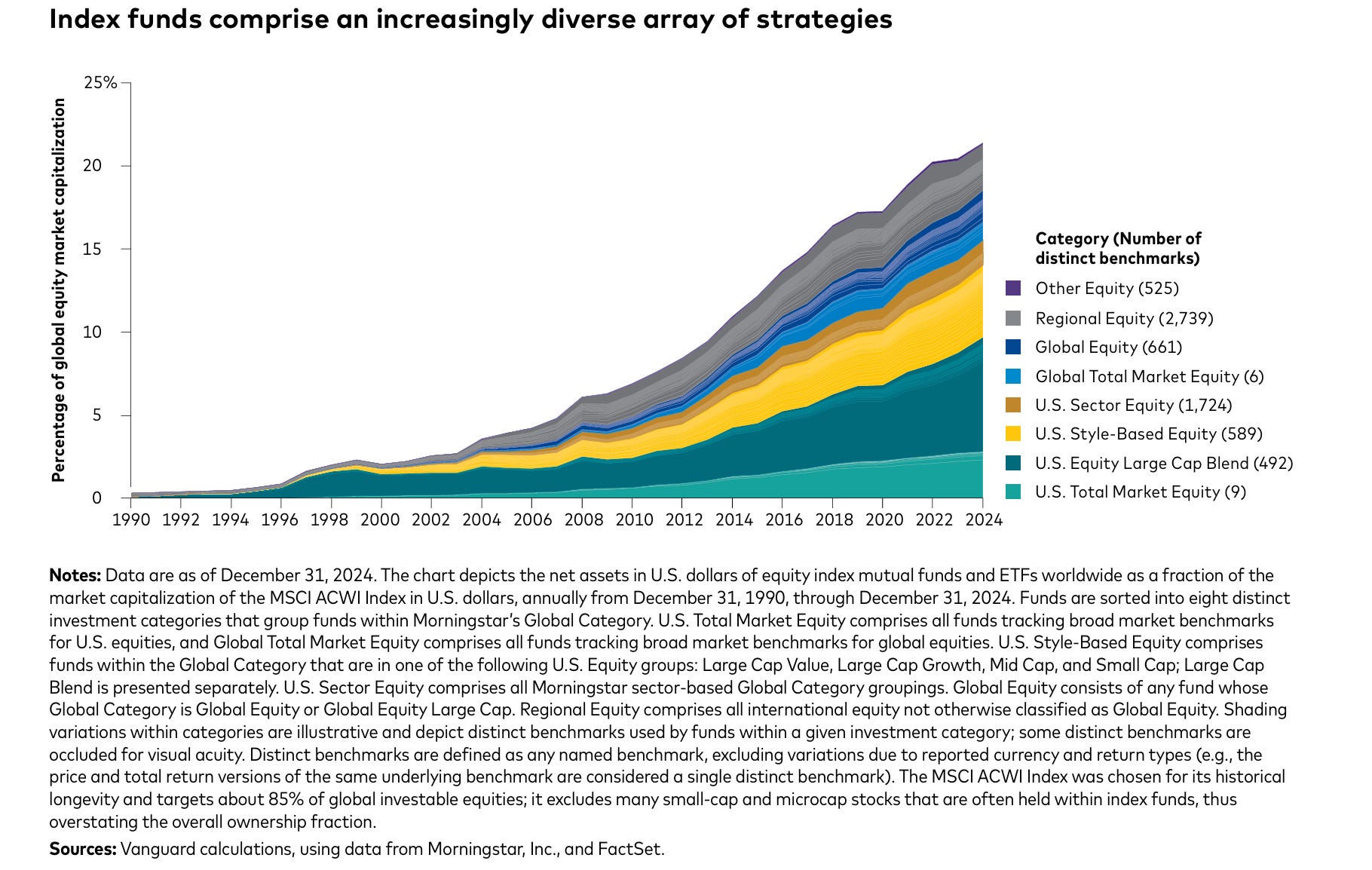
- Over-Concentration: Avoid funds that track highly niche "thematic" indices unless they serve a specific, small portion of a broader portfolio. A fund focused on a single country or a narrow sector is more an active "bet" than a traditional index investment.
- Ignoring Cash Drag: Funds that consistently hold a high percentage of cash rather than being fully invested will lag behind the benchmark significantly during bull markets.
- Misleading Branding: Some funds label themselves as "index" funds but use "enhanced" or "smart beta" strategies. These strategies may involve leverage, derivatives, or active decision-making by managers. While not necessarily "bad," they are not traditional index funds and carry different risk profiles.
Frequently Asked Questions
Does a lower expense ratio always mean a better fund? Generally, yes, when comparing two funds that track the exact same index. If Fund A charges 0.03% and Fund B charges 0.20% for the same S&P 500 exposure, Fund A is objectively better for the investor because there is no difference in the underlying performance of the benchmark.
What is the difference between a market-cap-weighted and equal-weighted index? A market-cap-weighted index gives more weight to larger companies, meaning your performance is more sensitive to the movements of the largest firms. An equal-weighted index gives every company the same weight, which provides more exposure to smaller companies within the index but can lead to higher turnover as the fund must rebalance to keep weights equal.
Are index funds safe during a market crash? Index funds are not "safe" in terms of capital preservation; if the underlying index drops 20%, your fund will drop roughly 20%. They are "safe" in the sense that they eliminate the risk of the fund manager making bad stock-picking decisions or the fund becoming completely worthless due to mismanagement of a single company.
Can I lose money with an index fund? Yes. Because index funds are equity (or bond) investments, they fluctuate in value based on market conditions. They are suitable for long-term horizons, but they carry market risk, and you should never invest money in them that you need in the short term.
What is an "in-kind" redemption and why does it matter? It is a process used by ETFs to exchange securities for shares of the fund. This allows the fund to avoid selling stocks to raise cash when shareholders exit, which prevents triggering capital gains taxes for the remaining investors in the fund.
Final Recommendation
To identify a good index fund, prioritize simplicity and transparency. Search for funds provided by large, reputable asset management firms with a long history of minimizing tracking error and keeping expenses minimal. Your goal should be to "own the market" at the lowest possible cost. Start by examining the expense ratio, checking the fund’s inception date to ensure it has a track record of stability, and verifying that the index it tracks aligns with your long-term asset allocation strategy. Always review the fund’s official prospectus on the provider's website before committing your capital.

Image Gallery
Select an image to open it in a new tab.
Zara El-Hashem
Sociocultural Dynamics and Academics Writer
