Should a Single Person Buy Life Insurance? A Complete Guide to Costs, Needs, and Alternatives

Single adults generally do not need life insurance if no one depends on their income. However, buying coverage makes financial sense if you have cosigned debts, support aging parents, want to lock in low premiums while young, run a business, or wish to cover your final expenses without burdening surviving family members.
Understanding Life Insurance Fundamentals for Single Adults
Life insurance is fundamentally a financial contract designed to replace lost income, cover outstanding debts, or fund future financial obligations upon the policyholder’s death. For married couples or parents, the primary mandate of life insurance is straightforward: replace the primary earner's income so surviving dependents can maintain their standard of living, pay off a shared mortgage, or fund future educational expenses.
For single individuals, however, the financial calculation shifts significantly. Without a spouse or children relying on your monthly paycheck, your absence does not create an immediate income gap for dependents. Consequently, life insurance is not an automatic requirement for every single adult.
Evaluating whether you need coverage requires assessing your personal balance sheet, your legal liabilities, and your long-term personal goals. Financial decisions surrounding life insurance involve evaluating risk management, tax implications, and estate planning.
Disclaimer: This guide is for educational purposes and does not constitute individual financial, legal, or tax advice. Consult a certified financial planner (CFP) or licensed insurance broker regarding your specific circumstances.
When a Single Person Does Need Life Insurance
While single status often reduces the urgent need for life insurance, several clear scenarios make owning a policy prudent or necessary.
- Do you have financial dependents or cosigned debt?
- YES: Life insurance strongly recommended to protect cosigners & dependents.
- NO: Evaluate secondary needs:
- Lock in young rates?
- Final expenses?
- Business key-person?
- YES: Consider low-cost term or final expense policy.
- NO: Life insurance is likely UNNECESSARY. Prioritize disability insurance.
1. You Have Cosigned Debt
Debt does not automatically vanish when a person dies. While individual unsecured debts (such as credit cards or federal student loans in your name alone) are generally paid out of your estate assets or discharged upon death, cosigned debts operate under entirely different legal rules.
If a parent, relative, or friend cosigned a private student loan, auto loan, or mortgage with you, they remain legally obligated to repay that debt if you pass away. In some cases, loan contracts contain an "automatic default" clause that makes the full remaining balance due immediately upon the primary borrower's death.
A term life insurance policy structured to match the length and balance of the cosigned loan prevents your debt from becoming a severe financial hardship for your cosigner.
2. You Provide Financial Support to Dependents
Single does not mean completely devoid of financial obligations to others. Many single adults provide vital financial care for:
- Aging parents: Assisting with monthly housing costs, medical bills, or home care assistants.
- Siblings or relatives with special needs: Funding long-term care trusts or day-to-day living expenses.
- Adult children or extended family: Supplying tuition assistance or mortgage support.
If your financial contributions keep an aging parent or vulnerable relative stable, your sudden absence could compromise their well-being. A targeted life insurance policy naming a family trust or individual relative as beneficiary ensures continuity of care.
3. Locking in Low Premiums While Young and Healthy
Life insurance rates are tied directly to age and health status at the time of application. Every year you age, base underwriting rates increase. Furthermore, developing a chronic medical condition—such as hypertension, high cholesterol, diabetes, or an autoimmune disorder—can drastically raise premiums or make coverage temporarily uninsurable.
Buying a 20-year or 30-year term life policy in your 20s or early 30s locks in a low monthly rate for decades. If you anticipate getting married, purchasing a home, or having children in the future, securing coverage early insulates you against future health changes that could make insurance expensive later.
4. Business Owners and Equity Partners
If you own a business, operate a partnership, or hold equity in a startup, life insurance plays a specialized structural role.
- Key Person Insurance: Protects your company against the financial shock of losing a founder or core administrative executive.
- Buy-Sell Agreements: Funded via cross-purchase life insurance, allowing surviving business partners to purchase your equity stake from your estate without depleting company operational reserves.
Without life insurance backing these arrangements, your business partners might end up managing operations alongside your legal heirs, or the business could be forced into liquidation to pay out your estate share.
5. Covering Final Expenses and Medical Debt
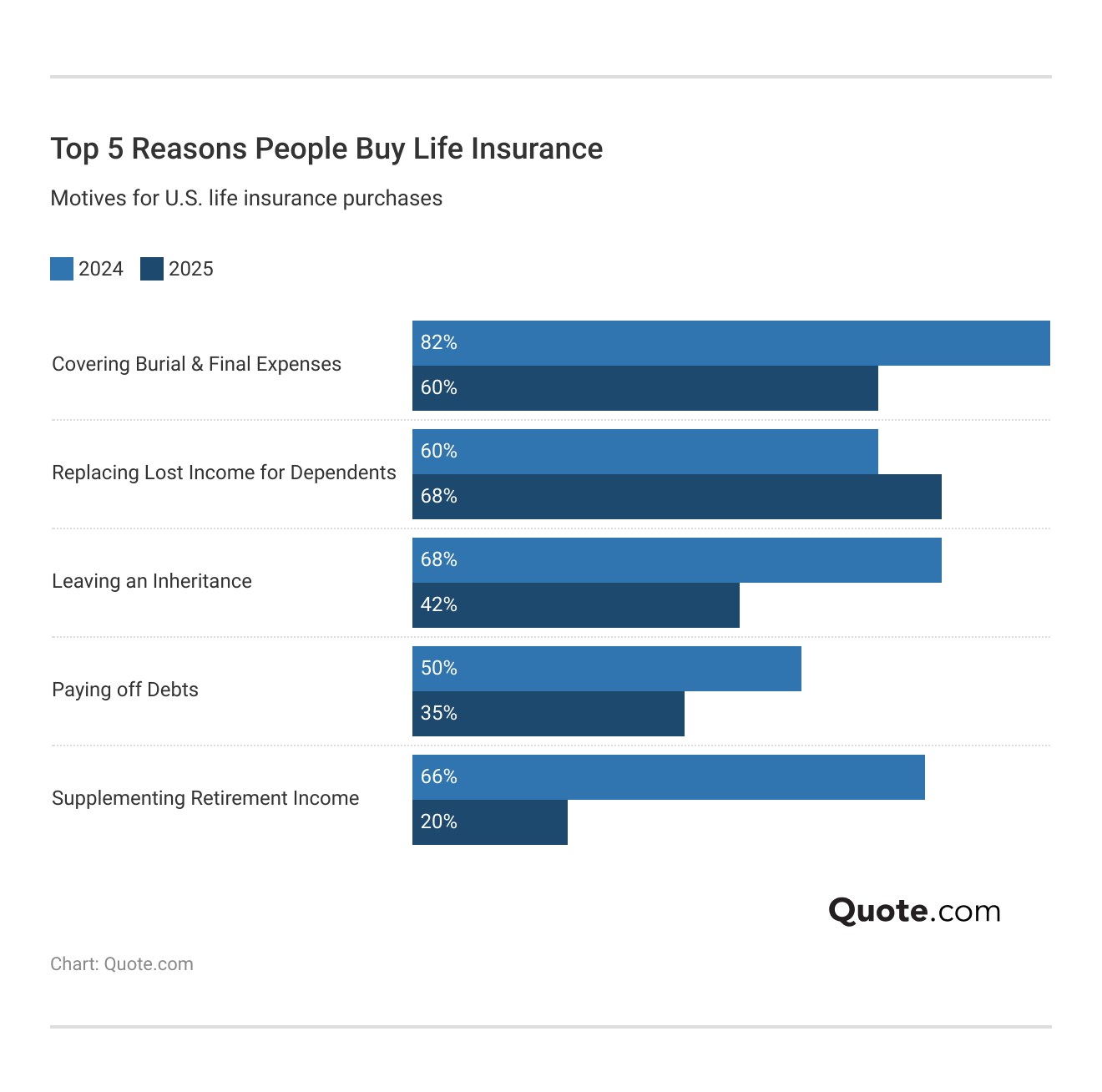
The average cost of a funeral, burial, or cremation in North America ranges between $7,000 and $12,000, according to industry surveys. If your estate lacks sufficient liquid bank balances to settle these expenses, surviving family members must cover them out of pocket.
Additionally, end-of-life medical care often leaves unpaid bills that estate administrators must resolve. A small term life policy or dedicated final expense policy prevents your family from incurring administrative stress or personal financial debt during probate.
When a Single Person Likely Does Not Need Life Insurance
Despite aggressive marketing campaigns from insurance providers, purchasing coverage is not always necessary. If you fall into the following categories, paying monthly insurance premiums may be an inefficient allocation of capital.
| WHEN SINGLE ADULTS CAN SKIP LIFE INSURANCE |
|---|
| 1. No dependents relying on your ongoing income. |
| 2. All debts are individual (e.g., federal loans, solo mortgages). |
| 3. You hold adequate liquid savings to cover final expenses. |
| 4. Your estate can clear administrative and medical costs cleanly. |
1. No Dependents and No Cosigned Debt
If no one relies on your income to pay their living costs, and your debts are held solely in your name, the core economic justification for life insurance is absent. Federal student loans are legally discharged upon the borrower's death under guidelines managed by the U.S. Department of Education. Similarly, individual credit card debts and personal loans are settled against estate assets; if the estate lacks funds, creditors generally write off the loss rather than collecting from your surviving relatives.
2. High Net Worth or Substantial Liquid Savings
If you have accumulated sufficient cash, money market reserves, or investment account balances to cover your funeral expenses, outstanding solo debts, and estate administration fees, you are effectively self-insured. Spending monthly funds on life insurance premiums yields a low return compared to continuing to build your liquid asset reserves or retirement portfolio.
3. No Intent to Support Others or Build an Insured Estate
If you do not plan to leave a financial legacy, fund a charity, or support future family members, purchasing a commercial policy yields little personal utility. Your capital is better directed toward your retirement savings (such as 401(k) or IRA contributions), health savings accounts (HSAs), or income-protection tools like disability insurance.
Comparing Life Insurance Options for Single Individuals
Choosing the right type of insurance depends on your financial goal, budget, and timeline. The primary policy options available for single adults differ significantly in structure, cost, and complexity.
| Policy Type | Ideal For | Typical Cost | Key Advantages | Primary Drawbacks |
|---|---|---|---|---|
| Term Life (10–30 Years) | Most single adults needing financial protection | Low / Affordable | Fixed rates, high coverage amounts, simple structure | Expires after the set term; no cash value accumulation |
| Whole Life (Permanent) | High-net-worth estate planning, lifelong dependents | High (5x–10x term) | Lifetime coverage, guaranteed cash value growth, fixed premiums | Expensive, complex fees, lower investment returns than market funds |
| Universal Life | Specialized estate planning, flexible budgets | Moderate to High | Adjustable premiums and death benefit options | Requires careful management to prevent policy lapse as costs rise |
| Final Expense / Simplified Issue | Older single adults covering burial costs | Moderate for low coverage limits | No medical exam usually required, guaranteed issue options | Low maximum coverage limits (e.g., $10k–$25k), higher cost per dollar of coverage |
| Employer Group Life | Supplemental basic coverage | Very Low / Free base | Automatic approval, convenient payroll deduction | Tied to employment; rarely portable if you change jobs or retire |
Calculating How Much Coverage You Actually Need
Standard financial advice often suggests buying coverage equal to 10 times your annual salary. However, this formula is geared toward individuals supporting a family for decades. For single adults, blanket rules often lead to over-insuring.
Instead, single adults should use a modified version of the DIME Method (Debt, Income, Mortgage, Education) tailored to single financial realities:
Total Needed = (Cosigned Debts) + (Final Expenses & Estate Fees) + (Support for Dependents) - (Liquid Savings)
Scenario Example: Single Adult Needs Assessment
Consider a 28-year-old single professional earning $75,000 annually with the following financial profile:
- Cosigned Private Student Loan: $30,000 remaining balance.
- Individual Federal Student Debt: $20,000 (discharged upon death—exclude from calculation).
- Solo Auto Loan: $12,000 (secured by vehicle value—exclude from basic need if asset covers liability).
- Estimated Final Expenses: $10,000 (funeral, burial, administrative costs).
- Financial Care for Aging Mother: $2,000/year for estimated 10 years ($20,000 present value).
- Existing Bank Savings: $15,000.
Calculation: $$\text{Coverage Need} = \text{$30,000 (Cosigned Loan)} + \text{$10,000 (Final Expenses)} + \text{$20,000 (Mother's Support)} - \text{$15,000 (Savings)} = \text{$45,000}$$
In this scenario, purchasing a small $100,000 or $250,000 20-year term policy provides more than adequate coverage at an extremely low monthly cost (often under $15 to $20 per month for a healthy nonsmoker), ensuring all cosigned liabilities and family commitments are covered.
Alternatives and Complementary Financial Protections for Singles
For single individuals without dependents, life insurance is often secondary to other forms of financial protection. Because single adults rely exclusively on their own ability to generate income, living benefits and asset preservation tools are critical.
| PRIORITY RANKING FOR SINGLE ADULTS |
|---|
| 1. Emergency Fund (3-6 Months Expenses) [HIGHEST PRIORITY] |
| 2. Disability Insurance (Income Support) [CRITICAL FOR SINGLES] |
| 3. Health & Critical Illness Insurance [ESSENTIAL] |
| 4. Term Life Insurance [CONDITIONAL NEED] |
Disability Insurance: The True Priority for Singles
While life insurance pays out if you die, disability insurance pays a portion of your income if you become sick or injured and cannot work.
According to data from the Social Security Administration, approximately one in four of today’s 20-year-olds will become disabled before reaching retirement age. If a single person loses their income due to an injury or chronic illness, they do not have a spouse's earnings to rely on.
- Short-Term Disability: Replaces a portion of your salary for 3 to 6 months.
- Long-Term Disability (LTD): Replaces 50% to 70% of your pre-disability earnings for years, or until retirement age, depending on policy terms.
For most single adults, securing robust, individual long-term disability coverage is significantly more urgent than purchasing life insurance.
Building an Independent Emergency Fund
Maintaining 3 to 6 months of basic living expenses in a high-yield savings account or money market account provides immediate insulation against job loss, medical deductibles, or emergency auto repairs. Building this liquid cash cushion reduces the reliance on insurance products for minor financial shocks.
Health and Critical Illness Policies
A single unexpected medical event can drain savings rapidly. Maintaining comprehensive health insurance—supplemented by critical illness or accident coverage if you work in high-risk environments—ensures that medical debts do not impair your long-term financial stability.
Common Pitfalls Single Buyers Should Avoid
If you decide to purchase life insurance as a single individual, avoid these frequent financial mistakes:
1. Buying Whole Life as a Primary Investment Vehicle
Permanent policies like whole life or variable universal life are frequently pitched to young professionals as "forced savings plans" or wealth-building tools. However, permanent life insurance comes with high management fees, agent commissions, and surrender charges. For the vast majority of single adults, maximizing tax-advantaged retirement accounts (like a Roth IRA or 401(k)) and investing in low-cost index funds yields higher net returns with far greater liquidity.
2. Relying Exclusively on Employer Group Coverage
Employer-provided life insurance (often offering 1x your annual salary for free or nominal fees) is a convenient benefit. However, group coverage has significant structural limitations:
- Portability: If you leave your job, laid off, or transition to self-employment, you usually lose the coverage.
- Insurability Risk: If you develop a health condition while employed and later leave the company, purchasing an individual policy on the open market could become expensive or difficult.
Treat employer group life insurance as a secondary supplement rather than your core coverage strategy.
3. Neglecting Beneficiary Designations and Estate Basics
Buying a life insurance policy requires naming a beneficiary. Common mistakes include:
- Naming a minor directly: Insurance companies cannot pay policy proceeds directly to a minor child. If you want funds to care for a minor relative, establish a trust or designate a legal guardian under a Uniform Transfers to Minors Act (UTMA) account.
- Forgetting to update beneficiaries: Naming an ex-partner, a deceased parent, or failing to name a contingent beneficiary can lead to policy proceeds being routed into your general estate, subjecting the payout to probate delay and potential creditor claims.
- Failing to create a basic will or power of attorney: Life insurance only handles asset transfer upon death. A complete estate plan for a single person must include a financial Power of Attorney (POA) and Healthcare Directive so someone you trust can manage your financial affairs if you become incapacitated.
Step-by-Step Decision Framework: Do You Need Life Insurance?
Follow this structured checklist to decide whether to apply for coverage:
Step 1: Audit Your Financial Liabilities
- Do you have private student loans with a living cosigner?
- Do you share a mortgage or personal loan with another person?
- Action: If YES to any, calculate total debt balance needing coverage.
Step 2: Assess Your Financial Support Structure
- Does an aging parent, disabled sibling, or relative rely on your monthly income?
- Action: If YES, estimate monthly transfer amounts multiplied by support timeframe.
Step 3: Evaluate Your Future Plans
- Do you plan to start a family, buy a home with a partner, or launch a business soon?
- Action: If YES, consider locking in 20- or 30-year term rates while young/healthy.
Step 4: Check Your Existing Resources
- Do you have liquid savings to cover $10,000 in funeral/estate costs?
- Does your employer provide basic group coverage?
- Action: If NO to savings, consider a minimal policy to cover final expenses.
- Final Decision:
- If all steps yield NO: SKIP life insurance; focus on Disability Insurance.
- If any step yields YES: Purchase targeted TERM life insurance.
Frequently Asked Questions
Is life insurance cheaper if I buy it when I am single and in my 20s?
Yes. Age and health status are the primary factors used in life insurance underwriting. Buying a policy in your 20s or early 30s locks in a low rate for the duration of the policy term. However, purchasing coverage you do not need simply because it is cheap is still an unnecessary expense. Only buy early if you anticipate future dependents, have cosigned debt, or want to hedge against future health issues.
What happens to my debt if I die single without life insurance?
Individual debts held solely in your name (such as credit cards, personal bank loans, and federal student loans) are paid out of your estate assets. Federal student loans are completely discharged upon death under federal regulations. If your estate lacks sufficient funds to pay off individual private debts, creditors write off the losses; your surviving family members are generally not personally responsible for paying them unless they cosigned the loan.
Can a single person name a friend or charity as a beneficiary?
Yes. You can name any person, trust, non-profit organization, or charity as the beneficiary of your life insurance policy. Insurance companies require that an "insurable interest" exists at the time of application—meaning the beneficiary would suffer a financial or legal loss upon your death—though standard individual term policies generally permit designating charities or close relatives without friction.
Is employer-provided life insurance enough for a single person?
For single individuals without cosigned debts or dependents, employer-provided group life insurance (often equal to 1x your annual salary) is usually sufficient. It covers basic final expenses and minor estate settlement costs at little to no out-of-pocket cost to you. However, if you have significant cosigned debts or long-term financial dependents, relying solely on employer insurance is risky due to lack of portability if you change jobs.
Should a single person buy whole life insurance as an investment?
For most single adults, whole life insurance is an inefficient investment vehicle compared to traditional retirement accounts. Whole life insurance policies feature high administrative fees, low early-year cash value growth, and significant agent commissions. Single adults are generally better served by buying low-cost term life insurance (if coverage is needed) and investing the remaining funds into tax-advantaged accounts like a Roth IRA, traditional 401(k), or index-based brokerage accounts.
Practical Next Steps
- Review your liabilities: Check all loan agreements (especially private student loans and auto loans) to confirm whether you have active cosigners.
- Prioritize income protection: Before applying for life insurance, verify that you have adequate long-term disability insurance through your employer or an individual policy.
- Check current employer benefits: Review your corporate benefits portal to see how much group life insurance you currently hold for free.
- Gather quotes if needed: If you identify a specific need (such as protecting a cosigner or covering aging parents), shop for a standard 10-, 20-, or 30-year term life policy using independent comparison tools to secure competitive rates. For regulatory guidelines and consumer protection resources regarding policy selection, consult the National Association of Insurance Commissioners (NAIC) or your state’s insurance commissioner.
Image Gallery
Select an image to open it in a new tab.


Ingrid Bjornson
Global Cyber Policy and Regulation Analyst
