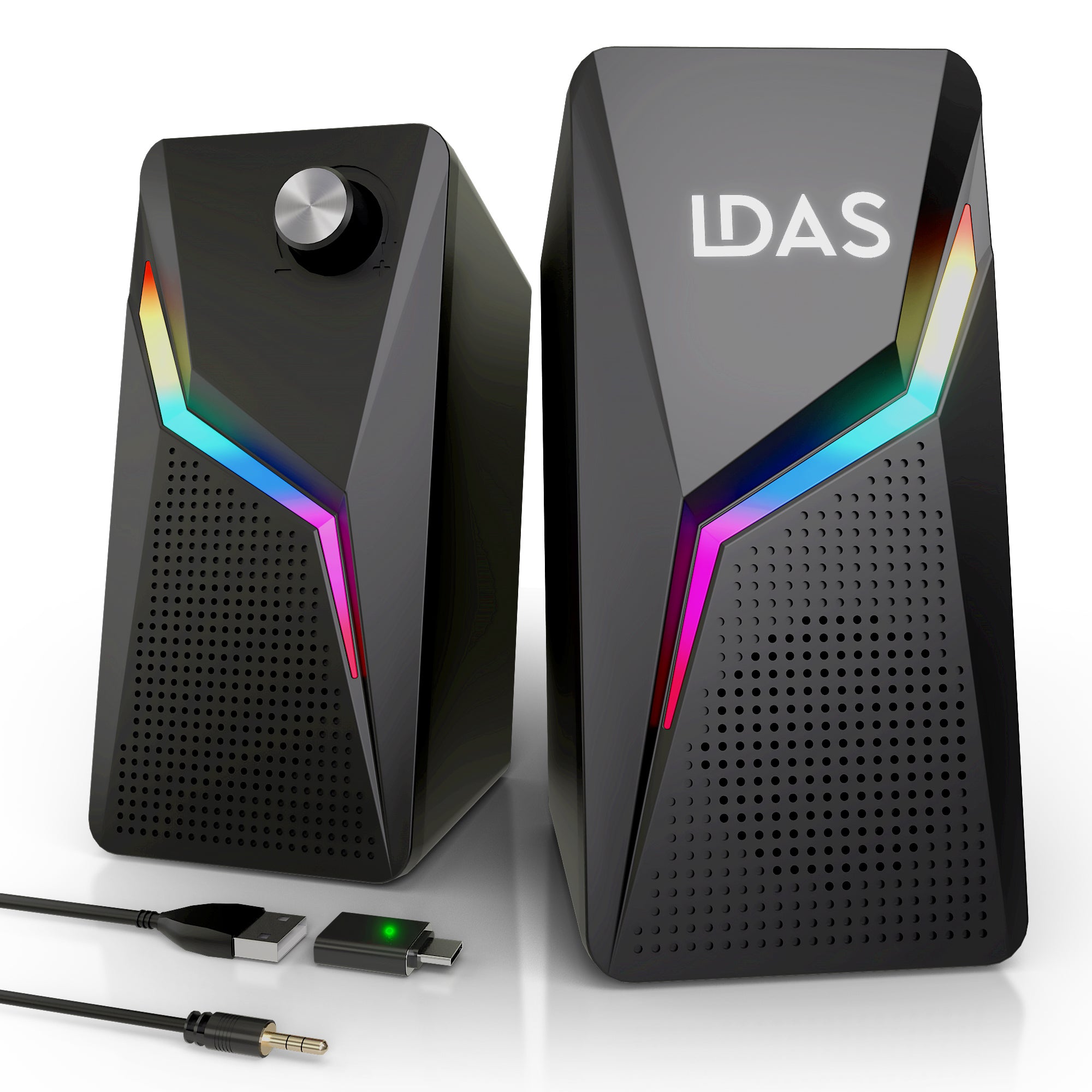
Determining how many watts a speaker uses is not a single, static figure, but rather a distinction between power handling capabilities and actual power consumption. While a speaker label might advertise a "500-watt" rating, that number typically refers to the maximum power the speaker can safely receive from an amplifier before distortion or physical damage occurs, rather than the amount of electricity it draws from your wall outlet.
To understand how many watts a speaker uses, you must distinguish between the electrical demand of powered (active) speakers, which plug into a wall, and passive speakers, which rely on external amplifiers.
Passive vs. Active Speakers: The Fundamental Difference
The confusion surrounding speaker wattage almost always stems from the difference between power handling and power consumption.
Passive Speakers do not consume electricity in the traditional sense of drawing current from a wall outlet. Instead, they receive an electrical signal from an external power amplifier or A/V receiver. The "wattage" listed on a passive speaker's specification sheet—often labeled as "RMS" (Root Mean Square) or "Peak" power—is a measure of the speaker’s capacity to handle the power delivered by an amplifier. If you connect a 100-watt speaker to a 50-watt amplifier, the speaker uses 50 watts. If you connect it to a 200-watt amplifier, you risk damaging the speaker if you push the volume too high.
Active (Powered) Speakers contain a built-in amplifier. These devices consume electricity directly from your home’s electrical system. Their power usage depends on the efficiency of the internal amplifier circuitry and the volume at which you are listening. Unlike passive speakers, active speakers have a dedicated power draw that can be measured in watts, typically ranging from 10 to over 100 watts depending on the size and output of the speaker.
Understanding Speaker Power Ratings
When evaluating speaker specifications, you will encounter several different ways that manufacturers express power. Understanding these terms is essential for matching speakers to amplifiers correctly and avoiding equipment failure.
- RMS (Root Mean Square): This is the most accurate measurement of a speaker’s continuous power handling. It represents the amount of power the speaker can handle consistently over time without overheating or distortion. When matching a speaker to an amplifier, you should prioritize RMS values.
- Peak Power: This refers to the maximum power a speaker can handle for very short bursts—usually milliseconds—without sustaining immediate damage. Peak power ratings are often used for marketing purposes and are generally double or more than the RMS rating. You should not use peak power as a baseline for selecting an amplifier.
- Sensitivity: This is a measure of how loud a speaker plays with a specific amount of power (usually 1 watt at 1 meter). A high-sensitivity speaker requires less wattage from an amplifier to reach the same volume as a low-sensitivity speaker.
How Active Speakers Draw Power
For active speakers, the power draw is dynamic. In 2026, most modern active speakers utilize Class-D amplification, which is highly efficient. When these speakers are in standby mode, they may use less than 0.5 watts. During normal listening levels, the power consumption might fluctuate between 5 and 20 watts. It is only when the speaker is pushed to high volumes with heavy bass content that the power consumption will climb toward the manufacturer’s maximum rated capacity.
If you are concerned about energy consumption, look for the "Power Consumption" line on the back of the device or in the technical manual. This number is typically the maximum power draw when the device is operating at full capacity.
Factors That Influence Power Usage
Several variables dictate how much power a sound system actually uses during operation:
- Volume Levels: The relationship between volume and power is not linear. Sound pressure levels increase logarithmically. To make a speaker sound twice as loud, you need ten times the power. Therefore, small increases in volume require significant jumps in wattage.
- Audio Content: Bass frequencies require significantly more energy to reproduce than high-frequency sounds. If you are listening to music with heavy electronic bass or movie soundtracks with deep explosions, your system will demand more power than it would for simple voice-based audio.
- Impedance: Measured in Ohms (Ω), impedance is the electrical resistance a speaker presents to an amplifier. Most home speakers are 8-ohm, but 4-ohm speakers exist. A 4-ohm speaker generally requires more current (and thus more power) from the amplifier to drive the same volume, which can lead to higher power consumption and heat generation.
- Amplifier Efficiency: Older Class-A/B amplifiers generate significant heat and are less efficient, meaning they draw more power from the wall to produce the same amount of sound as a modern Class-D amplifier.
Comparison of Power Characteristics
| Feature | Passive Speaker | Active (Powered) Speaker |
|---|---|---|
| Power Source | External Amplifier | Internal Amplifier / Wall Outlet |
| Primary Wattage Metric | Power Handling (RMS) | Power Consumption (Max) |
| Wall Power Draw | N/A (Amplifier draws power) | Yes (Variable) |
| Efficiency Variable | Depends on Amplifier | Built-in circuit efficiency |
| Matching Requirement | Must match Amp output | Self-contained system |
Choosing the Right Equipment
When selecting a sound system, the goal is "headroom." You want an amplifier (or the built-in amp in an active speaker) that provides enough power to reach your desired volume without "clipping." Clipping occurs when an amplifier runs out of power and cannot complete the electrical waveform, resulting in a square wave that can quickly burn out voice coils in your speakers.
If you are using passive speakers, a good rule of thumb is to choose an amplifier that provides a continuous RMS output roughly equal to or slightly higher (by 20–50%) than the speaker's RMS rating. This ensures the amplifier is never struggling, providing clean, distortion-free audio.
Frequently Asked Questions
Does a higher wattage rating mean the speaker sounds better? No. Wattage is simply a measurement of power handling or capacity. A speaker with a 500-watt rating is not necessarily better or louder than one with a 100-watt rating; it is merely capable of handling more power before distortion occurs.
Can I plug a speaker into a wall outlet directly? Never plug a passive speaker directly into an AC wall outlet. Doing so will immediately destroy the internal components of the speaker. Only active speakers are designed to be plugged into wall outlets, and they use internal power supplies to convert that electricity for the speaker drivers.
How do I calculate the electricity cost of my active speakers? To calculate the cost, check the wattage consumption on the device label. Divide the watts by 1,000 to get kilowatts, multiply by the hours used per day, and multiply by your local utility's cost per kilowatt-hour. Most home audio systems have a negligible impact on monthly energy bills.
Why does my amplifier get hot if I'm not playing music very loudly? Heat is a byproduct of inefficiency. If your amplifier is warm even at low volumes, it may be a Class-A or Class-A/B design that keeps its transistors "biased" and active even when the signal is quiet. Ensure there is plenty of ventilation around the device to prevent long-term damage.
What happens if my amplifier has less power than my speakers need? While you won't necessarily damage the speaker, you will likely encounter "clipping." If the sound starts to distort or "break up" when you turn the volume up, your amplifier is hitting its limit. This distortion is actually more likely to damage your tweeters than a high-power amplifier would.
Next Steps for System Optimization
If you are looking to optimize your setup, start by identifying your specific speaker type. If you have passive speakers, check your amplifier's manual to ensure it can handle your speakers' impedance (usually found on the back of the speaker). If you are using active speakers, ensure they are connected to a stable power source and that you are not daisy-chaining too many devices on a single power strip, which can occasionally lead to ground loops or voltage drops during peak demands. For most home users, the wattage of speakers should be a secondary concern to the quality of the signal and the room acoustics.

Image Gallery
Select an image to open it in a new tab.


Vivian Cho
Executive IT and Emerging Technologies Reporter
