Ethel Kennedy and Jackie Kennedy: Defining the Women of the Kennedy Dynasty in American History

Ethel Kennedy and Jackie Kennedy were the foundational female figures of the Kennedy political dynasty, respectively representing the activist spirit and the cultural elegance of the "Camelot" era. While Jackie curated the family’s aesthetic and historical legacy through her role as First Lady, Ethel served as the high-energy, resilient matriarch of the Robert F. Kennedy branch, dedicating over five decades to human rights after the tragedies of the 1960s.
The Intersection of Two Legacies: An Overview
The names Jacqueline Bouvier Kennedy and Ethel Skakel Kennedy are inextricably linked to the mid-20th-century American consciousness. Entering the Kennedy family through marriage to brothers John F. Kennedy and Robert F. Kennedy, these two women navigated a world of intense public scrutiny, high-stakes politics, and profound personal loss. From the perspective of 2026, their contributions are viewed not just as appendices to their husbands’ careers, but as independent forces that shaped American culture and international human rights advocacy.
Jacqueline (Jackie) Kennedy is often remembered as the "Cultural Architect." Her influence extended beyond the White House walls, touching on historic preservation, fashion, and the very way Americans conceptualized the presidency. Conversely, Ethel Kennedy was the "Keeper of the Flame" for the progressive ideals of the New Frontier. Following the assassination of Robert F. Kennedy in 1968, Ethel became a symbol of stoic endurance, raising 11 children while founding and leading the Robert F. Kennedy Center for Justice and Human Rights.
Their relationship was a study in contrasts: Jackie was the reserved, artistic intellectual who valued privacy and high culture; Ethel was the boisterous, competitive athlete who thrived in the chaos of large family gatherings and political campaigns. Despite these temperamental differences, they were bound by the unique pressures of the "Kennedy Curse" and a shared commitment to the family’s public service mission.
Jacqueline Bouvier Kennedy: The Architect of Camelot
Jacqueline Kennedy’s tenure as First Lady from 1961 to 1963 was transformative. Before her arrival, the role of the First Lady was often seen as purely ceremonial or domestic. Jackie reimagined the position as a platform for cultural diplomacy and national identity.
Historic Preservation and the White House Restoration
One of Jackie’s most significant contributions was the restoration of the White House. She believed the executive mansion should reflect the history and greatness of the American people. To achieve this, she established the Fine Arts Committee for the White House and hired Henry Francis du Pont to assist in acquiring authentic period furniture and art. In 1961, she famously led a televised tour of the restored White House, a broadcast that won her an honorary Emmy Award and brought the presidency into the living rooms of millions of Americans. This project wasn't merely about decorating; it was about establishing the White House as a museum of the American experience.
Cultural Diplomacy and the Global Stage
Jackie’s influence was a potent tool for the JFK administration’s foreign policy. During the 1961 state visit to France, her fluency in French and her deep knowledge of European history captivated President Charles de Gaulle and the French public, prompting JFK to famously introduce himself as "the man who accompanied Jacqueline Kennedy to Paris." Her 1962 goodwill tour of India and Pakistan further demonstrated her ability to use "soft power" to strengthen international ties during the Cold War.
The Invention of the Camelot Myth
Following the assassination of John F. Kennedy in November 1963, Jackie took on her most crucial role: the curator of his legacy. In an interview with Theodore H. White for Life magazine just a week after the funeral, she invoked the imagery of the musical Camelot, ensuring that her husband’s presidency would be remembered as a brief, shining moment of idealism. Her meticulous planning of JFK’s funeral—modeled after Abraham Lincoln’s—solidified the image of the fallen leader as a national martyr.

Ethel Skakel Kennedy: The Matriarch of Hickory Hill
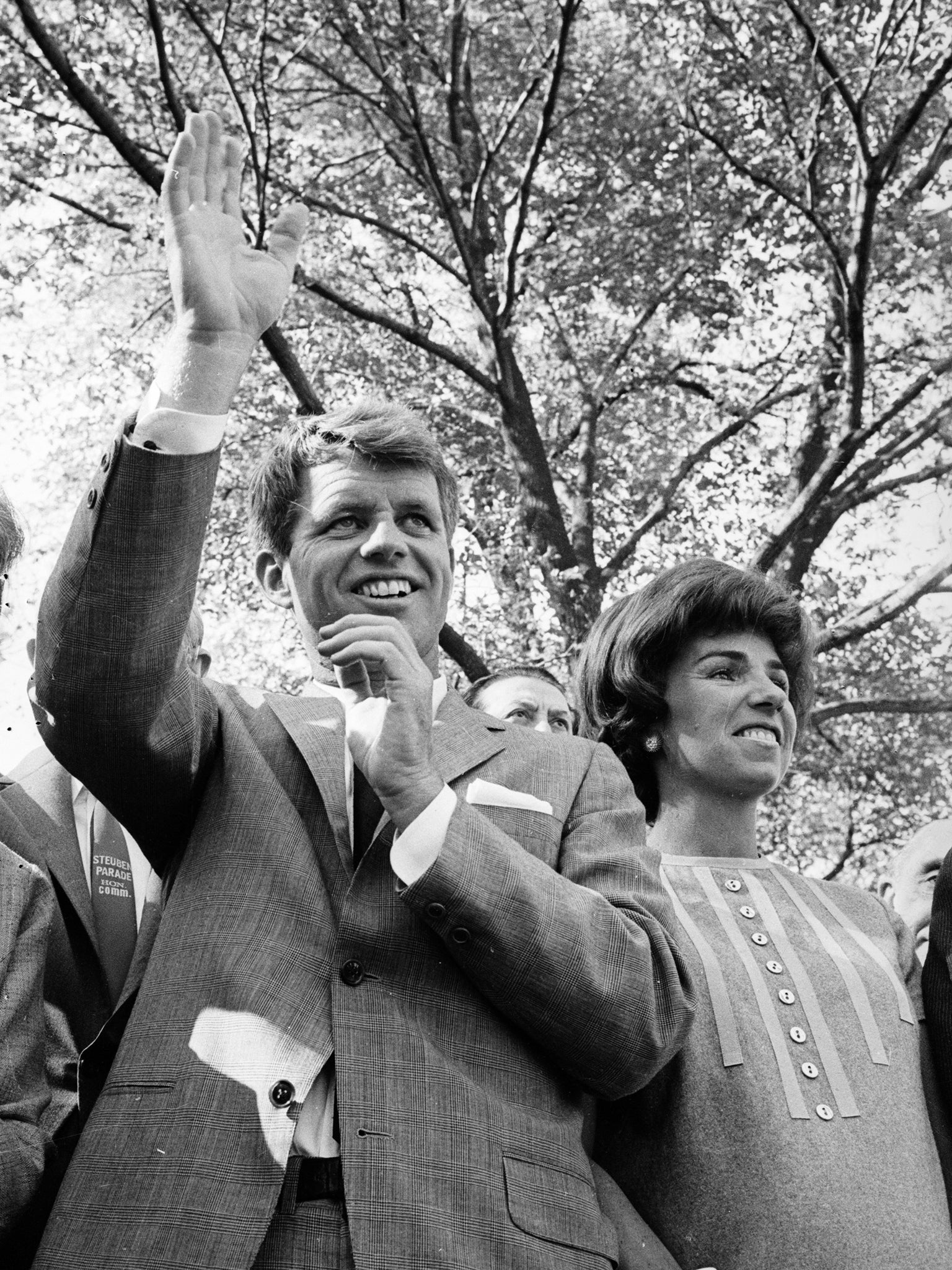
Ethel Kennedy’s impact on American history is characterized by a relentless, high-energy devotion to social justice and the Kennedy family’s political machinery. Married to Robert F. Kennedy (RFK) in 1950, she was his most ardent supporter, traveling by his side during his time as Chief Counsel to the Senate Labor Rackets Committee, Attorney General, and Senator.
The Social Hub of the New Frontier: Hickory Hill
While Jackie presided over the White House, Ethel turned her estate, Hickory Hill in McLean, Virginia, into the social and strategic headquarters of the "Robby" branch of the family. Hickory Hill was famous for its informal but intense atmosphere, where Cabinet members, civil rights leaders, and journalists would gather for touch football games and pool parties that doubled as political strategy sessions. Ethel’s ability to foster a sense of community and urgency among RFK’s staff was instrumental in his political successes.
Resilience and the 1968 Campaign
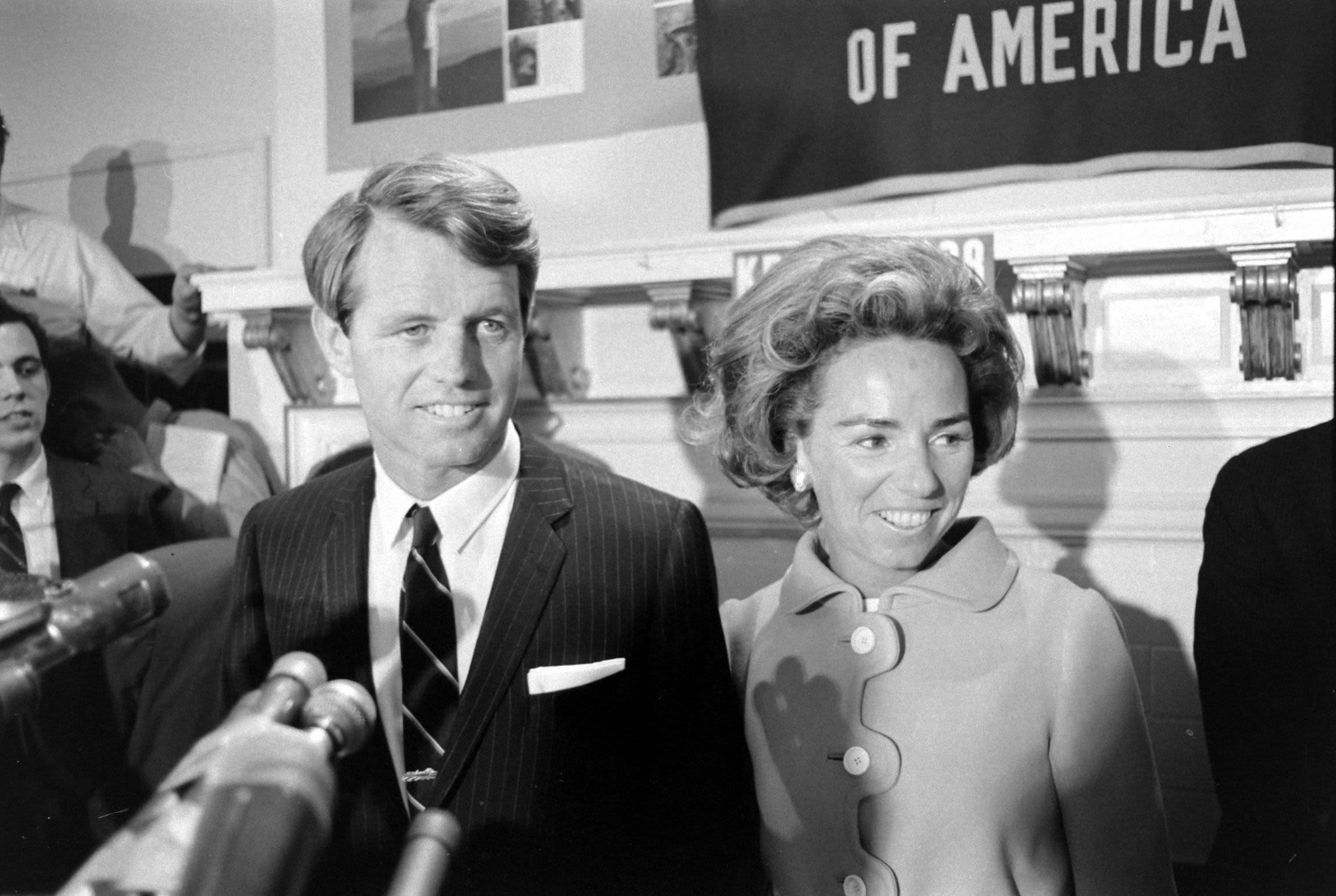
Ethel’s public image is forever tied to the 1968 presidential campaign. She was present at the Ambassador Hotel in Los Angeles when RFK was assassinated, a moment captured in heartbreaking photographs as she knelt by her husband. Despite being pregnant with their 11th child at the time, Ethel did not retreat from public life. In the decades following the tragedy, she became the matriarchal anchor for the entire Kennedy clan, ensuring that the next generation understood their obligation to public service.
Human Rights Advocacy
In late 1968, Ethel founded the Robert F. Kennedy Center for Justice and Human Rights (now Robert F. Kennedy Human Rights). Unlike many commemorative organizations, the RFK Center became a frontline advocacy group. Ethel personally participated in delegations to help political prisoners and human rights defenders around the world. From marching with Cesar Chavez and the United Farm Workers to challenging authoritarian regimes in South Africa and South America, Ethel transitioned from a political wife to a globally recognized activist. Her work was officially honored in 2014 when President Barack Obama awarded her the Presidential Medal of Freedom.
Comparative Dynamics: Personalities and Public Personas
The relationship between Jackie and Ethel was complex, shaped by their different backgrounds and approaches to the Kennedy world. Jackie was the daughter of Wall Street stockbroker John Vernou "Black Jack" Bouvier III and socialite Janet Lee Bouvier, raised in a world of refined elegance and equestrian discipline. Ethel came from the Skakel family, owners of Great Lakes Carbon Corporation; she was raised in a boisterous, wealthy Catholic household that valued athletic competition and religious devotion.
Contrasting Styles of Motherhood
The two women represented different archetypes of 1960s motherhood. Jackie sought to protect her children, Caroline and John Jr., from the "Kennedy circus," attempting to give them as normal a childhood as possible despite the secret service presence. Ethel, conversely, leaned into the Kennedy tradition of large, chaotic families. With 11 children, her household was a whirlwind of activity, and she encouraged her children to be as competitive and politically engaged as their father.
Responses to Tragedy
Their responses to the assassinations of their husbands also differed. Jackie sought a "second act," eventually marrying Greek shipping magnate Aristotle Onassis in 1968 to seek protection and privacy for her children—a move that initially shocked the American public. Later, she moved to New York City and enjoyed a successful career as a book editor at Doubleday. Ethel, however, remained "the Kennedy widow" for the rest of her life, never remarrying and dedicating herself entirely to the RFK legacy and the Catholic Church.
Key Historical Comparisons
The following table highlights the primary differences and milestones in the lives of Ethel and Jackie Kennedy as they pertain to their roles in American history.
| Feature | Jacqueline Bouvier Kennedy Onassis | Ethel Skakel Kennedy |
|---|---|---|
| Birth / Death | 1929 – 1994 | 1928 – 2024 |
| Marriage Date | September 12, 1953 (to JFK) | June 17, 1950 (to RFK) |
| Number of Children | 2 (surviving to adulthood) | 11 |
| Primary Initiative | White House Restoration / Historic Preservation | RFK Center for Justice and Human Rights |
| Historical Label | The Cultural Icon / "Camelot" Creator | The Political Matriarch / Human Rights Activist |
| Later Career | Book Editor (Doubleday) | Global Human Rights Advocate |
| Honors | Honorary Emmy (1962) | Presidential Medal of Freedom (2014) |
The Later Years: New York and Global Advocacy
As the 20th century closed, both women moved into distinct phases of influence. Jackie Kennedy, living in her apartment on Fifth Avenue in New York, became a symbol of sophisticated urban life. Her work as an editor allowed her to shape the literary world, working on books ranging from Michael Jackson’s autobiography to historical volumes on Russian art. She also remained a staunch defender of historic landmarks, famously leading the fight to save Grand Central Terminal from demolition—a battle that reached the Supreme Court and helped establish modern landmark preservation laws.
Ethel Kennedy, meanwhile, continued to be a fixture at political conventions and human rights forums well into the 21st century. Even in her 80s and 90s, she participated in "ice bucket challenges" for ALS and remained a vocal critic of social injustice. Her passing in late 2024 marked the end of an era, as she was the last surviving member of the inner circle of the 1960s Kennedy generation. By 2026, her legacy is cemented as one of the longest-serving activists in American political history.
Their Enduring Influence on American Femininity and Politics
The combined influence of Jackie and Ethel Kennedy redefined what was possible for women in the political sphere. Jackie proved that a woman could be a powerhouse of cultural and intellectual influence without holding elected office. She modernized the First Ladyship, making it a role focused on national heritage and international prestige.
Ethel demonstrated that a woman could be both a traditional matriarch and a fearless political warrior. She broke the mold of the "silent political wife," engaging directly in the struggles of the marginalized. Together, they represent the two poles of the Kennedy era: the aspiration for beauty and excellence (Jackie) and the relentless drive for social progress (Ethel).
Frequently Asked Questions
Did Jackie and Ethel Kennedy get along?
Yes, they maintained a supportive, albeit occasionally strained, relationship. While their personalities were very different—Jackie found the chaos of Ethel’s household overwhelming, and Ethel sometimes found Jackie’s reserve "haughty"—they were deeply bonded by the shared trauma of the assassinations. Jackie was particularly supportive of Ethel during the immediate aftermath of Robert Kennedy’s death in 1968.
How did Ethel Kennedy influence Robert F. Kennedy’s politics?
Ethel was often described as being more "Kennedy than the Kennedys." She was fiercely competitive and shared her husband’s deep Catholic faith, which informed his views on social justice. She was instrumental in encouraging him to enter the 1968 presidential race and was a constant presence on the campaign trail, often serving as his "eyes and ears" in crowds.
What is Jackie Kennedy’s most lasting contribution to the White House?
While her fashion sense is often cited, her most lasting contribution is the White House Historical Association, which she founded in 1961. This organization ensures that the White House remains a curated museum of American history, independent of the personal tastes of changing administrations. Her efforts led to the 1961 law (Public Law 87-286) which made the White House furniture a permanent part of the Smithsonian Institution.
What happened to the Robert F. Kennedy Human Rights organization after Ethel’s death?
By 2026, Robert F. Kennedy Human Rights continues to operate as a major international NGO. It is largely managed by her daughter, Kerry Kennedy, who has expanded its mission to include massive litigation for human rights abuses, the Speak Truth to Power curriculum in schools, and the RFK Compass program for sustainable investing. Ethel’s vision of a hands-on advocacy group remains the core of the organization’s identity.
Why is Jackie Kennedy associated with the term "Camelot"?
Jackie introduced the term during a post-assassination interview with Theodore H. White. She quoted a lyric from the Lerner and Loewe musical Camelot: "Don’t let it be forgot, that once there was a spot, for one brief shining moment that was known as Camelot." She insisted that while there would be other great presidents, there would never be another Camelot, effectively framing the JFK years as a lost golden age.
Recommendation for Further Study
To fully appreciate the historical impact of these two women, researchers should examine the primary sources of their respective eras. For Jacqueline Kennedy, the "White House Guide" (which she helped write) and the archival footage of her 1962 televised tour offer deep insights into her cultural philosophy. For Ethel Kennedy, a review of the annual Robert F. Kennedy Human Rights Award ceremonies provides a clear timeline of her lifelong commitment to global activism. Understanding these women is essential for any student of American history seeking to look beyond the men of the Kennedy family and see the powerful forces that sustained their legacy.
Image Gallery
Select an image to open it in a new tab.


Omar Farooq
EdTech Innovation and Virtual Pedagogy Journalist
