In banking, a posted transaction is a financial entry that has been fully processed, cleared, and finalized by the financial institution. Unlike a pending transaction, which represents a temporary hold on funds, a posted transaction is a permanent record that has been deducted from or added to your current account balance.
Understanding the distinction between posted and pending transactions is essential for effective money management. When you look at your mobile banking app or online statement in 2026, you likely see a list of recent activities. Some may be grayed out or labeled "Pending," while others appear in the main ledger. The moment a transaction moves from pending to "posted," the bank has completed the settlement process with the merchant or the receiving institution. This shift marks the transition from an "authorized" request to a settled legal obligation.
The Lifecycle of a Bank Transaction
To understand what a posted transaction means, one must first understand the journey a single dollar takes from the moment you initiate a payment. In the modern banking ecosystem, this process generally follows three distinct stages: Authorization, Clearing, and Settlement.
1. Authorization (The Pending Phase)
When you swipe your debit card or enter your details online, the merchant’s bank (the acquirer) asks your bank (the issuer) for permission to take the money. Your bank checks if you have enough funds and if the transaction appears legitimate. If approved, the bank places a "hold" on those funds. This is the pending stage. The money is technically still in your account, but it is no longer "available" for you to spend elsewhere.
2. Clearing
Clearing is the behind-the-scenes communication between financial institutions. During this phase, the merchant sends a "batch" of approved authorizations to their bank, which then sends them to the respective card networks (like Visa or Mastercard) or the Automated Clearing House (ACH). The banks reconcile the amounts, verifying that the transaction details match the original authorization.
3. Settlement (The Posted Phase)
Settlement is the final step where the actual transfer of value occurs. Your bank sends the funds to the merchant’s bank. Once this transfer is confirmed, the transaction status changes from pending to posted. On your statement, this is the point where the transaction is assigned a "Posting Date," which may differ from the "Transaction Date."
Key Differences: Posted vs. Pending Transactions
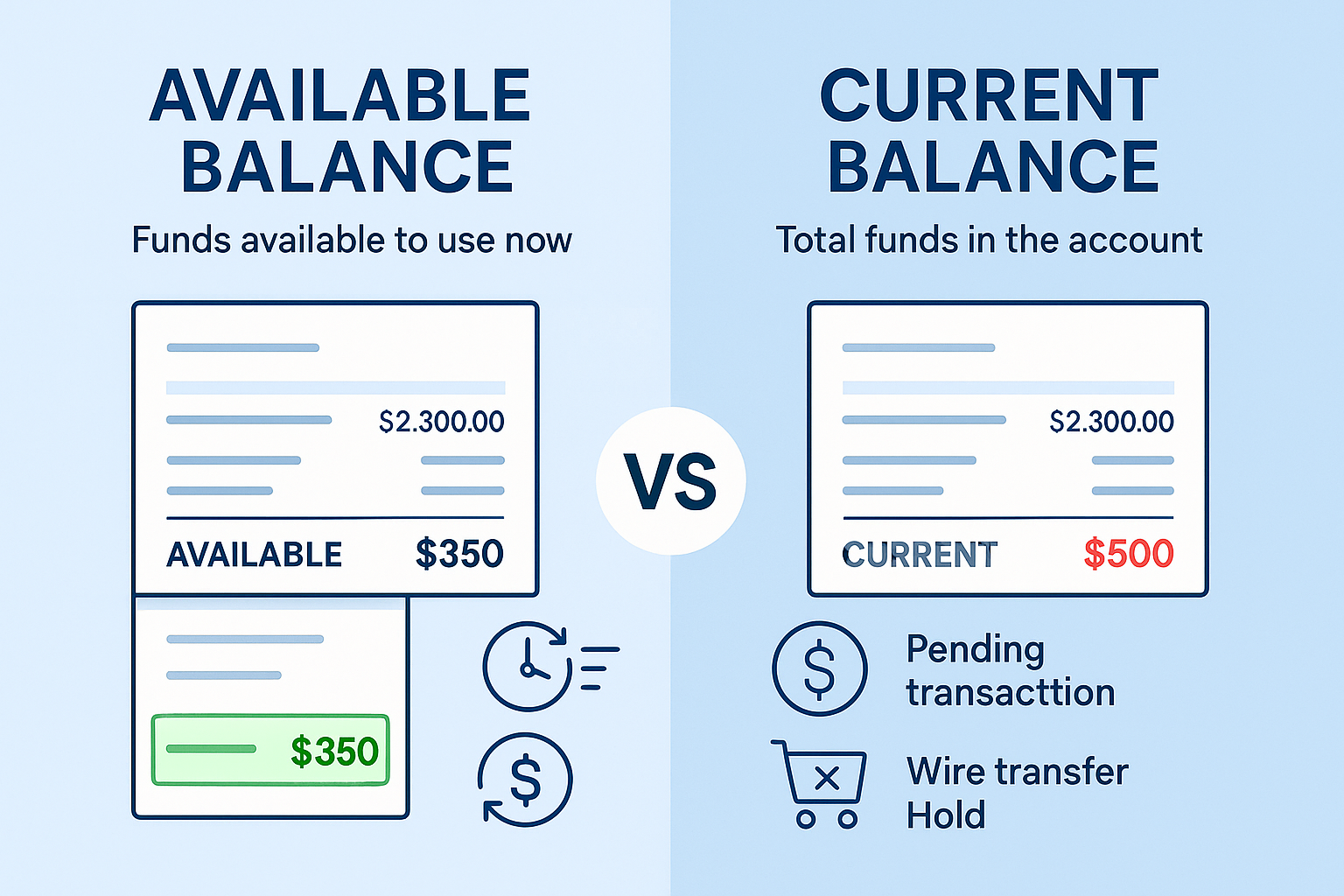
The confusion for many consumers arises when the "Current Balance" and "Available Balance" do not match. This discrepancy is almost always due to the lag between a transaction being initiated and it being posted.
| Feature | Pending Transaction | Posted Transaction |
|---|---|---|
| Definition | An authorized hold waiting for merchant confirmation. | A finalized, cleared, and settled entry. |
| Balance Impact | Reduces "Available Balance" but not "Current Balance." | Reduces both "Available" and "Current/Ledger" balances. |
| Cancellability | Can sometimes be voided by the merchant quickly. | Requires a formal refund or a dispute/chargeback. |
| Finality | The amount may change (e.g., adding a tip at a restaurant). | The amount is fixed and permanent on the ledger. |
| Duration | Typically lasts 1 to 5 business days. | Permanent until reversed by a new transaction. |
Why Do Transactions Take Time to Post?
Despite the move toward real-time payments in 2026, many transactions still require a few days to post. This delay is rarely the result of "slow computers" and is instead due to the structural mechanics of the global financial system.
Merchant Batching
Most businesses do not process every transaction individually the moment it happens. To save on processing fees and administrative labor, merchants "batch" their transactions at the end of the business day. If you buy a coffee on a Friday afternoon, the merchant might not send their batch to the bank until Friday night or even Monday morning. Until that batch is received and processed by your bank, the transaction remains pending.
The ACH Processing Cycle
The Automated Clearing House (ACH) network, which handles most direct deposits and bill payments in the United States, traditionally operates on a batch-processing schedule. While "Same-Day ACH" has become standard, the system still relies on specific windows throughout the day to move money. If a transaction misses a cut-off time, it won't post until the next business day.
Weekend and Holiday Delays
Banks and the Federal Reserve operate on a "business day" schedule. In 2026, while digital banking is 24/7, the settlement of funds often pauses on Saturdays, Sundays, and federal holidays. If you make a purchase on a Saturday, it is highly unlikely to post until at least Monday, as the interbank settlement systems are not fully operational for "posting" purposes over the weekend.
Understanding Your Balances: Current vs. Available
To navigate posted transactions effectively, you must distinguish between the two types of balances displayed on your account.
- Current Balance (or Ledger Balance): This is the total amount of money actually in your account at the start of the business day, including all posted transactions. It does not account for pending purchases or deposits.
- Available Balance: This is the "real-world" amount you can spend. It takes your Current Balance and subtracts any pending debit card authorizations or holds.
Example: If you have a Current Balance of $1,000 and a pending gas station hold of $50, your Available Balance is $950. Even though the $50 hasn't "posted" yet, you cannot spend that $50. Once the transaction posts, your Current Balance will also drop to $950.
The Importance of Posted Transactions for Overdrafts
One of the most critical reasons to monitor posted transactions is the prevention of overdraft fees. Banks typically calculate overdrafts based on the order in which transactions post to your account, not the order in which you made the purchases.
Posting Order
Many banks use a specific sequence to post items at the end of the day. They may post all deposits first, then all withdrawals. Some banks historically posted largest-to-smallest (which could maximize fees), though regulatory pressure has moved many toward a chronological posting order. If a large transaction (like a rent check) posts before several smaller transactions, it could trigger multiple overdraft fees if the account balance is low.
The "Disappearing" Pending Charge
Occasionally, a pending charge may disappear from your account view before the transaction posts. This can happen if the merchant does not claim the funds within the bank's hold period (usually 3–5 days). However, the merchant still has the right to settle the transaction later. If you spend that "restored" money, and the transaction eventually posts a week later, you could find yourself with a negative balance.
Special Cases: Pre-Authorization Holds
Posted transactions often differ in amount from their initial pending status due to pre-authorization holds. These are common in specific industries where the final cost is unknown at the start of the transaction.
- Gas Stations: When you dip your card at the pump, the station may place a $50 or $100 hold to ensure you can pay for the fuel. Once you finish pumping and the actual cost ($34.20, for example) is determined, the $100 pending hold will eventually be replaced by a $34.20 posted transaction.
- Hotels and Car Rentals: These businesses often place large holds for "incidentals" or security deposits. These can stay in a pending state for days after you check out. Only the actual room rate and taxes will eventually post.
- Restaurants: When a server swipes your card, the initial authorization is for the meal cost. The tip is added later. You may see a pending charge for $40, but the posted transaction will be $48 once the tip is processed.
Legal and Regulatory Protections
The Electronic Fund Transfer Act (EFTA), implemented through Regulation E, provides consumers with protections regarding posted transactions.
- Error Resolution: Once a transaction posts, you have a legal right to dispute errors. Banks generally require you to report these within 60 days of the statement on which the error appeared.
- Unauthorized Transfers: If a posted transaction was not authorized by you, your liability is limited, provided you report the loss of your card or the suspicious activity promptly.
- Direct Deposit Access: Regulations also govern how quickly "posted" deposits must be made available to you. For instance, many government checks and wire transfers must be available the next business day after they post.
The 2026 Landscape: Real-Time Posting
By 2026, the gap between "pending" and "posted" has narrowed significantly due to the widespread adoption of real-time payment rails like FedNow and the Clearing House’s RTP network.
In this environment, many peer-to-peer (P2P) transfers and payroll deposits post instantly. However, traditional retail transactions using debit and credit cards still rely largely on the legacy authorization-settlement model. This means that while you can send money to a friend and have it post in seconds, your grocery store purchase will likely still take 24–48 hours to move from pending to posted.
How to Manage Your Account Effectively
To ensure you are never caught off guard by the movement of transactions:
- Trust the Available Balance: Never assume the money in your "Current Balance" is yours to spend if there are pending items.
- Set Alerts: Most modern banks allow you to set push notifications for when a transaction posts or when your available balance falls below a certain threshold.
- Reconcile Weekly: Don't wait for your monthly statement. Check your transaction history once a week to ensure that pending charges are posting correctly and that the amounts match your receipts.
- Keep a Buffer: Maintain a small "cushion" in your checking account (e.g., $100–$200) that you never touch. This accounts for the fluctuations caused by tips, gas holds, and the timing of posted transactions.
Frequently Asked Questions
Can a posted transaction be cancelled?
No, a posted transaction cannot be "cancelled" in the same way a pending one can. Once a transaction is posted, the funds have already been moved. To get your money back, the merchant must issue a refund transaction, or you must file a formal dispute with your bank if the charge was fraudulent or incorrect.
Why is my posted transaction amount different from the pending amount?
This is common in industries that involve tipping or security holds. The pending amount is an estimate or a hold to ensure funds exist; the posted amount is the final, actual cost agreed upon at the completion of the service.
How long does it take for a pending transaction to post?
Most transactions post within 1 to 3 business days. However, it can take up to 5 business days for some merchants, and potentially longer if the transaction occurs right before a weekend or a federal holiday.
Can a posted transaction be reversed?
A bank can reverse a posted transaction under specific circumstances, such as a proven banking error or a successful merchant dispute. However, this is a formal legal process and not a simple "undo" button.
Why did a transaction post twice?
A double-posting usually occurs due to a merchant error or a technical glitch during the clearing process. If you see two identical posted transactions (not just one pending and one posted), contact the merchant first. If they do not resolve it, contact your bank to initiate a "duplicate charge" dispute.
Does a posted transaction affect my credit score?
Not directly. Posting is a function of your bank account ledger. However, for credit cards, the posting of a large purchase increases your "credit utilization," which is a major factor in your credit score. On a debit account, it only affects your personal liquidity.
Practical Next Step
The most effective way to master your finances is to log in to your banking portal today and identify one "Pending" and one "Posted" transaction. Note the "Transaction Date" versus the "Post Date" for the finalized entry. Understanding this lag will help you better predict your cash flow and avoid the pitfalls of spending money that is technically already spoken for.
Image Gallery
Select an image to open it in a new tab.
Zara El-Hashem
Sociocultural Dynamics and Academics Writer
