Nadal vs Djokovic at the US Open: A Complete History of Their Flushing Meadows Rivalry
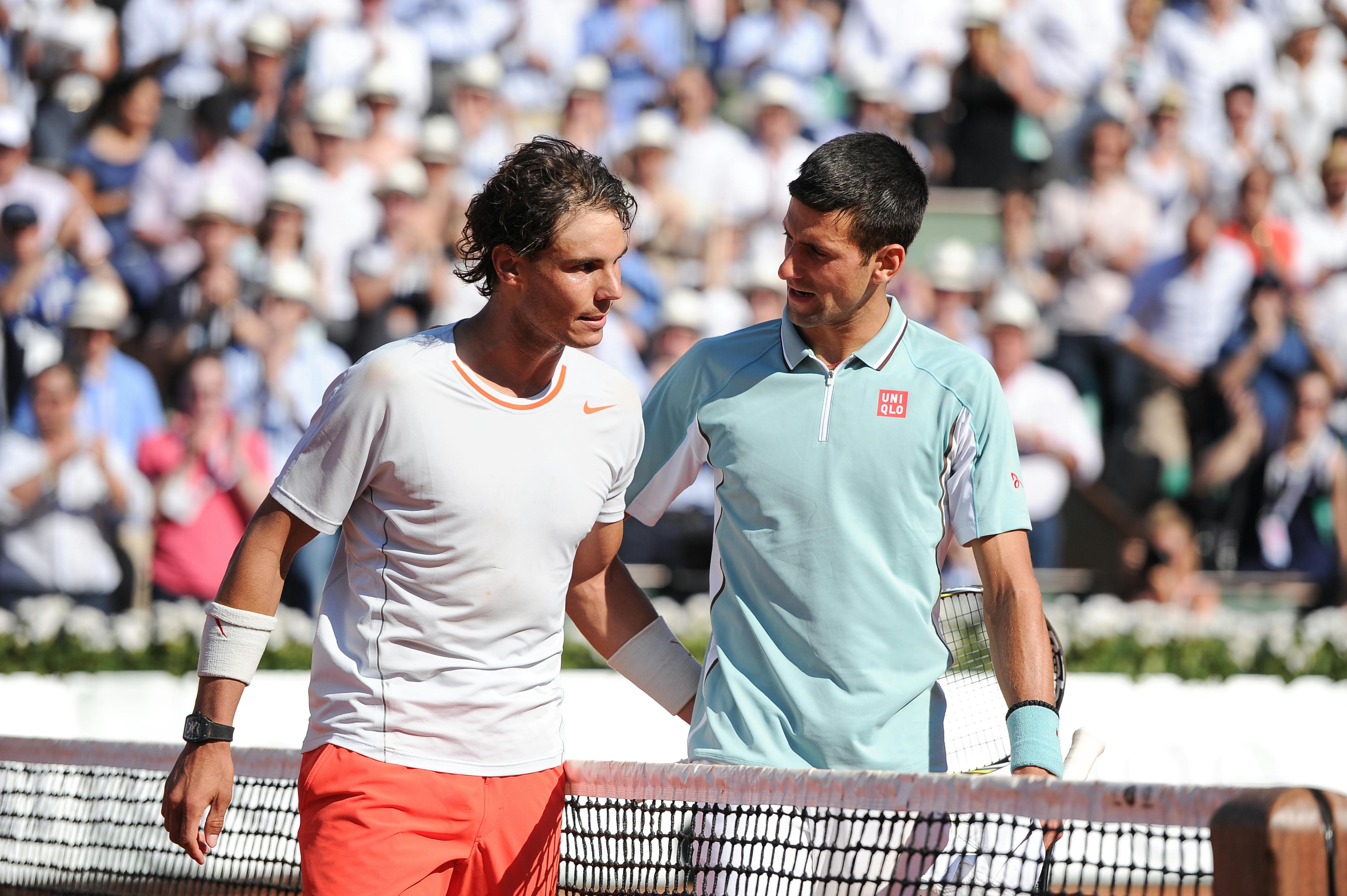
Rafael Nadal and Novak Djokovic met three times at the US Open, with Nadal holding a 2–1 head-to-head advantage. Uniquely, all three encounters occurred in the Men’s Singles Final (2010, 2011, and 2013), making them the only male pair in Open Era history to contest three US Open finals against one another.
Overview of the Nadal-Djokovic US Open Rivalry
The rivalry between Rafael Nadal and Novak Djokovic is the most played matchup in men's professional tennis history, spanning 59 total career meetings. While their epic battles at Roland Garros (dominated by Nadal) and the Australian Open (dominated by Djokovic) often draw immediate attention, their series at the US Open represents one of the most balanced and tactically fascinating chapters of their legendary rivalry.
Between 2010 and 2013, Arthur Ashe Stadium served as the battleground for three blockbuster finals between the Spaniard and the Serb. Unlike the slow, high-bouncing red clay of Paris or the medium-fast Plexicushion of Melbourne, the DecoTurf hard courts of Flushing Meadows offered a neutral playing environment. The surface provided enough speed to reward aggressive baseline hitting while offering sufficient bounce for physical, extended rallies.
Nadal vs Djokovic: US Open Final Breakdown
- 2010 Final: Nadal def. Djokovic (6–4, 5–7, 6–4, 6–2)
- 2011 Final: Djokovic def. Nadal (6–2, 6–4, 6–7³, 6–1)
- 2013 Final: Nadal def. Djokovic (6–2, 3–6, 6–4, 6–1)
- Overall US Open Head-to-Head: Nadal 2 – 1 Djokovic
Across these three finals, both players were forced to adapt their technical game plans, service strategies, and court positioning. The trilogy yielded career milestones for both men: Nadal completed his Career Grand Slam in New York in 2010, Djokovic capped off one of the greatest individual seasons in tennis history in 2011, and Nadal executed a remarkable hard-court resurgence in 2013.
Deep Dive into the Three US Open Finals
To fully appreciate the scope of this rivalry in New York, it is necessary to examine each final individually. Each match reflected a distinct phase in both players' physical conditions, mental confidence, and technical evolutions.
The 2010 US Open Final: Nadal Completes the Career Grand Slam
Entering the 2010 US Open, Rafael Nadal had already claimed titles at Roland Garros and Wimbledon earlier that summer. However, the US Open remained the sole Grand Slam title missing from his resume. Novak Djokovic, having defeated Roger Federer in a grueling five-set semifinal after saving two match points, arrived at the final seeking his second career major title.
Due to persistent rain in New York, the final was delayed to Monday, September 13, 2010. Nadal displayed an updated tactical element that surprised commentators and opponents alike: a modified service grip that added 5 to 10 mph to his first serve. Averages consistently reaching 120–128 mph allowed Nadal to win quick service points and protect his delivery against Djokovic’s elite return of serve.
- First Set: Nadal set an aggressive tone early, securing a break of serve and taking the opener 6–4 by dictating play with his forehand inside-out.
- Second Set: Djokovic elevated his baseline depth, absorbing Nadal's topspin and forcing errors to claim the second set 7–5 just before a 108-minute rain delay halted momentum.
- Third & Fourth Sets: Upon resumption, Nadal dominated behind his revamped serve. He converted crucial break points in the third set to take it 6–4 and ran away with the fourth set 6–2.
With a 6–4, 5–7, 6–4, 6–2 victory, Nadal became the seventh man in history (and the youngest in the Open Era at age 24) to complete the Career Grand Slam.
The 2011 US Open Final: Djokovic’s Peak Season Reaches Its Zenith
The 2011 season belonged almost entirely to Novak Djokovic. Prior to their meeting in Flushing Meadows on September 12, 2011, Djokovic had already beaten Nadal in five consecutive finals that year, including Indian Wells, Miami, Madrid, Rome, and Wimbledon. Nadal entered the US Open final seeking to stop a psychological pattern that had plagued him all season.
The 2011 final proved to be an overwhelming display of baseline counter-punching and physical endurance. Djokovic neutralized Nadal’s signature shot—the heavy topspin forehand to the backhand wing—by standing inside the baseline and taking the ball on the rise.
Key Match Statistics: 2011 US Open Final
- Match Duration: 4 hours, 10 minutes
- Total Points Won: Djokovic 141, Nadal 120
- Break Points Converted: Djokovic 11/26, Nadal 6/14
- Winner Count: Djokovic 55, Nadal 32
After taking the first two sets 6–2, 6–4 through relentless precision down the line, Djokovic faced a spirited fightback from Nadal in the third. Nadal raised his intensity, pushing the set to a tiebreak and winning it 7–6(3) to the roar of the Arthur Ashe crowd.
Despite suffering from back spasms and shoulder fatigue early in the fourth set, Djokovic regained control. Striking flat, deep groundstrokes that forced Nadal behind the baseline, Djokovic swept through the final set 6–1 to win his first US Open title and his third Grand Slam of 2011.
The 2013 US Open Final: Nadal’s Hard-Court Masterclass
By September 2013, the dynamic had shifted once again. Nadal had returned from a seven-month injury layoff earlier in the year and mounted an extraordinary hard-court campaign, winning titles in Montreal and Cincinnati. Djokovic entered the final as the World No. 1, but Nadal was the most form player of the summer.
Played on Monday, September 9, 2013, the match featured some of the most brutal rallies ever witnessed at Arthur Ashe Stadium. The signature moment of the match came in the second set during a extraordinary 54-shot rally, which Djokovic eventually won with a backhand winner down the line.
Despite losing the second set and facing serious pressure in the third, Nadal delivered a defining clutch performance:
- The Pivotal Turning Point: Serving at 4–4, 0–40 in the third set, Nadal appeared on the verge of surrendering a decisive break. He saved all three break points through aggressive, high-margin forehand placement and held serve.
- The Shift in Momentum: Spurred by that escape, Nadal broke Djokovic in the very next game to seal the third set 6–4.
- Closing out the Title: Demoralized by the missed opportunities, Djokovic saw his error rate climb in the fourth set. Nadal stormed through the set 6–1 to lock up a 6–2, 3–6, 6–4, 6–1 victory.
The win marked Nadal’s second US Open crown and 13th Grand Slam title overall, confirming his mastery over hard courts during the 2013 season.

Tactical and Surface Analysis: Flushing Meadows Dynamics
Understanding why the Nadal-Djokovic US Open matches were so closely contested requires examining how the court conditions, ball behavior, and tactical adjustments intersected at Flushing Meadows.
Flushing Meadows Tactical Matrix
| Surface Parameter | Nadal's Advantage | Djokovic's Advantage |
|---|---|---|
| DecoTurf Friction | High bounce aids topspin | Consistent true bounce |
| Ball Speed/Wear | Heavy ball penalizes flat | Easy to hit on-the-rise |
| Stadium Humidity | Enhances ball rotation | Favors slide & recovery |
1. DecoTurf Surface Characteristics
During the era of their US Open finals (2010–2013), Flushing Meadows utilized DecoTurf II, a acrylic hard-court surface laid over an asphalt foundation. DecoTurf was classified as a medium-fast surface, but its key characteristic was its abrasive texture.
- Topspin Interaction: The high-friction surface grabbed the felt of the ball, allowing Nadal’s extreme heavy topspin (often exceeding 3,200 RPM on his forehand) to kick up significantly higher than it would on faster indoor courts.
- Predictable Bounce: Unlike clay, which can produce bad bounces, DecoTurf provided a uniform, predictable bounce. This consistency allowed Djokovic to step inside the court and strike his two-handed backhand on the rise at waist height, directly combating Nadal’s primary weapon.
2. The Forehand-to-Backhand Cross-Court Dynamic
The primary strategic battle in every Nadal-Djokovic match centers on Nadal’s lefty forehand cross-court targeting Djokovic’s backhand. At the US Open, this dynamic played out in specific ways:
- In 2010 & 2013: Nadal altered his rally trajectories. Instead of looping balls high over the net, he struck his forehand flatter and deeper into the court, keeping Djokovic pinned behind the baseline and preventing him from stepping forward.
- In 2011: Djokovic mastered the counter-direction stroke. Rather than cross-court rallies drifting high into his hit zone, Djokovic used his two-handed backhand to redirect Nadal’s topspin straight down the line into Nadal’s forehand corner. This opened up the open court and forced Nadal to cover immense ground laterally.
3. Service Evolution and Return Positioning
Service performance was crucial in determining the outcome of their New York finals. In 2010, Nadal won 84% of his first-serve points during the tournament by adopting a continental grip adjustment specifically for the event. This tactical change netted him free points that prevented Djokovic from initiating long baseline grinding exchanges on Nadal's serve.
Conversely, Djokovic’s return of serve in 2011 stood out as a tactical benchmark. By standing close to the baseline and taking Nadal’s second serves early, Djokovic consistently neutralized Nadal’s serve-plus-one advantage, forcing Nadal into defensive patterns right from the start of the point.
Statistical Comparison of Nadal vs. Djokovic at the US Open
The table below provides a detailed breakdown of all three head-to-head encounters between Rafael Nadal and Novak Djokovic at the US Open.
| Year | Round | Winner | Score | Match Duration | Aces (Nadal / Djokovic) | Break Points Converted | Key Milestone / Significance |
|---|---|---|---|---|---|---|---|
| 2010 | Final | Nadal | 6–4, 5–7, 6–4, 6–2 | 3 hrs, 43 mins | 8 / 5 | Nadal: 6/20 Djokovic: 3/4 | Nadal completes Career Grand Slam; wins 3rd consecutive major title of 2010. |
| 2011 | Final | Djokovic | 6–2, 6–4, 6–7(3), 6–1 | 4 hrs, 10 mins | 2 / 7 | Nadal: 6/14 Djokovic: 11/26 | Djokovic wins 1st US Open; completes 3-major season (63–2 match record entering final). |
| 2013 | Final | Nadal | 6–2, 3–6, 6–4, 6–1 | 3 hrs, 21 mins | 1 / 6 | Nadal: 7/12 Djokovic: 3/11 | Nadal captures 2nd US Open title after saving critical 0-40 deficit at 4-4 in 3rd set. |
Historical Significance of Their New York Battles
When contextualizing the entire 59-match rivalry between Nadal and Djokovic, their US Open series occupies a distinct place. While their general Grand Slam head-to-head favors Nadal overall—largely due to his dominance at Roland Garros—their hard-court Slam record is split across venues. Djokovic dominated their Australian Open meetings (winning both the historic 2012 final and the 2019 final decisively), while Nadal held the edge at Arthur Ashe Stadium.
Grand Slam Breakdown: Nadal vs. Djokovic
- Roland Garros (Clay): Nadal leads 8 – 2
- US Open (Hard): Nadal leads 2 – 1
- Wimbledon (Grass): Djokovic leads 2 – 1
- Australian Open (Hard): Djokovic leads 2 – 0
- Total Grand Slam H2H: Nadal leads 11 – 7
The fact that Nadal and Djokovic never met again at the US Open after the 2013 final remains one of modern tennis’s most surprising scheduling anomalies. In subsequent years, injuries, draw placement, and unexpected upsets prevented a fourth installment. For instance:
- In 2014, Nadal missed the event due to a wrist injury.
- In 2018, Nadal was forced to retire in the semifinals against Juan Martín del Potro, preventing a scheduled final against Djokovic.
- In 2019, Djokovic retired due to a shoulder injury in the fourth round, while Nadal went on to capture the title against Daniil Medvedev.
- In 2021, Djokovic reached the final while Nadal missed the tournament due to a foot injury.
As a result, their US Open trilogy remains preserved between 2010 and 2013—capturing both players at the peak of their athletic capabilities on North American hard courts.
Key Takeaways for Tennis Analysts and Fans
Studying the three US Open matches between Nadal and Djokovic provides valuable technical and strategic insights for coaches, analysts, and fans watching modern baseline tennis:
- Adaptability Wins Hard-Court Majors: Nadal’s 2010 victory proved that even elite clay-court specialists must adapt their basic mechanics (such as serve speed and contact point) to shorten points on hard courts.
- Positioning Negates Spin: Djokovic’s 2011 performance demonstrated that taking extreme topspin early on the rise—before it reaches maximum height—is the most effective technical counter to heavy rotation.
- Clutch Point Management: Nadal’s escape from 0–40 at 4–4 in the third set of the 2013 final highlights how high-margin shot selection under extreme pressure can swing the momentum of a Grand Slam match.
- Physical Preparation is Non-Negotiable: The length of baseline exchanges at Flushing Meadows demands elite footwork recovery, lateral flexibility, and cardio endurance to withstand four-hour matches under humid conditions.
Frequently Asked Questions
Who leads the head-to-head between Nadal and Djokovic at the US Open?
Rafael Nadal leads the head-to-head record against Novak Djokovic at the US Open 2–1. Nadal defeated Djokovic in the 2010 and 2013 finals, while Djokovic defeated Nadal in the 2011 final.
How many times did Nadal and Djokovic play in the US Open final?
Nadal and Djokovic played in three US Open finals: 2010, 2011, and 2013. They are the only two male players in the Open Era to face each other in three separate US Open finals.
What made Nadal's serve so effective in the 2010 US Open final?
Prior to the start of the 2010 US Open, Nadal adjusted his serve grip slightly closer to a continental grip. This minor technical change increased his first-serve velocity by roughly 5 to 10 mph, allowing him to average over 120 mph on his first serve and earn quick points against Djokovic.
What was the longest rally between Nadal and Djokovic at the US Open?
The longest recorded rally between Nadal and Djokovic at the US Open occurred during the second set of the 2013 final. It lasted 54 shots and ended with Djokovic hitting a backhand winner down the line.
Why didn't Nadal and Djokovic play at the US Open after 2013?
Despite playing dozens more times across the ATP Tour, Nadal and Djokovic never met again at the US Open after 2013 due to mismatched tournament draws, opposing injury schedules (such as Nadal missing 2014 and 2021, or Djokovic missing 2017 and 2022), and upsets in earlier rounds before they could reach each other in the bracket.
Practical Recommendations for Rewatching These Classics
For fans seeking to rewatch or analyze these classic matches, the following approach offers the best tactical perspective:
- Watch the 2010 Final to Analyze Service Mechanics: Focus on Nadal’s first-serve speed and placement down the T to observe how serve efficiency alters baseline court positioning.
- Watch the 2011 Final to Study Baseline Counter-Punching: Observe Djokovic’s court position relative to the baseline. Note how rarely he steps more than two feet behind the baseline when returning Nadal’s forehand.
- Watch Set 3 of the 2013 Final for Pressure Management: Skip directly to the 4–4 game in the third set to see how Nadal saved three consecutive break points (0–40) through aggressive forehand play and high-percentage target selection.
Image Gallery
Select an image to open it in a new tab.


Akira Tanaka
International Academic Trends Correspondent
