Comprehensive Overview of Mayor Kasim Reed’s Political Career and Public Service

Kasim Reed served as the 59th Mayor of Atlanta from 2010 to 2018, following an influential eleven-year tenure in the Georgia General Assembly. His career is defined by aggressive economic development, landmark pension reform, and significant infrastructure investments, though it was also marked by federal investigations into his administration’s procurement processes.
The Foundation of a Political Career: Early Life and Education
Kasim Reed’s trajectory toward public service began long before he held elective office. Born in New Jersey and raised in the Cascade neighborhood of Atlanta, Reed was educated at Howard University, where he earned both his Bachelor of Arts and his Juris Doctor. During his time at Howard, he served as a student member of the Board of Trustees, a role that signaled his early aptitude for governance and high-stakes negotiation.
His entry into professional politics was catalyzed by his work as a campaign manager and strategist. Most notably, he served as the campaign manager for Shirley Franklin during her successful 2001 bid to become Atlanta’s first female mayor. This experience provided Reed with an intimate understanding of the city’s political machinery and the coalition-building required to lead a major American metropolis.
Legislative Service in the Georgia General Assembly (1998–2009)
Before ascending to the mayoralty, Reed spent over a decade in the Georgia state legislature, serving first in the House of Representatives (1998–2002) and subsequently in the State Senate (2003–2009). His legislative record focused on education, civil rights, and economic sustainability.
Key Legislative Achievements
In the Georgia House, Reed was a primary architect of the legislation that created the Georgia Early Care and Learning Department (DECAL). He was also instrumental in the expansion of the HOPE Scholarship program, ensuring that thousands of Georgia students could access higher education regardless of their financial background.
During his tenure in the State Senate, Reed rose to the position of Vice Chairman of the Senate Democratic Caucus. One of his most significant legislative victories was the passage of Georgia's first hate crimes legislation (SB 390), which, although later struck down by the Georgia Supreme Court for being "unconstitutionally vague," set the stage for future protections and demonstrated Reed’s commitment to social justice.
Reed also played a vital role in protecting the state’s water resources and advocating for transit expansion. His ability to work across the aisle—a trait that would define his mayoral years—began to emerge as he negotiated complex budgetary and infrastructure bills with Republican colleagues.
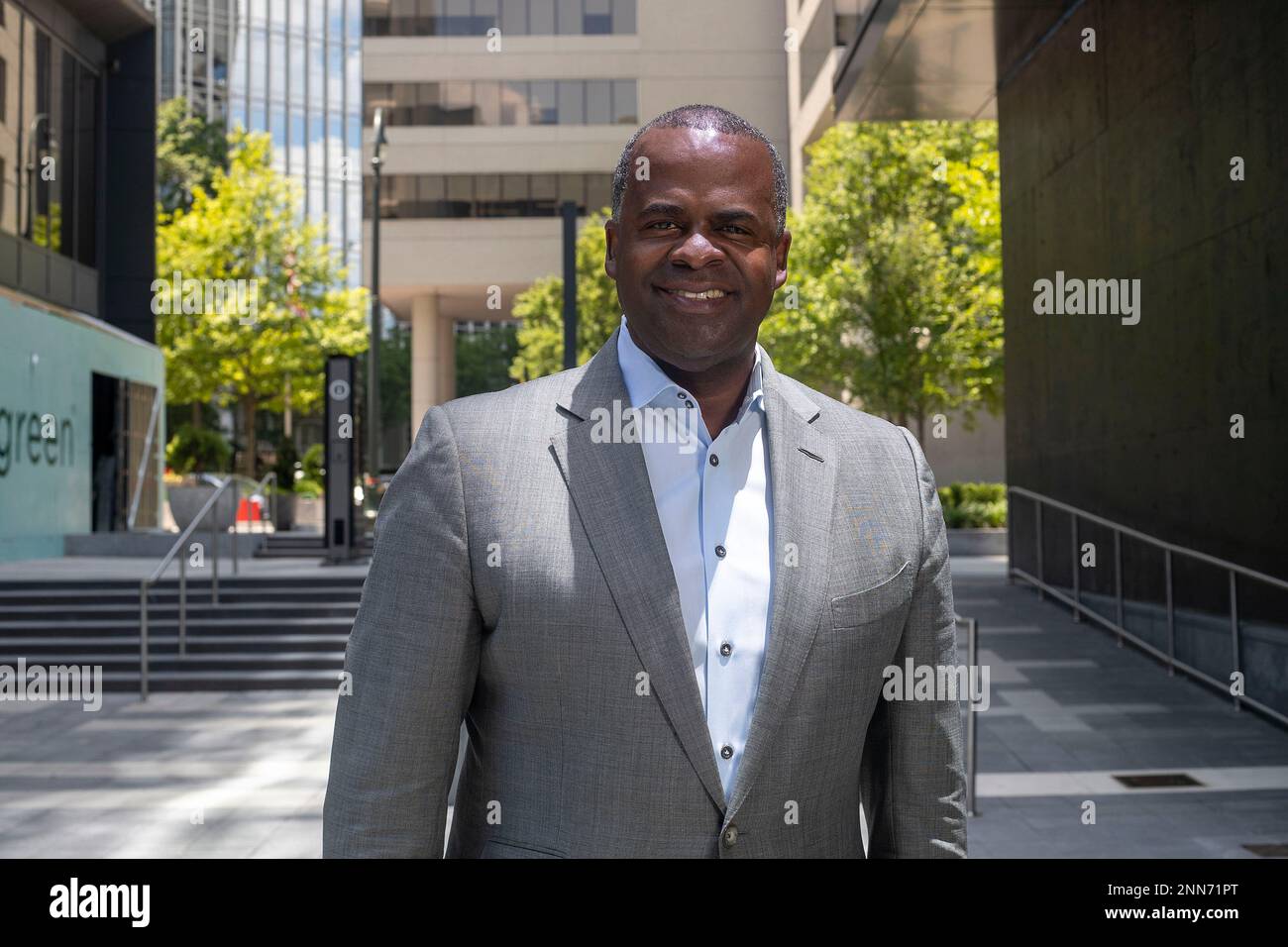
The 2009 Mayoral Election: A Turning Point
The 2009 Atlanta mayoral race was one of the most closely contested in the city’s history. Kasim Reed ran against a crowded field that included City Council President Lisa Borders and Mary Norwood. The campaign focused heavily on public safety, the city’s precarious financial state following the 2008 global financial crisis, and the need for visionary leadership.
Reed entered the runoff against Mary Norwood, a contest that gained national attention. He ultimately won by a razor-thin margin of 714 votes out of more than 84,000 cast. This victory signaled a transition in Atlanta’s leadership, bringing a younger, more assertive executive to City Hall who was determined to modernize the city’s operations.
The Mayoral Years: First Term (2010–2014)
Upon taking office in January 2010, Reed inherited a city facing a $48 million budget shortfall and a depleted "rainy day" fund that stood at only $7.4 million. His first term was characterized by fiscal stabilization and a "back to basics" approach to municipal services.
Financial Recovery and Pension Reform
One of Reed’s most significant achievements was the 2011 Pension Reform. Facing an unfunded pension liability of $1.5 billion, Reed negotiated with municipal unions to increase employee contributions and shift new hires to a hybrid plan. This move was estimated to save the city $25 million annually and more than $500 million over 30 years. By the end of his first term, the city’s cash reserves had grown significantly, eventually reaching over $200 million by the time he left office.
Public Safety Initiatives
Reed campaigned on a promise to increase the police force to 2,000 officers. While the department struggled with retention, his administration achieved record-high staffing levels and opened multiple new fire stations. He also focused on "video integration," creating the Loudermilk Video Integration Center, which allowed the Atlanta Police Department to monitor thousands of public and private cameras in real-time to combat crime.
The Mayoral Years: Second Term (2014–2018)
After winning re-election in 2013 with 84% of the vote, Reed shifted his focus toward legacy-defining infrastructure projects and international economic development.
Infrastructure and Urban Development
Reed presided over a period of unprecedented construction in Atlanta. Key projects during this era included:
- The Atlanta BeltLine: Reed secured hundreds of millions in federal and local funding to accelerate the development of this 22-mile loop of parks and transit.
- Mercedes-Benz Stadium: Reed was a central figure in the negotiations to keep the Atlanta Falcons downtown, facilitating a public-private partnership for the $1.6 billion stadium.
- Renew Atlanta Bond: In 2015, voters approved a $250 million bond referendum for infrastructure repairs, the first major investment of its kind in over a decade.
Economic Growth and Corporate Relocations
The Reed administration was highly successful in attracting major corporations to Atlanta. Under his watch, companies like Porsche North America, NCR, and Honeywell moved their headquarters or major hubs to the city. These moves were often incentivized by the city’s revitalized infrastructure and Reed's personal outreach to CEOs.
| Achievement Category | Key Action/Project | Impact/Result |
|---|---|---|
| Finance | 2011 Pension Reform | Saved $25M+ annually; reduced $1.5B liability |
| Infrastructure | Renew Atlanta Bond ($250M) | Repaired bridges, synchronized traffic lights |
| Development | Mercedes-Benz Stadium Deal | Secured 30-year commitment from Falcons/United |
| Reserves | Cash Reserve Expansion | Increased reserves from $7.4M to over $200M |
| Logistics | Hartsfield-Jackson Expansion | Maintained status as world's busiest airport |
| Transportation | TSPLOST & MARTA Referendum | Secured $300M+ for transit and road improvements |
The Federal Investigation and Ethical Scrutiny
As Reed’s second term drew to a close, a federal investigation into corruption at Atlanta City Hall began to unfold. Known as the "bribery-for-contracts" probe, the investigation led to the convictions of several high-ranking administration officials, including the Chief Procurement Officer and the Deputy Chief of Staff.
While Reed himself was never charged with a crime, the investigation cast a long shadow over his legacy. Critics pointed to a culture of secrecy and "pay-to-play" politics within the procurement department. Reed consistently maintained his innocence and cooperated with federal authorities, but the headlines regarding legal fees and subpoenas became a significant part of the public discourse surrounding his final years in office.
The 2021 Mayoral Comeback Attempt
After a four-year hiatus from public office, Kasim Reed announced his candidacy for Mayor again in 2021. The race took place against a backdrop of rising violent crime and concerns over city leadership. Reed’s platform focused on "restoring order" and leveraging his experience to manage the city's complex challenges.
Despite leading in several early polls, Reed finished third in the primary, narrowly missing the runoff. The election was ultimately won by Andre Dickens. Reed’s loss was seen by many political analysts as a sign that voters were ready to move past the controversies of his previous administration, despite acknowledging his successes in economic development.
Kasim Reed’s Public Service Beyond the Mayoralty
Even when not in elective office, Reed has remained a potent figure in the Democratic Party. As a surrogate for national candidates, including President Barack Obama and President Joe Biden, he has influenced urban policy discussions on a national scale.
In his private capacity, Reed has worked as a partner at various law firms, focusing on commercial real estate and government relations. He continues to be a frequent commentator on regional and national news outlets, offering analysis on urban governance, transportation, and civil rights.
Legacy and Impact on 21st Century Atlanta
Evaluating Kasim Reed’s public service requires a balanced view of "The Atlanta Way"—the city’s historical model of cooperation between the business community and political leadership.
Strengths of the Reed Legacy:
- Bipartisan Cooperation: Reed maintained a remarkably productive relationship with Republican Governor Nathan Deal, ensuring that Atlanta and the State of Georgia moved in lockstep on major economic initiatives.
- Operational Stability: He turned a bankrupt city into a financially solvent one with a "Triple-A" credit rating.
- Global Positioning: He aggressively marketed Atlanta as a global tech hub, leading to the "Silicon Peach" moniker.
Challenges to the Reed Legacy:
- Transparency Issues: The lack of oversight in the procurement department remains a point of criticism.
- Affordability: The rapid development spurred by his administration contributed to rising housing costs and the displacement of long-term residents in several Atlanta neighborhoods.
Frequently Asked Questions (FAQ)
What was Kasim Reed’s most significant financial achievement as Mayor?
His most significant financial achievement was the 2011 Pension Reform. By negotiating a deal that required employees to contribute more to their retirement and changing the structure for new hires, he stabilized the city's long-term fiscal health and prevented a potential bankruptcy scenario that many other American cities faced during that period.
Was Kasim Reed ever charged in the federal City Hall corruption probe?
No. Despite a multi-year investigation by the Department of Justice that led to the conviction of several of his subordinates, Kasim Reed was never charged with any crime. The investigation into his personal finances and campaign accounts was officially closed without charges.
How did Reed’s relationship with Governor Nathan Deal affect Atlanta?
Their relationship was considered a "golden era" of state-city cooperation. Despite being from different political parties, they collaborated on deepening the Port of Savannah, recruiting major corporations like Mercedes-Benz USA to Georgia, and managing the expansion of the world's busiest airport, Hartsfield-Jackson Atlanta International.
Why did Kasim Reed lose his 2021 mayoral bid?
Reed finished third in the 2021 primary. Analysts suggest that while many voters appreciated his past successes in economic growth, the combination of the lingering cloud from the federal investigation and the emergence of strong opponents like Andre Dickens and Felicia Moore fragmented his base of support.
What is Kasim Reed doing in 2026?
As of 2026, Kasim Reed remains active in the legal sector and as a strategic consultant. He continues to be a vocal advocate for urban infrastructure and often serves as a mentor and strategist for Democratic candidates in Georgia and across the Southern United States.
Recommendation for Further Research
For those looking to understand the mechanics of urban governance during the Reed era, it is recommended to review the City of Atlanta's Comprehensive Annual Financial Reports (CAFR) from 2010 to 2017. These documents provide a detailed look at the transition from deficit to surplus. Additionally, the Atlanta BeltLine's official archives offer insight into how the Reed administration navigated the complex land-use and funding challenges associated with one of the largest urban redevelopment projects in U.S. history.
Image Gallery
Select an image to open it in a new tab.
Lars Thomsen
Global Labor Markets and Economic Strategy Editor
