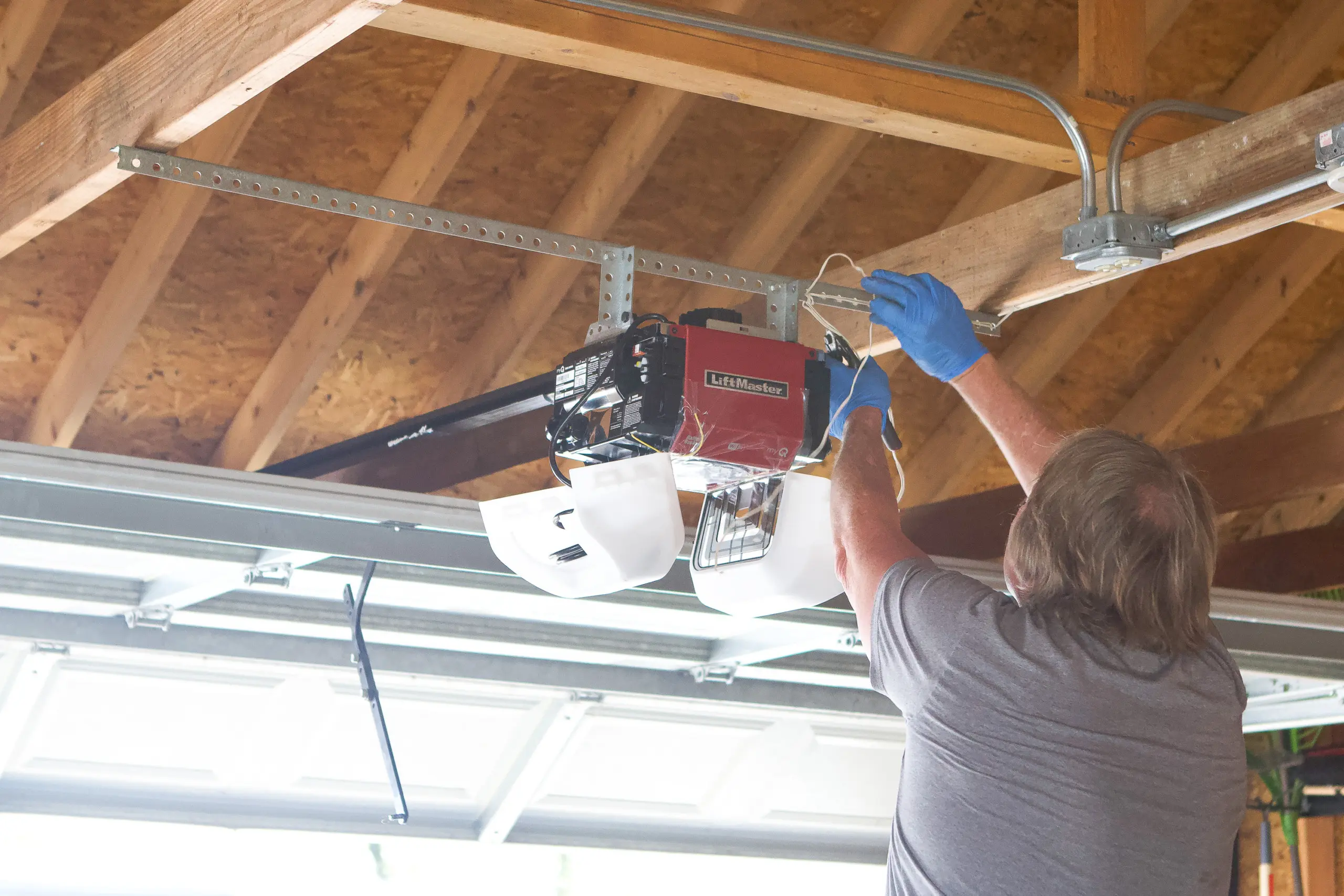
If your Linear garage door opener is not working, the issue is typically caused by a tripped "Lock" or "Vacation" mode on the wall station, misaligned safety sensors, or a disconnected power source. To fix it, ensure the wall panel isn't locked, check that the safety eye LEDs are solid, and verify the motor unit is receiving power.
Linear garage door openers, manufactured by Nice North America (formerly Nortek Security & Control), are known for their reliability and professional-grade performance. However, like any electromechanical system, they can encounter operational hurdles. Whether you have a classic LD050 model, a powerful LCO75, or a newer Wi-Fi-enabled LDC0800, troubleshooting follows a systematic process of elimination. In this guide, we will analyze the most common reasons why these units fail and provide detailed solutions for getting your garage door back on track in 2026.
Initial Diagnostic: The "Process of Elimination" Strategy
Before dismantling the motor head or calling a technician, you must determine if the problem is electrical, mechanical, or a safety-related lockout. Garage door openers are designed with multiple fail-safes to prevent injury or property damage. Often, what appears to be a "broken" opener is actually the system functioning exactly as intended by halting operation due to a detected obstruction or a manual lockout.
Identifying the Symptoms
The first step in troubleshooting is observing the behavior of the unit:
- The motor makes no sound at all: This usually points to a power supply issue or a blown logic board.
- The motor hums but the door doesn't move: This suggests a broken drive belt, a stripped gear, or a capacitor failure.
- The door starts to move but reverses immediately: This is almost always a safety sensor (photo-eye) issue or a travel limit setting problem.
- The remote works but the wall station doesn't (or vice versa): This indicates a wiring fault or a programming error.
1. Checking the Power Supply and Circuitry
It may seem elementary, but power disruptions are a leading cause of service calls. Garage door openers are often plugged into GFCI (Ground Fault Circuit Interrupter) outlets. These outlets are designed to trip in the presence of moisture or power surges, which are common in garage environments.
The GFCI Factor
If your garage door opener is completely unresponsive, locate the outlet it is plugged into. If it is a GFCI outlet, check if the "Reset" button has popped out. Press it back in. Furthermore, check your home’s main electrical panel. A surge during a 2026 summer storm could have tripped the specific breaker dedicated to the garage.
Internal Fuse and Logic Board
If the outlet has power (which you can test by plugging in a small lamp or tool), but the opener remains dead, the issue might be internal. Modern Linear units have sophisticated logic boards. If a power surge bypassed the surge protector, it might have fried the transformer or the logic board itself. Look for any smell of burnt electronics or visible scorch marks on the plastic housing of the motor head.
2. The "Lock Mode" Misstep
The most common reason for a Linear garage door opener to "stop working" while the wall station remains lit is the Lock Mode (also known as Vacation Mode).
How the Lock Feature Works
Most Linear wall stations feature a large "Up/Down" button, a light button, and a smaller "Lock" button. The Lock button is designed to disable all radio frequency (RF) signals. When activated, your remote controls and wireless keypads will not be able to open the door. This is a security feature meant for use when homeowners are away for extended periods.
How to Fix It
Check your wall station. If the light on the wall station is blinking, it is likely in Lock Mode. To deactivate it:
- Locate the "Lock" or "Vacation" button on the wall-mounted control panel.
- Press and hold the button for approximately 3 to 5 seconds.
- The blinking light should turn solid, or a small padlock icon on digital displays will disappear.
- Test your remote. If the door moves, the "problem" was simply an accidental button press.
3. Interpreting Linear Diagnostic Flash Codes
Linear garage door openers are equipped with a self-diagnostic system. The main overhead light (or a small LED on the motor head) will flash a specific number of times to indicate what the system has detected as a fault. This is the most accurate way to troubleshoot a Linear unit.
| Number of Flashes | Meaning | Potential Solution |
|---|---|---|
| 1 Flash | Safety Sensors Obstruction | Clear the path between the photo-eyes and clean lenses. |
| 2 Flashes | Safety Sensor Short Circuit | Check the wiring between the sensors and the motor head. |
| 3 Flashes | Wall Station Wire Short | Inspect the bell wire for staples that are too tight or frayed ends. |
| 4 Flashes | Logic Board/Internal Error | Power cycle the unit; if it persists, the board may need replacement. |
| 5 Flashes | Motor Thermal Overload | Allow the motor to cool for 20-30 minutes before trying again. |
| 6 Flashes | RPM Sensor/Encoder Failure | Check the internal drive gears or the RPM sensor disk. |
Deep Dive: 1 and 2 Flashes (Safety Sensors)
The "photo-eyes" are the two small sensors located at the bottom of the garage door tracks. They send an invisible infrared beam across the opening. If that beam is broken or the sensors are misaligned, the door will not close.
- Alignment: One sensor (the sender) usually has a green light, while the other (the receiver) has a red or amber light. Both must be glowing steadily. If one is flickering or dark, gently nudge the bracket until it aligns with the other.
- Cleaning: Dust, cobwebs, and even heavy sunlight (interference) can prevent the sensors from "seeing" each other. Wipe the lenses with a soft, dry cloth.
4. Remote Control and Keypad Issues
If the wall station works perfectly but the remotes do not, you are dealing with a signal or programming issue.
Battery Depletion
By 2026, most Linear remotes use CR2032 or similar lithium coin-cell batteries. These typically last 2–3 years. If the LED on your remote does not light up when pressed, replace the battery first.
Reprogramming the Remote
Sometimes a power surge or an internal memory glitch can cause the opener to "forget" its paired remotes. To reprogram a Linear remote:
- Locate the "Learn" or "Program" button on the back or side of the motor unit (you may need to pop off the light cover).
- Press and release the "Learn" button. The "Learn" LED will glow for about 15 seconds.
- While the LED is glowing, press the button on your remote control that you wish to use.
- The overhead light will flash once, indicating the remote has been successfully paired.
5. Travel Limit and Force Adjustments
If your Linear garage door opener starts to close but then reverses as if it hit something (even when the path is clear), the Down Limit or the Close Force might be set incorrectly.
The Down Limit Setting
The "Down Limit" tells the motor exactly where the floor is. Over time, as house foundations settle or weather stripping on the door expands, the motor may think the door is hitting an object when it is actually just reaching the floor "too early."
- On the side of the motor head, you will see two plastic adjustment screws labeled "Travel" or "Limit."
- Turn the "Down" screw slightly in the "minus" direction to shorten the travel distance, or the "plus" direction to lengthen it.
Force Sensitivity
Linear openers are required by law to have a safety reversal system. If the "Close Force" is set too low, the motor will reverse at the slightest hint of resistance, such as a stiff hinge or a rusty track.
- Locate the "Force" adjustment screws.
- Slightly increase the "Close Force" by turning the screw clockwise. Caution: Do not set this to the maximum setting, as this can make the door dangerous to people or pets. It should be set just high enough to close the door smoothly.
6. Mechanical Failures and Wear Parts
If the motor runs and you hear a grinding noise, but the door does not move, the problem is mechanical.
Stripped Gears
Linear chain-drive and belt-drive units use internal gears to translate the motor's rotation into the movement of the trolley. Over 10–15 years, these plastic gears can wear down (strip). You will often see "plastic snow" (white shavings) inside the motor housing if this is the case. Replacement gear kits are available and are a cost-effective alternative to replacing the whole unit.
The Start Capacitor
In AC motor models (like the LD050), the capacitor provides the "kick" needed to start the motor. If your opener just hums and refuses to move, and the door is not stuck in the tracks, the capacitor may have failed. A blown capacitor often looks swollen or has leaked oil. This is a high-voltage component; ensure the unit is unplugged before attempting an inspection.
When to Call a Professional
While most troubleshooting steps for a Linear garage door opener can be handled by a homeowner, certain situations require a certified technician.
- Broken Springs: If you hear the motor straining and the door won't lift, check the springs above the door. If they are in two pieces, do not attempt to operate the opener. The springs are under high tension and are extremely dangerous.
- Frayed Cables: If the steel cables on the sides of the door are fraying or have jumped off the drums, the door may become crooked and jam, potentially burning out the opener motor.
- Logic Board Replacement: If you have confirmed power is reaching the unit but there are no lights or response after a surge, a technician can confirm if the logic board is fried.
Maintenance Checklist for 2026
To prevent your Linear opener from failing in the future, perform these annual maintenance tasks:
- Lubricate the tracks and hinges: Use a silicone-based garage door lubricant. Avoid WD-40, as it attracts dust and can gum up the works.
- Tighten hardware: Vibrations from the door opening and closing can loosen the bolts on the tracks and the opener's mounting brackets.
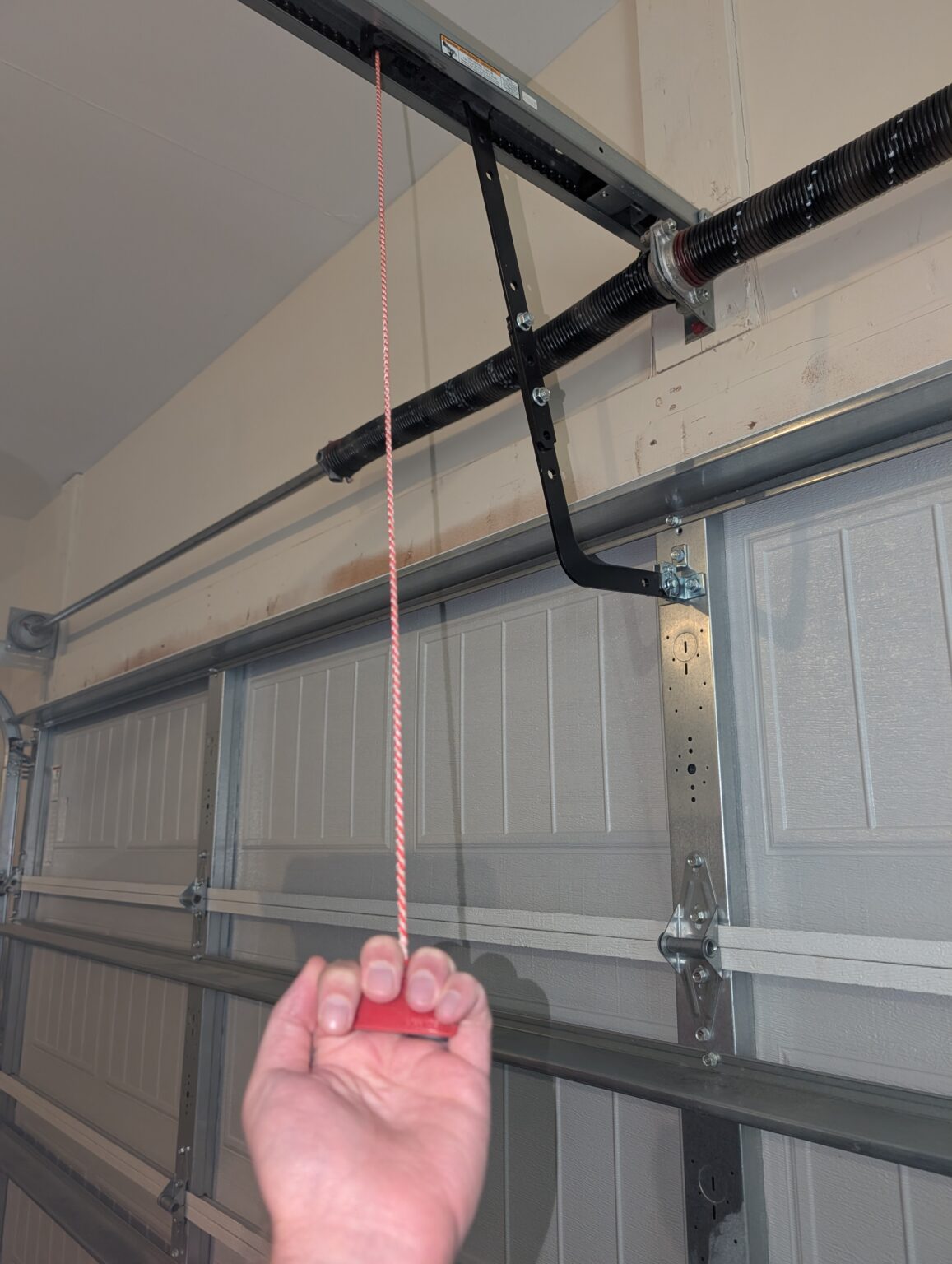
- Check the balance: Disconnect the opener by pulling the red emergency release cord. You should be able to lift the door halfway by hand and have it stay in place. If it slams down or shoots up, the springs need professional adjustment.
Summary of Troubleshooting Steps
| Step | Action | Expected Result |
|---|---|---|
| 1 | Check the wall station "Lock" button. | Disable blinking light to restore RF signal. |
| 2 | Inspect safety sensor alignment. | Both LEDs should be solid, not blinking. |
| 3 | Count diagnostic light flashes. | Refer to the manual/table for the specific fault code. |
| 4 | Test the GFCI outlet and breaker. | Ensure the motor head has 120V AC power. |
| 5 | Replace remote batteries. | Use fresh CR2032 or CR2016 batteries. |
| 6 | Adjust travel limits. | Prevents "false reversals" when the door hits the floor. |
Frequently Asked Questions
Why is my Linear garage door opener light flashing but the door won't move? The flashing light is a diagnostic code. Count the number of flashes in a sequence. Usually, this indicates the safety sensors are blocked (1 flash) or the wall station is in "Lock" mode. If the light flashes once after you try to close it, check for obstructions in the door's path or misaligned photo-eyes.
How do I reset my Linear garage door opener? To perform a "soft reset," unplug the motor unit from the power outlet for 60 seconds and then plug it back in. To clear the memory of all remotes (a "hard reset"), press and hold the "Learn" button for about 10 seconds until the LED goes out. Note that you will need to reprogram all remotes after a hard reset.
My Linear opener works with the wall button but not the remote. What’s wrong? This is almost always due to the "Lock" feature being activated on the wall station. If the wall station light is blinking, press and hold the "Lock" button for several seconds. If that doesn't work, try replacing the remote's battery or reprogramming the remote to the motor head.
Can I use a universal remote with my Linear garage door opener? Yes, most Linear models are compatible with high-quality universal remotes like those from Chamberlain (LiftMaster) or specialized 318MHz Linear-compatible remotes. Check your motor head for the frequency (usually 318 MHz for Megacode systems) to ensure compatibility.
What does it mean if the motor is humming but the belt/chain isn't moving? A humming motor usually indicates that the start capacitor has failed or the motor is physically jammed. In some cases, it may mean the carriage is stuck against the "up-stop" bolt because the travel limits were set incorrectly. Try pulling the emergency release cord to see if the carriage can be moved manually.
Recommendation
If your Linear garage door opener is still not working after checking the power, Lock mode, and safety sensors, look at the motor head and count the diagnostic flashes. This code is your most reliable guide. For mechanical failures or spring-related issues, contact a local garage door professional to ensure the repair is handled safely and according to UL 325 standards.
Image Gallery
Select an image to open it in a new tab.


Mateo Castillo
Decentralized Finance and E-Payments Strategist
