
The Hmong people today primarily reside in Southeast Asia, the United States, France, French Guiana, Australia, and South America, maintaining a distinct ethnic identity across a global diaspora. While the majority of the population remains rooted in the mountainous regions of Southeast Asia—predominantly Laos, Vietnam, Thailand, and China—significant refugee movements following the Vietnam War and the Laotian Civil War established vibrant, permanent communities in Western nations.
Historical Context and the Roots of the Hmong Diaspora
Understanding where the Hmong live today requires examining centuries of migration and geopolitical shifts. Originally hailing from the southern provinces of China—such as Guizhou, Yunnan, Sichuan, and Hunan—the Hmong (historically referred to in some historical texts as the Miao) began migrating southward into the highlands of Laos, Vietnam, Thailand, and Myanmar during the late 18th and 19th centuries. Seeking religious and political autonomy, as well as fertile agricultural land suited to their slash-and-burn and highland farming practices, they settled in remote, elevated terrains.
The modern global dispersion of the Hmong, however, was fundamentally shaped by the mid-20th-century conflicts in Southeast Asia. During the Laotian Civil War and the broader Vietnam War, the Central Intelligence Agency (CIA) recruited tens of thousands of Hmong men and boys to fight against communist forces in what became known as the "Secret War." When the Pathet Lao took control of Laos in 1975, the Hmong faced severe political persecution, retributive violence, and systemic marginalization. This crisis triggered a massive exodus across the Mekong River into Thailand, where hundreds of thousands lived for years in crowded, perilous refugee camps before being resettled globally or, in some cases, repatriated.
The Hmong Population in Southeast Asia
Southeast Asia remains home to the largest share of the global Hmong population. Their distribution across the region spans several countries, each with distinct socio-economic conditions, cultural preservation efforts, and political realities.
Laos
Laos hosts one of the largest indigenous Hmong populations, primarily concentrated in the northern and central mountainous provinces such as Xiengkhouang, Luang Prabang, Vientiane, and Bolikhamsai. Hmong communities in Laos have deep agricultural roots, cultivating upland rice, corn, and vegetables. While generations have lived in these highlands for centuries, integration into the broader Laotian sociopolitical landscape has evolved slowly. Many Hmong in Laos continue to navigate complex relationships with the central government, balancing traditional clan structures, animist spiritual practices, and Christianity with national legal frameworks.
Vietnam
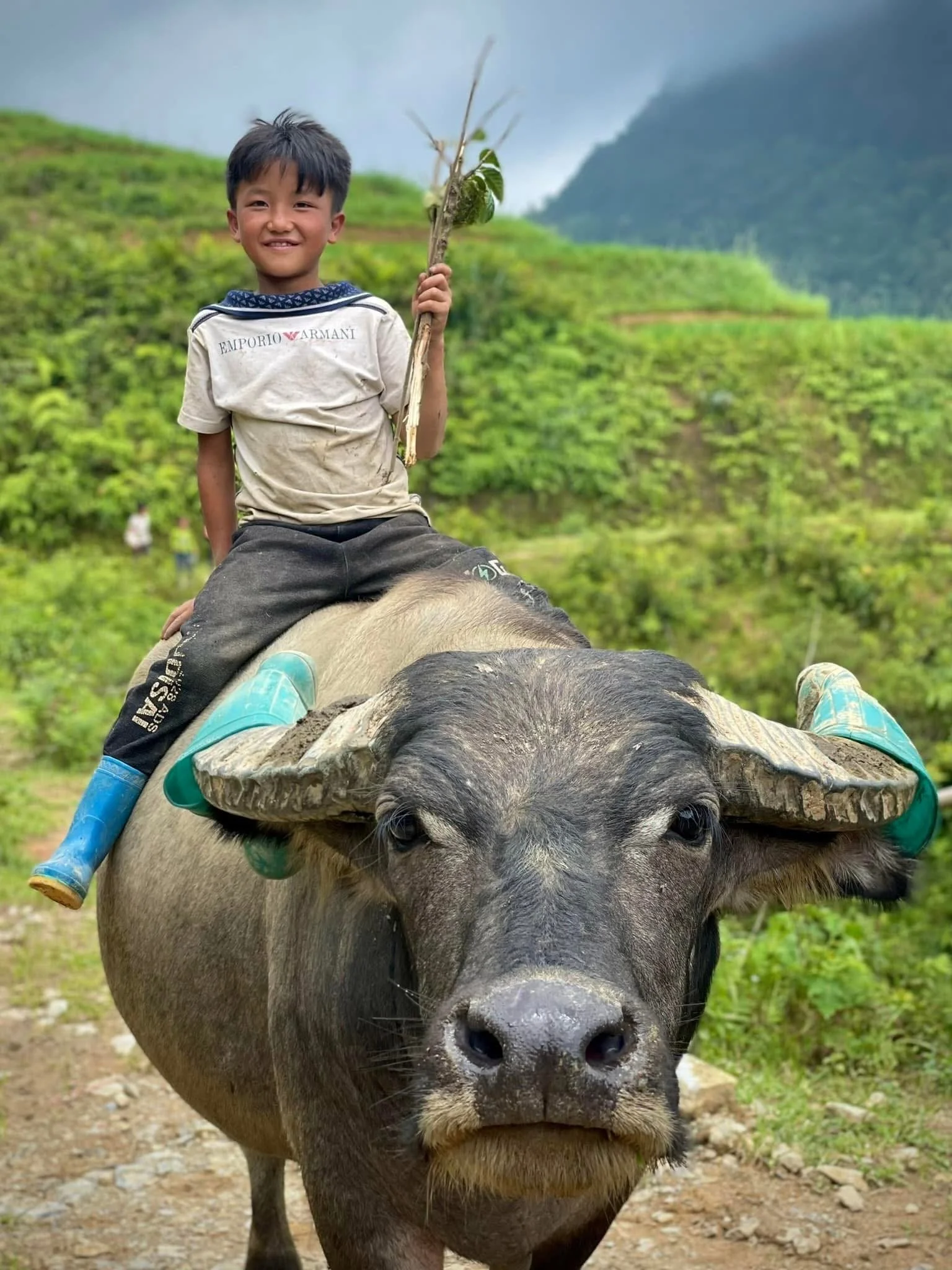
In Vietnam, the Hmong are officially recognized as one of the country's 54 ethnic minority groups. The government officially designates them under the umbrella term "Mèo" historically, though "Hmong" is the preferred and widely accepted self-descriptor. They primarily inhabit the rugged northern highlands near the Chinese border, including provinces such as Hà Giang, Lào Cai (home to popular tourist hubs like Sapa), Lai Châu, and Điện Biên. The Hmong in Vietnam are renowned for their intricate textile arts, indigo dyeing, and silver craftsmanship, which form a crucial part of both their domestic economy and the burgeoning highland tourism sector.
Thailand
Thailand’s Hmong population is concentrated in the northern provinces, including Chiang Mai, Chiang Rai, Nan, and Tak. Unlike Laos and Vietnam, where the Hmong have ancient indigenous ties, many Hmong in Thailand trace their migration pathways back through Laos and Myanmar over the past two centuries. Today, Thai Hmong communities are fully integrated into the national fabric, benefiting from Thai citizenship, modern education systems, and infrastructure. Many have transitioned from traditional slash-and-burn opium cultivation (successfully eradicated through royal substitution crop projects in the latter half of the 20th century) to permanent agriculture, growing cabbages, strawberries, and temperate fruits for national markets.
China
China holds the ancestral homeland of the broader Miao grouping, which includes several linguistic and cultural subgroups related to the Hmong. Millions of Miao citizens live across southern and southwestern China, particularly in Guizhou province, which boasts the highest concentration. While Chinese terminology and classification systems group these populations under the Miao umbrella, cultural, linguistic, and historical ties connect them to the Hmong communities of Southeast Asia and the diaspora.
The Hmong Diaspora in Western Nations
The aftermath of the 1975 conflict in Laos transformed the Hmong into a transnational diaspora, with the vast majority of resettled refugees finding new homes in North America, Europe, and Oceania.
United States
The United States is home to the largest Hmong population outside of Asia, numbering over 300,000 individuals according to census estimates and community data. The initial waves of refugees arrived in the late 1970s and 1980s, sponsored by religious organizations, charitable groups, and individual families.
While Hmong immigrants settled across various states, significant population centers emerged in specific metropolitan areas:
- Minnesota: The Twin Cities of Minneapolis and Saint Paul host the largest urban Hmong population in the United States, renowned for cultural institutions, businesses, and political representation.
- California: The Central Valley—specifically cities like Fresno, Merced, Sacramento, and Stockton—features deep-seated agricultural and urban Hmong communities.
- Wisconsin: Cities such as Milwaukee, Wausau, Sheboygan, and Eau Claire have thriving Hmong populations with robust community organizations.
- North Carolina: A notable community established itself in regions like Charlotte and Hickory.
In the U.S., Hmong Americans have made remarkable strides in education, business, law, and politics, producing state legislators, judges, and municipal leaders while fiercely preserving their language, clan structures, and New Year celebrations.
France and French Guiana
France holds a unique place in the Hmong diaspora due to its historical colonial ties to Indochina. Following the 1975 crisis, the French government accepted several thousand Hmong refugees. Many were initially settled in European France, where communities took root in cities like Nîmes, Toulon, and Paris.
Uniquely, the French government also resettled a group of Hmong farmers in French Guiana, an overseas department of France on the northeastern coast of South America, during the late 1970s. Communities in Cacao and Regina successfully transformed dense rainforest into productive agricultural land, supplying fresh produce to local markets and maintaining a distinct cultural enclave in the Amazonian territory.
Australia
Australia welcomed smaller numbers of Hmong refugees starting in the late 1970s and 1980s. Hmong Australians primarily settled in suburban areas of major cities like Melbourne and Sydney. Though smaller in scale compared to the U.S. diaspora, the Australian Hmong community maintains active social clubs, religious gatherings, and cultural preservation initiatives.
Global Distribution Summary Table
| Region / Country | Estimated Population Status | Primary Concentration Areas | Key Economic & Social Adaptations |
|---|---|---|---|
| Laos | Large Indigenous Presence | Xiengkhouang, Luang Prabang, Vientiane Province | Upland agriculture, traditional clan leadership, rural community networks. |
| Vietnam | Major Ethnic Minority | Hà Giang, Lào Cai, Lai Châu, Điện Biên | Highland farming, textile crafts, cultural tourism integration. |
| Thailand | Established Regional Minority | Chiang Mai, Chiang Rai, Tak, Nan | Permanent agriculture, market farming, full national integration. |
| China | Ancestral Miao Populations | Guizhou, Yunnan, Hunan, Sichuan | Regional governance, traditional arts, integration into provincial economies. |
| United States | Largest Diaspora Population | Minnesota (Twin Cities), California (Central Valley), Wisconsin | Urban employment, small business ownership, political representation, higher education. |
| France & French Guiana | European & Overseas Diaspora | Paris, Nîmes, Cacao (French Guiana) | Agricultural production (in Guiana), urban integration, European citizenship. |
| Australia | Established Migrant Enclave | Melbourne, Sydney | Suburban community organizations, small businesses, multicultural participation. |
Cultural Preservation and Modern Identity
Despite being scattered across continents, mountainous borders, and urban metropolises, the Hmong maintain a remarkably cohesive cultural identity. This cohesion is largely anchored by the traditional clan system (xeem), which operates across international boundaries. There are roughly 18 primary Hmong clans. Membership in a clan dictates social etiquette, marriage rules (exogamy is strictly practiced, meaning one must marry outside their clan), and mutual aid networks. When Hmong individuals travel internationally, their clan identity often serves as an immediate passport to hospitality and kinship within foreign Hmong communities.
Language preservation remains another cornerstone of the modern Hmong experience. The Hmong language belongs to the Hmong-Mien (formerly Miao-Yao) language family and is divided into two primary dialect groups: White Hmong (Hmoob Dawb) and Green/Blue Hmong (Moob Leeg), which are largely mutually intelligible. While traditional oral history, folk songs (kwv txhiaj), and shamanic rituals have sustained cultural continuity for centuries, the creation of the RPA (Roman Popular Alphabet) in the 1950s revolutionized literacy, enabling transnational communication, printed literature, and digital media sharing among Hmong populations in the U.S., Southeast Asia, and Europe.
Furthermore, the annual Hmong New Year celebrations—traditionally held after the harvest season—have evolved into massive global cultural festivals. Events in Minnesota, California, Laos, and Thailand draw tens of thousands of attendees, featuring traditional ball-tossing courtship games, elaborate traditional attire adorned with silver coins and intricate embroidery, dance competitions, and musical performances that bridge generational and geographical divides.
Frequently Asked Questions
Why did the Hmong scatter across the globe?
The global dispersion of the Hmong was primarily triggered by the end of the Vietnam War and the Laotian Civil War in 1975. Having allied with the United States to fight communist forces in Laos, many Hmong faced severe political retribution and persecution. This forced hundreds of thousands to flee across the Mekong River into Thailand, entering refugee camps where many awaited permanent resettlement in Western nations like the United States, France, and Australia.
What is the largest Hmong community in the world?
The largest concentration of Hmong people remains in Southeast Asia, spanning Laos, Vietnam, Thailand, and southern China. However, looking specifically at urban centers outside of Asia, the Minneapolis-Saint Paul metropolitan area in Minnesota hosts the largest urban Hmong population in the world, with over 80,000 residents of Hmong descent.
Do Hmong people in different countries still speak the same language?
Yes, Hmong people across the diaspora generally speak mutually intelligible dialects, primarily White Hmong and Green/Blue Hmong. While regional loan words from English, French, Lao, Thai, or Vietnamese have been integrated into local vocabulary depending on where communities live, the core grammar, vocabulary, and tonal structure allow Hmong speakers from Minnesota, Laos, and France to communicate effectively.
Are the terms Hmong and Miao the same thing?
They are related but applied differently depending on geography and official policy. "Miao" is an exonym historically used by Chinese authorities to categorize several related ethnic groups in southern China, including those who self-identify as Hmong. In contrast, "Hmong" is the preferred self-identification used by the ethnic group itself, particularly in Southeast Asia and the Western diaspora.
How do Hmong clans function in modern Western societies?
The traditional clan system remains a vital social safety net for Hmong people living in Western countries. Comprising around 18 distinct family names, clans dictate marriage laws, resolve community disputes, organize funerals, and provide mutual aid. Even in high-tech, urban environments like the United States, clan leaders often act as mediators and community elders, preserving customary laws alongside civil legal systems.
Next Actions and Further Exploration
For researchers, students, and travelers seeking to understand or engage with Hmong communities today, starting points include exploring cultural heritage museums such as the Hmong Museum in Minnesota, engaging with academic literature on the Secret War and Southeast Asian diaspora studies, and visiting community-led cultural festivals during the autumn and winter New Year seasons. Respecting local customs, supporting community-owned enterprises, and recognizing the complex historical context of displacement remain essential steps in engaging meaningfully with Hmong populations worldwide.
Image Gallery
Select an image to open it in a new tab.


Lars Thomsen
Global Labor Markets and Economic Strategy Editor
